
Bricklaying in Ashley Heath
Repointing, brick repair, chimney work, boundary walls and new brickwork across Ashley Heath and BH24. Free site visit, free written itemised quote.
The site visit is free and so is the written itemised quote. Thomas Hannen prices every job himself.
Last updated
On most houses around Ashley Heath the pointing does not need doing all the way round. One or two elevations take the weather and go first, and the sheltered sides are often sound for another decade. Ask for the quote broken down elevation by elevation, and you will usually find the job is a third of the size you feared.
The brickwork trouble in Ashley Heath tends to be on a long, low house. The joints on one face have opened up and there is green in the mortar. The bottom courses are damp and a few brick faces have started flaking. The chimney has been called out by a roofer as needing repointing while the scaffold is there. Or a boundary wall between two large plots is leaning, and neither neighbour is quite sure whose it is.
We come and go round the whole building, not the one wall you rang about, because on a single storey house the difference between elevations is usually stark and worth seeing. The survey covers how deep the mortar is sound, whether the brick faces have blown, what the ground level is doing against the wall, and where the rainwater goes. The site visit is free, the written quote is free, and it is itemised so you can drop an elevation out of the job this year and keep it for next.
The work
The usual brickwork jobs at Ashley Heath
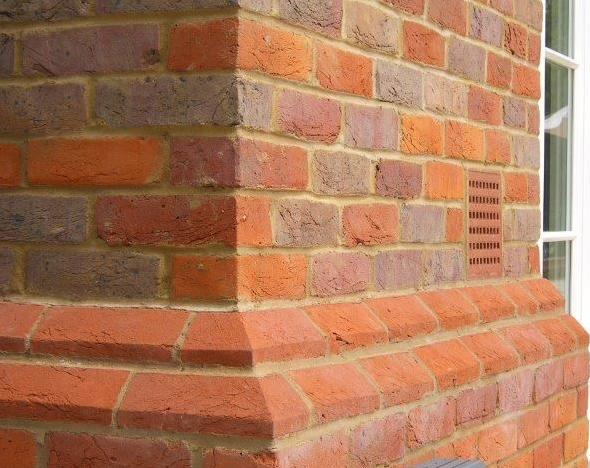
Brickwork of the seventies and eighties. Half of Ashley Heath was built between the war and the early eighties and the busiest years were the seventies, so most brickwork here is not soft old brick in lime.
It is a hard cement mortar on a machine made facing brick, and that fails differently. Rather than washing out, the joint face frets and crazes on the weather side, the perpends open first, and water starts to track in under the cills. It is raked out square to sound mortar and put back in a mix chosen for that brick, struck to match the profile already on the wall so one elevation does not stand out against the next.
Boundary walls, and stacks above a low roof. More than half the dwellings here are bungalows, and a stack on a single storey house is short but fully exposed, taking weather on all four sides with no wall above to shelter it. The mortar around the pots is nearly always the first thing gone, and if that flaunching is cracked then water is running down inside the stack. We repoint the stack, renew the flaunching and rebuild the courses above the roof where frost has got into them, and doing that while roofing access is up is the cheap way to buy it. Plots here are large and the walls between them are long, so boundary work is a bigger part of the job than it would be on an estate. Leaning lengths come down and go back up off a proper footing, gate piers are put back plumb and re-capped, and coping is re-bedded. Where a wall is retaining even a small change in level we build drainage in behind it, because one asked to do a retaining wall's job without it will bow out again.
Wide windows and patio doors are everywhere in this housing, and a long opening puts a lot of load on one lintel. A crack running vertically from the corner of an opening usually means the lintel has dropped or a steel one is corroding, so the opening gets propped, the lintel replaced and the brickwork over it rebuilt, with cracked cills cut out at the same time. New work is cavity construction off a foundation dug to what the ground actually is, and the hard part is the match, because a facing brick from that period can be difficult to source. There is a little older property here and two listed entries, and those solid walls are a lime job.
How it runs
Brickwork and boundary walls: how the job is run
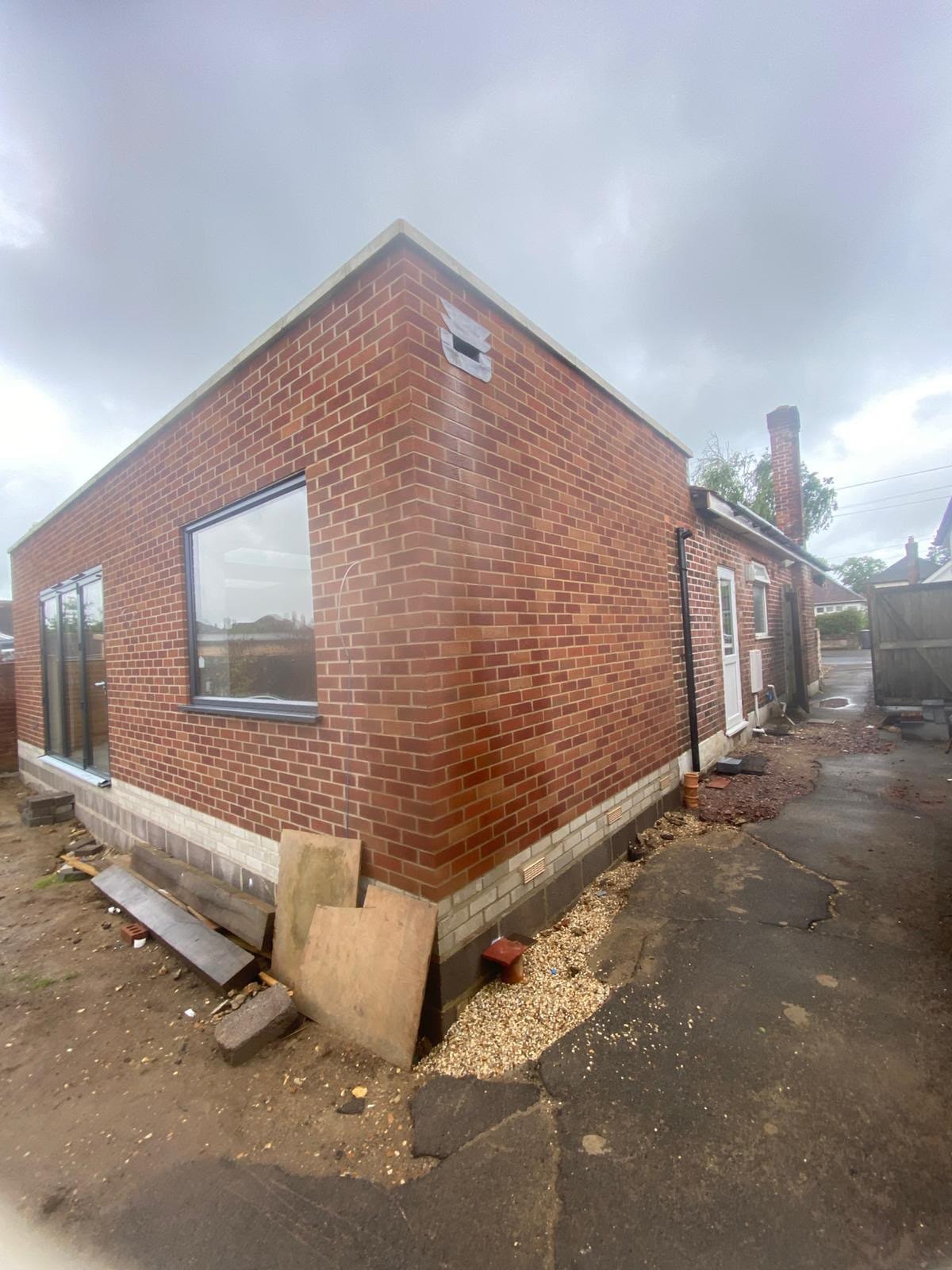
Brickwork at Ashley Heath is mostly post-war: bungalows and detached houses, their garages and outbuildings, and the long boundary walls between big plots. Thomas comes and looks at it himself, taps the joints and the brick faces, and writes the quote. It lists access, raking out, the mix, every elevation by area, any bricks to replace, and disposal as separate lines.
A garden wall or a single storey elevation is worked from the ground or a tower. A chimney or a gable wants a scaffold. Mortar is mixed on boards rather than on your drive, and cut bricks, rubble and dust are cleared each day and taken away. If a lintel turns out to be rusted through, or a wall is hollower than it looked, the work pauses while you look at a photograph and a written price.
With no conservation area here and two entries on the national list, repointing and brick repair on almost every house is maintenance and needs no planning permission. If your own house is the listed one, even repointing can need listed building consent. Building control comes in when structure changes: a new lintel, a widened opening, underpinning or a load bearing pier. A new or raised garden wall has height limits that Planning Portal explains, and a wall on the boundary line brings in the Party Wall etc. Act 1996.
Cost
What decides the cost of brick repairs on big plots
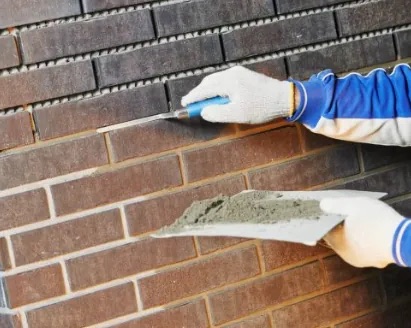
Brickwork is not priced by the square metre, because the joints decide the time, not the area. How long the walls are. Plots here are large, and a boundary wall between two gardens can run a long way. Rebuilding a bowed length means taking it down to sound work, cleaning or replacing bricks and relaying on a proper footing, so the length and the footing drive the price.
The mortar already in it. Houses of this age were built in cement mortar, so matching it is about sand colour and joint profile, not lime. Raking out hard cement by hand is slow. A disc is quicker but can widen the joint, so ask which is planned, and how deep. Joint depth sets the hours.
Spalled faces. A brick with its face blown off has to be cut out and replaced. Finding a match for an old wirecut or facing brick can take a reclaim search, and each one is counted on the quote.
Height. A garden wall, a garage or an outbuilding is ground or tower work. A chimney stack or a gable needs a scaffold, and the work at height regulations mean it is priced properly rather than slipped in later.
Ask any other bricklayer how deep they rake, by hand or disc, what mix and sand they use, how many bricks are being replaced, and whether the scaffold is included.
If something has moved
A garden wall leaning or a chimney shedding mortar
If a boundary wall has started to bow or lean, keep children and cars away from it and do not try to push it back. If bits of mortar or brick are dropping from a chimney, stay out from under it. Call us instead of sending the form.
On that first visit we make it safe, whether that means propping a wall, taking down loose courses or clearing a stack of anything that could fall, and then we price the permanent repair. After a windy spell, cracked flaunching round the pots is worth a look too. Planned jobs run Monday to Friday, 8am to 6pm. If you cannot get through, we return the call as soon as possible.
One local thing
What a bungalow changes about a brickwork price
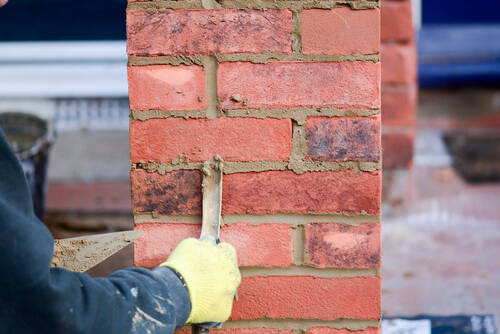
More than half the homes at Ashley Heath are bungalows, and that changes the arithmetic of a brickwork job in two opposite directions. In your favour: the whole of the wall is within reach of a tower, so the access line on the quote is small and the work starts the day we arrive rather than the day after the scaffolders.
Against you: the same floor area spread over one storey means a longer perimeter, more corners and returns, and more metres of joint than a two storey house of the same size would have. So the useful thing to do when you compare quotes here is to make everybody price it elevation by elevation. A single figure for the whole house hides which face was the expensive one.
The other consequence is that nearly all of your brickwork is close to the ground. The damp proof course sits a couple of courses up, and on a long low elevation there is a lot of wall where a border, a gravel margin, decking or a patio can end up above that line. Once the level is bridged the wall wicks water past the dpc, the inside goes damp at skirting height, and the bottom two or three courses stay wet all winter until frost takes their faces off.
Look along the base of your own walls: if you cannot see two clear courses of brick above the soil, that is the job, and it is groundwork and a few cut out bricks, not anything injected. Rain bouncing off a hard path does the same thing more slowly, which is why a gravel margin along the foot of a wall is worth more than it costs.
Who you are dealing with
The bricklayer behind the quote
We take on brickwork in Ashley Heath and across BH24, through St Leonards, St Ives and Ashley, out to Three Legged Cross and West Moors, and it is 7.1 miles from our base in Boscombe. Dorset Council deals with planning and building control here.
The company is Bournemouth Roofing & Building Ltd, registered in England and Wales as number 15471719, and a minute on Companies House will confirm it. Thomas Hannen owns it and prices every wall himself after looking at the joints. A verified Checkatrade customer scored the work 10 out of 10. The visit, and the written quote with each item listed, cost you nothing. Before you book a visit in Ashley Heath, you can read our customers' Google reviews, word for word, on our reviews page.
Planning at a glance
Do you need planning permission in Ashley Heath?
Most repairs in Ashley Heath need no application at all. What decides whether a change to the outside of your house does is who the council is, whether a conservation area or a listing applies, and whether the place sits in a protected landscape.
| Question | In Ashley Heath |
|---|---|
| Who decides | Dorset Council is the planning authority for Ashley Heath. Dorset Council's heritage pages set out what it controls. |
| Conservation area | None covers Ashley Heath, so a like-for-like repair is ordinary maintenance. |
| Listed buildings | Yes, Ashley Heath has listed buildings. If yours is one, or stands in the grounds of one, work can need listed building consent. |
| Protected landscape | No National Park or National Landscape covers Ashley Heath. |
Questions
Questions about bricklaying in Ashley Heath
More than half the houses here are bungalows. Does that change things?
Ashley Heath's bungalows change the access and they change the pricing. With 52.2% of Ashley Heath being bungalows, most brickwork we repoint is reachable off a low tower or a hop up instead of a full scaffold, which brings the cost of getting to the wall down.
What it does not change is the quantity of wall. A bungalow spreads the same floor area over a longer perimeter, so there is more pointing per house than on a two storey semi.
What should I look at on my own wall before ringing?
Stand back and sight along the joints in low sun. Mortar weathered back behind the brick face, joints you can rake out with a car key, and a run of missing pointing under the sills are the three that matter. Then look for a dark band low down on the shaded side, because the ground here is naturally wet and a north facing wall in Ashley Heath dries slowly after rain.
Is there any heritage restriction on brickwork in Ashley Heath?
Almost certainly not: Ashley Heath has two listed entries and no conservation area, and Dorset Council is the authority, so for the other several thousand homes a repoint or a rebuilt wall is straightforward repair. The postwar stock, which runs to 51.1% of the total, was built with a cement mortar from the start, so matching it is a question of sand colour and joint profile instead of getting a heritage mix approved.
Can pointing be done in a wet week?
Not while the wall is running with water. Fresh mortar wants the surface damp rather than saturated, and it must not be rained straight back out of the joint on the first day. We sheet the scaffold and work the sheltered elevations when the weather turns, then come back to the south west face that takes the driven rain in Ashley Heath. Frost is the harder stop, and below about four degrees we will not put mortar on.
What does a survey of a cavity wall actually cover?
The ties first. On the 1970s and early 1980s work that peaks at 20.7% of Ashley Heath stock, cavity ties were often thin galvanised strip. We drill a small hole, put a borescope in and look at the tie and at any mortar droppings bridging the cavity. Then the sills, the lintel bearings and the bottom two courses. What comes back to you is a written itemised quote for the parts that need doing.
Nearby, and next door
Bricklaying near Ashley Heath
Nearby places we also cover for bricklaying, with straight-line distances from Ashley Heath, and the other trades we offer in Ashley Heath itself.
Bricklaying nearby
Our other trades in Ashley Heath
Brickwork and repointing guides
Lime or cement mortar: which do you need? Single storey extension: planning and building regs Subsidence cracks: which ones matterEverything we do in West Moors Bricklaying, all areas Every area we cover
Free quote
Get the brickwork at Ashley Heath priced by elevation
Tell us the address and which wall is bothering you. We look at all of them, and the written price shows each face on its own line.