Insulation in Ashley Heath
Loft top-ups taken right out to the eaves, chalet bungalow knee walls and sloping ceilings, and cavity checks across Ashley Heath and BH24, priced in writing after a free survey.
The site visit is free and so is the written itemised quote. Thomas Hannen prices every job himself.
Most insulation work in Ashley Heath is a loft brought back up to depth, and the part that decides whether it was worth doing is the last metre at the eaves. Get the edges right and a bungalow holds its heat. Leave a gap over the wall plate and the room below it stays cold whatever depth is in the middle.
Three things bring people to us here. A bungalow that is warm in the middle and cold in the back bedroom. A chalet bungalow where the upstairs rooms cook in July and cannot be heated in January. And a loft that somebody has finally looked into, where the insulation is grey, compressed and stops well short of the wall.
We treat all three the same way to start with. A free survey, up through the hatch, along the roof to the eaves rather than a look from the ladder, and a measured depth rather than an estimate. Photographs of what is up there, including the corners nobody sees, and then a written itemised quote so you know what each part of the job costs. If the loft is already sound we will say so and talk about the walls, the floor or the draughts instead.
The work
A chalet roof is four jobs, not one
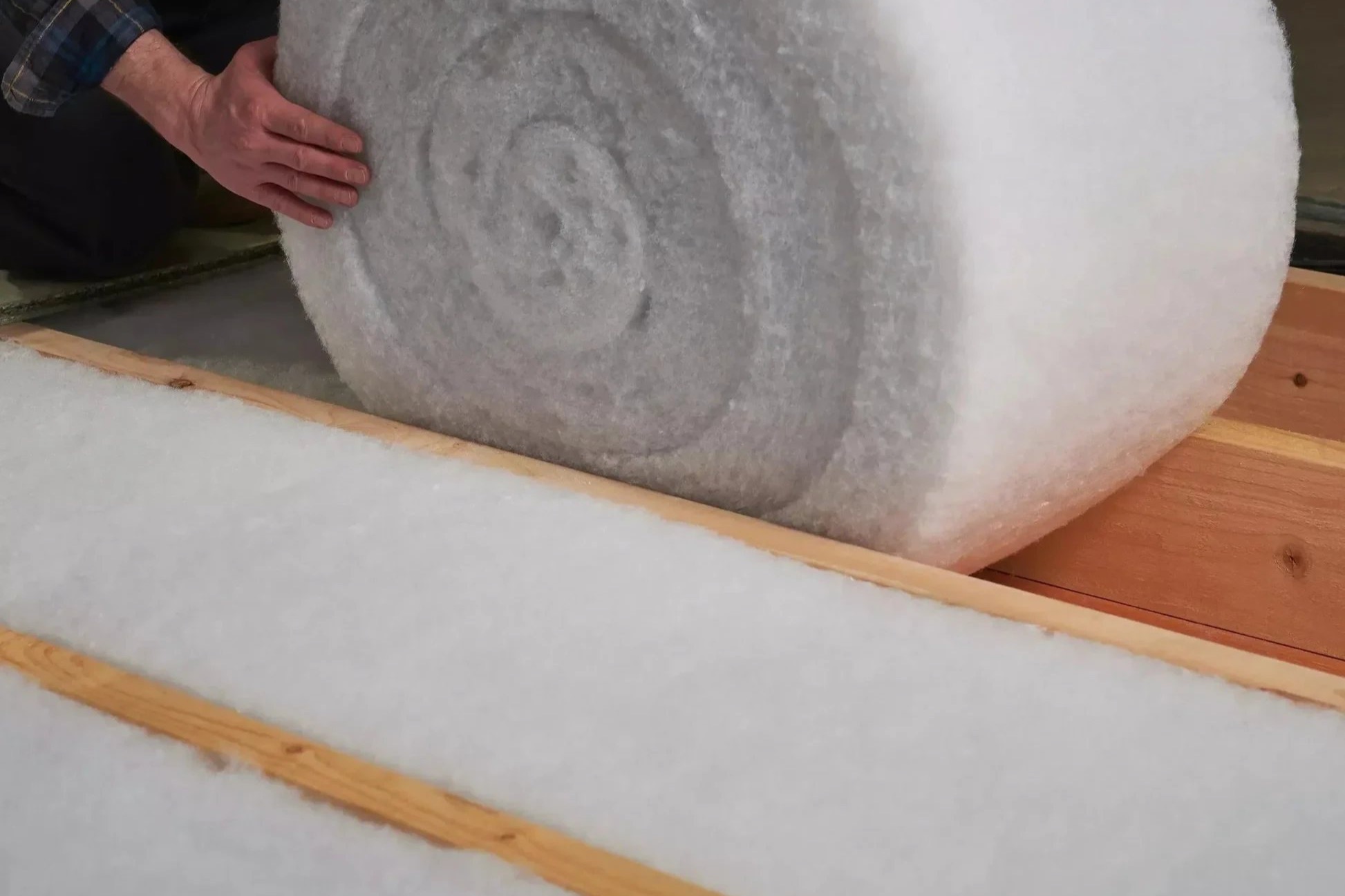
Bungalow loft top-ups. The estates here were mostly built in the 1970s and early 1980s, on shallow pitched trussed roofs with hipped ends, and the original insulation went in at a depth nobody would accept now. We lift and check what is there, remove anything that has gone damp or is holding debris, then lay new mineral wool, ordinary eco roll, between the joists and a second layer across them to bring the total to around 270mm, the depth that takes a ceiling to the 0.16 u-value expected when a thermal element is renovated. Cross laying is the whole point: it buries the joists, which are otherwise a cold bridge and a straight line of heat loss running through every ceiling in the house.
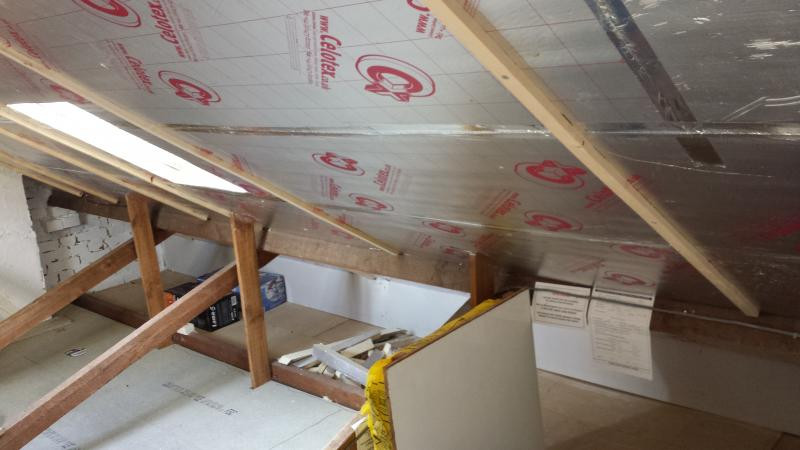
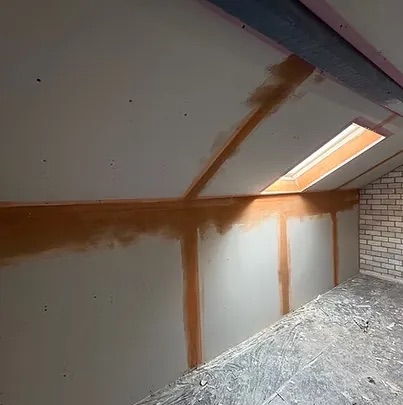
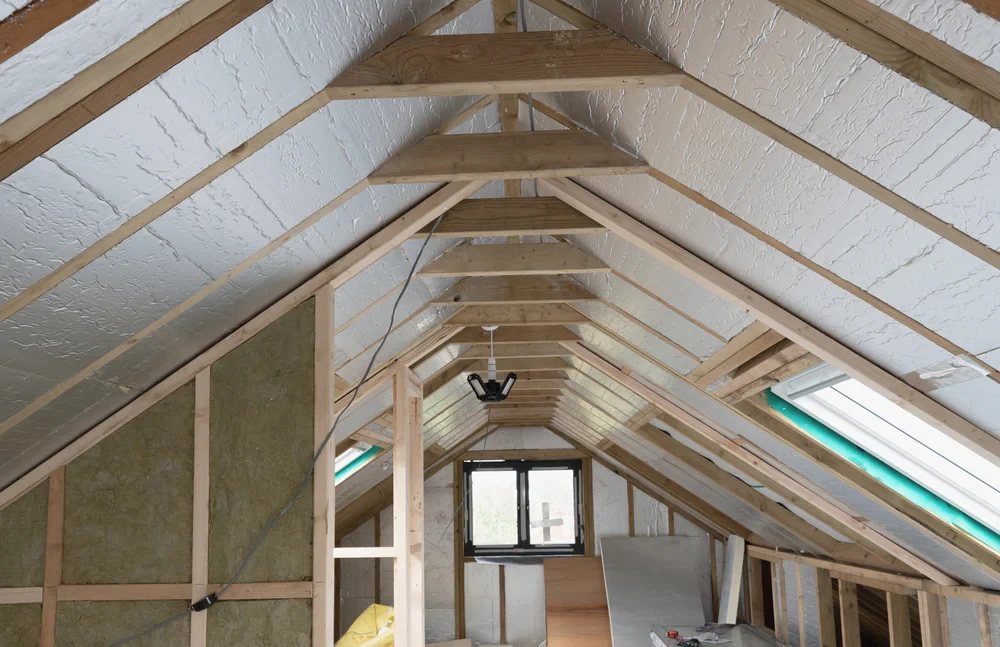
A chalet roof is four jobs, not one. More than half the dwellings here are bungalows and plenty of them are chalets, which are the ones most often done badly. A chalet has a sloping ceiling, a short knee wall, a triangular void behind that knee wall, and a flat ceiling over the middle. Insulate the flat bit and the slope but leave the void behind the knee wall open to the eaves and you have left a cold channel running the length of both bedrooms. Done properly, the slope gets foil faced PIR rigid board between and under the rafters, or a multi-layer foil quilt such as TLX where the headroom is not there to lose, the knee wall is treated as an insulated wall in its own right and sealed against draughts, and the loft depth carries over the flat ceiling so the line is continuous the whole way round. A dormer on the back is built as a warm roof, cheeks and flat top, rather than left as the thin spot.
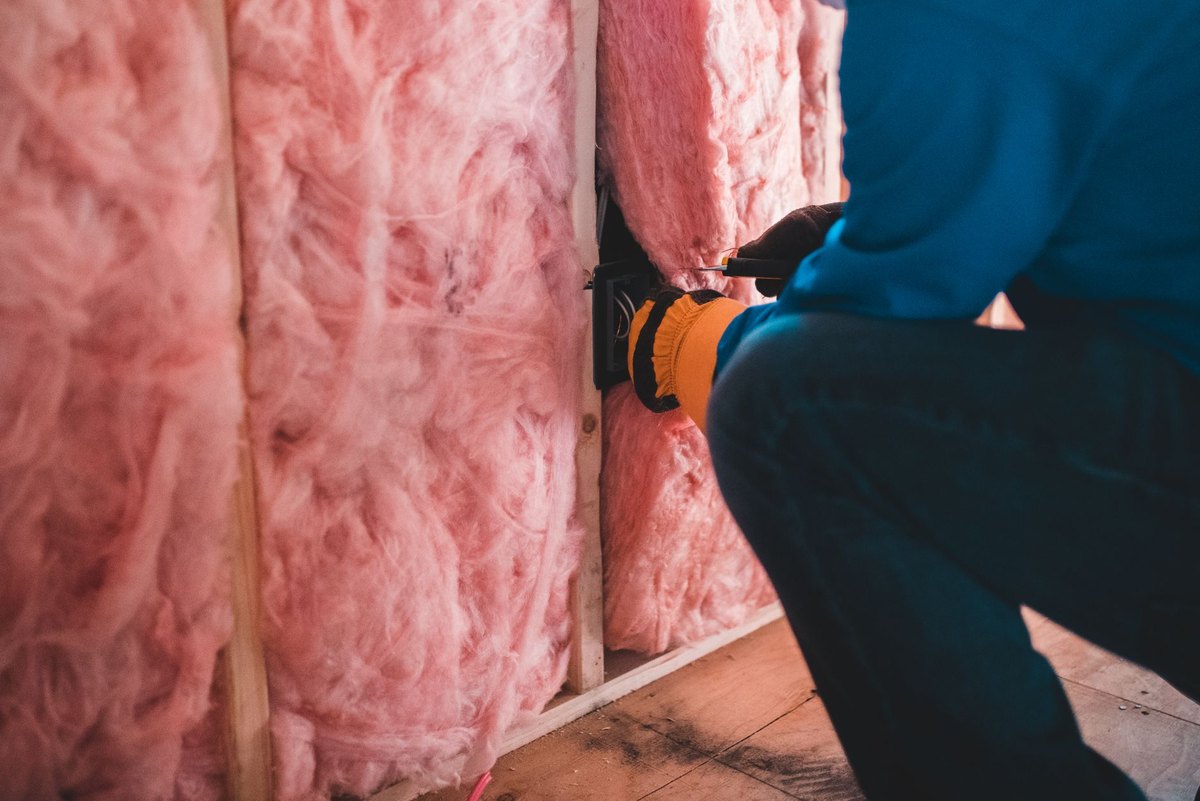
A shallow pitch with a hipped end gives you almost no height where the rafter meets the wall plate, and that is exactly where the insulation has to be full depth. Vent trays go in first so a clear air path is held open above the wool, then the insulation is pushed right out to the plate, because an even 250mm carried to the wall beats a deeper heap in the middle. Blocked eaves in a cold loft mean condensation on the underside of the felt by February. Cavity walls of this era were usually built empty and a lot of them still are: a borescope tells you what is in there, an empty cavity can take blown bead or mineral fibre in a day, and a fill that has settled leaves the top course cold and needs clearing before it is refilled. Loft legs raise a boarded deck so storage does not squash the depth flat, the hatch gets insulated and draught sealed, the tank and its pipework get lagged once the space around them is colder, and every downlighter gets a fire rated cover.
How it runs
From your call to a written price
The quote is itemised: survey, clearing, material and depth, ventilation and disposal on separate lines. None of the loft work needs planning permission or a building control notice, and the Planning Portal is clear about that. External wall insulation is different, because it changes how the building looks, and it is the one part of this trade that can need an application. Dorset Council is the authority and it publishes what needs listed building consent, though Ashley Heath has no conservation area and almost nothing on the list, so for the overwhelming majority of addresses there is nothing to apply for. Insulation fitted in a home is also currently zero rated for VAT.
Cost
What decides the price of an insulation job
No rate per square metre: the area is the easy part. A detached bungalow with a drop down ladder, a chalet where half the roof space sits behind a knee wall panel, and a 1970s house with the hatch above a fitted wardrobe are three different amounts of time before any material is laid. Old material that has to come out and be bagged is a cost of its own. Approved Document L sets what the work must reach. Ask what depth is going down, whether the void behind a knee wall is included, and whether the hatch and the pipework are.
If it is urgent
Damp, condensation or a room you cannot heat
Ring rather than use the form. A dripping loft, black mould that comes back faster than you can wash it off, or a room that will not hold heat gets looked at quickly, and the first visit works out whether it is insulation, ventilation or both. Ashley Heath is a short run off the Ringwood road, so within days. The phone is answered 24 hours for emergencies; scheduled work runs Monday to Friday, 8am to 6pm.
Worth knowing
In bungalow country the loft is the whole house, and the edges are the job
Just over half the homes in Ashley Heath are bungalows. That single fact changes the value of a loft here. In a two storey house the loft is the lid on the upstairs only, and a fair amount of what escapes through it has already warmed a bedroom on the way.
In a bungalow the ceiling you are insulating sits over the kitchen, the lounge, the hall and every bedroom, so the same day of work covers roughly twice the floor area and does roughly twice the good. If you are choosing one thing to spend money on in a house like this, it is this one.
The catch is the shape of the roof. A bungalow has far more perimeter for its floor area than a house does, and on the hipped shallow roofs common here the space at the eaves is tight and awkward to reach. That is where a rushed job stops short, and a cold strip around the outside of every room is exactly the strip you feel when you sit down.
When you get quotes, ask how the last metre out to the wall plate is being handled and whether vent trays are included, because that is the difference between a loft that measures well from the hatch and a loft that actually works.
Who you are dealing with
A local firm you can check
We cover Ashley Heath, St Leonards, Ringwood, West Moors and the BH24 side of the Dorset border. Bournemouth Roofing & Building Ltd, registered in England and Wales, company number 15471719, which you can look up in a minute. Thomas Hannen's business, and he is the one who comes out to price the job, not a salesman. A verified customer's 10 out of 10 on Checkatrade. The visit and the written quote are both free.
Questions
Ashley Heath questions we get asked
Over half the homes here are bungalows. What does that mean?
More roof per household and a lot more edge. 52.2% of Ashley Heath is bungalows and only 3.5% semis, so the typical roof here covers the whole home rather than half of it, and it usually hips down to the wall plate on all four sides. That leaves a low triangle at each end where nobody can stand. Those corners are where material stops short and the ceiling below goes cold, so that is where the time goes.
Is autumn too late to book this before the winter?
Late autumn is the busiest month to ask and still a workable one. Nothing about laying insulation depends on the weather outside, so the diary is the only real constraint. What we would rather avoid is putting a fresh layer over a defect that has been leaking since August, so Thomas looks up at the underside of the covering for stains and daylight before he quotes. Once the depth is on, the first sign of a leak is the ceiling.
Our house is from the seventies. Is the old layer any use?
It usually stays and it usually helps. 51.1% of Ashley Heath went up between 1945 and 1982, and what was laid then sits between the joists only, flattened, pushed aside by cables and thin at the perimeter. Unless it is wet, sooty or full of debris it is not waste. The new quilt runs across the joists over the top of it, at right angles, which is what removes the cold line the timber makes.
Does Dorset Council need to know before we start?
Not for a top up over the joists. There is no conservation area covering Ashley Heath and one listed entry in the whole place, so heritage consent is not part of the conversation for almost every address. Building control does come in if you insulate the slope of a room in the roof, or a flat roof, because that counts as renovating a thermal element and has a standard to meet. Thomas says which of the two you have.
What do you check before pricing a loft here?
Depth first, then the things that stop the depth working. The ventilation path at the eaves, the cold water cistern and the pipe runs, whether boards are screwed or nailed, whether wiring has been buried, and how far the material reaches into the hips. In a bungalow of the sort common in Ashley Heath the perimeter is long and shallow, so most of the survey happens at the edges rather than in the middle where you can stand up.
Nearby, and next door
Insulation near Ashley Heath
Insulation nearby
Our other trades in Ashley Heath
Everything we do in West Moors Insulation, all areas Every area we cover
Free quote
Get a price for insulating your Ashley Heath bungalow
Tell us the address and which rooms never feel right. We will measure the loft properly, including the edges, and put an itemised price in writing. No charge and no obligation.