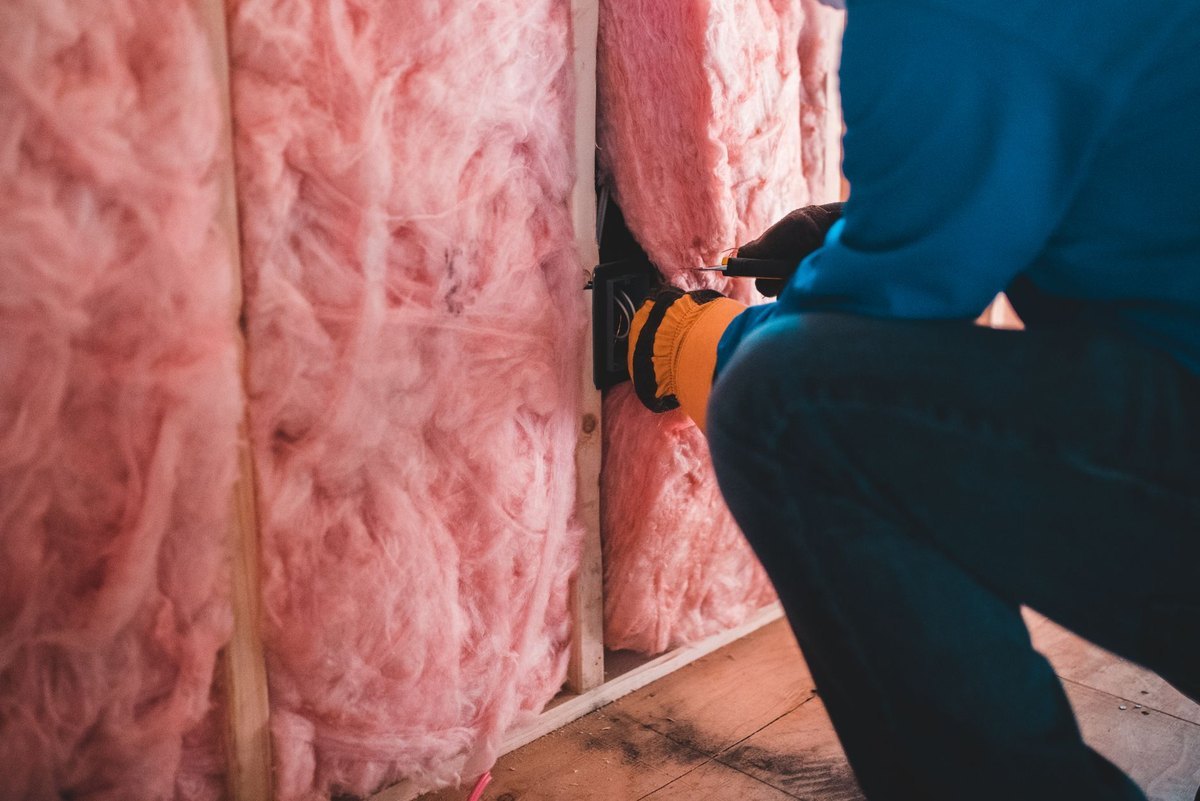
Wall insulation in Matchams
There is no identical house next door out here, so every elevation gets drilled, scoped and read before anybody names a system.
The site visit is free and so is the written itemised quote. Thomas Hannen prices every job himself.
Houses out on the heath were never built in estates, so no neighbour's wall tells you a single useful thing about yours. Each property has to be read on its own terms. That is why the drilled check and the meter readings happen before anyone puts a name to a system or a figure to a job.
Calls come from a room on the exposed side that will not hold heat, a wall that has begun staining inside after a run of south westerlies, and owners quoted for a fill by somebody who worked the whole thing out from the pavement.
We do it the other way round. One small hole in a mortar joint with a borescope through it, moisture readings on the inside face, a look at ground levels and air bricks, and a walk round every elevation on the building. The free written itemised quote that follows keeps the survey, the system, the junctions and the making good apart on the page.
The work
Reading one building at a time
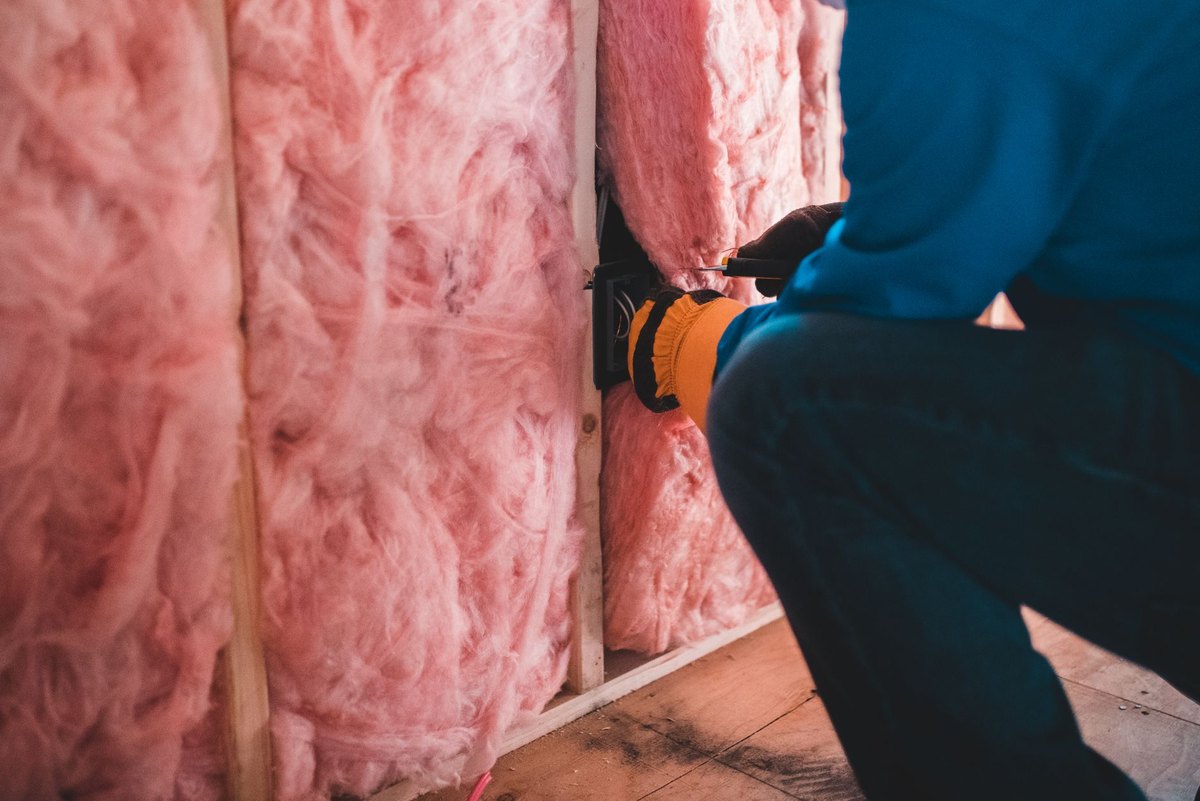
Solid, or is there a cavity in there? Rendered, a nine inch solid wall and an early brick and block cavity are indistinguishable, and on a property built or extended in stages both can turn up on the same house. So the scope answers it rather than the eye: gap or no gap, what width, clean or fouled, dry or wet, empty or already filled.
Does the answer change round the corner? Frequently, yes. An extension put on twenty or thirty years after the original is often a different construction altogether, so the scope goes in more than once and the elevations get compared against each other before anything is written down.
Is the gap worth filling? If it is clear, dry and wide enough, then yes, and it is filled from outside through drilled holes made good in matching mortar. Bead is the choice on anything exposed, because bonded polystyrene finds the corners and will not slump back out of them. Wool, blown in, is the older material and still correct behind shelter. Most properties are a day, and a low building sits within reach of a tower.
When is the answer no? Under fifty millimetres of gap. Mortar droppings bridging the ties. A cracked or open jointed outer leaf. Damp already crossing. Any of those and filling makes the house worse rather than better. On the most exposed wall of an isolated building we would sooner repoint and repair the outer leaf, then line that room internally, than blow material into a wall still taking water.
What goes on if we are lining? Internal wall insulation covers a solid wall and covers every cavity ruled out above. Insulated plasterboard bonded on, or batten and stud packed with mineral wool or PIR, then boarded and skimmed. Per millimetre Celotex and Kingspan do more, and aerogel board is for a room with no depth to surrender. Reveals, threshold, floor junction and joist ends get wrapped, since that is where the heat loss in a lined room concentrates.
Is the outside face an option here? Often it is the strongest one. External wall insulation puts board on the outer face with a render carrier and a thin coat over it, so on an exposed building it insulates and weatherproofs in a single operation and lifts the thermal bridge off corners and eaves. It also thickens every reveal and moves sills, vents and rainwater goods outwards, which makes it a bigger undertaking than a fill and one that wants planning settled on paper before materials are ordered.
And what happens to the air? Fill that has slumped shows as a cold band at the head of the wall, while a wet cavity brings penetrating damp inside and black mould with it. Both read off the borescope, and extraction comes before anything is put back. Ventilation follows: trickle vents, an extract fan that shifts air, air bricks kept clear. Insulating moves the dew point and strips out the draughts, so a taped vapour control layer and breathable materials keep interstitial condensation out of the build up.
How it runs
From your call to a written price
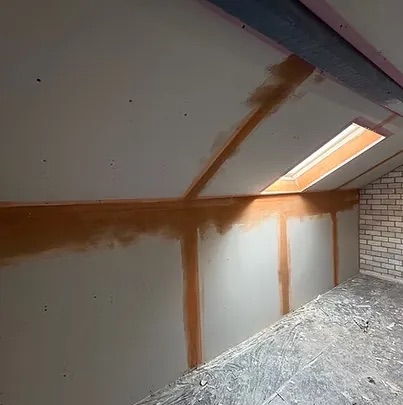
Same team from first visit to last, one person to ring, and no sub-contracting your work out to somebody you have never met. The quote is itemised, not a figure on the back of a card: the survey and any borescope check, the system and its thickness, making good around windows and doors, ventilation works, and disposal on separate lines, so you can compare it properly against anyone else's.
Nothing is left open or unusable overnight. The site is swept at the end of each day rather than the end of the job, and what comes out leaves with us. If something turns up once we start that nobody could have seen, you get a photograph and a price before we carry on.
Lining the inside of a wall is not development and needs no application, which Planning Portal guidance on insulation confirms, and Planning Portal guidance on external walls covers the outside face. There is no conservation area over this stretch of heath and nothing on the statutory list, so the outside is largely a technical decision, though Dorset Council's listed building pages is worth checking for any address near the older properties. It is notifiable work either way: regulation 23 means a renovated thermal element has to reach the Part L standard in Approved Document L, and building control take the U value and the ventilation together.
Cost
What decides the price of a wall insulation job
No rate per square metre, because the wall area is the easy part; what happens at every window, door and floor junction is not.
Getting to it. A house set well back off the road, a converted outbuilding and a low building with a long elevation are three different jobs before a hole is drilled. Cavity fill is drilled from outside and a bungalow comes off a tower where a three storey gable wants a scaffold. Internal lining is worked room by room from inside, so it is your rooms rather than a platform that gets disrupted. The work at height rules still set the platform.
Which wall you actually have. A cavity that is clear and dry can be filled in a day. A solid wall cannot be filled at all, and has to be lined inside or insulated outside, which is a different job at a different price. A borescope through one drilled hole settles it, and no honest quote is written before that.
The junctions, not the field of the wall. Reveals at windows and doors, the floor junction, the eaves and any party wall are where heat escapes and where condensation shows up if the detailing is wrong. That work is slow, it is most of the labour, and it is the first thing a cheap quote leaves out.
Comparing quotes? Ask whether the wall has actually been checked with a borescope or just assumed, what system and what thickness is specified, how the reveals and floor junction are being detailed, whether ventilation is being addressed, and who makes good the plaster and decoration afterwards. Two quotes for the same job are usually two different jobs.
If damp has appeared
Damp or mould after a wall was insulated
Ring rather than use the form. Damp patches or black mould appearing on an outside wall after cavity fill or internal lining usually means water is tracking across the cavity, or warm air is reaching a cold surface at a junction. We look before we take anything out, because the fix depends on which of those it is. It is under seven miles from us, so a BH24 address out here is usually seen within a day or two. The phone is answered 24 hours for emergencies; scheduled work runs Monday to Friday, 8am to 6pm.
Worth knowing
There is no house next door to compare yours with
On a housing estate you learn a great deal for nothing. The houses went up together, they were built the same way, and if a neighbour has had the cavity scoped or filled then the odds are yours is much the same. Out here that shortcut simply does not exist. Properties were put up one at a time and altered one at a time, and it is entirely ordinary for one wall of a building to be a different construction from the wall round the corner, because an extension arrived twenty or thirty years after the rest of it.
Which is why the survey on this side of the parish takes longer, and why we charge nothing for it. More than one wall gets scoped. Moisture is read inside on whichever elevations take the weather. Where the building sits gets looked at too, because a house standing on open ground with nothing to windward is in a different weather class from one tucked in behind trees. What comes back is a quote written for your building rather than for its postcode, and where the honest answer is that one wall should be filled and another lined inside, that is exactly what it will say.
Who you are dealing with
A local firm you can check
We cover Matchams, the Hurn Road side, Avon and the BH24 addresses along the heath, with Dorset Council for planning and building control. You are dealing with Bournemouth Roofing & Building, the trading name of Bournemouth Roofing & Building Ltd, registered in England and Wales, company number 15471719, which you can look up in a minute. Thomas Hannen's business, and he is the one who comes out to price the job, not a salesman. A verified customer's 10 out of 10 on Checkatrade. The visit and the written quote are both free.
Questions
Matchams questions we get asked
Why do you scope more than one wall on my house?
They are not always the same. An extension built decades later can be a completely different construction from the original, so one answer covering the whole building would only be a guess.
Can a quote be given without drilling anything?
Not an honest one. Cavity width, whether it is clear and whether it is dry are the three facts a price rests on, and none of them can be read from outside the building.
Is an exposed house on open ground harder to insulate?
Not harder, but the choices narrow. Bead rather than wool in the cavity, closer attention to the outer leaf, and on the worst elevation a lining inside instead of a fill.
What if one wall should be filled and another lined?
Then the quote says so, with the two priced apart. No rule says a house has to be treated the same way the whole way round.
How long does the survey take out here?
Longer than in town, usually an hour or more, because there are more walls to read and more variation to turn up. Still free, and still nothing to sign at the end of it.
Nearby, and next door
Wall insulation near Matchams
Wall insulation nearby
Our other trades in Matchams
Everything we do in West Moors Wall insulation, all areas Every area we cover
Free quote
Have every wall read before anything is quoted
Thomas comes out, scopes the walls that matter, reads the moisture and prices the work in writing. The visit and the quote are free.