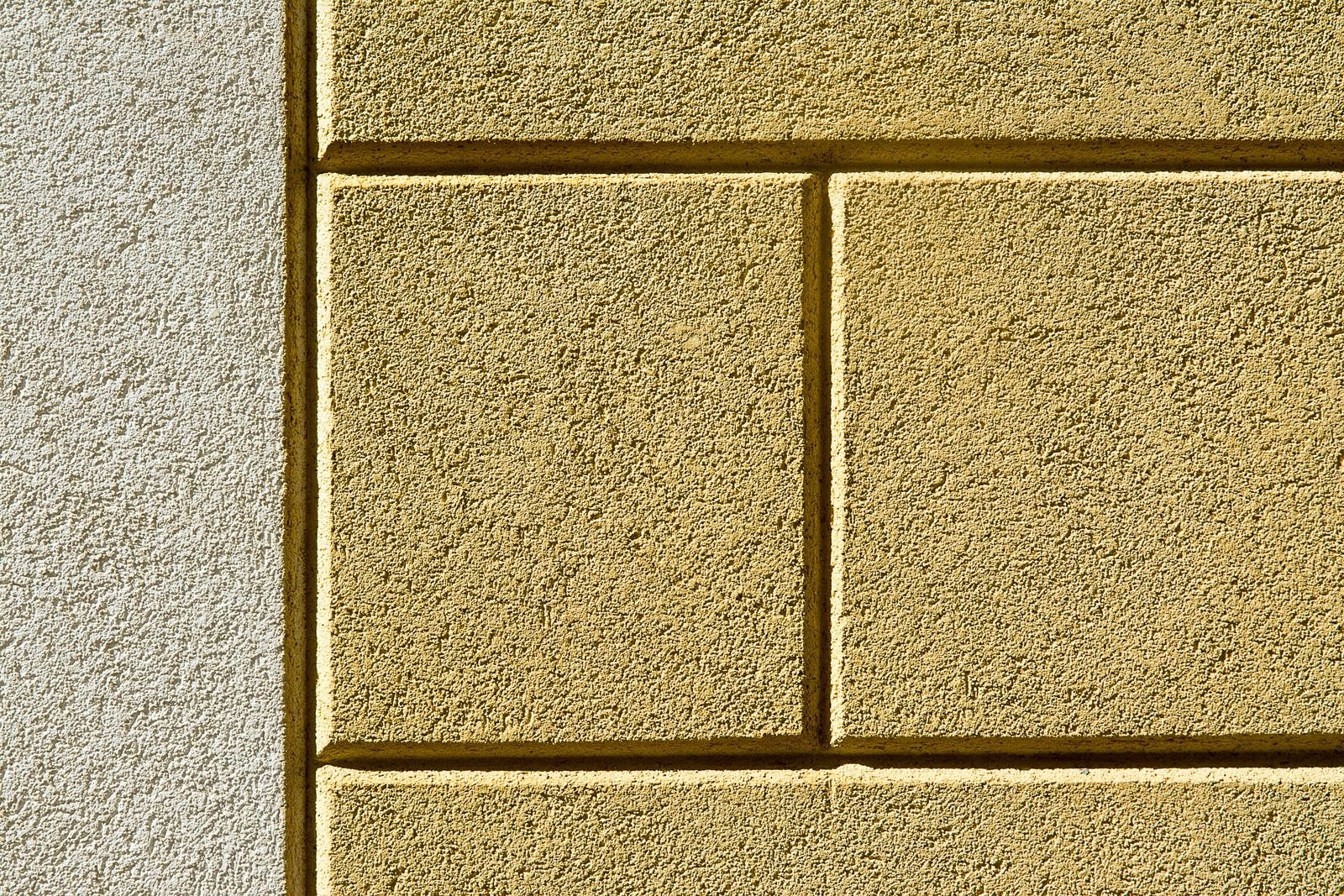
Rendering in Sixpenny Handley
High open downland where frost, wind and driving rain decide when a fresh coat can safely go on a wall.
The site visit is free and so is the written itemised quote. Thomas Hannen prices every job himself.
Render is a wet trade carried out in the open, and up on the Chase the working season is shorter than it is down on the coast. Frost during curing, driving rain on a green coat and hot sun on a south wall all wreck a job that would have been fine three weeks either side.
The problems people ring about are the usual ones. A hollow patch found by knocking. A crack running out of the corner of a window. Dash flaking away where the wind and rain hit hardest. Or a wall that has gone streaky and green on the shaded side and does not stay clean.
We come out and tap the whole elevation, not the piece you noticed, then say plainly what wants doing and when it is sensible to do it. Sometimes the honest answer is to make it safe now and render it in March. It all goes in writing, line by line. The site visit and the written itemised quote are both free.
The work
The render jobs we take on around the village
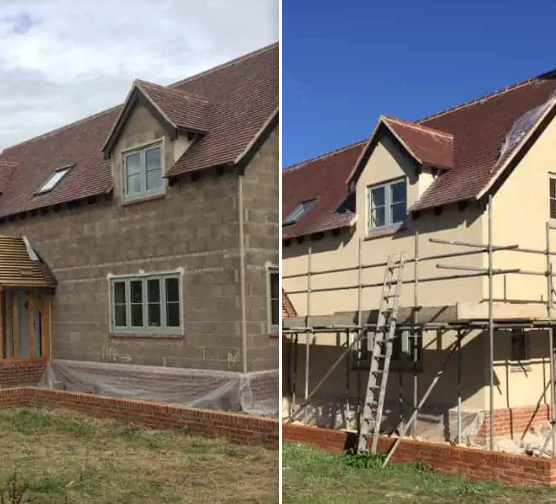
Silicone thin coat. Primer, a polymer basecoat with glass fibre mesh bedded into it, then a through-coloured silicone topcoat scraped to an even texture. It moves slightly with the background, sheds driven rain and keeps its colour, which is what an exposed elevation wants. Beads and stop ends at every opening and a bellcast at the base so water leaves the wall.
Monocouche. A single through-coloured coat laid on thick and scraped back the next day. It is quick and hard wearing, and it is the fussiest system about weather. Frost inside the first few days ruins it, so we will not start one in a cold week however keen anybody is.
Sand and cement, pebbledash and Tyrolean. Scratch coat, float coat, then a smooth finish, a dry dash thrown on while the coat is green, or a Tyrolean flicked on. Matching an existing dash is a matter of aggregate size and colour, so we mix and hang a sample panel before the main wall.
Lime render. The older solid walls here have no cavity and get rid of rain by drying back out through their own face, so they want lime in two or three coats, hair gauged in the base. Lime is also the slowest to cure and the least tolerant of frost, which puts it firmly in the warmer half of the year.
Tapping and hacking off. Blown render has parted from its background. We tap the elevation and mark every hollow area, because how far they run decides between cutting out panels and taking the wall back to the background and starting again.
Cracks, delamination, algae and staining. Fine crazing is shrinkage and cosmetic. An open crack is movement or a failed bead and needs cutting out and reinforcing. Green and black staining on a shaded wall is organic growth and comes off with a soft wash rather than a pressure lance.
Render over external wall insulation. Insulation board fixed to the wall as a render carrier, then mesh, basecoat and topcoat over it. Approved Document L sets what a renovated wall is expected to reach, and on an exposed house up here the difference in a cold snap is worth having. Every reveal gets deeper, so cills and pipework are planned rather than found.
How it runs
From your call to a written price
Same team from first visit to last, one person to ring, and no sub-contracting your work out to somebody you have never met. The quote is itemised, not a figure on the back of a card: access and scaffold, protection, preparation of the existing wall, the system and number of coats, beads and stop ends, and making good on separate lines, so you can compare it properly against anyone else's.
Nothing is left open or unusable overnight. The site is swept at the end of each day rather than the end of the job, and what comes out leaves with us. If something turns up once we start that nobody could have seen, you get a photograph and a price before we carry on.
Renewing an existing render like for like is maintenance and needs no application. Rendering a wall that has never been rendered is a change of appearance, and the Planning Portal sets out when external wall work needs permission. The village sits within the Cranborne Chase National Landscape, where what a building looks like from the open downland carries weight, and the listed entries need listed building consent. Dorset Council is the authority.
Cost
What decides the price of a rendering job
No rate per square metre, because the square metres are the easy part; what is already on the wall decides the price.
Getting to it. A farmhouse with a yard to stand a tower in, a semi on the village street and an exposed gable end on the edge of the fields are three different platforms before any material is ordered. A bungalow gable comes off a tower, a three storey elevation wants a scaffold, and the platform has to stand for the whole system rather than a day. The work at height rules are why it is a priced line rather than something folded into a rate.
What is already on the wall. Rendering over sound brick is one job. Hacking off blown sand and cement, or a pebbledash that has parted from the background, is another, and it is the part nobody can see from the road. We tap the whole elevation before quoting, because the hollow areas set the hours.
The system, and what the wall behind it needs. Silicone thin coat over insulation, monocouche through-coloured, or traditional sand and cement all price differently and behave differently. On a solid wall that has to breathe, a plastic-rich modern system traps moisture and moves the problem inside, so the right system is a wall decision rather than a colour decision.
Comparing quotes? Ask which system is being quoted and how many coats, whether the old render is being hacked off or overlaid, whether beads, bellcast and stop ends are included, whether the scaffold is in the price, and what happens to the existing sills and pipework. Two quotes for the same job are usually two different jobs.
If it has started to come away
Render that has blown or cracked open
Ring rather than use the form. A section that sounds hollow when you tap it, or a crack you can get a coin into, is letting water behind the render and the frost does the rest. We make the loose area safe, sheet it if the weather is against us, and price the elevation once we can see how far the blown area actually goes. In winter that often means making safe and sheeting now and rendering properly in the spring, which is a better outcome than a coat put on in the wrong week. The phone is answered 24 hours for emergencies; scheduled work runs Monday to Friday, 8am to 6pm.
Worth knowing
The render season is shorter up here than on the coast
Everything about render depends on it curing rather than drying. The chemistry needs time and moisture, and it is unforgiving at both ends of the thermometer. Frost inside the first days of a fresh coat expands the water in it and destroys the bond, and the damage does not show until spring. Strong sun on a south wall does the opposite, pulling the moisture out too fast so the coat crazes and never reaches its strength. Driving rain on a green surface washes the face off it. On high open ground the cold arrives earlier, the frosts run later into spring and the wind is on the wall more days of the year, so the reliable window is genuinely narrower here than it is fifteen miles south.
That does not mean nothing happens in winter, and it does not mean paying for a delay. Preparation, hacking off, scaffold and repairs to beads and cracks all carry on in the cold. What we will not do is put a topcoat on in a week with frost forecast, or start a monocouche when the nights are near freezing, because the wall would be back on our list in two years. When we quote in the autumn we will tell you which parts we can do now and which are better held to March, and we would rather lose the booking than take it and hope.
Who you are dealing with
A local firm you can check
We cover Sixpenny Handley, Pentridge, Woodyates, Cranborne and the villages along the Chase, broadly SP5, with Dorset Council for planning and building control. You are dealing with Bournemouth Roofing & Building, the trading name of Bournemouth Roofing & Building Ltd, registered in England and Wales, company number 15471719, which you can look up in a minute. Thomas Hannen's business, and he is the one who comes out to price the job, not a salesman. A verified customer's 10 out of 10 on Checkatrade. The visit and the written quote are both free.
Questions
Sixpenny Handley questions we get asked
Is any of this work possible in the cold months?
Parts of it can. Scaffold, preparation, hacking off blown areas, bead repairs and making safe all happen in the cold. What should not happen is a fresh coat going on with frost forecast in the following few nights, because the bond is destroyed while it is still curing and nothing shows until the following year.
When should we get into the diary for the coats?
Spring through to early autumn for the coating work, with the survey and the quote done whenever you like. Booking early in the year usually gets you a better slot than ringing in August, and it means the preparation can be done ahead so the good weather is spent on the coats rather than on the hacking off.
What do you do if the forecast changes mid job?
We sheet the scaffold and stop. A monocouche or a topcoat part done and rained on is worse than one not started, so the elevation gets protected and we come back. That is why we plan a wall as one operation rather than splitting it across weeks, and why the sequence is written into the quote.
Does a National Landscape stop us rendering?
No. It means how the building reads from open country is taken into account where something needs permission. Renewing an existing finish is maintenance either way. Putting render on a wall that has never had it, or choosing a colour that stands out across the fields, is the sort of thing worth checking before you order it.
Nearby, and next door
Rendering near Sixpenny Handley
Rendering nearby
Our other trades in Sixpenny Handley
Everything we do in Verwood Rendering, all areas Every area we cover
Free quote
Get the wall surveyed now, coated at the right time
Thomas taps the elevation, prices the preparation and the coats separately and says plainly when each should happen. The visit and the quote are free.