
Driveways and patios in Sixpenny Handley
Gravel, resin and block paving from the village out to the farms and lanes around it. We dig a trial hole and take levels before anyone talks about a price.
The site visit is free and so is the written itemised quote. Thomas Hannen prices every job himself.
On a village drive up at Sixpenny Handley it is nearly always the first few metres that have failed rather than the whole surface. Rebuilding the entrance, the edge and the fall costs a fraction of relaying everything behind it, and it is the part that actually stops the stone escaping.
Three things bring people to ring us in Sixpenny Handley. Gravel keeps washing out of an entrance and ending up on the lane, so it needs sweeping back every few weeks and the drive thins where you turn. A long entrance has been rutted and potholed by an oil tanker, a horsebox or a delivery lorry, and the puddles have started to hold.
Or a front garden needs turning into somewhere a car can stand and turn, so nobody has to reverse out blind onto a road that traffic comes round quickly. We come out, walk the whole length of it, dig a trial hole where the wheels actually sit and take levels off the doorstep and the road. Then you get an itemised written quote with the excavation, the sub-base, the edgings, the drainage and the surface on separate lines.
The work
Long entrances, loose stone and the lane at the end of it
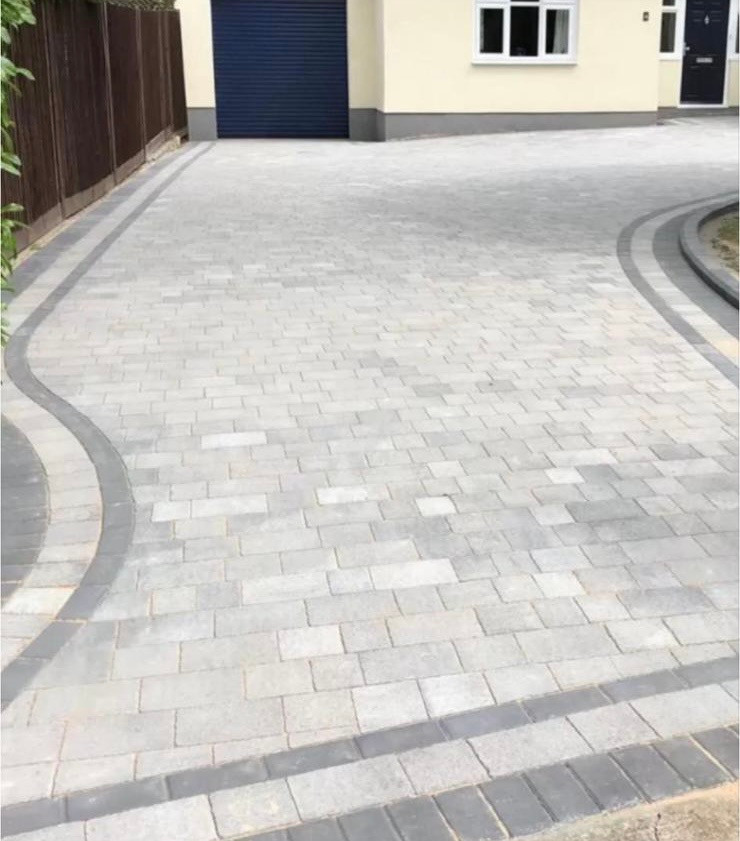
Entrances that lose their stone onto the road. Most drives here run straight off a lane with no kerb and no footway, and the first three or four metres do all the suffering. Every car pulling out carries gravel with it, and what leaves your drive ends up in the verge or the ditch. The repair is an edge restraint haunched in concrete rather than pushed into soft ground, a bound margin of tarmac or resin across the stretch nearest the road so nothing can travel, a crossfall that sends water into a border instead of out of the gate, and a channel drain at the entrance where the ground runs the wrong way, with a soakaway or an outfall to take what it collects.
Ruts and potholes on a drive that takes real weight. A heating oil tanker or a feed lorry is a different load from a car, and rutting is almost never a surface problem. We excavate to a firm formation, lay a geotextile membrane where the ground is soft, then build a compacted sub-base in layers at a depth set by what is actually carrying the weight. A thin one is potholes again by the second winter, whatever went on top of it.
A good many frontages here are walled in brick and flint and the wall is worth keeping, so where a front garden becomes parking we form the opening, rebuild the returns properly rather than leaving a raw end, and set the levels so surface water stays on your side.
Patios go on a full mortar bed rather than five dabs, with the finished level clear of the damp proof course and a gravel margin along the wall. The jointing is pointed rather than filled with a kiln dried sand that washes out, opens the joint and lets weed in. There is no street lighting down most of these lanes, so even risers and a surface with grip on it in the wet matter more than they would in town, and under trees a textured stone earns its money where a smooth flag stays damp.
How it runs
From your call to a written price
One person to ring, and the quote itemised: excavation, muck away, sub base, edgings, surface and drainage on separate lines. Relaying what is already there is maintenance. More than five square metres of new hard surfacing at the front is only permitted development if it is permeable or drains to your own ground rather than the lane, and Planning Portal sets out that test. A new opening onto the lane needs dropped kerb consent from the highway authority, a separate application from anything to do with planning. Dorset Council is the planning authority, and where a wall or step is attached to one of the seven listed entries you need listed building consent first.
Cost
What decides the price of a driveway
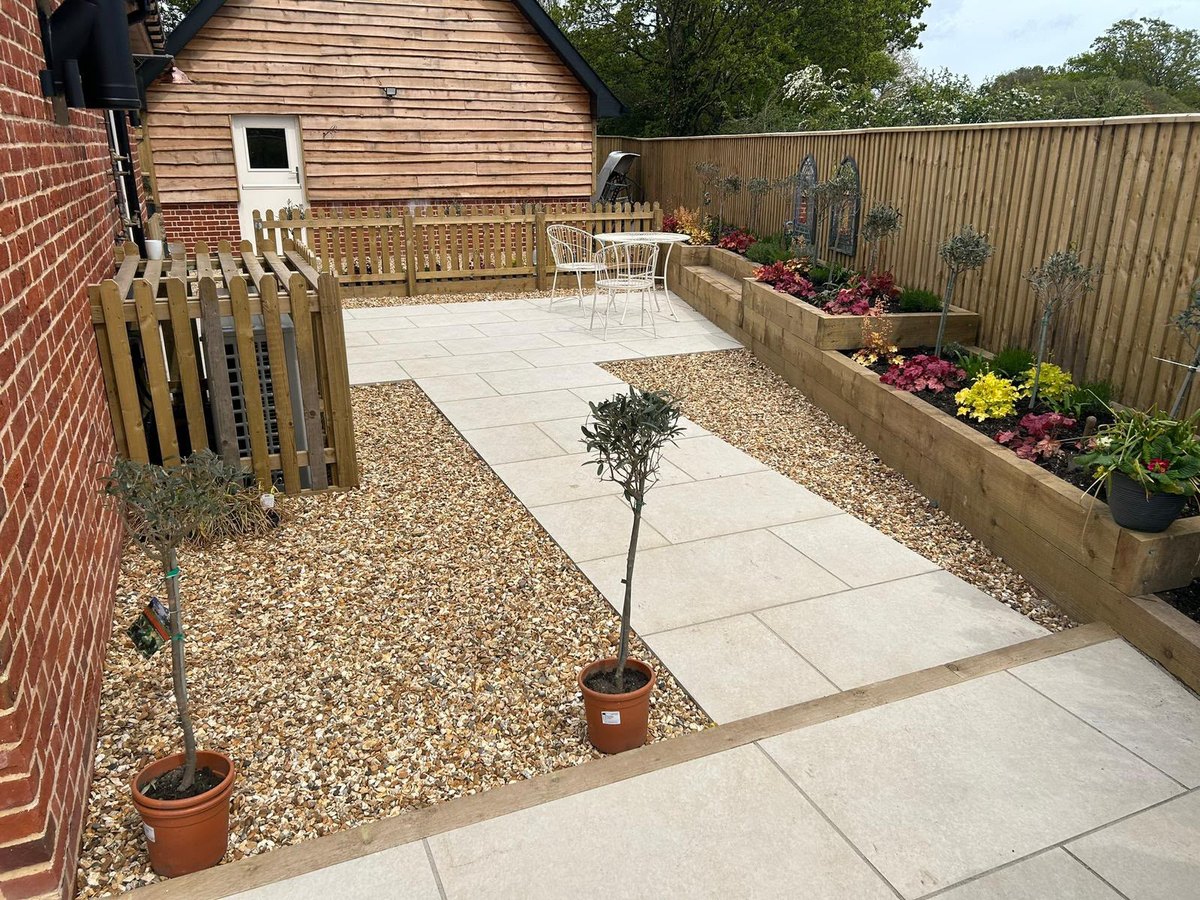
No rate per square metre, because what is under it decides more than what goes on top. A cottage on the village street with its wall hard on the road, a bungalow with a wide gravel sweep and a house at the far end of a shared track are three different jobs before a single slab moves. Ground conditions, the depth of the dig and how much muck goes away are the real variables, all of it settled at the survey rather than on the morning, with a grab lorry for the disposal. Surface water has to be dealt with on the property rather than run into the lane. Ask the depth of dig, the sub base, the drainage and who takes the spoil away.
If it is urgent
A trip hazard, or a drive that floods
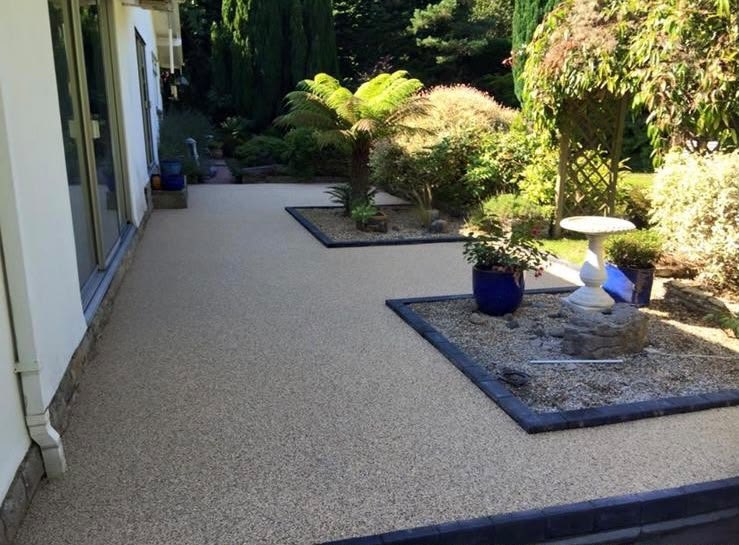
Ring rather than use the form. A lifted slab, a sunken bay that ponds by a doorway or a gully that has stopped taking water will not wait, because somebody falls or water ends up against the house. Around here it is usually gravel washing out of an entrance onto a lane cars come round fast. The phone is answered 24 hours for emergencies; scheduled work runs Monday to Friday, 8am to 6pm.
Worth knowing
You are inside a National Landscape, and that reaches the frontage
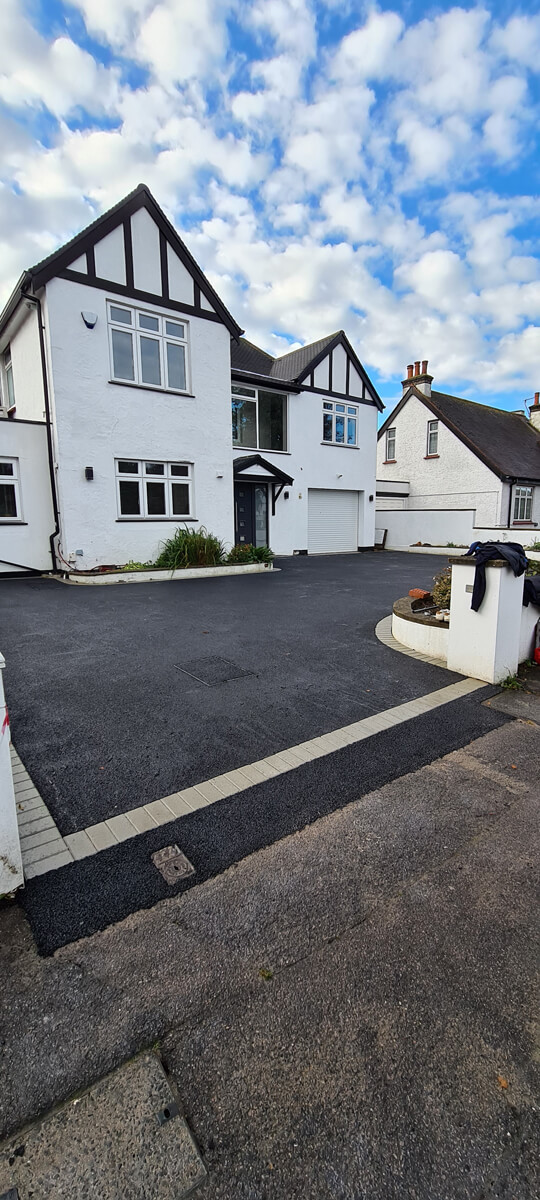
Sixpenny Handley sits inside the Cranborne Chase National Landscape, and the practical effect is narrower than people fear. It does not tell you what to lay on a back garden patio and it does not stop you building a drive.
What it does mean is that anything visible from the road gets looked at more carefully than it would elsewhere: the width of a new opening, the height and material of a boundary wall, whether a hedge or a bank comes out, and how much of a frontage ends up as hard surface. There are only seven listed entries in the parish, so for most addresses this is the constraint that actually applies rather than listing.
The useful move is to settle the entrance before anyone prices a surface, because it can change the whole design. Keeping the existing gateway and turning behind it is usually cheaper and easier to get agreed than widening onto the lane.
A gravel or a muted block reads better against flint and brick than something bright, and a permeable build-up keeps the job inside permitted development while dealing with the water at the same time. Where a boundary wall has to be opened, we rebuild the returns in the material that came out of it rather than whatever the merchant has in stock, and we price that part separately so you can see what it is costing.
Who you are dealing with
A local firm you can check
We cover Sixpenny Handley and SP5, out through Woodcutts, Pentridge, Cranborne and the lanes towards Tollard Royal. Bournemouth Roofing & Building Ltd, registered in England and Wales, company number 15471719, which you can look up in a minute. Thomas Hannen's business, and he is the one who comes out to price the job, not a salesman. A verified customer's 10 out of 10 on Checkatrade. The visit and the written quote are both free.
Questions
Sixpenny Handley questions we get asked
Does the landscape designation change what a drive can look like?
It affects appearance rather than principle. Sixpenny Handley sits within the Cranborne Chase and West Wiltshire Downs landscape, so anything visible from the lane gets closer design scrutiny than the same job would get in a town. In practice that pushes people towards gravel, hoggin or a muted block instead of a wide black apron. Dorset will tell you what they expect before an application goes in, and it is a short conversation.
The track in is single width. How is material delivered?
In smaller loads, on days we tell you about first. An articulated lorry will not turn on the lanes into Sixpenny Handley, so stone arrives on a six wheeler or a grab and gets tipped in one agreed spot rather than beside the work. From there it is moved by dumper. That means more deliveries and more machine time, so the passing places stay clear and the drop point is fixed before anyone books a load.
Our cottage is listed. Does a new path need consent?
Quite possibly, because listed building consent follows the building and its curtilage rather than stopping at the walls. There are seven listed entries in the parish, and where steps, gate piers or an original path form part of the listed structure, lifting them is consented work. If your own place is not listed but stands opposite one, the paving is unaffected. Dorset can tell you which of those two situations you are in.
It is a long way out. Will you still come and look?
Yes. Sixpenny Handley is roughly seventeen miles from the yard and we cover it, although the visit tends to be grouped with anything else out that way rather than made on its own the same afternoon. Thomas comes himself, measures, and looks at how water leaves the plot now. The visit and the written quote cost nothing, and the quote is itemised so the effect of the access is visible.
Why do the ruts come back in the same places?
Because a rut is a sub-base problem showing through the surface. Wheels load the same two lines every day, and if the stone underneath is too shallow or was never compacted in layers it keeps consolidating. Topping up loose stone fills the dip for a season and then it returns. On the entrances around Sixpenny Handley we dig the wheel tracks right out, lay a geotextile over soft ground and build the depth back in layers.
Nearby, and next door
Driveways and patios near Sixpenny Handley
Driveways and patios nearby
Our other trades in Sixpenny Handley
Everything we do in Verwood Driveways and patios, all areas Every area we cover
Free quote
Get a price for a drive or patio in Sixpenny Handley
Tell us the address and what the drive or the paving is doing now. We will come and look, then put an itemised price in writing. Both cost nothing.