
Driveways in Cranborne
Gravel and grid parking, brick paths, stone terraces and drives across Cranborne and the Chase villages. Built properly underneath, and chosen to suit the house.
The site visit is free and so is the written itemised quote. Thomas Hannen prices every job himself.
Last updated
In a village like Cranborne the surface you choose matters as much as the way it is built, and the two are decided together. We will price a drive that suits the house and the lane it sits on, and tell you honestly what it will look like in five winters rather than on the day we leave.
Property like this tends to need its parking, its old paths and its patios put right. Parking areas that have gone to mud and rutting because cars are standing on grass with nothing underneath them. Brick and stone paths and yards that have sunk, lifted and lost their pointing.
And patios that are too small, in the wrong place, or sitting so high against an old wall that the water has nowhere to go but back into the brickwork. We come out, take levels, look at what the existing surfaces are telling us, and put an itemised written quote in front of you with the excavation, the base, the drainage and the surface all costed separately.
The work
Brick, gravel and grass: what gets laid around Cranborne
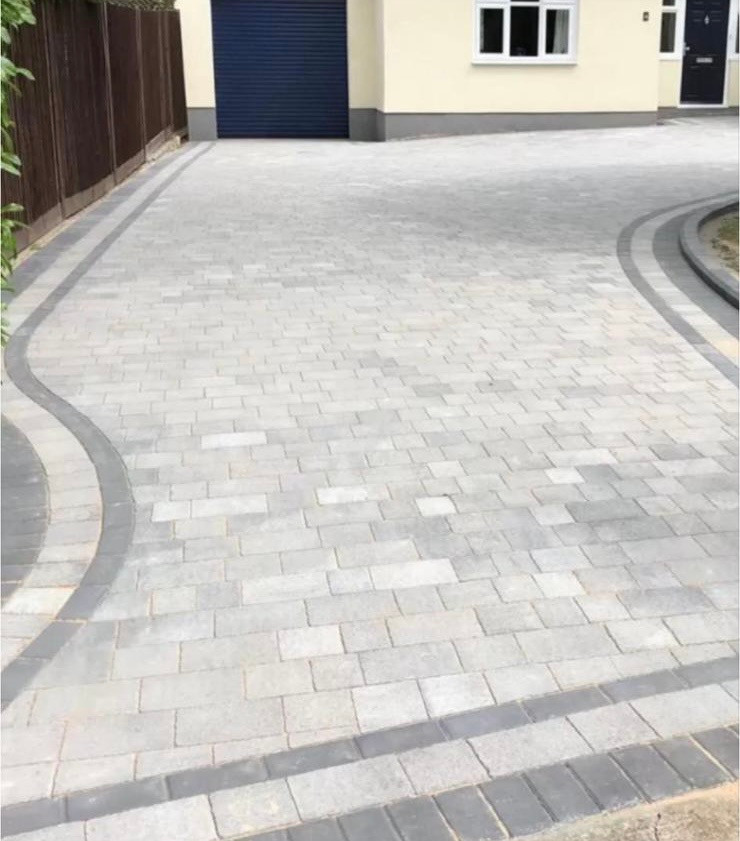
Parking on ground that was never built for it. A great many properties in Cranborne park on grass or on a thin skim of shingle over soil, which works until a wet fortnight turns it into ruts.
A cellular grid over a compacted sub-base and a geotextile membrane fixes that without turning the front of a village house into a car park: it stays green, it is permeable, and it carries a vehicle in February. Where a firmer surface is wanted, self-binding gravel over the same base gives a bound, mellow finish that suits a lane better than anything glossy.
Brick paths, yards and thresholds. Old brick paving is worth saving. We lift it, clean it, put a proper base and a full mortar bed under it and relay it on edge or flat as it was, then point it with a mix that suits the wall it runs up to rather than a hard modern one. Reclaimed brick is matched in for the missing pieces, and the result is a path that looks like it has always been there, which is the whole point in a village of this age.
Stone terraces go on a full bed with a fall away from the house, the level kept clear of the damp proof course where the building has one and kept deliberately low where it does not; for that work, see patios in Cranborne. Long approaches and farm accesses rut where the cross-fall has flattened and the water runs down the wheel tracks instead of off the side; regrading, a fresh compacted sub-base and a gully at the low point normally sorts it. Broken concrete, tired tarmac and spoil leave with us, by grab lorry where one can turn and by skip and barrow where it cannot, and disposal is its own line, because on a rural job with poor access it is a real part of the price.
How it runs
Digging out and laying a drive behind a village gateway
Thomas measures up and digs a small test hole to see what is under your drive, then writes the price himself. You deal with one company from the dig to the laying.
You get it itemised: excavation, muck away, sub base, edgings, the surface you choose, and drainage.
Access shapes a Cranborne drive. Many properties sit behind a flint wall or a narrow gateway, some front straight onto the lane, and some are at the end of a long track. We measure the gateway before booking any digger or grab lorry, and where nothing big fits, spoil goes out by dumper and the quote says so. The lane is kept clear and swept each evening, and you always have a way to your door. An old soakaway or a soft patch found in the dig is photographed and priced before we carry on.
Paving a front garden is normally permitted development when the surface is permeable or runs water to a lawn or bed. Over five square metres of solid surface draining to the road needs planning permission, and a dropped kerb is a separate application to Dorset Council. Cranborne is in the Cranborne Conservation Area, which Dorset Council can advise on. At a listed house, check whether the boundary walls and gate piers are listed as well, since altering them can need listed building consent.
Cost
The dig, the base and the drainage come before the surface
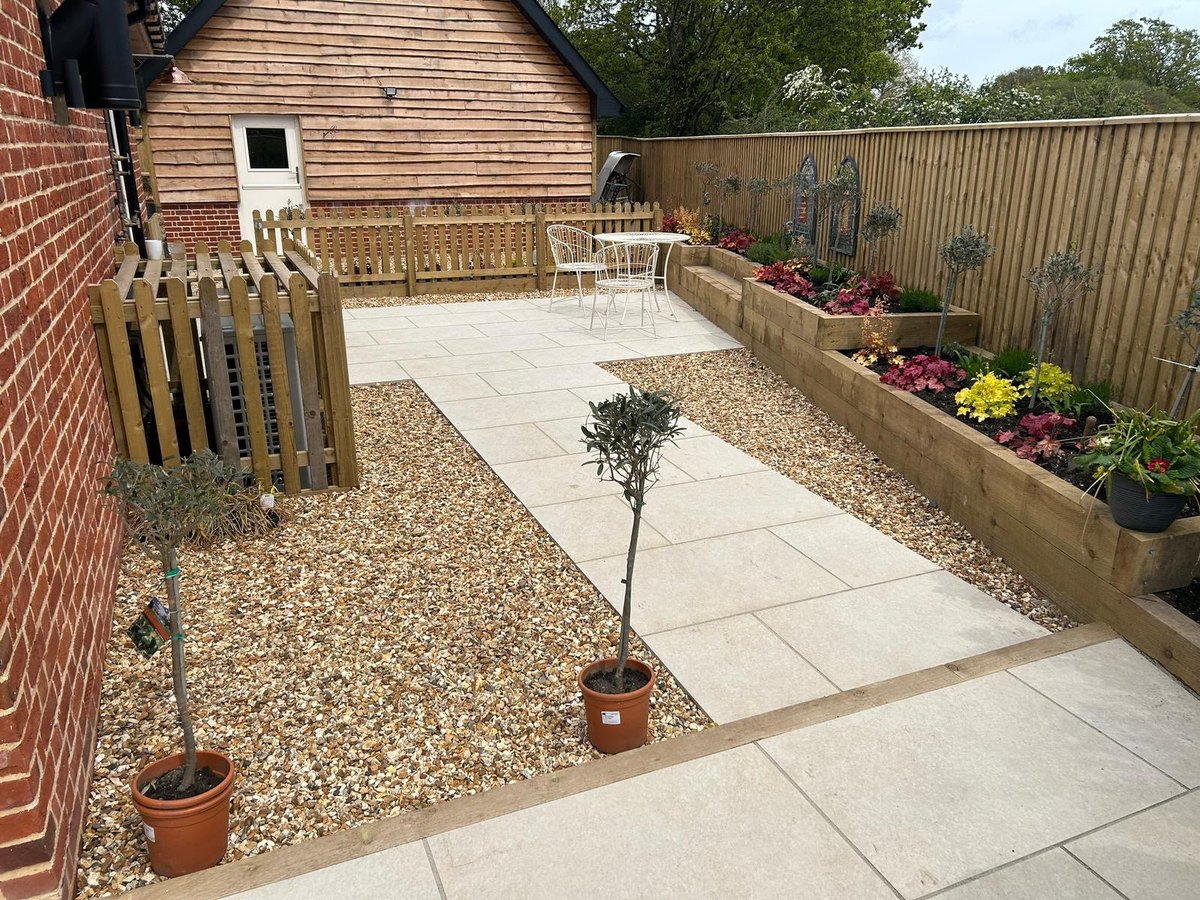
What sits under a drive decides more of its cost than what you walk on, so the square metres only start the conversation.
Getting machines in. A house straight onto the street, a cottage behind a narrow gateway in a flint wall, and a property at the end of a long track are very different before any paving is chosen. A small digger makes short work of a dig. Where it cannot fit, a mini digger and dumper, or shovels, take longer.
What comes out. Old concrete, a gravel drive over clay, or roots from a hedge all add loads to the muck away. How deep we go depends on what the ground is like once the top is off.
The base and edgings. A drive that takes a car needs enough compacted sub base, and edgings haunched in concrete so nothing creeps. Skimp on either and the edges sink.
Water. Rain has to stay on your land, not run out into the lane. That means a permeable finish, a channel at the gate, or a soakaway, depending on the ground.
The surface. Bound gravel, block and resin price differently, and on an older house the look counts.
Ask a rival firm to set out the sub base depth and type, whether edgings are haunched, and who removes the spoil.
If it is urgent
A lifted slab or water standing at the door
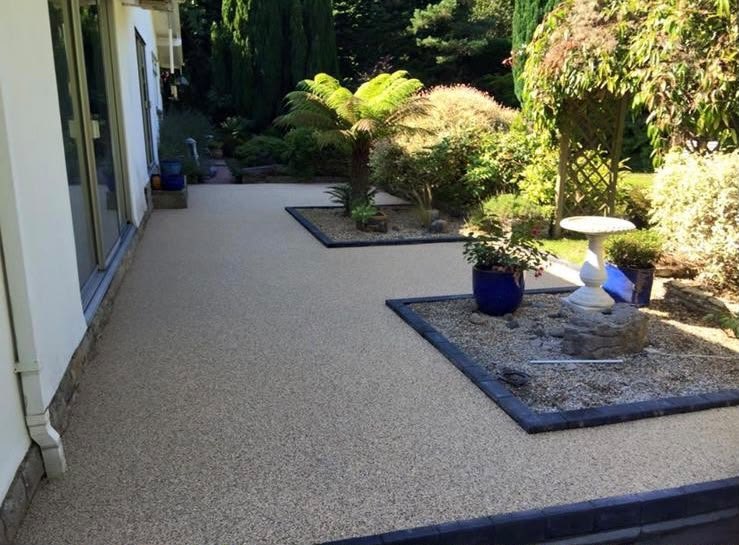
A drive rarely counts as an emergency, but some problems get worse quickly. A slab that has lifted at an edge is a trip, and a gully that has stopped taking water can send run off towards a doorway or into a garage or outbuilding.
Put something visible over a trip hazard and, if water is heading for a door, clear the gully grate of leaves. On the first visit we make it safe, relaying the worst of it or opening the blocked drain, and we look at why it happened before quoting a proper repair. Our working hours are Monday to Friday, 8am to 6pm. If it cannot wait, a phone call beats the form, and if you cannot get through, we will ring you back as soon as possible.
The one local thing
A conservation area, and 25 listed entries in the parish
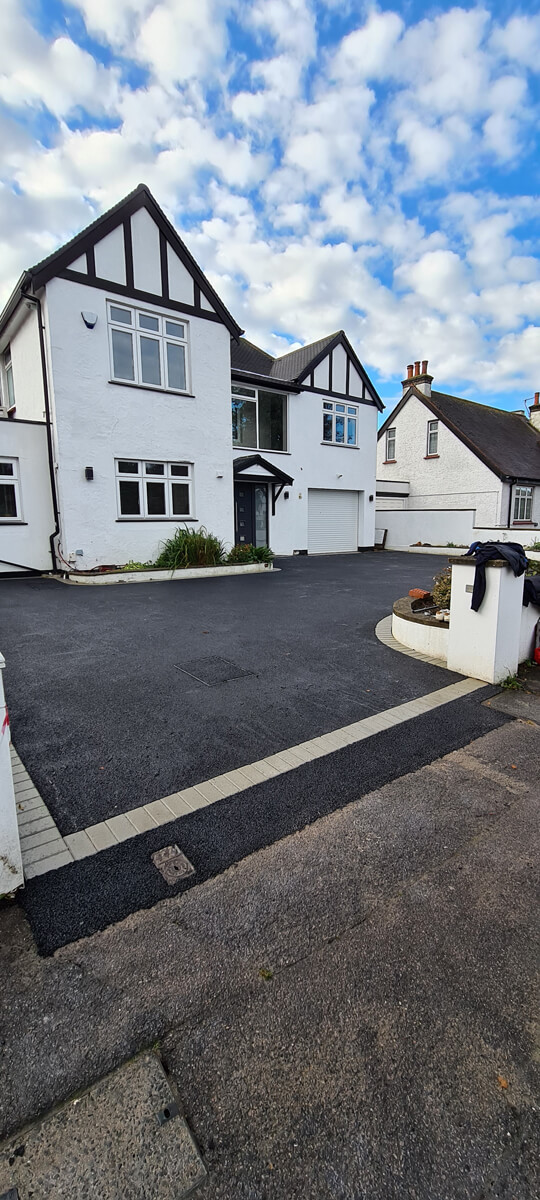
Cranborne has its own conservation area, and there are 25 listed entries in the parish, Cranborne Manor House among them. For a drive or a patio that brings appearance and the boundary into play. The first is that appearance carries weight: replacing like for like is maintenance and rarely troubles anybody, while changing the material, the colour or the line of an approach is a change somebody may have a view on.
It is why gravel, hoggin, brick and muted stone are the safe choices here and bright multi-coloured block paving is not. That is not a rule, it is what tends to get waved through and what tends to get comment.
The second is the boundary. Listing covers the building and can extend to structures around it, so an old wall, a set of gate piers or a railing at the front of a listed house may be listed too. Widening an entrance by taking a pier down is then a completely different proposition from laying paving behind it, and needs listed building consent before anyone touches it.
A conservation area can also carry a direction that removes the usual permitted development rights, so the sensible order is to ring the council with the address first and design the job around the answer. We are happy to hold a start date while that is sorted, and we would much rather do that than dig a hole you have to fill back in.
Who you are dealing with
Your driveway quote comes from the owner
Cranborne is 13.9 miles from Boscombe, and we lay drives there and in Alderholt, Sixpenny Handley and the Chase villages in BH21, working out from our Bournemouth base. Dorset Council handles planning and dropped kerbs here.
Your contract would be with Bournemouth Roofing & Building Ltd, which is registered in England and Wales under company number 15471719. The owner is Thomas Hannen. He measures the drive, digs the test hole and writes the price. On Checkatrade, one verified customer gave us a score of 10 out of 10. Both the visit and the line by line written quote are free. Before you book a visit in Cranborne, you can read our customers' Google reviews, word for word, on our reviews page.
Planning at a glance
Do you need planning permission in Cranborne?
Most repairs in Cranborne need no application at all. What decides whether a change to the outside of your house does is who the council is, whether a conservation area or a listing applies, and whether the place sits in a protected landscape.
| Question | In Cranborne |
|---|---|
| Who decides | Dorset Council is the planning authority for Cranborne. Dorset Council's heritage pages set out what it controls. |
| Conservation area | Yes: Cranborne Conservation Area. Check whether your street is inside the boundary before changing anything visible. |
| Listed buildings | Yes, there are listed buildings in and around Cranborne. If yours is one, work can need listed building consent. |
| Protected landscape | Inside the Cranborne Chase & West Wiltshire Downs National Landscape (formerly AONB), so anything visible from outside gets more attention. |
Questions
Questions about driveways in Cranborne
Does the Cranborne Conservation Area decide what our drive looks like?
Yes, the conservation area has a say, because appearance is exactly what it controls. The Cranborne Conservation Area covers the village, so a frontage visible from the street is judged on how it sits with what surrounds it. Renewing gravel with gravel is maintenance. Going from gravel to a black bound surface, or to a strong modern block, is a change of character, and Dorset Council would rather discuss that than discover it.
We are near Cranborne Manor House. Does listing affect our ground?
It can, where you are within a curtilage or attached to something listed. There are twenty five listed entries around Cranborne, the Manor House and a carriage house among them, and listing takes in ground and structures historically attached to a building, not only the walls people live in. Where that applies, a new hard surface next to it needs consent. We establish which side of that line a property is on before pricing.
Can we park on the grass without turning it to mud?
With something under it: bare grass over freely draining ground copes with an occasional car and gives up under a daily one. A cellular grid filled with soil and seeded, or filled with stone, sits on a compacted base and spreads the load, so the surface stays green and wheels stop cutting ruts into it. In Cranborne that also keeps a frontage looking unpaved, which is the easier conversation in the conservation area.
Where does the water from a new drive go here?
Into the ground, most likely: Cranborne sits on freely draining ground, so a soakaway sited well away from the house and the boundary normally handles a drive's worth of run off and nothing needs piping out to the road. It is still proved with a timed pit before being designed. On a small frontage, a permeable surface doing the soaking itself can remove the need for a separate structure altogether.
Who comes out to price a job this far out?
Thomas Hannen does, and Cranborne is not far enough out to change that. He owns the business, does the measuring and the digging of check holes, and writes the quote, so there is nobody in between to blame afterwards. The visit costs nothing and so does the written itemised quote. The firm is Bournemouth Roofing and Building Ltd, registered in England and Wales, company number 15471719.
Nearby, and next door
Driveways near Cranborne
Nearby places we also cover for driveways, with straight-line distances from Cranborne, and the other trades we offer in Cranborne itself.
Driveways nearby
Our other trades in Cranborne
Driveways and patios guides
Driveway planning permission and where water goes Sunken or ponding driveway: base or drainage Indian sandstone vs porcelain paving: an honest comparisonEverything we do in Verwood Driveways, all areas Every area we cover
Free quote
Get a written price for your drive or patio
Free site visit, free itemised quote, and advice on what will sit right in a conservation area before you commit.