Exterior cleaning in Cranborne
Gutters cleared, roof moss taken off dry and old walls washed at a pressure they can take, across Cranborne and the surrounding lanes.
The site visit is free and so is the written itemised quote. Thomas Hannen prices every job himself.
Last updated
Exterior cleaning in Cranborne starts with the trees. Under this much canopy the green on walls and roofs wants a soft wash and a biocide at low pressure, and the gutters want clearing first, because debris is what holds the damp that grows the moss.
Under the trees here, the gutters, the roof moss and the paving are where things go wrong. Water coming over the front of a gutter in the first heavy rain of the autumn. A roof slope thick enough with moss that lumps of it are dropping into the beds below. Or paving, steps and a path that have gone green and slippery, which around Cranborne happens on the shaded side of the house months before it happens anywhere else.
We look at each surface separately and price it that way, because on an old building the right method changes from one wall to the next. The site visit is free and so is the written itemised quote. If the honest answer is that a gutter clear and a treatment on one elevation is all it needs this year, that is what you get.
The work
Old walls, big trees and green paving
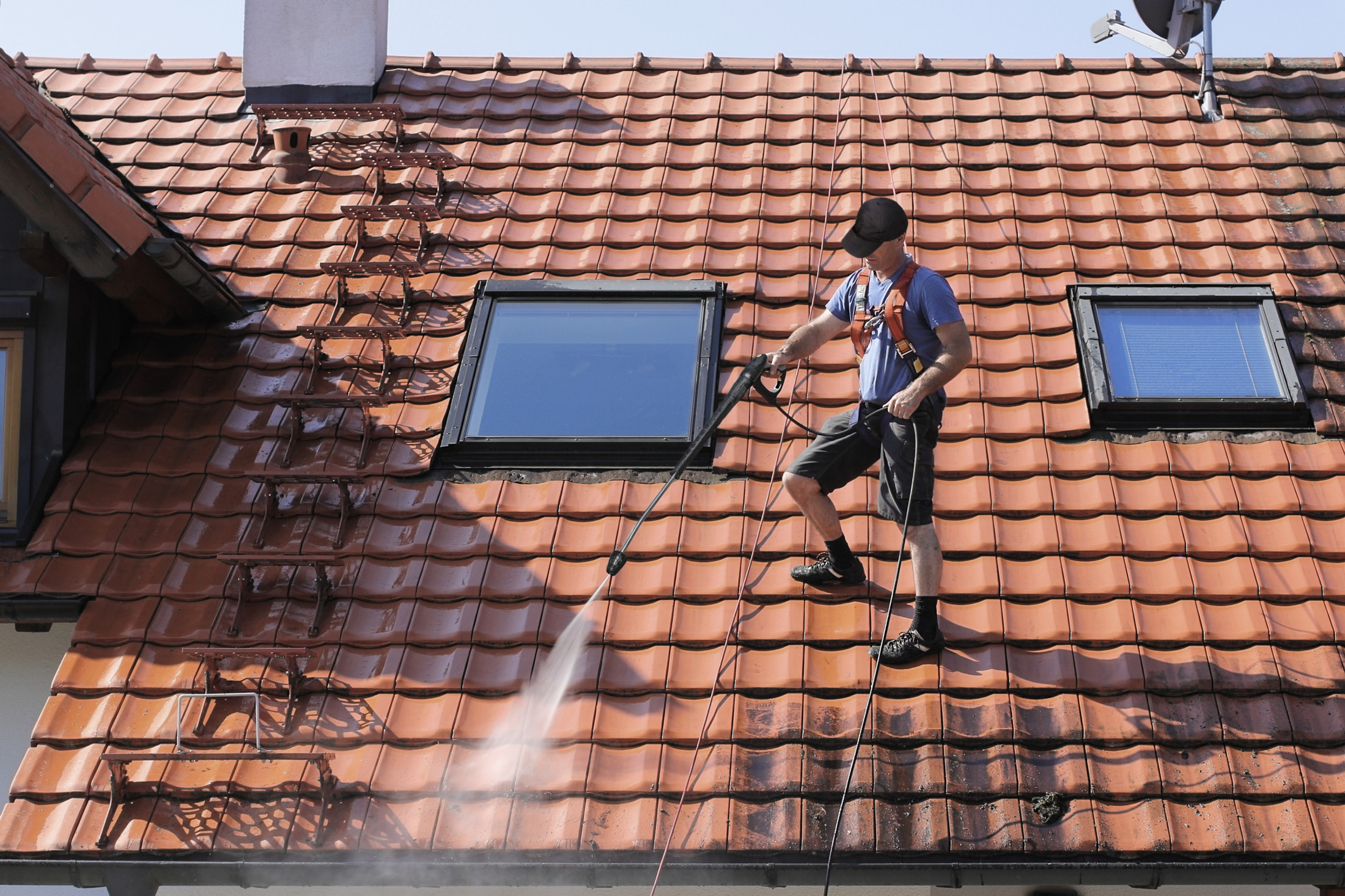
Gutters, valleys, downpipes and outlets. Leaf comes down for weeks and keeps trickling all winter, and on cast iron rainwater goods sitting full is what rots them, so the Cranborne gutters come first, before any wall is washed.
Moss on a shaded slope under a canopy never gets a chance to dry, so it mats up and holds water against the tile. It comes off dry, by scrape and brush, worked down the slope so nothing is driven up under the laps, with the ridge and the valleys cleared out properly, and then a biocide so the spores die back. A roof here is never jet washed: pressure lifts the laps, breaks old mortar bedding at the ridge and drives water into the roof space.
Where a wall is old brickwork, flint or anything bedded in lime mortar, it gets a wide nozzle, low pressure and a treatment left to do the work, because force takes the joint out before it takes the algae off. Green on a north wall is normal out this way and it comes back; a treatment slows it down, nothing stops it. Barns, stables and outbuildings get the same rules, and the gutters on them get cleared while the kit is out.
How it runs
Cleaning flint, brick and render without harming it
Thomas Hannen looks at each surface himself and prices the clean.
The written quote sets out the method for each surface, how planting and drains are protected, how we reach it, and where the residue goes.
One Cranborne house can have lime jointed brick and flint, painted render, old stone flags and a clay tile roof, and each needs its own method. Soft brick, flint and lime pointing get a low pressure rinse, or a biocide left to do the work, never a jet that blows the joints out. Render gets a soft wash and a biocide. Flags and a drive can take more pressure. Plants are covered, drains protected and run off controlled, and where the house fronts the street the footway stays clear. We rinse and tidy before leaving. Cracked render or failed pointing uncovered by the clean is photographed and priced separately, and left for you to decide.
Cleaning is maintenance and needs no application. Painting, sealing or recolouring a surface is different. Check with Dorset Council before that, since the village is in the Cranborne Conservation Area, and a listed building can need listed building consent for the work itself.
Cost
What each surface needs sets the price of a clean
Two walls of the same size can be hours apart to clean, so area alone tells nobody the price. Access. A cottage on the street with nowhere to park, a farmhouse up a long track, and a house on one of the newer closes are very different before anything comes off the van. The work at height rules decide whether a pole from the ground does it or a tower is needed.
The surface. Lime jointed brick and flint, painted render and old stone flags each need their own pressure, and one of them needs none. A biocide wash is slower to show results but leaves the surface whole.
The growth. A green film on render lifts quickly. Deep moss on a north facing roof, or black lichen on stone, is slower and may need a second treatment once the first has worked.
Water and run off. Protecting planting, a pond or a stream at the end of the garden, and controlling what reaches the drains, takes time.
When you compare, ask which surfaces get a biocide and which a rinse, whether a return visit is included, and where the dirty water goes. The biocides regime the HSE administers controls what can be used.
If there is a date
A viewing or a family occasion coming up soon
Nobody needs an emergency clean, but a house sale, a viewing or a family event gives you a date to hit. Tell us the date when you ring and we will tell you honestly whether there is time to do it properly.
A biocide wash on render keeps working for a couple of weeks, so allow for that. If time is tight, the front elevation, the path and the drive are where it shows most. We will not jet wash lime pointing in a rush to meet a deadline, because the damage outlasts the occasion. Our cleaning runs Monday to Friday, 8am to 6pm. For anything with a date on it, pick up the phone rather than the form, and if we do not answer, we call back as soon as possible.
Worth knowing
Trees set the timetable, and the ditch decides the method
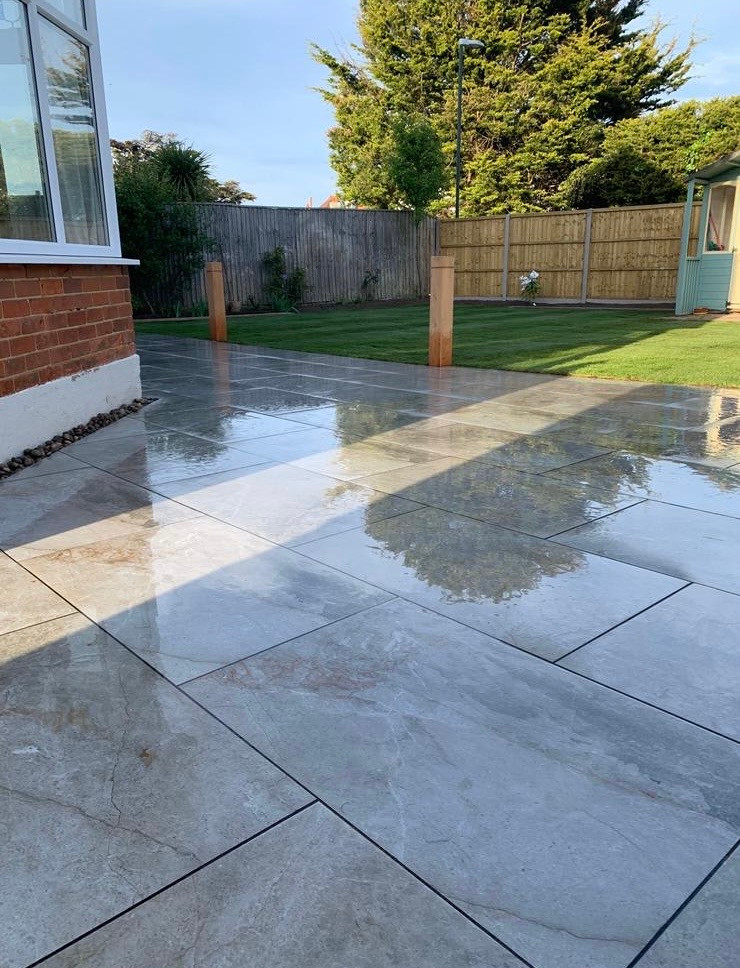
The village sits among mature trees and estate woodland, and that changes the maintenance interval more than it changes the work. A building under a canopy fills its gutters several times faster than one on an open estate, the shaded slopes stay wet for days after the rain has stopped, and debris lying in a valley is exactly the damp bed that moss and algae need to take hold.
So the useful pattern here is a clear in late autumn once the leaf is down, and a second look in spring. Do that and the cleaning itself gets smaller every time. Skip it for five years and the moss on the roof is a day's work instead of an hour's.
The second thing trees and open country change is where the water is allowed to go. On the lanes in Cranborne there is often no roadside gully at all, so whatever comes off a roof or a drive ends up on the verge, in a ditch or heading for a watercourse. That is why we cover the drains and gullies before we start, wet and sheet the planting nearest the wall, keep products to the rate printed on the label under the biocides regime the HSE administers, and take the moss and debris away with us rather than flushing it off the property.
The government's pollution prevention guidance is what sets that standard, and on a gravel drive it matters twice over, because the run off carries silt as well as treatment.
Who you are dealing with
Who cleans your roof and walls, and how to check
Boscombe, where our base is, sits 13.9 miles from Cranborne. We clean houses in the village and across the BH21 postcodes on the Chase, out through Alderholt, Sixpenny Handley and Verwood and on to Wimborne Minster, and the local authority is Dorset Council.
We trade as Bournemouth Roofing & Building Ltd, a company registered in England and Wales, number 15471719. It belongs to Thomas Hannen, and he walks round the house with you before putting a figure on the clean. On Checkatrade you can see a verified customer's 10 out of 10 for us. The visit is free, and you get a free written quote with each surface on its own line. Before you book a visit in Cranborne, you can read our customers' Google reviews, word for word, on our reviews page.
Planning at a glance
Do you need planning permission in Cranborne?
Most repairs in Cranborne need no application at all. What decides whether a change to the outside of your house does is who the council is, whether a conservation area or a listing applies, and whether the place sits in a protected landscape.
| Question | In Cranborne |
|---|---|
| Who decides | Dorset Council is the planning authority for Cranborne. Dorset Council's heritage pages set out what it controls. |
| Conservation area | Yes: Cranborne Conservation Area. Check whether your street is inside the boundary before changing anything visible. |
| Listed buildings | Yes, there are listed buildings in and around Cranborne. If yours is one, work can need listed building consent. |
| Protected landscape | Inside the Cranborne Chase & West Wiltshire Downs National Landscape (formerly AONB), so anything visible from outside gets more attention. |
Questions
Questions about exterior cleaning in Cranborne
Does the Cranborne conservation area stop us cleaning the brickwork?
No, the designation does not stop brickwork being cleaned. The Cranborne Conservation Area controls what a building looks like, and washing returns it to what it looked like, so there is no application to make. Where the designation bites is on a coating, a paint colour or a change of material afterwards, and Dorset Council would want sight of that first. With 25 listed entries here, Cranborne Manor House among them, many walls carry protection of their own.
What does low pressure washing do to lime mortar?
Nothing, provided the pressure genuinely stays low. Lime is softer than the brick around it and a jet finds the joint first, opening it up and driving water into a wall that was built to dry out through its own face. Around Cranborne we hand wash, apply a biocide and let that do the work over some weeks. The wall looks untouched on the day and clean a month later.
The lane is overhung with trees. What does that do?
It keeps everything damp. Cranborne sits in the Cranborne Chase National Landscape with tree cover close in on most properties, so shaded walls never really dry and roof growth returns faster than it would on open ground. A treatment left to work slows that down. The leaf, twig and blossom that land in the gutters all year are best cleared on their own routine.
Would you quote for the outbuildings and garden walls too?
Yes, and they are worth doing on the same visit while the kit is already set up. Old garden walls and brick outbuildings around Cranborne usually want gentler handling than the house, and copings and wall heads are where water finds a way in once growth has been disturbed. Each structure goes onto the written quote as its own line, so you decide what actually happens.
Is a settled dry week better for the treatment out here?
It makes a real difference. The ground drains freely here, which helps underfoot, but the treatment wants several hours of dry surface to bite, and a shower inside that window rinses it away before it has achieved anything. We watch the forecast and put that part into a settled run, then let it break the growth down slowly. Gutters and paths we clear in whatever weather turns up.
Nearby, and next door
Exterior cleaning near Cranborne
Nearby places we also cover for exterior cleaning, with straight-line distances from Cranborne, and the other trades we offer in Cranborne itself.
Exterior cleaning nearby
Our other trades in Cranborne
Exterior cleaning guides
Soft washing vs pressure washing: safe for a roof? How to clean a patio without damaging it Moss on a roof: does it need removing?Everything we do in Verwood Exterior cleaning, all areas Every area we cover
Free quote
Get a written price for your Cranborne clean
Send the postcode and tell us what needs doing. We come out, look at every surface and every gutter run, and put the price in writing.