Roofing in Cranborne
Repairs, re-laying, leadwork and flat roofs on the older coverings in Cranborne, with the conservation area sorted out before anything is ordered.
The site visit is free and so is the written itemised quote. Thomas Hannen prices every job himself.
In Cranborne the hard question is rarely whether a roof can be repaired. It is what goes back on it. The village has its own conservation area, so like for like is maintenance and a change of covering is a planning matter, and that is settled before anyone orders a tile.
Most calls from the village are one of two kinds. Something has come off or gone through after a wet, windy spell and there is a stain on a ceiling. Or an old clay tile or slate roof has reached the point where it is being patched every year and you want to know whether that is sensible or whether it needs relaying.
Both need the same first step. We come out, get on the roof where it is safe to be, get into the roof space, and photograph the fixings, the timber and the junctions rather than guess from the ground. The site visit and the survey are free.
The work
Sound tile goes back on the street elevation
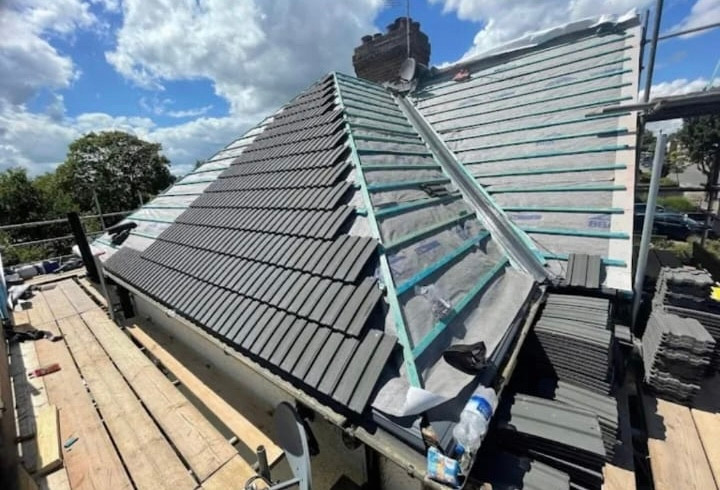
Plain clay tile, relaid rather than replaced. A good deal of what we find in the village centre is small plain clay tile, some of it handmade, hung on nibs and pegs. When those roofs fail it is almost never the tile: it is the nails, the pegs and the batten they hang on. So we strip, sort by hand, set the sound tile aside and re-lay it on new treated battens over a breathable membrane, buying in matched tile only for the shortfall. Sound tile goes back on the elevation facing the street. Natural slate fails the same way: nail sickness lets slates slip one at a time and a roof can lose a dozen in a winter while the slate itself is sound.
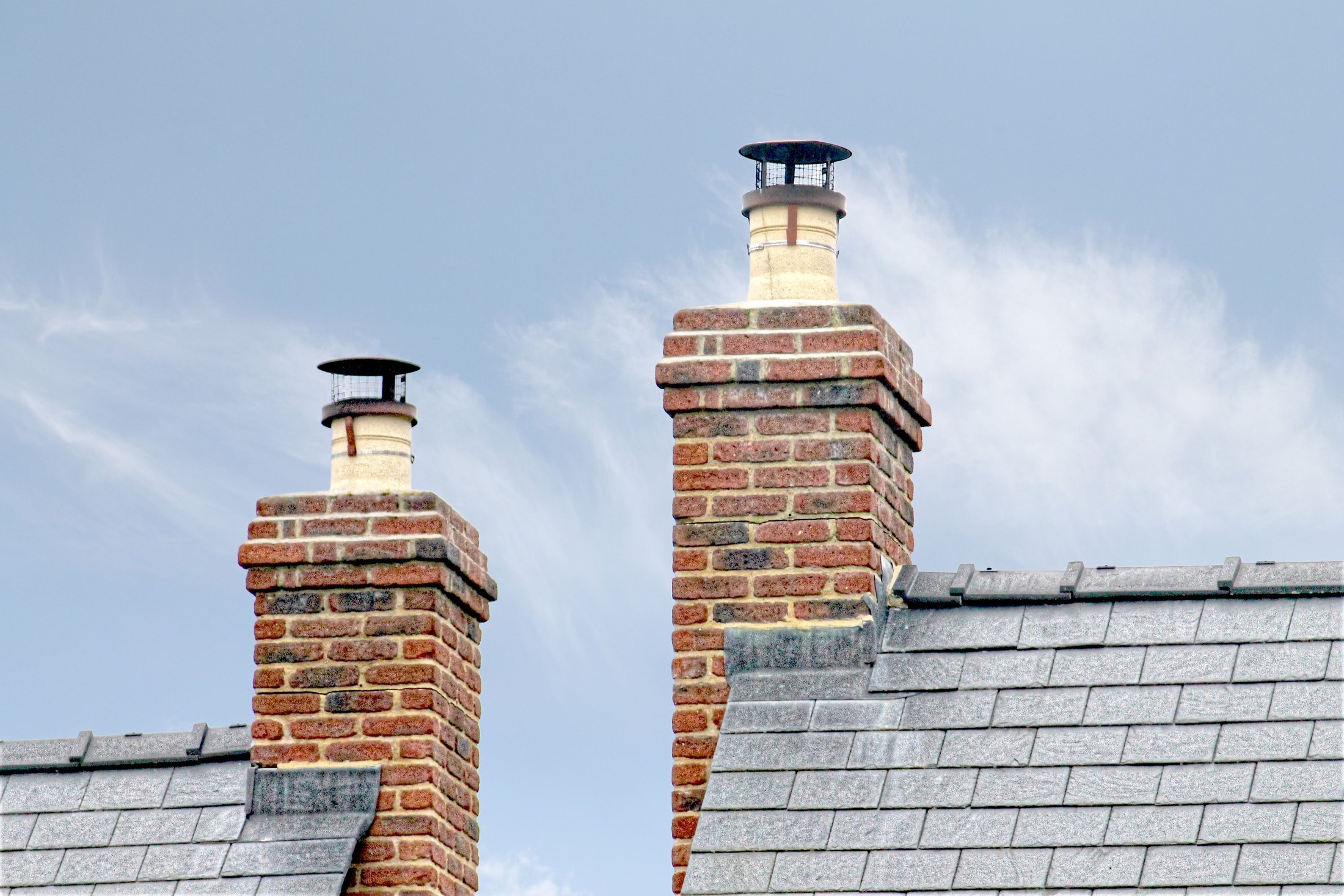
Chimneys, valleys and abutments. Old village houses carry tall brick stacks and a lot of roof junction, and that is where nearly every leak we chase begins. Flashings, soakers and back gutters go back in code rated lead, stepped and wedged into the joints rather than smeared over with mastic, and flaunching renewed at the same time. Valleys in plain tile can be swept or laced rather than lined, which looks right and lasts, but it is slow work.
Bonnet hips and clay ridge on the old roofs are bedded and pointed the traditional way. On the newer houses at the edge of the village the covering is concrete interlocking tile, mortar bedding is the usual failure, and a dry fix ridge screwed over a ventilated roll is the better answer, which is also the mechanical fixing BS 5534 expects. Inside the conservation area we check whether a visible dry verge is acceptable before we specify one. Cast iron rainwater goods are usually worth repairing rather than swapping for plastic, and where a downpipe has been overflowing, the fascia and soffit behind it want looking at too. Clearing leaf debris out of the gutters and algae off a shaded slope is the maintenance that keeps the rest honest. While the covering is off, insulation and eaves ventilation are far cheaper to deal with, with Approved Document L setting the standard a renovated roof must reach.
How it runs
From your call to a written price
Same team from first visit to last, one person to ring, and no sub-contracting. The quote is itemised line by line, and anything found on the strip gets a photograph and a price before we carry on. Tell us the address early, because here it changes the answer. Inside the Cranborne Conservation Area a like for like repair or re-cover is maintenance and needs no application, but a change of covering or material is a planning matter and we order nothing until it is settled. On any of the twenty five listed entries in the parish, listed building consent applies to roof work regardless of what Planning Portal guidance says about permitted development. Dorset Council handles both.
Cost
What decides the price of a roof
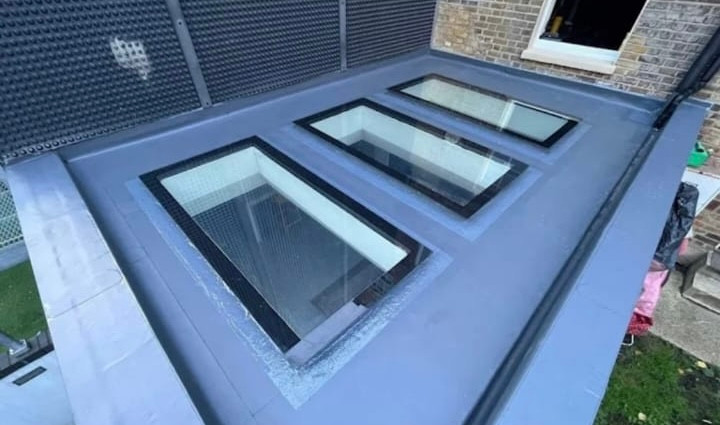
No rate per square metre. Village frontages are tight and some open straight onto the road, so where the scaffold and the skip can stand is agreed before anything is priced, and a licence from Dorset Council is needed if the platform has to sit on the highway. Some roofs come off a tower, and how long one stands matters as much as its size, which is why the work at height rules make it a priced line. Chimneys, valleys and abutments are priced one at a time. Ask whether battens and membrane are renewed or covered over, and who pays for the skip.
If it is leaking now
Water coming in today
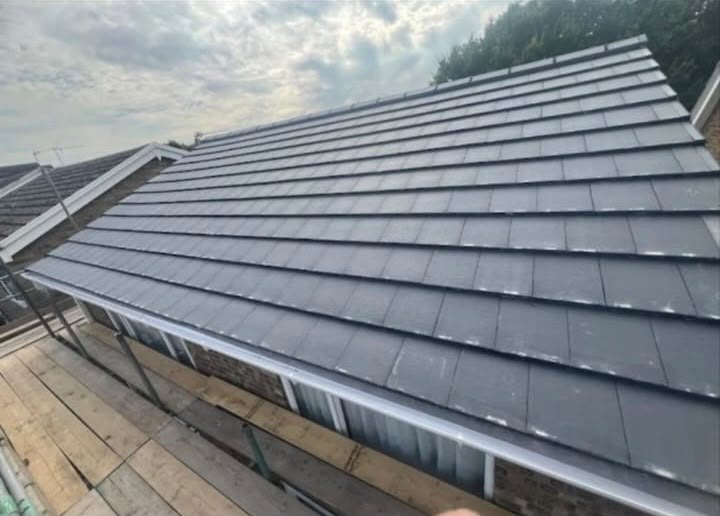
Ring rather than use the form. Anything letting water in goes to the front of the queue, and the first visit makes it safe. Say if it followed a gale, because storm damage usually shows as cracked or missing tiles along one edge rather than a single hole. On an old clay tile or slate roof, do not let anybody spray, seal or foam the underside. It traps moisture against the batten and it is the repair we spend most time undoing. The phone is answered 24 hours for emergencies; scheduled work runs Monday to Friday, 8am to 6pm.
Worth knowing
The conservation area decides what goes back on
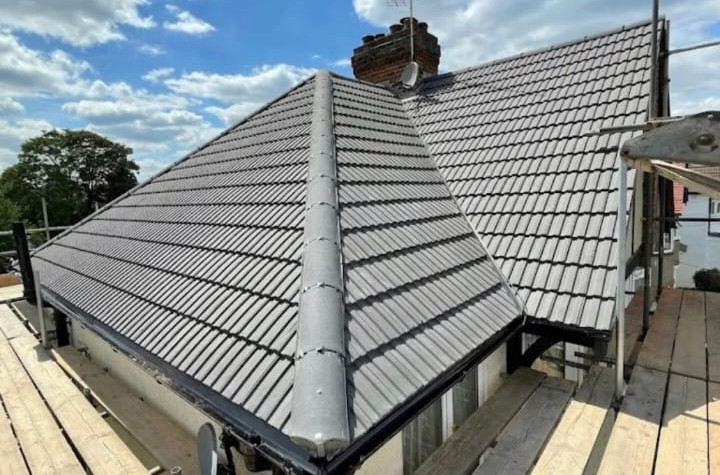
Cranborne has its own conservation area, and what that controls is appearance. It does not stop you repairing your roof and it does not make the work harder. What it does is remove the cheap way out. Swapping a slipped clay tile roof for concrete interlocking tile because the concrete is cheaper by the thousand is a change of material and it is not permitted development here, whatever a merchant tells you. Nor is a run of grey rooflights across a front slope.
So the practical advice is this. Ask any quote you receive to name the tile or slate it is pricing, by make and colour, and ask whether it assumes salvaging and re-laying the existing covering or buying new. Two quotes for the same roof here are often two different buildings by the time they are finished.
Who you are dealing with
A local firm you can check
About fourteen miles from us, covering Cranborne and the surrounding BH21 addresses out towards Alderholt, Woodlands and Sixpenny Handley. Dorset Council for planning, building control and listed building consent. Bournemouth Roofing & Building Ltd, registered in England and Wales, company number 15471719, which you can look up in a minute. Thomas Hannen's business, and he is the one who comes out to price the job, not a salesman. A verified customer's 10 out of 10 on Checkatrade. The visit and the written quote are both free.
Questions
Cranborne questions we get asked
What does the Cranborne conservation area actually control?
How the building reads from outside, which for a roof means the covering, the colour and the detail at the edges. Replacing what is there with the same thing is maintenance and needs no application. Changing material or profile does, and it goes to Dorset Council. There are 25 listed entries in Cranborne, the Manor House among them, and on those the roof is covered by the listing itself.
Does being in Cranborne Chase affect what I can put up?
It affects anything visible. Cranborne sits within the Cranborne Chase and West Wiltshire Downs landscape designation, which brings design scrutiny onto changes that read from a distance or from the lanes. A flush conservation rooflight passes where a standard unit standing proud of the tiles often will not. A change of tile colour falls into the same conversation. We flag all of it before anything is ordered.
My house is listed. Can you re-use the original tiles?
Usually, and on a listed building in Cranborne that is the starting assumption rather than one option among several. Tiles come off onto boards, get sorted for sound ones, and the salvage goes back on the elevation that shows. Shortfalls are made up with matched reclaimed stock, with new material put where it is least seen. Dorset Council's conservation officer will normally want that written into the consent.
Will the lane be blocked while you are working?
Not for long, and it gets agreed beforehand. In Cranborne the scaffold goes up in one visit and comes down in one, with a loaded lorry there for a couple of hours each time. Between those we work off the scaffold and keep the van in a single spot. Spoil is bagged or dropped straight into a covered skip rather than heaped, so nothing blows about the village.
Should the ridge go back in mortar or dry fixed?
Inside the Cranborne conservation area that is not a purely technical choice. Dry fixed systems hold better and shed no bedding down the slope, but some show a visible plastic or metal edge that a conservation officer will not accept on a prominent elevation. Where appearance is controlled we bed the ridge in mortar with mechanical fixings underneath, which reads as traditional and still stands up to a gale.
Nearby, and next door
Roofing near Cranborne
Roofing nearby
Our other trades in Cranborne
Roofing guides
Concrete vs clay roof tiles: which is right? Planning, building regs or listed building consent Storm damage to a roof: the first 24 hoursEverything we do in Verwood Roofing, all areas Every area we cover
Free quote
Ask us what your Cranborne roof actually needs
A free site visit, photographs of the fixings and the junctions, and a free written itemised quote.