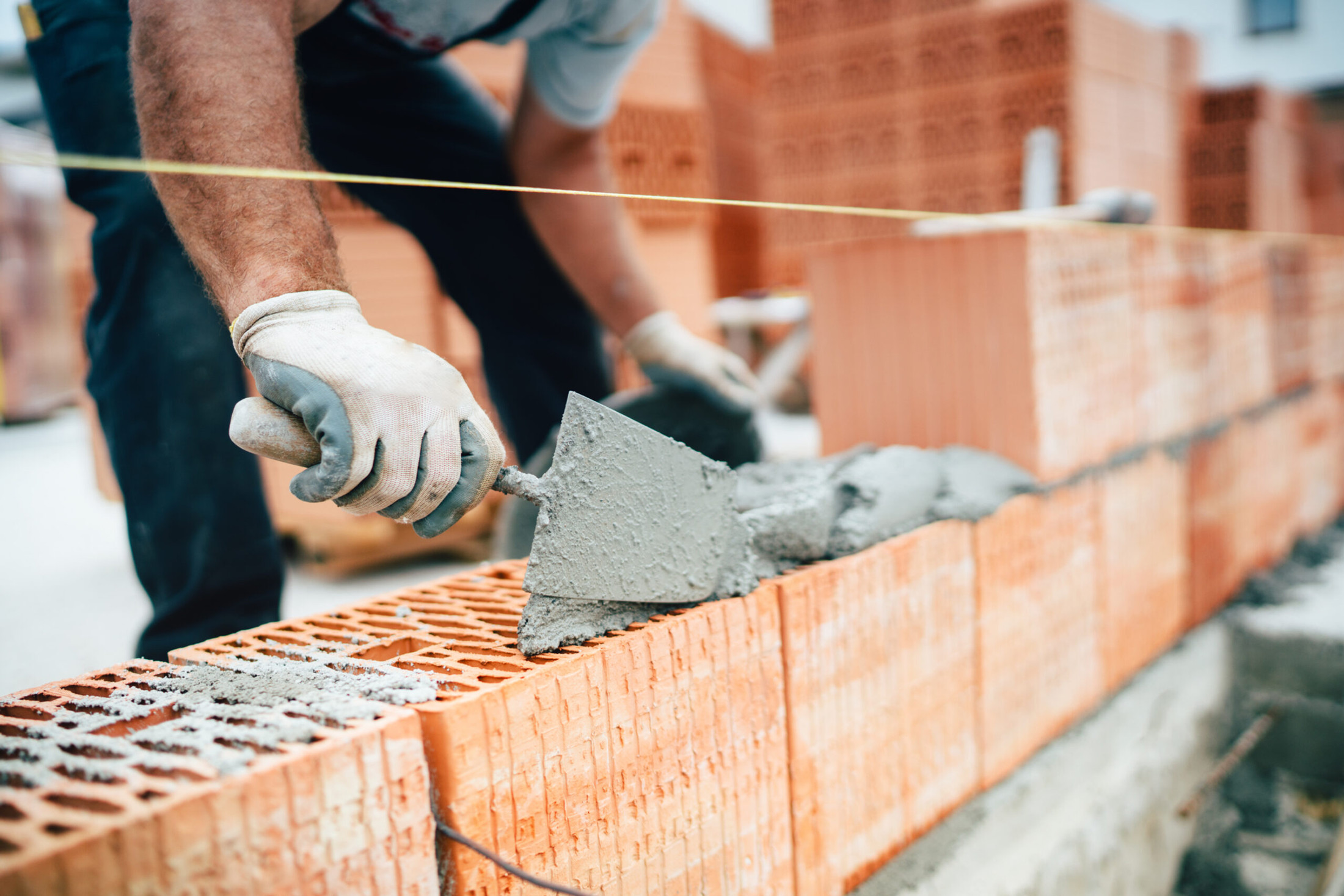
Bricklaying and repointing in Cranborne
Lime repointing, brick and flint repair, high boundary walls and chimney stacks in Cranborne and the villages along the chalk.
The site visit is free and so is the written itemised quote. Thomas Hannen prices every job himself.
Bricklaying and repointing
Repointing in Cranborne: what we do, and how we work on old walls
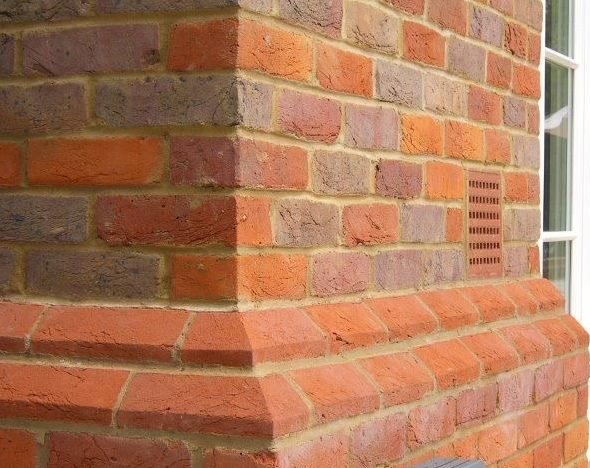
Old walls in Cranborne want lime, worked by hand, and very little else. Rake the tired joints out, put back a mortar softer than the brick or the flint around it, and the wall goes back to drying out through the joint the way it was built to. The mistakes we spend most of our time undoing here were all made with a mixer full of cement and the best of intentions.
Three things bring people to the phone. Joints that have washed back far enough to see into the wall, usually low down or on the side that takes the weather. Flints or bricks that have started to come loose in a boundary wall because there is nothing left holding them. And a stretch of high wall that has developed a bulge and is now leaning further every wet winter.
We come out and look at the wall in front of us rather than at a photo of it, because around here the same symptom has three or four different causes and only one of them is the mortar. You get a straight view of what needs doing now, what can sensibly wait, and an itemised written price for the part that cannot. The visit and the quote are both free.
The work
The brickwork jobs we do in and around Cranborne
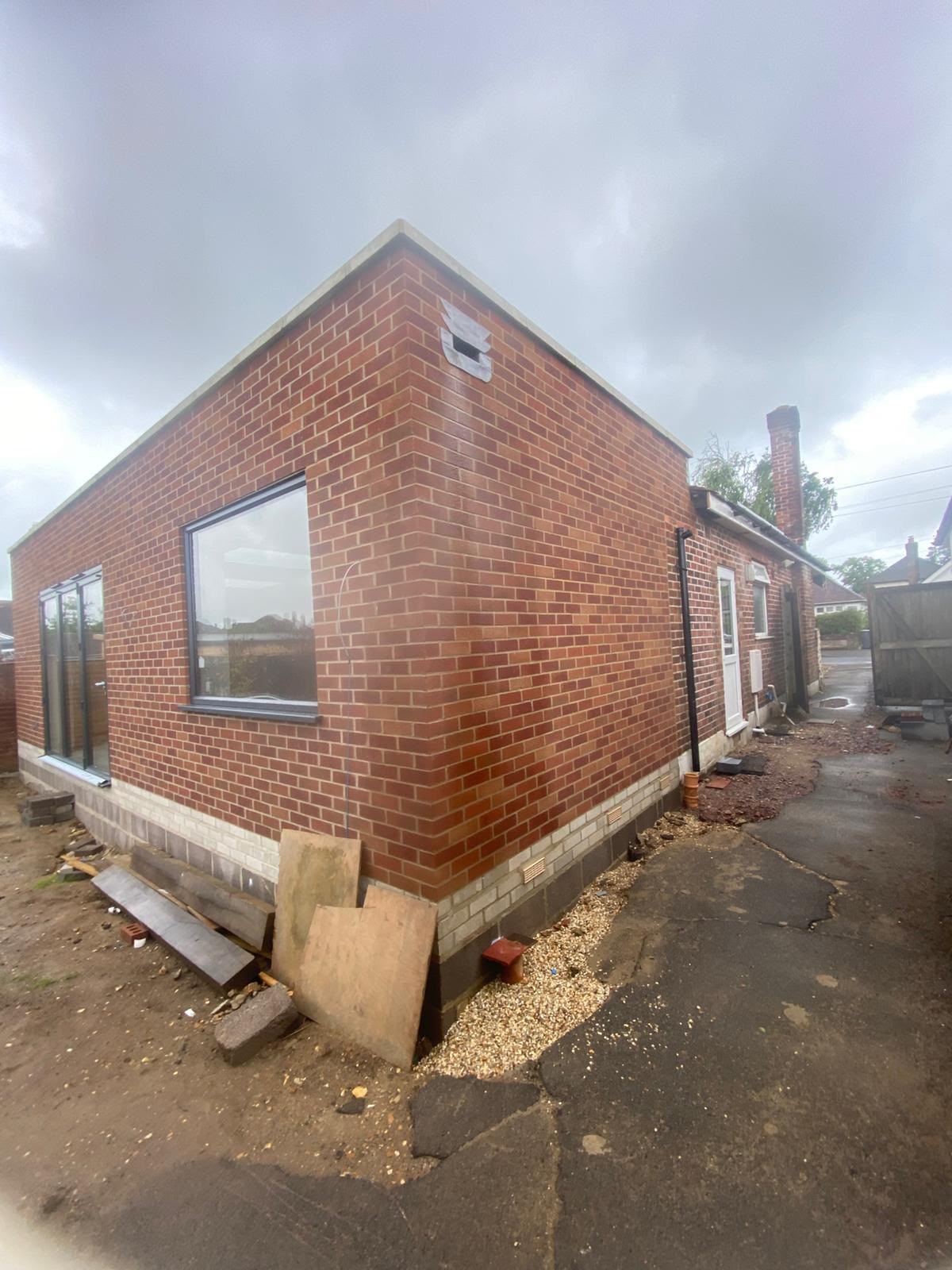
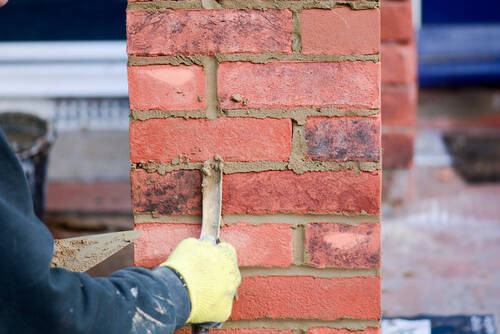
Brick and flint. A great deal of what we are asked to look at here is not plain brickwork at all. Flint set in wide lime joints, often banded or quoined with brick, is a different discipline: the flint itself is not absorbent, so every bit of the weathering happens in the mortar, and the joint is doing structural work as well as keeping water out. That means raking carefully rather than deeply, because take too much out and the flints move, a properly graded lime mix packed and pressed rather than buttered on, and galleting put back where the original had it. On soft handmade brick the joints were the sacrificial part, so they come out by hand and go back in an NHL lime with the sand matched, with a sample panel to look at first.
High walls and stacks. The tall walls around here are slender for their height and rely on their coping and their piers to stay upright. Once the coping is loose water goes into the core, freezes and pushes the faces apart, and a wall that has started spalling loses a little more with every frost, so we rebuild bowed lengths, reinstate brick on edge or tile creasing coping, rebuild buttress and gate piers, and put a damp proof course in at the base where the appearance allows it. On a thatched cottage the stack has to stand well clear of the ridge, and several here have been reduced over the years without much thought: cracked flaunching, pointing gone from the top courses, a lean that has crept in. We rebuild stacks course for course and reuse the original brick where it is sound, making the shortfall up from a reclaimed batch rather than a modern facing brick, off a scaffold, under the same HSE guidance on work at height that applies to any roof job. A crack that steps out of a window head is usually the lintel or the ground rather than the mortar, and we say which before we price a repair.
How it runs
From your call to a written price
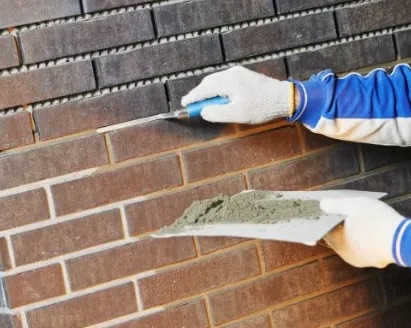
Thomas prices it himself after a survey of each elevation, with photographs of anything that needs explaining, and the quote itemises access, raking out, the mix, each elevation and any brick replacement. Cranborne sits with Dorset Council, inside its own conservation area and inside the Cranborne Chase National Landscape, so anything visible from the road gets looked at closely and the brick and mortar colour are worth agreeing before rather than after. Everyday repair needs neither planning permission nor building control, though on one of the 25 listed entries here, the Manor House among them, repointing is alteration and needs consent. Building a new wall or raising an existing one has height limits set out in Planning Portal guidance on fences, gates and garden walls, and a shared wall brings in the Party Wall etc. Act 1996.
Cost
What decides the price of a brickwork job
We do not price brickwork by the square metre. The joints decide it, not the area. A thatched cottage on the street, a tall estate wall with a field behind it and a house set back down its own drive are three different set ups. The platform is a priced line rather than a favour, under work at height rules. How deep the joints have to come out, and whether the faces have already spalled, decides the hours. Comparing quotes, ask the rake depth, hand or disc, the mix, the brick count and the scaffold.
If something has moved
Loose brickwork, or a wall that has shifted
Ring rather than use the form. Anything leaning or overhead comes first: a moving chimney, a parapet, a wall pushed out by roots or clipped by a vehicle. Out here it is usually a length of high boundary wall that has bulged through a wet winter, or a stack on a thatched cottage. The phone is answered 24 hours for emergencies; scheduled work runs Monday to Friday, 8am to 6pm.
The one local thing
Cranborne is a conservation area, and it decides what goes back on
The village is a conservation area with twenty five listed entries inside the parish, the manor house among them. The one practical effect on brickwork is that appearance is controlled. Repairing like for like is still maintenance and needs no application, so nobody has to ask permission to put back what was already there. What is not allowed to happen quietly is a change of appearance: a soft red wall repointed in grey cement with a hard ribbon joint reads as a different building from thirty yards away, even though it started life as a repair.
If the property itself is listed, the repointing is alteration in its own right and needs listed building consent from Dorset Council before a joint is opened, and that includes garden and boundary walls inside the curtilage, which catches people out more often than the house does.
Two things are worth knowing before you get quotes. First, the rule of thumb: repair in the same material, the same mix and the same profile needs nothing, while anything that changes what the wall looks like probably does, and the awkward middle ground is worth a phone call to the council rather than a guess.
Second, if a wall of yours is coming down for any reason, keep the bricks. A crate of original handmade brick from your own wall is the only exact match you will ever have, and it is worth far more sitting behind the shed than it is in a skip. We stack and set aside anything reusable as a matter of course, and it is on the quote as a line rather than as a favour.
Who you are dealing with
A local firm you can check
Cranborne is about fourteen miles from the yard, so we come out along the chalk in planned runs, taking in Alderholt, Sixpenny Handley, Wimborne St Giles and Verwood on the same trip. Bournemouth Roofing & Building Ltd, registered in England and Wales, company number 15471719, which you can look up in a minute. Thomas Hannen's business, and he is the one who comes out to price the job, not a salesman. A verified customer's 10 out of 10 on Checkatrade. The visit and the written quote are both free.
Questions
Cranborne questions we get asked
Is design scrutiny a real obstacle to brickwork here?
Rarely, for repairs. Cranborne sits in the Cranborne Chase and West Wiltshire Downs National Landscape, which means anything visible is looked at on design grounds, so Dorset Council will have a view on a change of material or colour on an elevation seen from the road. Repointing that matches what is already there is not a change. The paperwork starts when the appearance moves, not when the scaffold does.
Could our outbuilding be listed along with the house?
It can be, and people are caught out by it. Cranborne has 25 listed entries including Cranborne Manor House, and listing normally extends to walls and outbuildings inside the curtilage rather than stopping at the front door. You can look your own address up on the national list to see what is covered. Where an outbuilding is caught, mortar for a repair is settled through the consent rather than on site.
Can the conservation area object to a lighter mortar colour?
Usually it comes down to the sand. Inside the Cranborne Conservation Area appearance is controlled, so a joint reading noticeably paler or greyer than the wall it sits in counts as a change rather than maintenance. Colour in a lime mortar comes from the sand it is mixed with, not from a pigment stirred in at the end, so we take a sample of the old joint and match the aggregate to it.
Who comes out to price a job this far out?
Thomas Hannen, who owns the firm. Cranborne is 13.9 miles from the yard, so it is a booked visit rather than a passing look, and he measures the elevations himself, rakes a joint to see how deep the failure runs, and looks at the wall heads and copings while he is there. The written itemised quote follows and both are free. Nobody sits between you and the person doing the work.
Our boundary wall leans towards the lane. Repair or rebuild?
Once a free standing wall is out of plumb by more than its own thickness, repointing the joints does nothing about how the load is travelling, so it becomes a rebuild decision. In a village where walls sit right on the lane, the consequence of leaving it is more than an untidy boundary. We take it down in sections, keep every brick or stone that is sound, and rebuild off a footing under a coping that throws water clear.
Nearby, and next door
Bricklaying and repointing near Cranborne
Bricklaying and repointing nearby
Our other trades in Cranborne
Everything we do in Verwood Bricklaying and repointing, all areas Every area we cover
Free quote
Get the wall looked at before it moves further
Tell us what you are seeing and we will come out, look at the whole wall and give you a written itemised price with the access and the disposal on it.