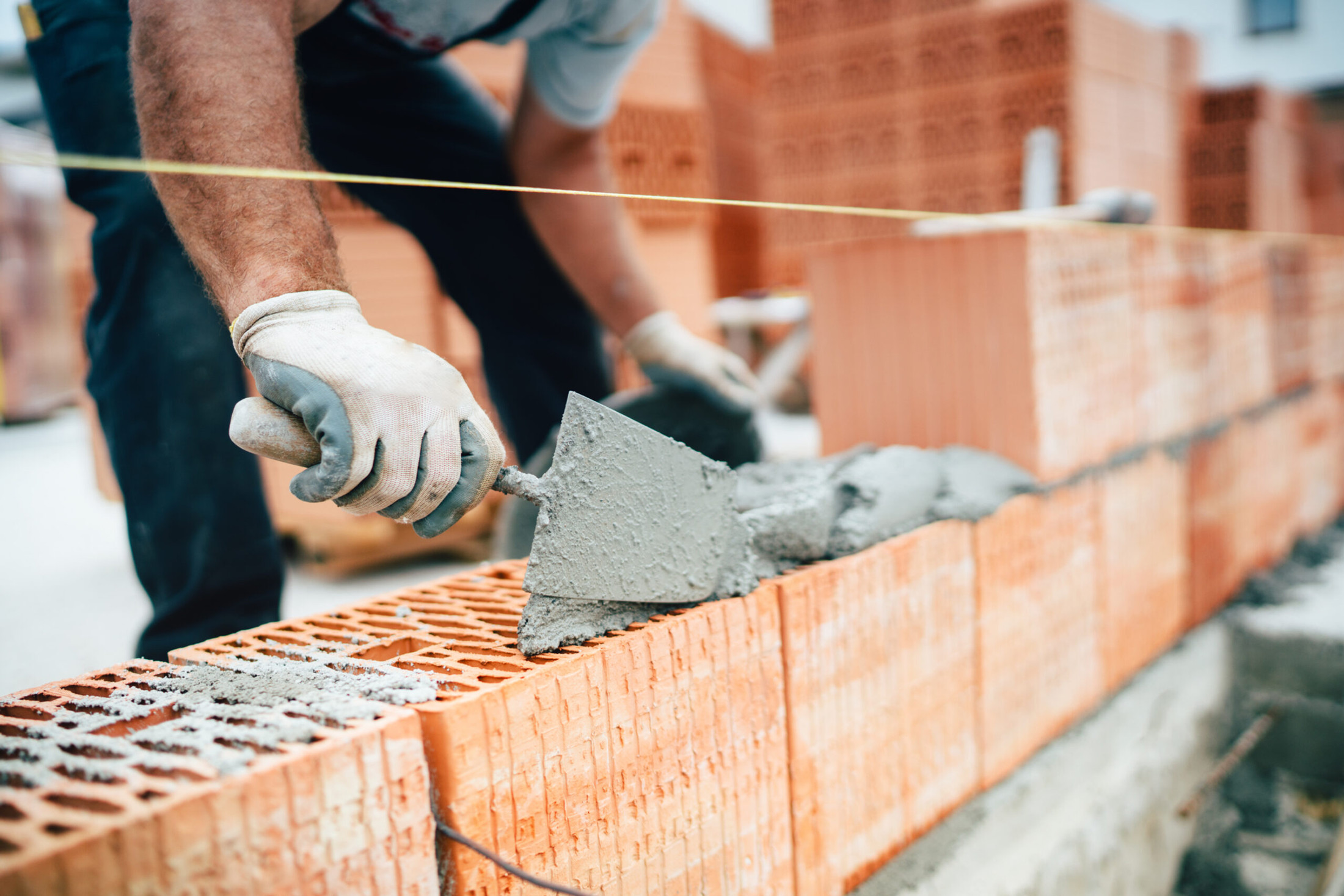
Bricklaying and repointing in Sandleheath
Lime repointing, brick repairs, chimney stacks and boundary walls in Sandleheath and around Fordingbridge.
The site visit is free and so is the written itemised quote. Thomas Hannen prices every job himself.
Bricklaying and repointing
Brickwork in Sandleheath: what we take on, and in what order
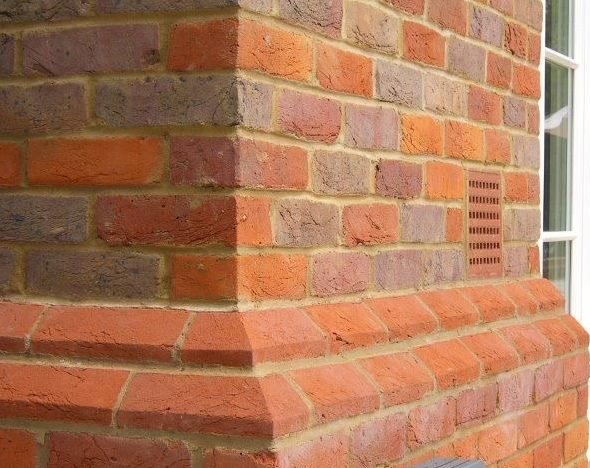
A fifth of Sandleheath predates the First World War, and the older red brick here was built to dry out through its joints. So the first question on any wall is what mortar is in it. Soft brick gets an NHL lime mix that stays weaker than the brick around it. Cement on an old wall is the fault we are called to undo more than any other.
People ring us here for three sorts of thing. A cottage elevation where the joints have eroded back and the brick faces have begun to crumble with them. A band of damp along the bottom metre of a solid wall that no amount of decorating shifts. And the ordinary unglamorous list: a stack, a bowed garden wall, a pier that needs rebuilding, a new opening that wants a lintel over it.
The wall gets looked at in daylight and tapped rather than judged from a photograph, because a face that sounds hollow and a face that is simply dirty need completely different jobs doing. You get a survey in plain words, a note of what will keep for a few years, and an itemised written price for the rest. The site visit and the quote are both free.
The work
The brickwork jobs we do in Sandleheath
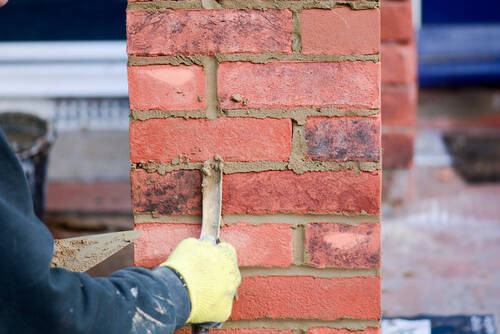
Lime repointing on the older brick. A fifth of the stock here predates 1919 and the biggest single slice of it is pre-1900. That soft handmade brick was laid in a lime mortar, and the joint was always meant to be the sacrificial part: it takes the weathering so the brick does not. We rake out by hand, only as deep as the wall will safely give up, and never with a disc cutter on soft brick. It goes back in an NHL lime mix with the sand matched for colour and grain, in the profile the wall already has. You see a sample panel dry out in daylight before we carry on.
Old brickwork pointed in hard cement cannot lose the water it takes in through the joint, so it loses it through the brick instead and the face spalls after the first hard frost. That said, we do not strip cement for the sake of it. If it is sound, well stuck and the brick behind it is intact, taking it out does more harm than leaving it. Where the joints have cracked away from the brick and are holding water behind them, it comes out and goes back in lime.
The bottom of a solid wall. The ground here holds water rather than shedding it, and a solid wall with no damp proof course relies on being able to dry out at the base. Raised borders, a path laid over the old level and cement render skirts all stop that. We take the ground back down off the wall, repoint the base courses breathable, cut out and replace the bricks that have gone, and where a wall will take a retrofit DPC we install one.
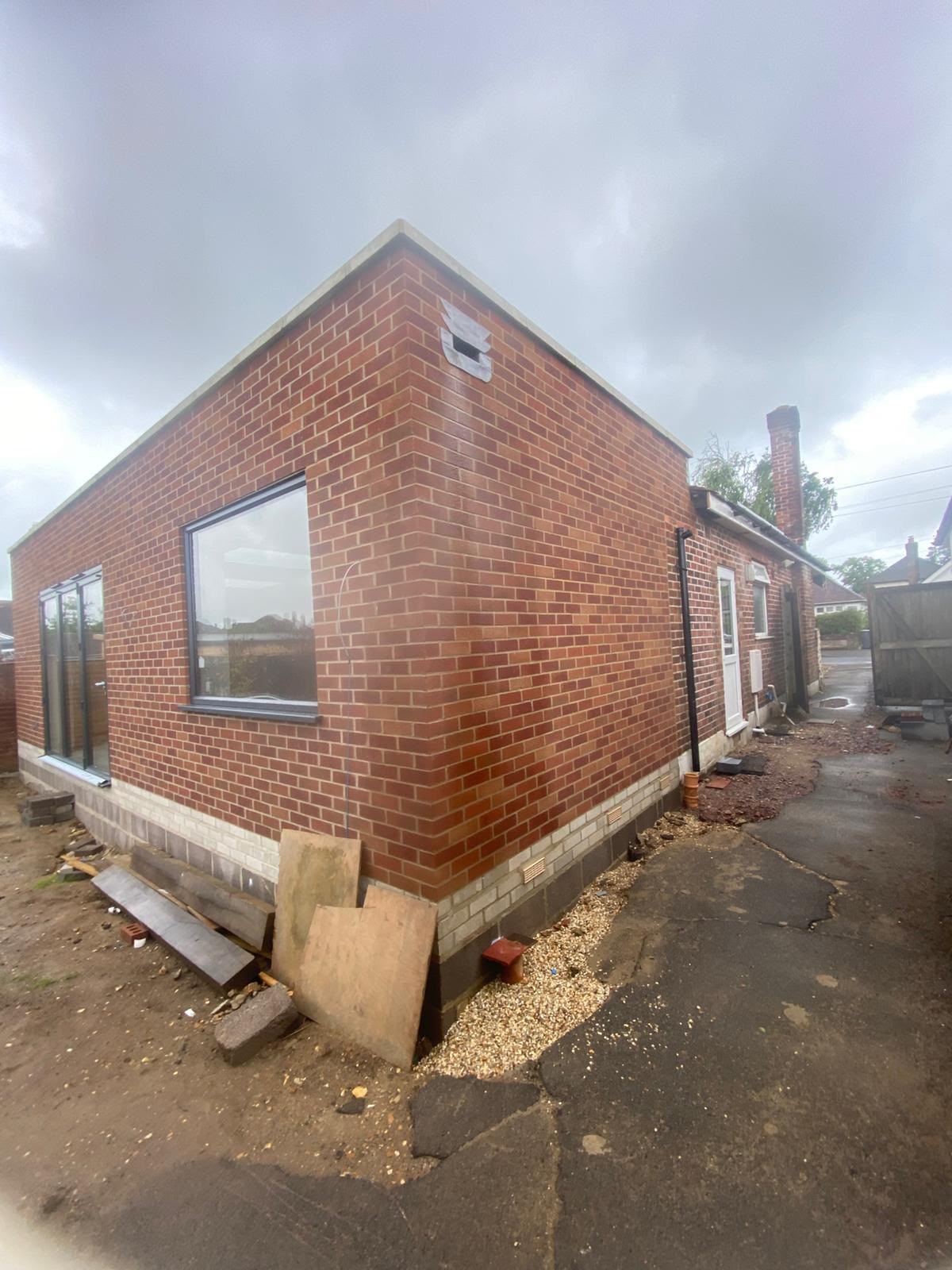
Stacks on the older houses stand well clear and get the weather from every side, so they crack their flaunching and go soft in the top courses. We rebuild course for course, reuse the original brick where it is sound and match it where it is not, off a tower or a scaffold under work at height rules. Long brick garden walls fail from the top down once the coping is loose: we rebuild bowed lengths, reinstate brick on edge or tile creasing, rebuild gate piers that a vehicle or a root has shoved, and put a damp proof course in at the base. New work is extension and garage skins in stretcher bond with blockwork behind, a lintel over every opening and a footing under the lot, with a radon detail to get right as well.
How it runs
From your call to a written price
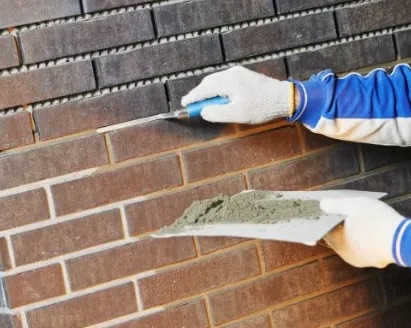
The quote is itemised by elevation: access, raking out, the mix, brick replacement and disposal on separate lines. Planning here is New Forest rather than Dorset, and the National Park boundary runs close enough that it is worth putting your address into the authority's interactive property map first. No conservation area covers the village and only two entries are listed, but on a listed building repointing is alteration and needs consent before a joint is opened. Repairing like for like needs no planning permission and Planning Portal guidance on external walls covers what does. A new boundary wall has its own height limits, structural work goes through building control, and a shared boundary brings in the Party Wall etc. Act 1996.
Cost
What decides the price of a brickwork job
No rate per square metre: the metre of wall tells you nothing until you know what the joints are like. A cottage right on the lane, a detached house set back behind a hedge and a garden wall with a soft verge beside it are three different set ups. How long a platform stands matters as much as its size, and the work at height rules are why it is a priced line rather than an optional extra. Raking out by hand is the only safe way on soft brick, so the depth decides the hours. Ask what depth, and whether the scaffold is in.
If something has moved
Loose brickwork, or a wall that has shifted
Ring rather than use the form. Anything overhead or leaning goes to the front of the queue: the first visit makes it safe, and we price the permanent repair once we can see how far the movement goes. Out here it is usually a stack on an older roof, or a boundary wall bulged after a wet winter. The phone is answered 24 hours for emergencies; scheduled work runs Monday to Friday, 8am to 6pm.
The one local thing
Radon, and why it only matters when you are building
Sandleheath sits in a radon affected area, in the band where a new dwelling or an extension has to be built with basic radon protection. That is a building control matter and it lands on the bricklayer, because the protection is a sealed membrane under and around the floor, dressed up the inside of the wall and lapped into the damp proof course so there is no gap for gas to come through.
Every service that pierces it has to be sealed, and the cavity has to be dealt with rather than left as an open route from the ground into the building.
The practical point for you is timing. Built in as the footing and the first courses go down, it is a membrane and an afternoon of careful detailing. Retrofitted to a floor that is already finished, it is a different order of money entirely.
So if you are pricing an extension here, ask every builder quoting how they intend to detail the radon barrier at the DPC and at the cavity, and be wary of a price that does not mention it at all. None of this touches repointing, a garden wall or a chimney rebuild, where the ground is not being opened up and there is nothing to protect.
Who you are dealing with
A local firm you can check
We cover Sandleheath, Fordingbridge, Alderholt, Rockbourne and the SP6 villages, and we are about fifteen miles out, so a look at a wall is a morning rather than a day. Bournemouth Roofing & Building Ltd, registered in England and Wales, company number 15471719, which you can look up in a minute. Thomas Hannen's business, and he is the one who comes out to price the job, not a salesman. A verified customer's 10 out of 10 on Checkatrade. The visit and the written quote are both free.
Questions
Sandleheath questions we get asked
Which walls in Sandleheath still have no cavity?
The pre-1919 ones, which is a fifth of the place at 20.3%, with the largest single slice pre-1900 at 16.1%. You can usually tell from the bond: where short brick ends appear at regular intervals across the face, the wall is solid and those bricks are tying the thickness of it together. Solid walls dry outwards through the mortar, so they want a lime softer than the brick and will not tolerate a cement ribbon.
Nothing here is listed. So what limits the work?
The wall itself. Sandleheath has two listed entries and no conservation area of its own, so New Forest District will not be asking about mortar colour on an ordinary house. What limits us is condition: how deep the joints have gone, whether the brick arrises are still square, whether a lintel or a cill has dropped. Those decide how much comes out, and they are what the itemised quote is broken down against.
Radon is mapped over this parish. Does brickwork come into it?
Not for a repair. Sandleheath sits in a 3 to 5 percent radon affected band where basic protection is expected, and that is a floor, membrane and ventilation question on a new extension or a conversion rather than anything to do with pointing. Where it touches us is a rebuild going down past the slab, because the membrane has to stay continuous where we open the wall up. We flag that before we start.
How much of the joint has to come out?
Twice the width of the joint as a minimum, and further wherever the mortar behind is soft. A shallow scrape leaves new work sitting on failed material and it drops out within a season or two. We rake by hand into the soft ground, blow the dust clear, damp the joint down and fill in two passes rather than one, so the mortar compacts against the brick instead of shrinking away from it.
Is there a time of year you would rather not point?
Frost is the limit, not cold. Lime has to carbonate before it freezes, and a joint that takes a frost in its first week goes to powder however well it was mixed. We keep lime work on the older Sandleheath walls to spring through early autumn, hang damp hessian over finished elevations in hot weather so it cures slowly, and stop when the overnight forecast turns. Cement work has more latitude, but not a great deal.
Nearby, and next door
Bricklaying and repointing near Sandleheath
Bricklaying and repointing nearby
Our other trades in Sandleheath
Everything we do in Verwood Bricklaying and repointing, all areas Every area we cover
Free quote
Get a written price for your brickwork in Sandleheath
Tell us what the wall is doing and we will come out and look at it. Free visit, itemised written quote, and a straight answer about what can wait.