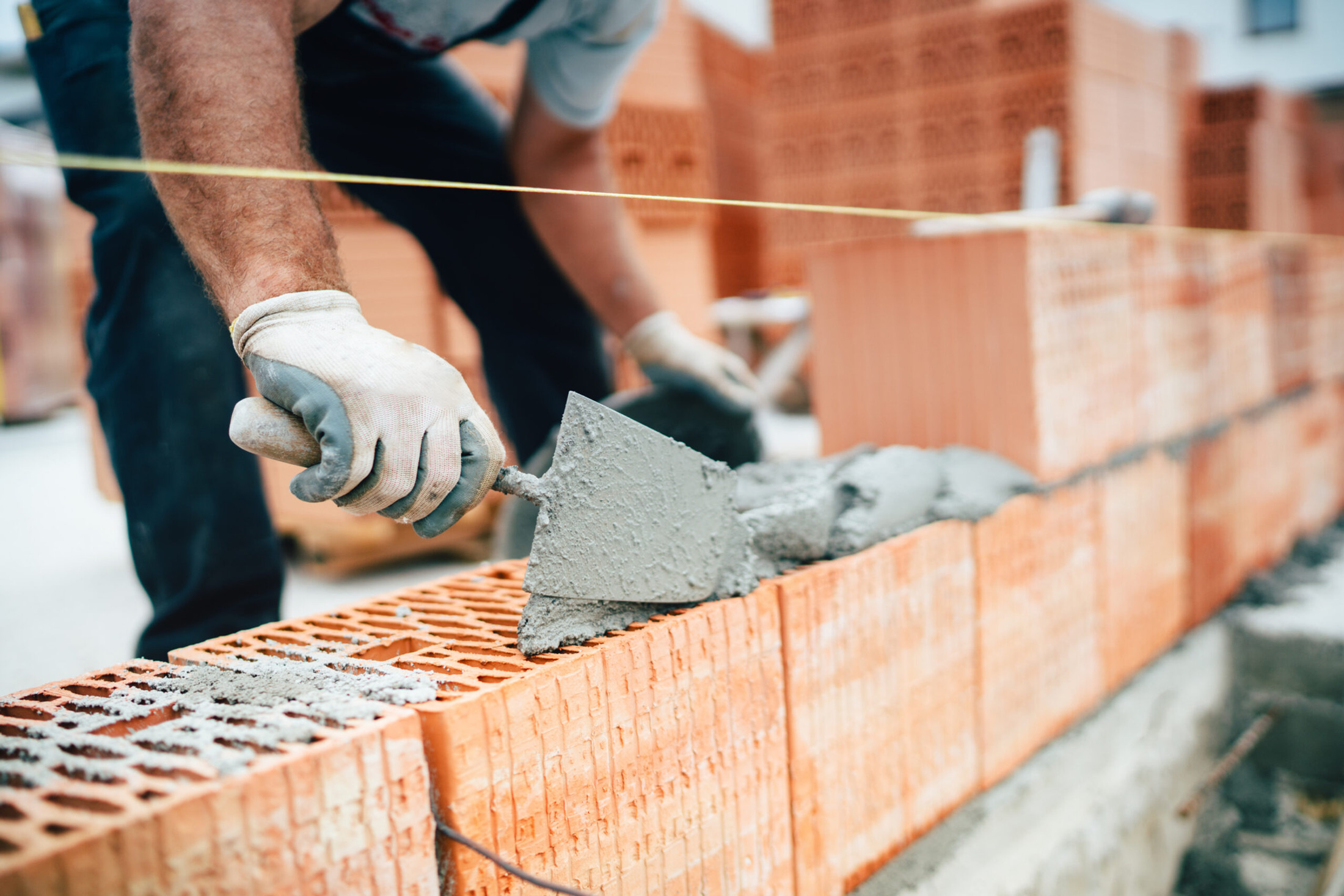
Bricklaying in Fordingbridge
Repointing, brick repairs, chimneys and new walls across Fordingbridge and the SP6 villages, raked by hand and mixed to suit the wall.
The site visit is free and so is the written itemised quote. Thomas Hannen prices every job himself.
Last updated
Fordingbridge is a brick town, and most of what fails here is joints, not bricks. Rake the tired mortar out of a solid wall, put back something the wall can breathe through, and brickwork that looked finished has another lifetime in it.
Old brickwork in Fordingbridge fails first on the frontages, along low-lying walls and at the chimney. Mortar washed out of a frontage on or near the High Street until the joints are shadows. A band of spalling along the bottom few courses of a wall standing on low ground near the water. And a chimney stack with daylight through the joints, which is normally the first brickwork on an older house to give up.
There is a second Fordingbridge behind the old one, the post-war and nineteen seventies estates out from the centre, and those have their own list: corroded wall ties, cracked lintels and extensions that need matching in. We survey what you have actually got instead of assuming, and the written quote itemises the access, the raking out, the mix and any brick replacement separately.
The work
Brickwork jobs in town and on the estates
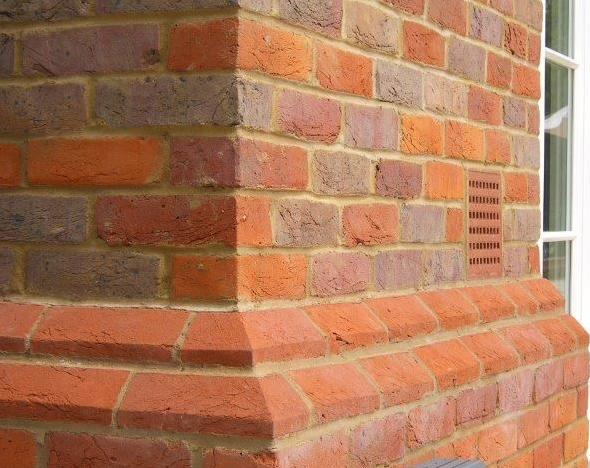
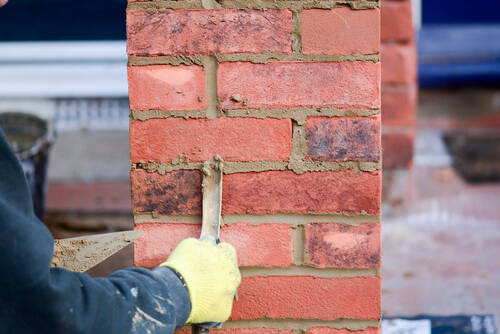
The older streets. The frontages in the middle of town are solid brick with no cavity, often in Flemish bond, and a lot of the brick is soft and handmade. The joints come out by hand with a hacking iron and a plugging chisel.
A grinder on brick like that takes the arris off and there is no putting it back. We rake to about twice the width of the joint, damp the wall and fill in lifts with NHL 3.5 lime and a sharp sand, kept weaker than the brick. The joint goes back flush or slightly recessed, because a proud joint on soft brick sheds the water onto the face.
Sweatfords Water runs through Fordingbridge with the Avon alongside it, and walls on the low ground stay wet at the base for months. That shows as salts drying out white, soft crumbling mortar and frost spalling the brick faces in the bottom courses. Blown bricks are cut out and replaced with reclaimed brick of the same size, pointed in something soft. What we will not do is render a cement skirt round the base to tidy it up, which traps the water and moves the damage further up the wall.
Tall stacks on the older terraces take weather from every side, so the flaunching cracks, the pots work loose and the joints go long before anything else. Repointing above the roof line off a scaffold covers most of it, and where the top courses have gone soft they come off and go back. Yard walls, walls along the river paths and anything holding a level change need weep holes and drainage behind them, or the water finds the joints instead. Copings go back brick-on-edge with a weathering, and gate piers are rebuilt plumb off their footing.
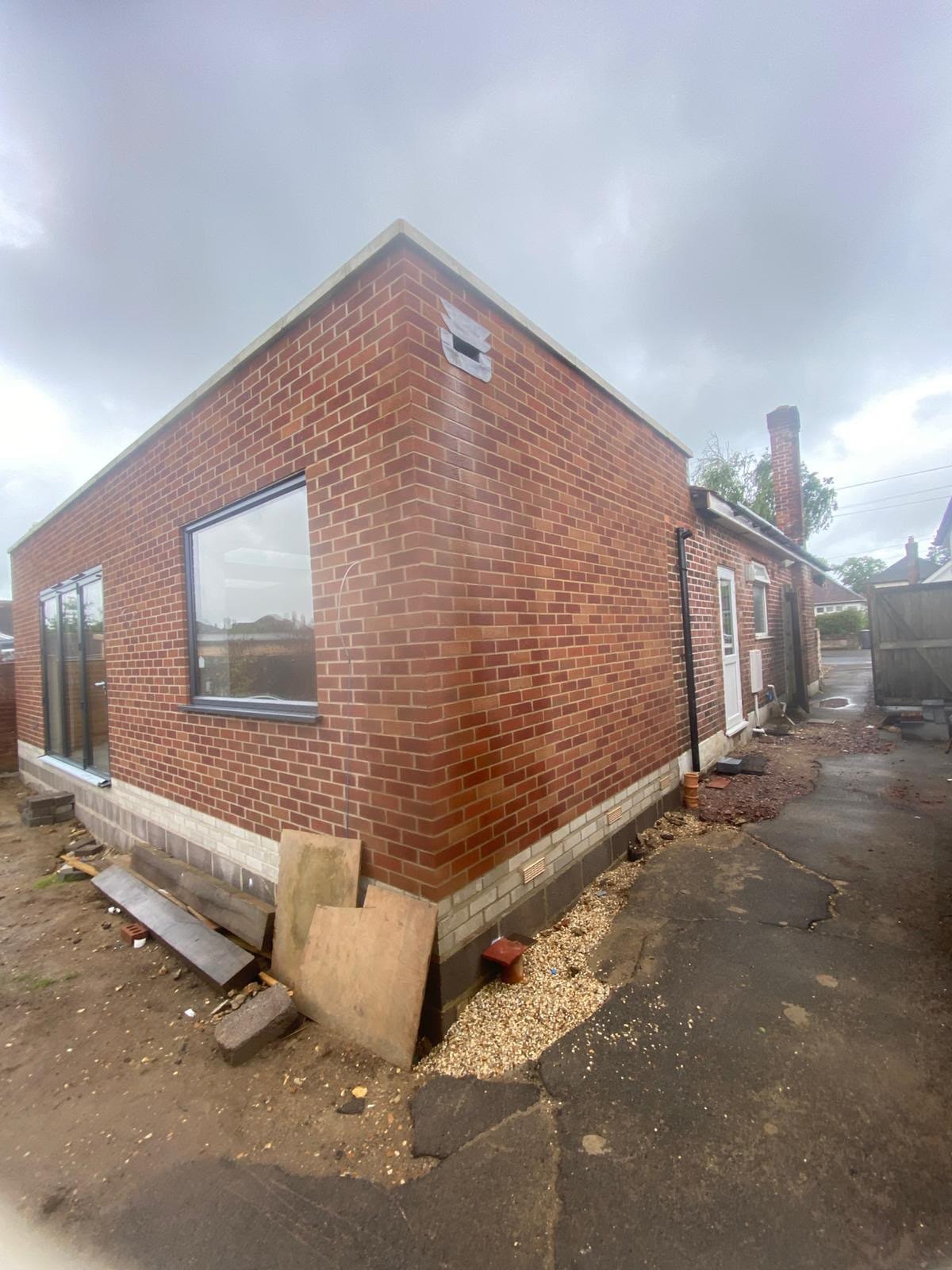
The estates. Four in ten homes in Fordingbridge went up between 1945 and 1982, cavity built with a blockwork inner leaf, a facing brick outer skin in stretcher bond and mild steel wall ties. Horizontal cracking repeating at regular courses is tie failure, and it is repaired with replacement ties resin fixed through the outer leaf. Then it is lintels, garage openings, porches and extensions, with the new brick shown to you as a sample panel before an elevation goes up. Bowed fronts and stepped cracking at a corner take helical stitching, or cutting out and rebuilding off a sound foundation. Where the cause is the ground rather than the brickwork, that wants a structural engineer before anybody quotes, and we will say so rather than sell you pointing.
How it runs
Brick repairs, from the first look to the last joint
Thomas looks at the wall with you and picks at a few joints with a screwdriver to see whether the mortar is lime or cement and how far back it has weathered. His written quote prices access, raking out, the mortar, the area of each face, any bricks to be cut out and replaced, and the waste, each as its own item. The whole job is raked and pointed to that one quote.
Fordingbridge brickwork splits between the later estates and the older centre. The later estate houses are hard machine-made brick in cement mortar, and the usual work there is a chimney stack, a cracked panel under a window or a garden wall. The older houses round the centre are softer brick laid in lime, and they need a lime mortar that matches. A stack or a gable needs scaffold, while a boundary wall needs kneeling boards and a barrow. Old mortar is swept up daily and leaves with us. Where a brick crumbles as its joint is opened, you are shown a photo and a price for cutting it out, and it stays until you agree.
Planning for the town itself is decided by New Forest District Council. Out towards Godshill and Hyde the parish meets the National Park, and the Authority's interactive property map shows which side of the boundary your address is on. The centre is the Fordingbridge Conservation Area. A listed building needs its own consent, which is not the same as planning permission and covers the mortar as well as the brick.
Cost
Joint depth, brick match and scaffold: the real costs
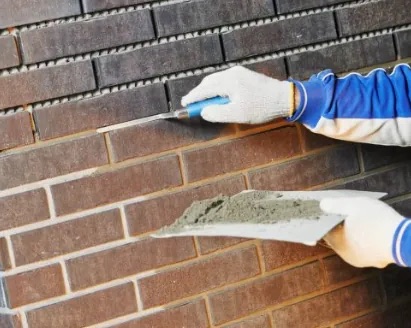
The size of a wall tells you little about the price; the state of its joints tells you a lot.
Which wall. A pavement frontage in the old streets, a chimney stack on a seventies semi and a garden wall behind a bungalow each need a different set up. A stack or a two storey gable needs scaffold, and the longer it stands, the more it costs. The HSE rules on roof work are why the platform is shown separately, and a terrace frontage on the pavement adds a licence.
Joint depth. Raking out by hand is slow, and on soft brick it is the only safe way, because a grinder chips the arrises. Deeply eroded joints or faces that have spalled set the hours far more than the area does, so joint depth is the first thing measured.
Matching. An estate brick can usually be matched at a builders' merchant. An old town centre brick may need reclaimed stock, and a lime mix is tried in trial panels until the colour and texture sit right against the old work.
Damp at the base. On the low ground near the Avon a garden wall can stay wet at the bottom, and the lowest courses may need rebuilding rather than repointing.
Put these to any other bricklayer: how deep will you rake, will it be by hand or with a grinder, which mortar will you use, and is the scaffold included?
If something has moved
A stack, parapet or garden wall that has started to move
If bricks have dropped from a chimney stack, a parapet on an older frontage is leaning or a garden wall has cracked and moved, keep everyone away from underneath anything overhead and from the side it would fall towards. Move the car.
Then phone us, because the form is too slow for this. What the first visit does is make it safe: loose bricks lifted off, a moving wall propped or fenced, and a look at whether the mortar, the footing or wet ground is the cause. Scheduled work is Monday to Friday, 8am to 6pm. If you ring and nobody answers, expect a return call from us at the first chance.
The local part
Building new here: the radon detail nobody mentions
Fordingbridge sits in a radon affected area, at the lower end of the scale, where a small share of properties come out above the action level and new work is expected to include basic radon protection. It changes nothing at all about repointing, a brick repair or a garden wall.
It changes an extension. Basic protection means a radon barrier under the new floor, lapped and sealed at every edge and junction, carried into the cavity and joined to the damp proof course, not laid loose and built over.
Why that matters to the person paying for it: it is invisible a week after it is done, and building control will want to see it before the slab goes down. So ask for it as its own line on the quote, ask when the inspection is booked, and do not let anybody tell you it is the same thing as an ordinary damp proof membrane.
It is a small item at the right moment and a miserable one afterwards, because getting to it later means lifting the floor you have just paid for. If your job is a repair rather than new build, none of this touches you.
Who you are dealing with
Your SP6 bricklayer, and the company behind them
We are based in Boscombe, 14.1 miles from Fordingbridge, and we take on brickwork in the town and in Sandleheath, Alderholt, Breamore, Rockbourne and the other SP6 villages along the Avon. The town's planning and building control are both with New Forest District Council.
Bournemouth Roofing & Building Ltd is the company, registered in England and Wales, company number 15471719. Thomas Hannen, whose business it is, comes to see the wall and prices it himself. A customer verified by Checkatrade rated us 10 out of 10. No charge is made for the site visit, and none for the written quote with every item listed. Before you book a visit in Fordingbridge, you can read our customers' Google reviews, word for word, on our reviews page.
Planning at a glance
Do you need planning permission in Fordingbridge?
Most repairs in Fordingbridge need no application at all. What decides whether a change to the outside of your house does is who the council is, whether a conservation area or a listing applies, and whether the place sits in a protected landscape.
| Question | In Fordingbridge |
|---|---|
| Who decides | New Forest District Council is the planning authority for Fordingbridge. The National Park boundary runs close by, and the Park's property map shows which side an address falls. |
| Conservation area | Yes: Fordingbridge Conservation Area. Check whether your street is inside the boundary before changing anything visible. |
| Listed buildings | Yes, there are listed buildings in and around Fordingbridge. If yours is one, work can need listed building consent. |
| Protected landscape | No National Park or National Landscape covers Fordingbridge. |
Questions
Questions about bricklaying in Fordingbridge
Our seventies brickwork is flaking. What causes that?
Frost gets into the face of the brick where the pointing has gone hard and stands proud, and the face pops off. About 41.2% of Fordingbridge stock went up between 1945 and 1982, with the concentration in the 1970s and early 1980s, so the mortar on those walls is cement and stronger than the brick it sits between. We cut out the damaged bricks, turn or replace them, and point back in a mix softer than the brick face.
Do the 49 listed entries here change how you point?
Only if yours is one of them. Fordingbridge has 49 listed entries, from The Old Manor House to the road bridge over the River Avon, and listed building consent covers repointing because mortar counts as historic fabric. New Forest District is the authority for that. If your house is not on the list and sits outside any designated area, putting matching mortar back in an open joint is repair and needs no application. We establish which it is before quoting.
Will the Avon nutrient rules hold up our extension?
Only where the scheme creates a new home. The River Avon catchment nutrient rules apply to a new dwelling or a separate unit of overnight accommodation, such as a self-contained annexe, so a garage turned into a bedroom within your own house is not caught, and nor is a rebuilt gable or any repointing. That is a planning question to settle with New Forest District first, because it can change what you are allowed to build. Brickwork repairs at your house are outside it entirely and can be booked in the meantime.
What can I check on the south west wall myself?
Run a key along a joint. If the mortar powders out to the depth of your fingernail and sand collects on the path below, the pointing has gone. Look under the sills and at the first three courses above ground for green staining and blown brick faces. The south west elevation is the exposed one in Fordingbridge, so expect its joints to be further gone than the sheltered side. Photograph what you find and we will work from that at the visit.
Where do you park and put the spoil on a job?
On the drive where there is room, otherwise on the road, with the muck bagged or skipped and off site the same week. Raking out produces a lot of grit and broken mortar, so beds, paths and any pond get sheeted before a disc goes near the wall. The ground here is freely draining and we sweep and collect the dust instead of hosing it into the borders. Everything is cleared at the end of each day rather than left.
Nearby, and next door
Bricklaying near Fordingbridge
Nearby places we also cover for bricklaying, with straight-line distances from Fordingbridge, and the other trades we offer in Fordingbridge itself.
Bricklaying nearby
Our other trades in Fordingbridge
Brickwork and repointing guides
Lime or cement mortar: which do you need? Single storey extension: planning and building regs Subsidence cracks: which ones matterEverything we do in Verwood Bricklaying, all areas Every area we cover
Free quote
Get a written price for your Fordingbridge brickwork
Send the postcode and a photograph of the wall or the stack. The site visit is free, the quote is itemised, and Thomas prices the job himself.