Insulation in Fordingbridge
Loft top-ups, cavity wall fill and warm roofs across Fordingbridge and the SP6 villages along the Avon. We survey before we price, and both the visit and the quote are free.
The site visit is free and so is the written itemised quote. Thomas Hannen prices every job himself.
Last updated
Fordingbridge is two towns for this trade, and the right answer depends on which one you live in. On the estates it is nearly always a loft top-up and a look at the cavity. In the older brick streets near the bridge there is no cavity to fill, the ceilings will not take weight, and the work has to be done in a different order.
What prompts insulation work in Fordingbridge usually looks like this. A house that swallows heat and never feels warm at the edges. A back bedroom or a bathroom that grows mould every winter in the same spot. Or a loft conversion being thought about, and a wish to know what should be insulated and when, before a builder starts pulling things apart.
We look before we price, in the roof space and in the room underneath, and we ask what you are planning as well as what is wrong now, because the plan changes where the insulation belongs. What comes back is written and itemised so each part stands on its own line. If your loft simply needs topping up and nothing else, the quote will say that and will not grow a wall job on the end of it.
The work
Near the river the ceilings are lath and plaster
Loft top-ups on the estates. A good share of the estate housing went up between the war and the early eighties, much of it under trussed roofs with the webs running through at knee height.
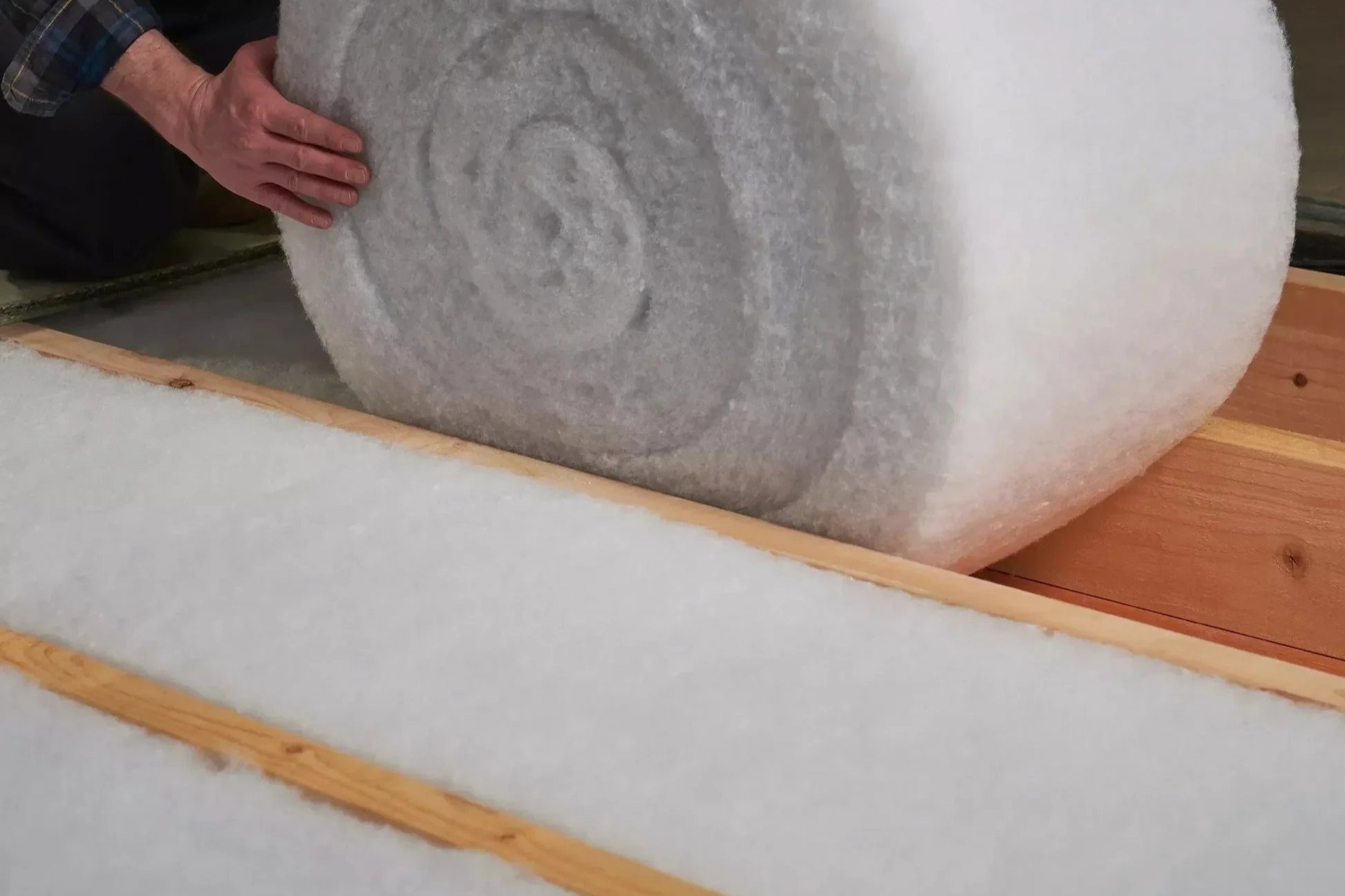
Those lofts were insulated to the standard of the day and have not been touched since, so what is up there has settled, gone flat under storage and dropped away from the joists. It comes out, gets bagged and leaves with us, and mineral wool roll goes back between and over the joists so the timber is covered rather than left as a cold bridge. Approved Document L puts a loft being upgraded at a u-value of about 0.16, which is 270mm in ordinary roll, and there is no honest shortcut to it.
The older streets near the river. Around a fifth of the housing in Fordingbridge predates 1919, and those brick houses near the Avon carry purlin roofs, shallow eaves and very often lath and plaster ceilings. You do not walk on a lath ceiling and you do not stand storage on it. Work is done from boards spread across the joists, and depth is fed carefully into the last half metre at the eaves without choking the airflow. If you want the loft usable afterwards the boarding goes on raised legs over the full depth rather than crushing it.
A seventies or eighties wall in Fordingbridge usually has a cavity, and where it is empty, clean and dry it can be drilled and filled from outside in a morning. We check with a borescope first, because plenty of the later stock is already filled and drilling a full wall is money for nothing. The older brick in the town centre is solid all the way through, so there is nothing to fill: it is internal wall insulation battened and boarded on the inside face, or external wall insulation, EWI, rendered over the outside, and on a period frontage that second option is rarely the one to reach for.
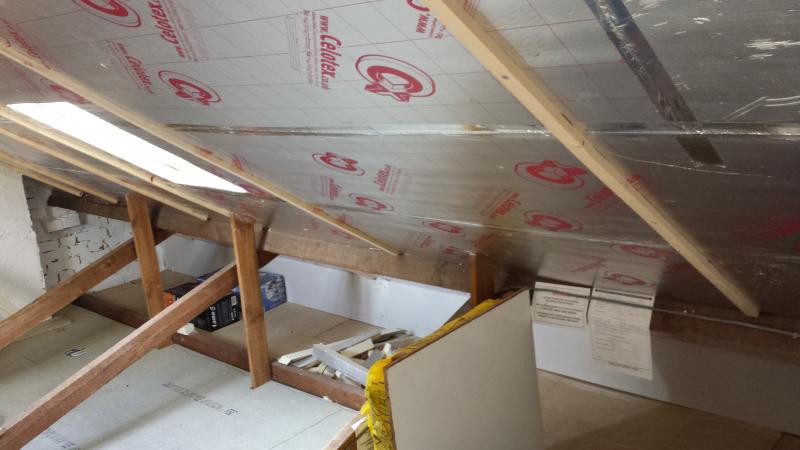
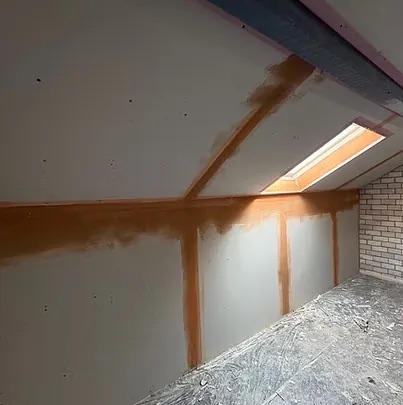
Where the loft has already become living space, insulating its ceiling does nothing and the work goes to the rafters: PIR rigid board such as Celotex cut between them with a second layer underneath, or a foil faced multi-layer quilt like TLX where the sloping ceiling has no headroom to give away. A vapour control layer goes on the warm side and an air gap stays open above the board. Then vent trays hold the eaves open, downlighters get covers, the tank and every pipe now sitting above the insulation get lagging, and the hatch is insulated and draught sealed.
How it runs
Roof space, cavity or solid wall: how the job runs
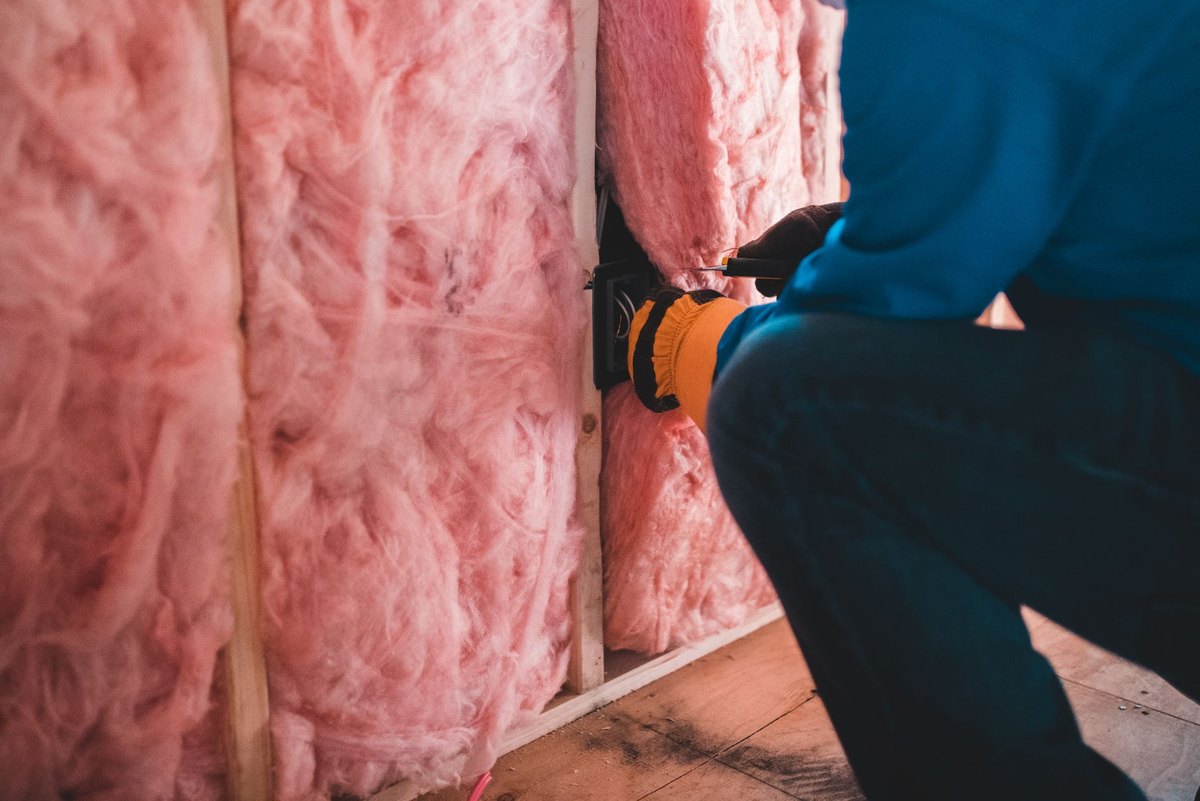
Thomas comes out and goes into the loft himself. He checks what is up there and how deep it is, looks at the eaves for airflow, and if it is the walls, checks whether they are cavity or solid. His written quote sets out the survey, clearing the loft, which material and how deep, any ventilation work, and taking the old material away.
Many houses in Fordingbridge are post-war estate homes with a hatch on the landing and a cavity wall, where a loft top-up is a day's work and cavity fill is drilled from outside off a ladder or a tower. A bungalow has a wide, low loft where the eaves take time. An older house in the town centre may have solid walls and lath ceilings, which call for a different approach. We lay boards to kneel on, bag the old material and take it away. Wet timber, a cracked ceiling or bare wiring found up there is pictured and priced for you, and nothing is done about it without your say.
Loft and cavity insulation is permitted development and needs no planning application, as the Planning Portal insulation guidance explains. On a listed building, other permissions you may require can reach inside as well. If you are not sure whether your address falls inside the National Park, look it up on the New Forest National Park Authority's property map.
Cost
Depth, access and the age of the house: what sets the price
Nobody should price this per square metre. Measuring the floor of a loft is quick; the work round the edges is what takes time.
Loft or walls. A loft top-up with mineral wool laid across the joists is one job. Cavity wall insulation is another, and it only suits a cavity that is clear and dry. A solid wall in an older town house cannot be filled at all, and its lath ceilings need care from above.
What is up there now. Many estate lofts were insulated years ago with a thin layer that has since flattened. It can usually be topped up, but if it is damp or full of dust and droppings, it is bagged and removed first. Belongings stored in the loft have to come out and go back.
Ventilation. Insulation has to stop short of the eaves so air still gets through, and on an older roof without a breathable membrane that matters even more.
Getting there. A landing hatch is easy. A hatch over the stairwell, or a flat reached through a communal stair, takes longer, and cavity fill on a gable needs a tower. The standard the work aims at is in Approved Document L.
Check with anyone else quoting how deep the finished layer will be, whether the old fibre is coming out, and whether the eaves, hatch and pipework are part of it.
If it is urgent
Condensation, a mouldy wall or a room that stays cold
If you go into the loft and find droplets on the underside of the felt, damp insulation or mould on the timbers, warm moist air is getting in and not getting out. Insulating more before that is sorted makes it worse, because a roof space that cannot breathe turns a damp patch into a wet one.
Take a photo, and do not stand between the joists. Rather than the form, pick up the phone. That visit is about telling a ventilation fault from an insulation one, and checking the roof itself is not leaking. Planned work is Monday to Friday, 8am to 6pm. We will be back in touch as soon as we can if your call goes unanswered.
The one local thing
Insulating the roof space, or converting it, is the fork in the road
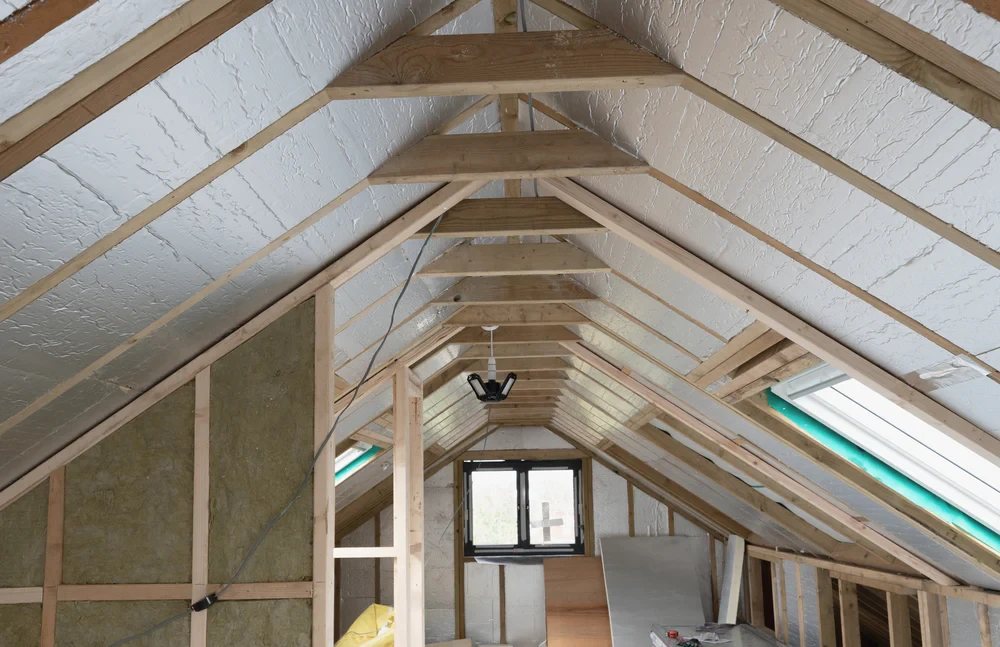
Fordingbridge drains to the River Avon, and the river is a Special Area of Conservation with a nutrient neutrality requirement running across its catchment. It sounds like something that belongs on a developer's desk, and for loft and wall insulation it is. It engages only where a scheme adds overnight accommodation. Insulating a loft does not add a bedroom, so a top-up, a cavity fill or a boarded storage deck are all completely unaffected.
Turning that loft into a bedroom for your own household does not normally engage it either, but an annexe or a holiday let would, and then it becomes one of the other permissions you may require that has to be settled before the work starts rather than during it.
Why it matters to you now is that it decides where your money should go this year. If you are not converting, the insulation belongs at ceiling level, the loft stays cold and ventilated, and it is the cheapest useful improvement in the house.
If you are converting, the insulation belongs at rafter level as part of that job, and paying for a rafter-level warm roof in advance is money thrown away, because a conversion will strip it back and re-detail it anyway. So the question we ask at the survey is not just what is cold, it is what you are planning in the next two or three years. Answer that honestly and the right job is obvious. Answer it vaguely and you can easily pay for the same roof twice.
Who you are dealing with
The company behind the insulation, and its details
Boscombe, where our base is, lies 14.1 miles from Fordingbridge. We insulate homes in the town and out through Sandleheath, Alderholt, Rockbourne and Breamore along the Avon, and building control for the town is New Forest District Council.
The firm is Bournemouth Roofing & Building Ltd, company number 15471719, registered in England and Wales. It belongs to Thomas Hannen, who goes up into the loft in person and prices the job. A verified customer gave us 10 out of 10 on Checkatrade. Both the survey visit and the written, itemised quote are free. Before you book a visit in Fordingbridge, you can read our customers' Google reviews, word for word, on our reviews page.
Planning at a glance
Do you need planning permission in Fordingbridge?
Most repairs in Fordingbridge need no application at all. What decides whether a change to the outside of your house does is who the council is, whether a conservation area or a listing applies, and whether the place sits in a protected landscape.
| Question | In Fordingbridge |
|---|---|
| Who decides | New Forest District Council is the planning authority for Fordingbridge. The National Park boundary runs close by, and the Park's property map shows which side an address falls. |
| Conservation area | Yes: Fordingbridge Conservation Area. Check whether your street is inside the boundary before changing anything visible. |
| Listed buildings | Yes, there are listed buildings in and around Fordingbridge. If yours is one, work can need listed building consent. |
| Protected landscape | No National Park or National Landscape covers Fordingbridge. |
Questions
Questions about insulation in Fordingbridge
Our house is 1970s. Is the loft insulation original?
Probably, and probably about 100mm of it. Around 41% of Fordingbridge stock went up between 1945 and 1982, with the busiest run in the 1970s and early 1980s, and the quilt laid then has been compressed by its own weight ever since. I measure at the hatch, at mid span and out at the eaves, because the middle always reads deeper than the edges and people quote the middle.
Does New Forest District Council need to approve insulation?
Not for topping up what is already there. That counts as maintenance and no application goes in. Converting the loft is a different matter for building control, though an extra bedroom in your own house does not normally engage the River Avon nutrient rules; a new dwelling, an annexe or a holiday let would. The town centre is covered by the Fordingbridge Conservation Area, but insulation laid inside a loft does not change the outside of a house, so ordinary houses there have nothing else to clear either. A listed building is the exception, since consent can reach internal work.
Ours is one of the listed buildings. What changes?
The consent does. Fordingbridge has 49 listed entries and if yours is among them, work touching historic ceilings, cornices or panelling needs listed building consent from the council first. Quilt laid loose over the joists in an unaltered roof space is usually the least contentious thing you can do up there. I read the list entry and its description before pricing, so we both know what is protected.
Someone said Fordingbridge has radon. Does that affect this?
Radon is a ground floor problem, not a roof one. This area sits in the band where 3 to 5% of homes need basic protection, and it comes up when you dig for an extension or lift a solid floor. Laying material above a ceiling has no bearing on it. A loft conversion adds no new ground floor, so radon protection does not come into it.
We let the house out. Can our tenant book it?
The tenant can let me in but cannot order the work. Altering the fabric is the owner's decision, and in a Fordingbridge terrace the material runs right up to the party wall, which is worth agreeing with the neighbour beforehand. I arrange access through whoever lives there and send the written itemised quote to you. Thomas Hannen prices the job himself, so there is one person to ask about it.
Nearby, and next door
Insulation near Fordingbridge
Nearby places we also cover for insulation, with straight-line distances from Fordingbridge, and the other trades we offer in Fordingbridge itself.
Insulation nearby
Our other trades in Fordingbridge
Insulation guides
Part L: do you have to insulate when you re-roof? Black mould on walls: what causes it and what stops it PIR board vs mineral wool: which insulation?Everything we do in Verwood Insulation, all areas Every area we cover
Free quote
Get a straight answer about your insulation
A free survey in the roof space and the rooms below it, then an itemised written price with every part on its own line.