Insulation in Rockbourne
Loft, floor and breathable wall insulation for old buildings, put in where it works and left out where it would do harm.
The site visit is free and so is the written itemised quote. Thomas Hannen prices every job himself.
Insulating an old cottage is not the same job as insulating a modern house, and in Rockbourne most of what we are asked to look at is old. The rule we work to here is simple: put the depth in where it does not stop the building drying out, and leave alone anything that would trap moisture in a wall or a roof that has always breathed. The site visit and the written quote are free.
Two conversations come up more than any others. Somebody is buying or has just bought a cottage in the village, the heating bill has arrived and they want to know what can honestly be improved without wrecking the fabric. Or somebody has lived with a cold bedroom over an unheated room for years and has finally had enough of it.
Neither is answered from a doorstep. We go up into the roof and under the floor where we can get there, measure the existing depth with a probe instead of guessing at it, look at what the ceilings and walls are actually built of, and check where air is moving through the building. Then you get an itemised written quote with the method on it, and nothing is ordered until you have agreed it.
The work
Half these ceilings will not carry a man's weight
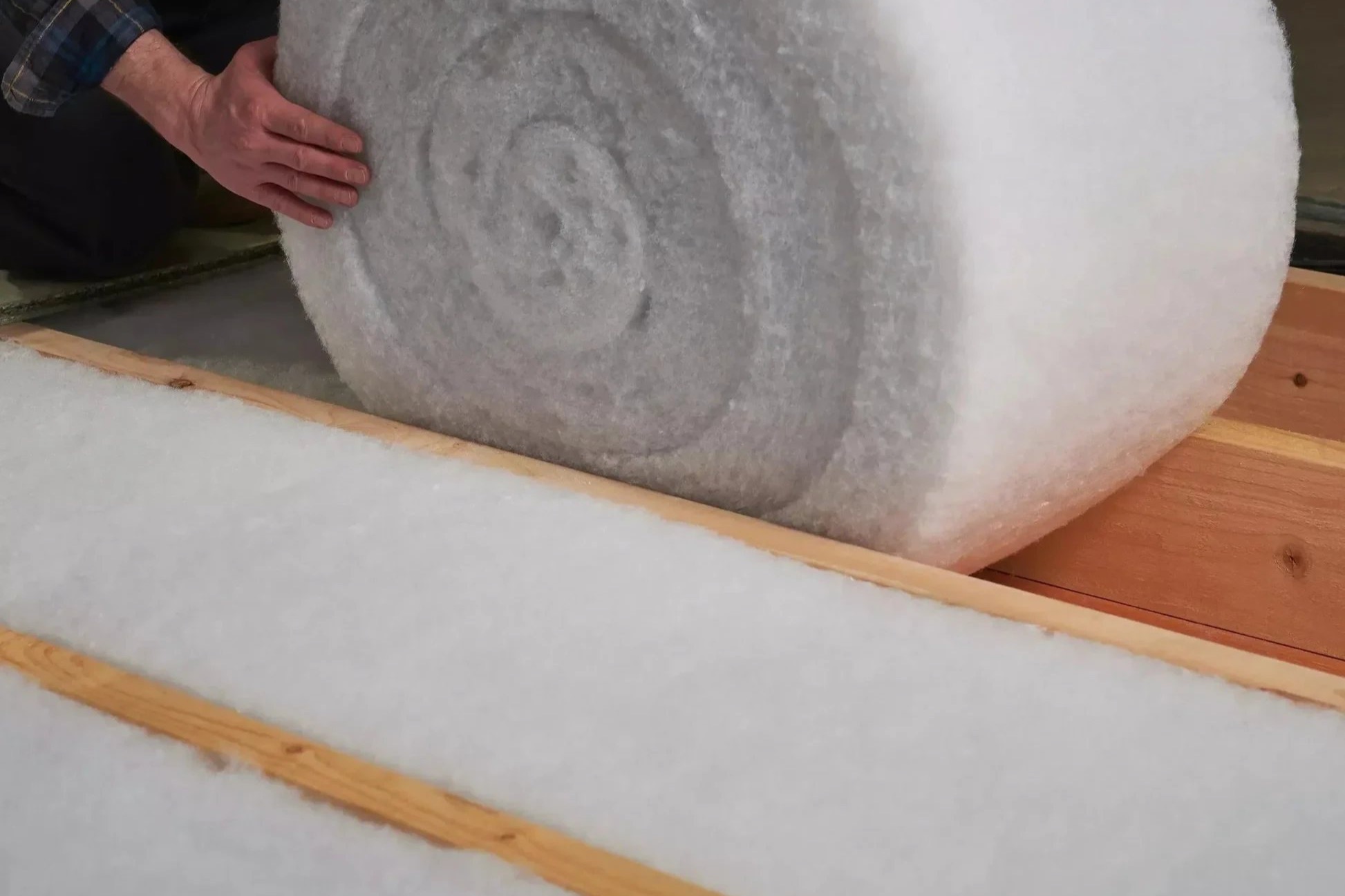
Lofts under thatch. Thatch is already a warm covering and it works because it is open to the air and dries from both sides. So the insulation goes at ceiling level in mineral wool, with nothing sealed across the underside of the thatch and no vapour barrier laid where it would stop the roof breathing. Recessed downlighters and thatch do not belong in the same building, and where we find them shining up into a quilt we say so and price the covers rather than bury them. Getting depth over irregular joists in a low roof space is slow, patient work, and we would rather take the extra half day than leave a gap along every edge.
A lot of the ceilings here are lath and plaster and will not carry a person's weight, so we crawl on boards laid across the joists. The joists are rarely at any spacing a roll was made for, so the wool is cut to fit rather than pushed in and left to spring back. We lay between and over where the space allows, the second layer straight across the joists so none of them is left as a cold bridge. The number that counts is the finished ceiling: a renovated thermal element is expected to reach a U-value of 0.16, nearer 270mm of quilt than the 250 people have in mind.
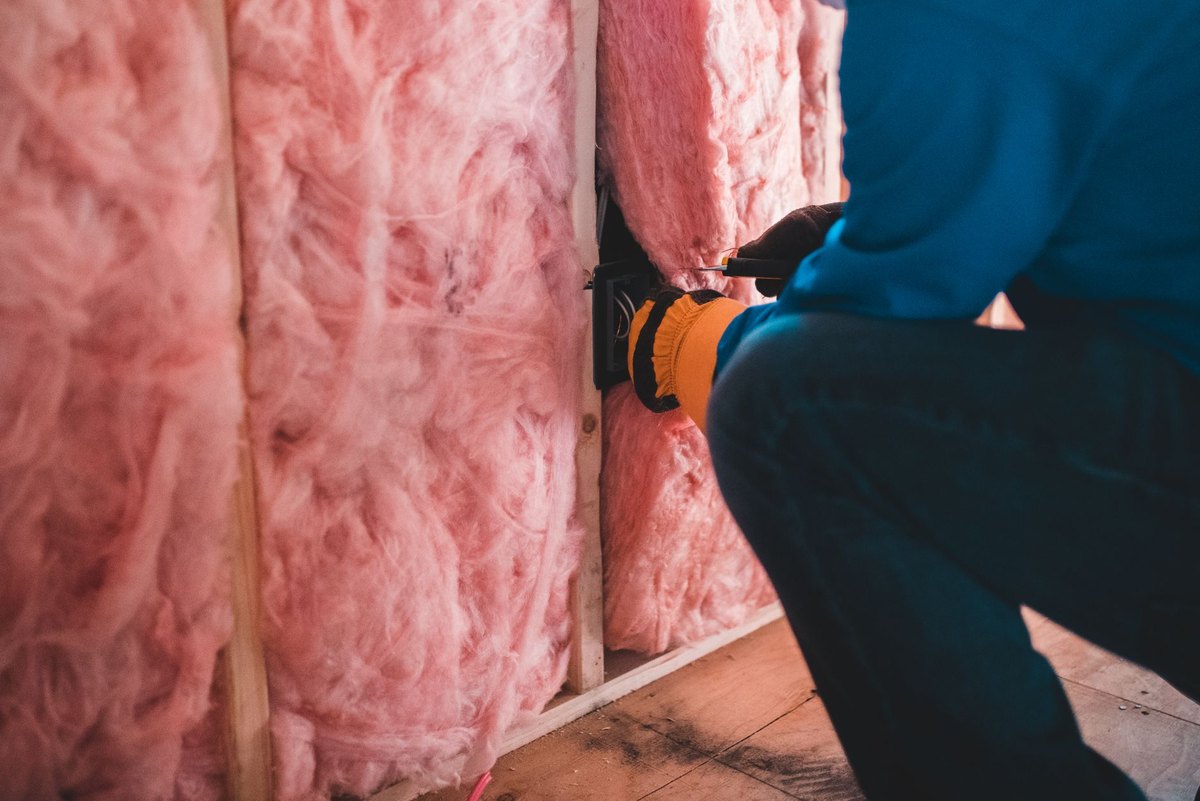
Where we stop on the walls. Cob, brick and flint and old solid brickwork have no cavity to fill, so the choice is internal wall insulation on the coldest rooms in wood fibre or another breathable board bedded in lime, or nothing at all. External wall insulation is a different conversation in a village that is a conservation area, and mostly the answer here is no. On the newer houses at the edge of the village a borescope tells us in minutes whether the cavity is clear, already filled, or slumped and leaving a cold band.
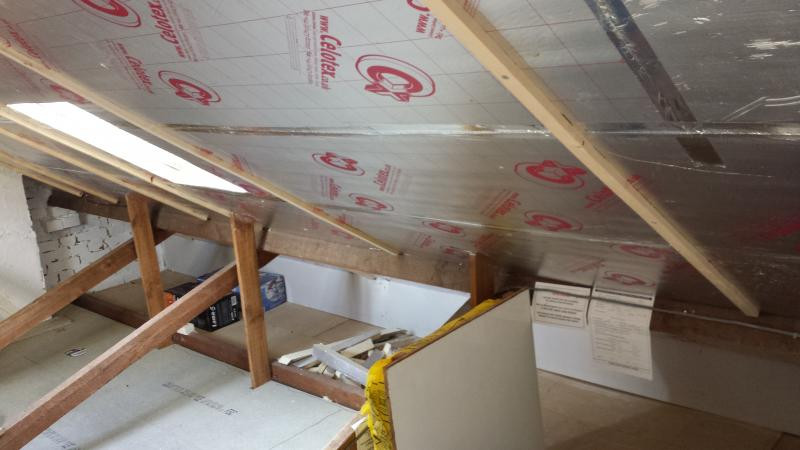
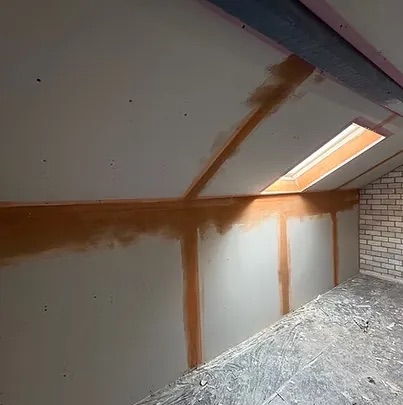
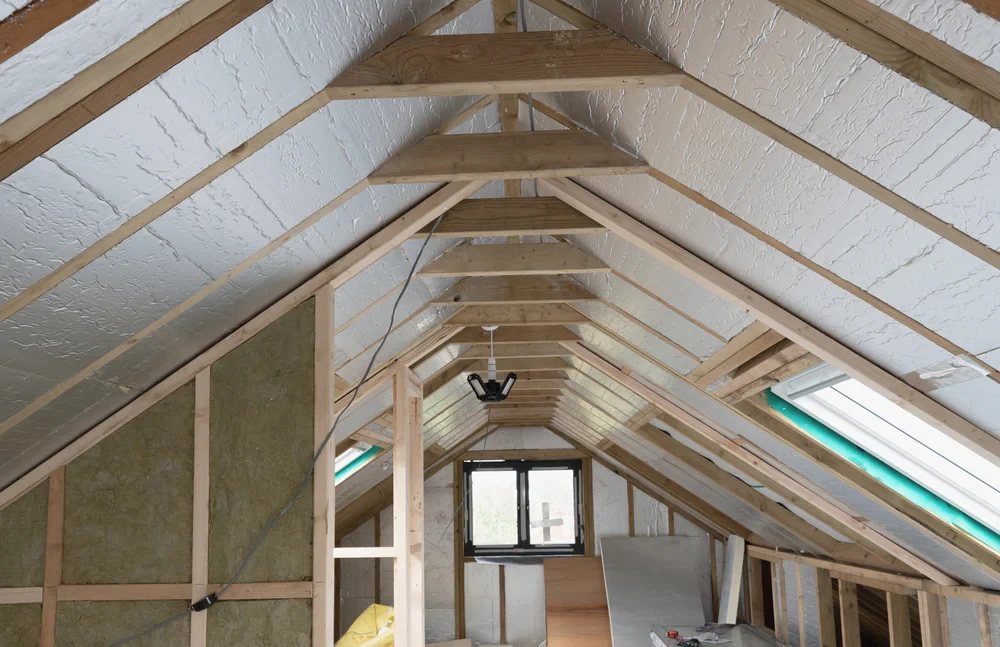
A suspended timber floor over a ventilated void is one of the biggest sources of draught in a cottage and often easier to deal with than the walls. Where there is access we insulate between the floor joists with a breathable quilt on netting, keep every air brick clear so the void still ventilates, and seal the gaps at the skirtings. Where a roof has already been lived in, a room in roof is insulated at rafter level: PIR board such as Celotex between the rafters with a clear air gap above, a foil faced board across the underside, or a multi-layer quilt like TLX where the headroom is tight.
How it runs
From your call to a written price
Laying quilt in a loft or lining a wall on the inside is an improvement rather than development, so it needs no planning permission and sits inside permitted development, and the Planning Portal sets out where that stops. It stops sooner here: the village is a conservation area, so cladding a wall on the outside is not permitted development the way it would be elsewhere, and Planning Portal guidance on external walls explains why. There are 52 listed entries here, and consent for a listed building reaches inside as well as out, so we check the address before we quote. New Forest District Council is the authority, and regulation 23 sets what a renovated thermal element has to reach.
Cost
What decides the price of an insulation job
No rate per square metre. A thatched cottage with a small hatch on a landing and purlins in the way, a brick and flint house where the loft is only reachable off a bedroom cupboard, and a modern bungalow at the edge of the village with a fitted ladder are three different days before any material is opened. Old material that has to be bagged and carried out is a cost before anything new goes down. Approved Document L sets what the finished work has to reach. Ask any quote what depth is going down and whether the eaves are being kept clear.
If it is urgent
Damp, condensation or a room you cannot heat
Ring rather than use the form. A loft dripping with condensation, mould that keeps coming back, or a room that will not hold heat gets looked at quickly. The first visit tells you whether it is insulation, ventilation or both. Rockbourne is out past Fordingbridge, so you get an honest day rather than a promised hour we would miss. The phone is answered 24 hours for emergencies; scheduled work runs Monday to Friday, 8am to 6pm.
Worth knowing
Off the gas main, the fabric is worth more here
Close to half the households in this area heat with oil and about one in ten with direct electricity, which is a very different picture from a street on the gas main. That does not change how a loft is insulated. It changes what the same loft is worth.
Every unit of heat that goes out through a cold ceiling here has been bought at the price of a tank of oil or a unit of electricity rather than at the mains gas rate, so the same job pays for itself sooner in Rockbourne than it would in a town, and the case for going to full depth rather than a token top-up is stronger. It also changes what happens when the tank runs low in February, because a house that holds its heat gives you a few more days between deliveries.
The order of work matters too. If a heat pump is anywhere in your thinking, the fabric comes first: a heat pump gives you warmth at a lower flow temperature, which only feels comfortable in a house that is not leaking heat through the ceiling and the floor. Insulate first, then size the heating to the house you have made, rather than the other way round.
And it is worth knowing before you compare quotes that insulation fitted in an existing home is zero rated for VAT under HMRC VAT Notice 708/6, so a price that has tax on the materials is a price worth asking about. We are happy to look at the whole house and tell you the order we would do it in, even where that means telling you to leave the walls alone for now.
Who you are dealing with
A local firm you can check
We cover Rockbourne, Sandleheath, Breamore and Fordingbridge on SP6, out across the Avon valley and down through Ringwood, and New Forest District Council is the planning and building control authority for this address. Bournemouth Roofing & Building Ltd, registered in England and Wales, company number 15471719, which you can look up in a minute. Thomas Hannen's business, and he is the one who comes out to price the job, not a salesman. A verified customer's 10 out of 10 on Checkatrade. The visit and the written quote are both free.
Questions
Rockbourne questions we get asked
We heat with oil out here. Where does insulating pay?
In the fabric, first. Around 44.8% of households in Rockbourne burn oil and another 10.8% run on electricity, so every unit of heat is bought and stored rather than metered off a main. That makes the roof the first job, then draughts at doors, letterboxes and floorboards. Filling the loft before you touch the boiler means the tank in the garden lasts further into the winter.
Does the Rockbourne conservation area reach inside the roof?
No. The designation controls how the place looks, so it reaches the covering, the render, the windows and anything fixed to an elevation. Quilt rolled between joists is invisible from the lane and sits outside all of that. Where it does matter is a change of material, because swapping a covering for something different is not like for like maintenance and New Forest District will want to see it first.
The cottage sits in flood zone 3. What changes?
The ground floor does. Sweatfords Water runs about 12.7 metres away and both flood zone 2 and zone 3 cover this part of Rockbourne, so I would not pack a suspended timber floor with something that holds water and cannot dry out again. Mineral quilt slung under boards in a void that floods is a mistake. Roof work is unaffected by any of it and goes ahead as normal.
Can you get right out to the eaves in an old roof?
Usually, with a rake and a crawl board, but not always. Old cottage roofs out this way have a low pitch at the wall plate and often no gap left for air, so pushing material hard into the corner blocks the only ventilation the void has got. Where I cannot reach it safely I say so and price a vent tray rather than pretending the corner has been done.
Which side of the house loses the most heat?
The south west face, on almost every property here, because that is the elevation taking wind and driven rain off open ground. Wind blowing at a wall pushes air through the gaps around openings and along the eaves, and moving air strips heat far faster than still air does. So on a Rockbourne survey I look hardest at that corner, the window reveals and the top of the wall.
Nearby, and next door
Insulation near Rockbourne
Insulation nearby
Our other trades in Rockbourne
Everything we do in Verwood Insulation, all areas Every area we cover
Free quote
Ask what your cottage actually needs
A free site visit, a probe into what is already there, and an itemised written quote with the materials and the method on it as well as the price.