
Bricklaying and repointing in Rockbourne
Lime repointing of flint and brick walls, cob plinths, stacks over thatch and the long walls along the lane.
The site visit is free and so is the written itemised quote. Thomas Hannen prices every job himself.
Bricklaying and repointing
Brickwork in Rockbourne: flint, soft brick and nothing hard anywhere near it
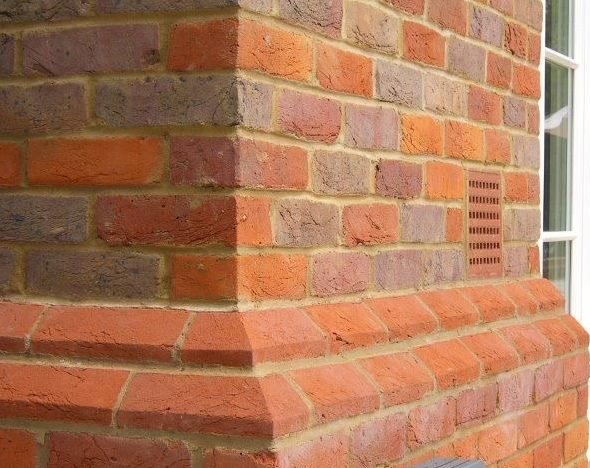
Almost every wall in Rockbourne is a solid wall built in lime, and a lot of them are flint with brick quoins and lacing courses rather than brick throughout. Those walls have to stay breathable, so the repair is always lime and always raked by hand. If somebody offers to run round the village with a disc cutter and a bag of cement, that is the job you should not buy.
What brings people to the phone here is usually one of three things. Flint dropping out of a wall along the lane, which is the mortar failing rather than the flint. Brick faces flaking away in the bottom few courses of a cottage or a boundary wall. Or a stack on a thatched roof that has started shedding mortar and is now a genuine worry.
We come out, look at the whole building rather than the patch you have spotted, and tell you what is actually happening in the wall, which on an old building is often a ground level or a gutter rather than the brickwork at all. If it can wait, we say so. The site visit and the written itemised quote are free either way.
The work
The brickwork jobs we do in Rockbourne
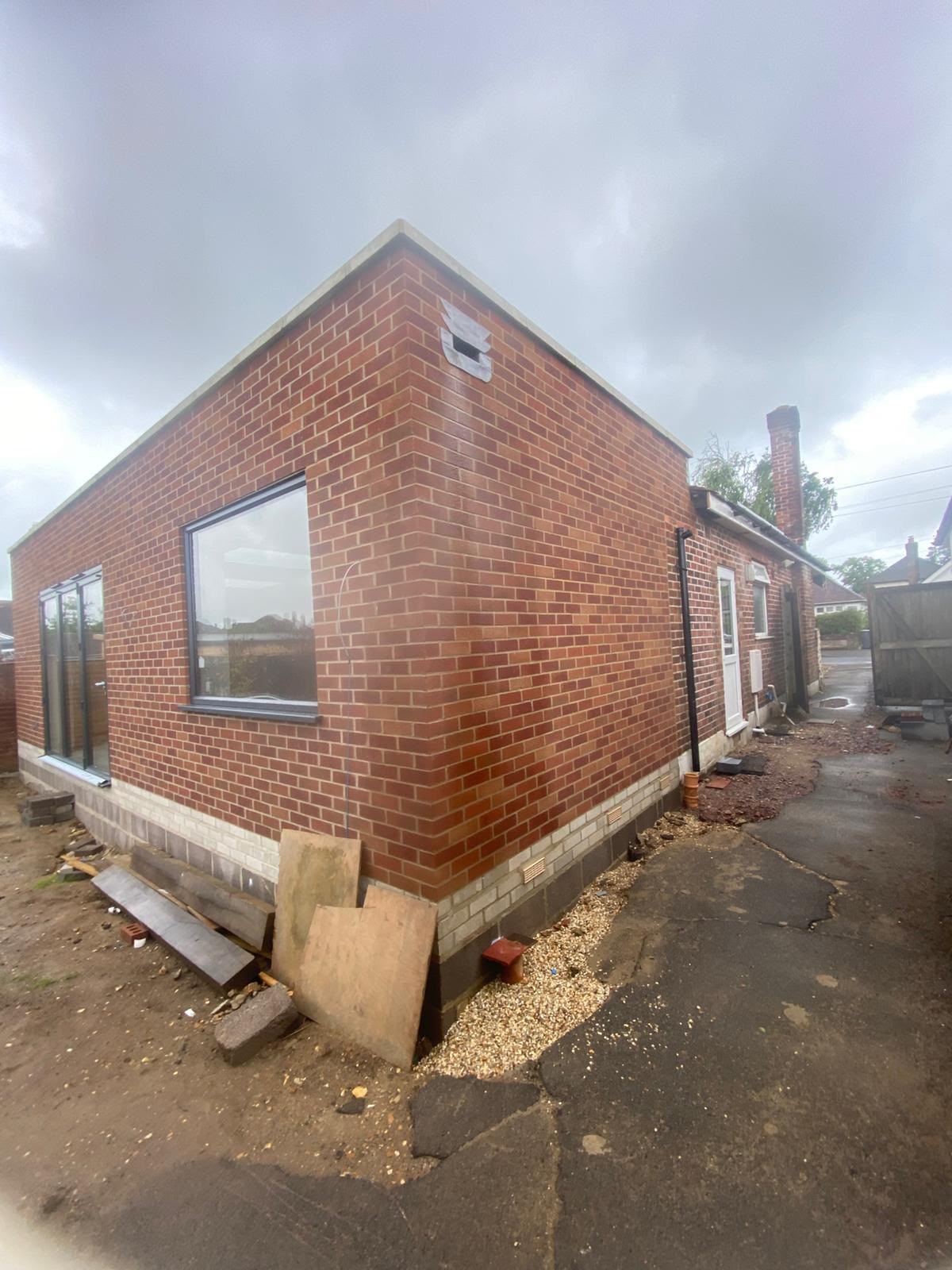
Flint and brick, pointed to the flint. The chequer and banded walls here are flint set in a lime mortar with brick at the quoins, the lacing courses and the openings, and the flint is doing almost nothing structurally on its own. It is the mortar that holds the wall together, so when it washes back the flints loosen and then drop. We rake the joints out by hand and point back in an NHL lime matched for sand, colour and texture, brought up around each flint rather than smeared flush across the face, because a flush skim over flint is what makes an old wall look like a concrete one.
The brick in the village is soft and handmade, and where it has been repointed in sand and cement the damage shows in the brick rather than the joint. A hard joint stops a solid wall breathing, so the moisture leaves through the face and pushes it off. Cutting that cement out without damaging what is left is slow, patient work.
Plinths, and the wet end of a wall. Several buildings here are cob or chalk sitting on a brick or flint plinth, and the plinth exists to keep the earth wall clear of the splash line. Once it loses its mortar, water gets behind it and the wall above starts to go. Rebuilding a plinth course by course in lime, bedded so the wall can still dry, is a repair worth doing the year you notice it. The village sits in flood zones 2 and 3 with Sweatfords Water only metres off the built edge, so the bottom courses of any wall here work harder than they do elsewhere.
A stack above a thatched roof is the most exposed brickwork in the village. We repoint above roof level, cut out perished brick, renew the flaunching round the pots and rebuild from the flashing up. Working over thatch changes the method rather than the price: no grinders, no flame, the coat sheeted, and the access set out so nothing is dragged across it.
The walls along the street are long, old and have no damp proof course, so they wick water up from a verge that is wet for much of the winter and the bottom courses go first. We rebuild bowed lengths on a proper footing, reinstate the coping that was keeping rain out of the core, and rebuild gate piers bonded into the wall. The former farm buildings bring blocked cart openings cracked along the joint between old and new, sagged lintels, and new openings that need a foundation under the pier.
How it runs
From your call to a written price
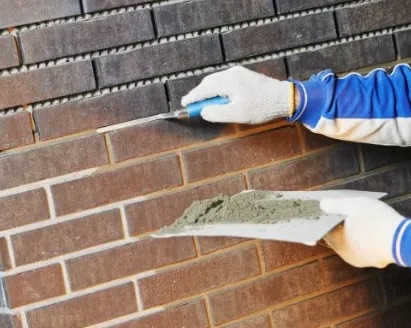
The quote is itemised by elevation: access, raking out, the mix, brick replacement and disposal on separate lines. Rockbourne is New Forest District Council and the village has its own conservation area, so like for like repair is maintenance but a different mortar colour or joint profile is not. Fifty two entries here are listed, the church and the manor among them, and there even like for like repointing needs consent first; The Planning Portal note on other permissions you may require sets out what that covers. Garden walls have height limits, explained in Planning Portal guidance on fences, gates and garden walls. Structural work goes through building control, and the Party Wall etc. Act 1996 covers a shared wall.
Cost
What decides the price of a brickwork job
No rate per square metre: the metre of wall tells you nothing until you know what the joints are like. A thatched cottage on the street edge, a flint and brick wall along the lane and a barn in the yard behind a house are three different set ups. How long a platform stands matters as much as its size, and the work at height rules are why it is a priced line rather than an optional extra. Matching an existing lime for colour and strength takes trial panels, and matching a brick means sourcing it. Ask what the mix is.
If something has moved
Loose brickwork, or a wall that has shifted
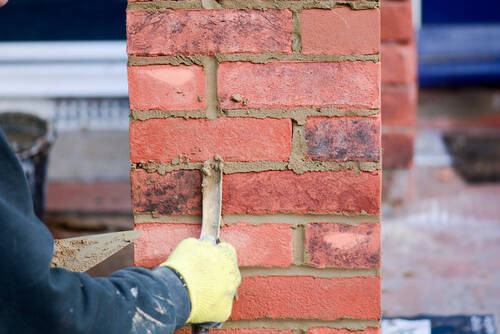
Ring rather than use the form. Anything overhead or leaning goes to the front of the queue: the first visit makes it safe, and we price the permanent repair once we can see how far the movement goes. Here it is usually flint coming out of a lane side wall after a wet spell, or a stack loose above thatch. The phone is answered 24 hours for emergencies; scheduled work runs Monday to Friday, 8am to 6pm.
The one local thing
The stream keeps the bottom of your walls wet all winter
Rockbourne is a chalk valley village and the watercourse runs close to the street, close enough that a good part of the village sits in flood zones two and three. For brickwork the once in a generation flood is not really the point. The point is that the ground alongside a wall here stays wet for months at a time, and the walls in this village were built with no damp proof course because that is how walls were built.
They cope with it perfectly well as long as they can dry out again through the joints, which is exactly what a lime mortar lets them do and exactly what a cement one stops. Nearly every failing bottom course we look at here is a drying problem rather than a wetting problem.
What to do with that. Before you spend anything on the wall itself, look at the ground against it. Levels creep up over decades: a path relaid a bit thicker, a new drive, a border built up against a plinth, and suddenly soil or paving is sitting above the level the wall was designed for and holding water against soft brick. Getting that level back down and giving the base of the wall air does more good than any repointing. Then point in lime so the wall can breathe.
Resist anything sold as waterproofing: a cement skirt or a sealer traps the water in and simply moves the damage a course or two higher. And if you are planning anything new, check your address on the government flood risk service first, because the flood zone changes what a footing and a floor level should look like and it is much cheaper to know before the drawing than after.
Who you are dealing with
A local firm you can check
We are about seventeen miles from Rockbourne and up into SP6 regularly, covering the villages north of Fordingbridge including Sandleheath, Breamore, Damerham and Whitsbury. Bournemouth Roofing & Building Ltd, registered in England and Wales, company number 15471719, which you can look up in a minute. Thomas Hannen's business, and he is the one who comes out to price the job, not a salesman. A verified customer's 10 out of 10 on Checkatrade. The visit and the written quote are both free.
Questions
Rockbourne questions we get asked
What does the Rockbourne conservation area control on a wall?
Appearance, which in practice means the mortar and the joint. Repointing in the same mix, the same colour and the same profile as what is already there reads as maintenance and needs nothing from New Forest District. Change the material, widen the joint or strike it proud and you have altered how the wall looks, which is a different matter. We photograph a clean length of the original joint before anything comes out, so the match is on record.
Sweatfords Water runs close by. Does that reach the brickwork?
At the bottom of a wall it does. The nearest watercourse is Sweatfords Water at about 12.7 metres, and Rockbourne sits in flood zones 2 and 3, so the lowest courses of a boundary wall or an outbuilding spend part of the winter saturated. Lime in that position washes out faster than the same lime higher up the same wall. On a rebuild we use a denser mix at the base and keep the softer work above the splash line.
Do the listed buildings here catch the cottages around them?
Sometimes. There are 52 listed entries in Rockbourne, the Church of St Andrew and the barn east of the Manor House among them, and a structure standing in the grounds of a listed building before 1948 can be covered by the same protection. That takes in garden walls, privies and outbuildings nobody thinks of as listed. Check the entry for your address first, and if it is covered, consent comes before the tools do.
Where would the van and the mixer stand on our lane?
Usually the awkward part in a village like Rockbourne is not the height of the wall, it is where the plant sits while we work. Soft verges, a ditch behind the hedge and a lane with no passing place all decide that. Thomas settles it at the visit. We bring materials in as they are needed rather than dropping a full load on the grass, and anything touching the highway is cleared with New Forest District first.
Someone pointed our wall in cement. Does it all come out?
Where it is doing damage, yes. Cement across a soft old wall traps water behind it and the brick face blows instead of the joint, so you get spalled arrises and a crumbling surface under a hard grey ribbon. Where the cement is sound, well bonded and the brick behind it is intact, cutting it out can do more harm than leaving it alone. We rake a test length, look at what comes away, and price only the areas that need doing.
Nearby, and next door
Bricklaying and repointing near Rockbourne
Bricklaying and repointing nearby
Our other trades in Rockbourne
Everything we do in Verwood Bricklaying and repointing, all areas Every area we cover
Free quote
Find out what that wall actually needs
A free site visit, an honest answer about lime, ground levels and what can wait, and a written itemised quote.