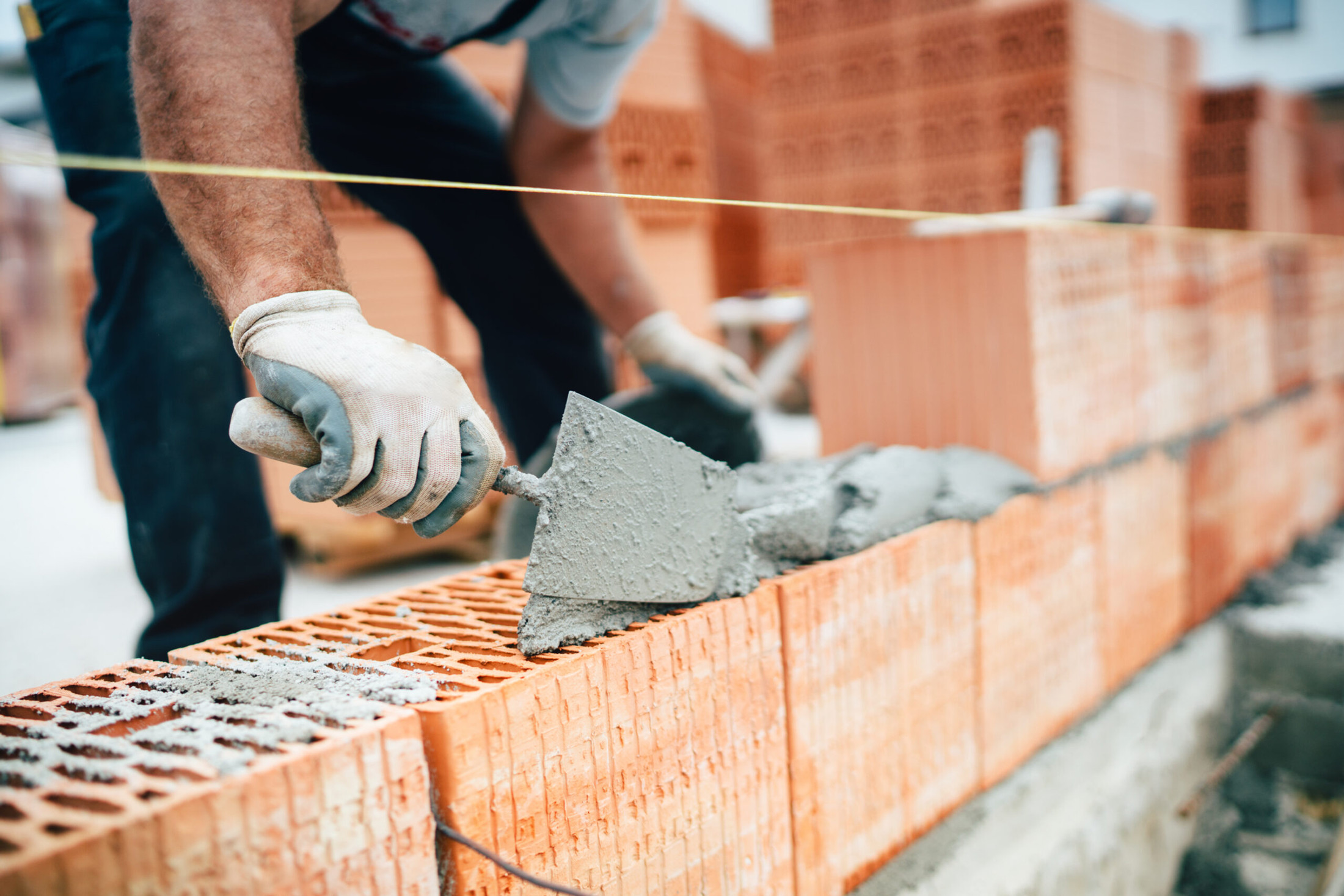
Bricklaying and repointing in Downton
Repointing, brick repairs and new walls across Downton and the SP5 villages, raked out by hand and filled with a mortar the wall can live with.
The site visit is free and so is the written itemised quote. Thomas Hannen prices every job himself.
Most brickwork in Downton does not need rebuilding. It needs the joints raking out to a proper depth and refilling with a mortar soft enough to let the wall dry out through the joint, which is how the older walls in this village were built to work in the first place.
Three things bring people to ring us here. Mortar that has gone so soft you can rub it out of a bed joint with a thumb, usually along the bottom of a wall on the low ground near the river. A hard grey cement pointing that somebody applied over soft old brick years ago, which is now taking the faces off the bricks either side of it. And a garden or boundary wall along one of the lanes that has started to lean after a wet winter.
None of those is an emergency. All of them get worse and more expensive the longer the joints stay open, because the joint is the part of a wall meant to be renewed and the brick is not. We come out and survey it properly, tell you which of the three you have got, and put an itemised written price on paper before anybody touches the wall.
The work
The jobs we do on Downton walls
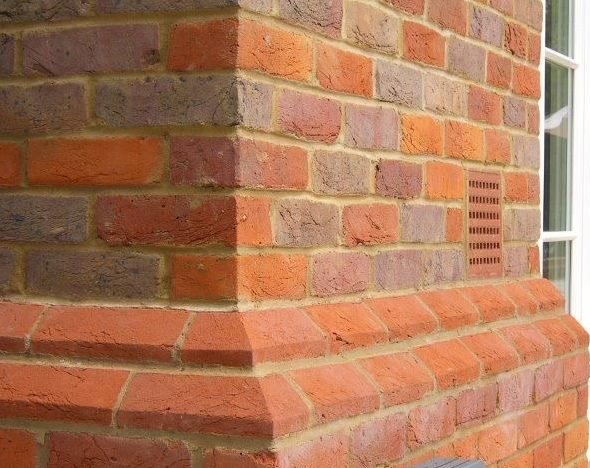
Solid walls on The Borough. The Borough and the lanes running off it are largely soft red brick, a fair amount of it handmade, some of it panelled with flint and dressed in brick, and nearly all of it solid walling with no cavity behind it. A quarter of Downton predates 1919 and the largest single slice of that is pre-1900. On that fabric the joints come out by hand with a hacking iron and a plugging chisel rather than an angle grinder, because a disc that wanders takes the arris off the brick and you look at that for the rest of your life. We rake back to about twice the width of the joint, damp the wall down so it does not suck the water out of the mix, and fill in lifts. The mortar is a natural hydraulic lime, usually NHL 3.5 with a sharp sand, kept weaker than the brick so the joint wears before the face does, finished flush or slightly recessed, which is what most walls in the village already have.
Low courses and copings. The ground here is wet and the water table sits high, so the damage turns up in the bottom courses first: spalling where frost has lifted the faces, white salts drying out of the brick, and a soft crumbly band above the damp proof course where there is one at all. Blown bricks are cut out one at a time and replaced with a reclaimed brick of the same size, with a sample panel to look at where the match matters. Outside it is brick and flint boundary walls, gate piers, brick-on-edge copings that have lifted, and free-standing walls pushed over by a root or clipped by something reversing. A coping is not decoration: its weathering throws the rain clear of the top of the wall, and once it is off the water gets into the core and the wall starts to go. Where the movement is real we rebuild from the footing. Where it is old and settled we stitch and repoint it and leave it alone.
Stacks above the older cottages show cracked flaunching, pots sitting loose and joints you can see daylight through, and a stack takes weather from every side at once, so it is normally the first brickwork on a house to go. Repointing is usually enough, and where the top courses have gone soft they come off and go back. Getting on for half the village went up after the war and is a different animal: cavity construction, blockwork inner leaf, facing brick outer skin and mild steel ties. What we see there is horizontal cracking repeating every few courses where the ties have corroded, and cracked lintels over windows and garage openings. The mix is a gauged sand and cement and the joints go back as they were struck. Stepped cracking at a corner, a bowed elevation or a wall that has come away at a return is another thing again: some is helical stitching, some is rebuilding off a sound foundation, and some wants a structural engineer before anybody quotes brickwork. If it is the third we will tell you, because selling you pointing over a moving wall helps nobody.
How it runs
From your call to a written price
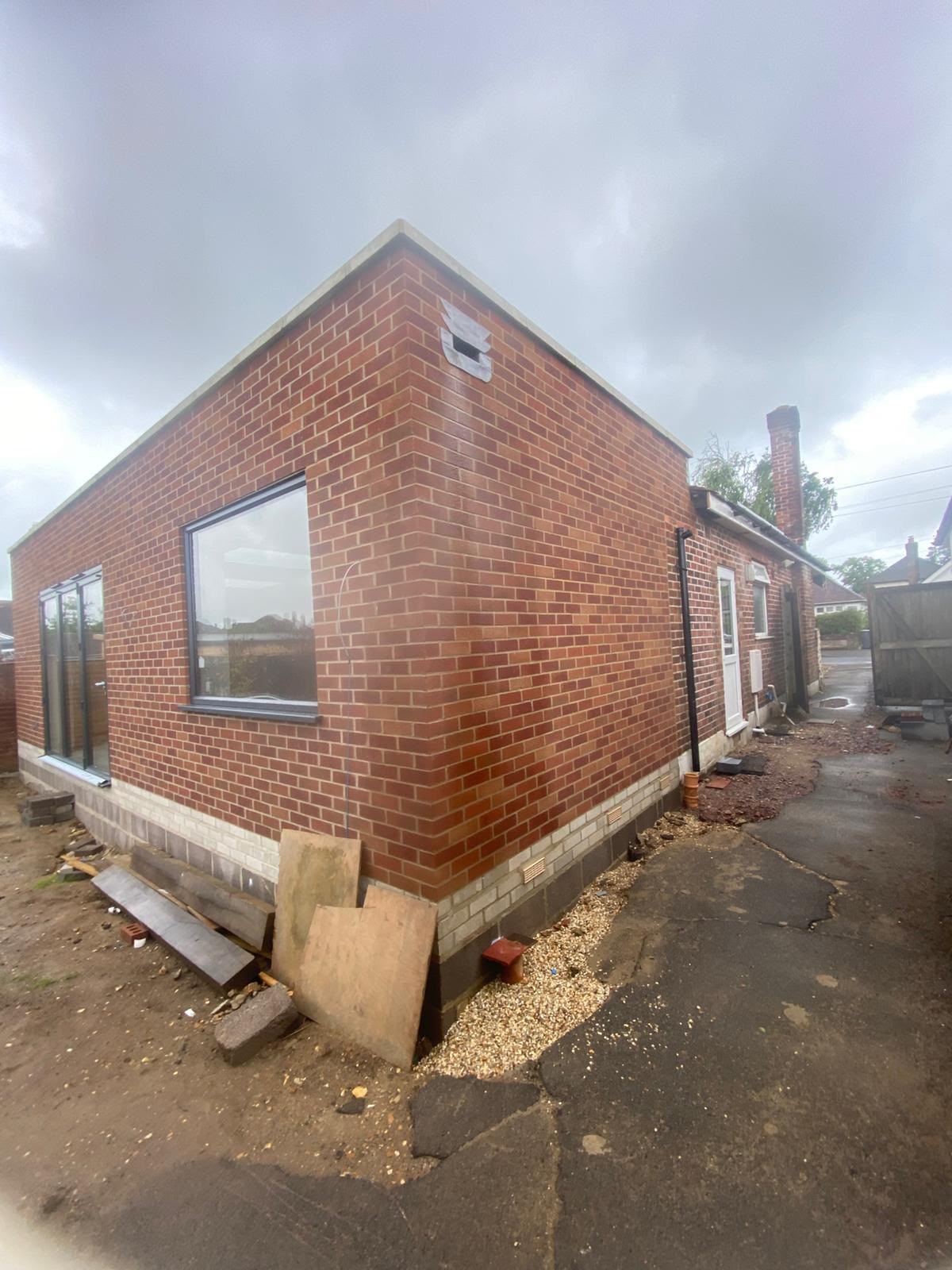
Thomas prices it himself, and the quote itemises access, raking out, the mix, each elevation and any brick replacement. Downton is a conservation area and the village carries more than a hundred listed entries, the Manor House and the Church of St Laurence among them, so on an older building we check what we are working on before a joint is touched. Repointing like for like is repair. Changing the mortar, the joint profile or the colour on a listed building is not, and listed building consent is a separate application from planning permission. Wiltshire Council is the authority here, and the Planning Portal sets out the general position on work to external walls.
Cost
What decides the price of a brickwork job
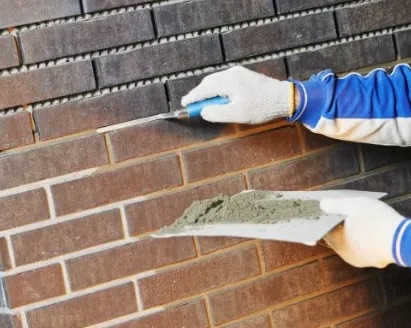
No rate per square metre: the metre of wall tells you nothing until you know what the joints are like. A cottage front on The Borough, a semi on one of the post-war closes and a boundary wall along a lane are three different access problems. The platform is a priced line rather than a favour, under work at height rules. Depth of rake and the state of the brick faces decide the hours, not the square metres. Comparing quotes, ask the rake depth, hand or disc, the mix, the brick count and the scaffold.
If something has moved
Loose brickwork, or a wall that has shifted
Ring rather than use the form. Anything overhead or leaning jumps the queue: a chimney that has moved, a parapet, a garden wall pushed out by roots or a vehicle. Round here it is most often a length of old boundary wall by a lane, or the top of a stack after a wet spell. The phone is answered 24 hours for emergencies; scheduled work runs Monday to Friday, 8am to 6pm.
The local part
What the conservation area actually changes
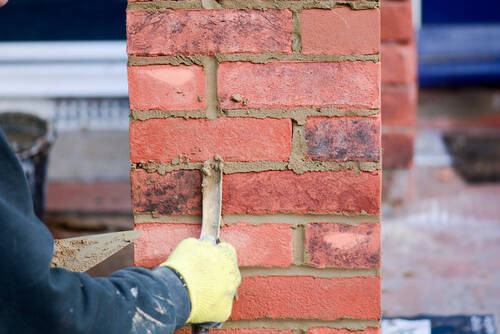
Downton is a conservation area and there are more than a hundred listed entries inside the village, which is a lot for a place this size. What that controls is narrow, and it is worth knowing exactly how narrow: appearance. Repairing a wall the way it was built is maintenance and nobody minds. Changing how it looks is a different conversation.
So the questions that decide your job are what the existing mortar actually is, what profile the joints were finished to, and whether the building itself is listed, because a listed building needs consent for work that changes its character even where planning permission is not in question at all.
In practice that means we put up a sample panel and agree the colour and the texture with you before the rest of the wall is touched, and where the council wants to see one, with them as well. It also means we will not put a cement mix on a period wall to save a day.
Old solid walls are breathable by design, and a hard joint on soft brick does not stop the water, it just moves the wear off the mortar and onto the brick faces, and replacing faces costs many times what replacing mortar does. If your property sits outside the conservation area boundary and is not listed, none of this applies to you and we get on with it.
Who you are dealing with
A local firm you can check
We cover Downton, Redlynch, Lover, Alderholt, Fordingbridge and the SP5 addresses down the Avon valley, with Wiltshire Council for planning and building control. Bournemouth Roofing & Building Ltd, registered in England and Wales, company number 15471719, which you can look up in a minute. Thomas Hannen's business, and he is the one who comes out to price the job, not a salesman. A verified customer's 10 out of 10 on Checkatrade. The visit and the written quote are both free.
Questions
Downton questions we get asked
Downton is in Wiltshire. Do you cover it?
We do. Downton is 19.7 miles from the yard and it is Wiltshire Council rather than Dorset or the New Forest, so the planning contact is different from the rest of the patch. That only matters where consent comes into it. For a repoint, a rebuilt garden wall or a chimney repair it makes no difference at all to how the job is measured, quoted and run.
How do I tell whether a joint has actually failed?
Take a car key to it. If the point goes in more than a few millimetres and dry sand falls out, the joint has gone and anything laid over the top will not hold. If the surface looks weathered but the mortar behind it is firm, leave it alone. On the pre-1900 walls that make up the biggest single share of Downton, a soft lime joint sitting slightly back from the face is doing its job.
There are 107 listed entries here. Does that slow things?
It makes checking the address the first job rather than an afterthought. Downton has 107 listed entries, the Manor House and the Church Of St Laurence among them, and the village centre is a conservation area as well. If your house is on the list, Wiltshire Council settles the mortar through the consent. If it is not, a like for like repoint is maintenance and we get on with it.
What did the original builders point these walls with?
Lime gauged with sand, not cement, which is why old joints vary in colour from one street to the next. A quarter of the housing in Downton predates 1919 and the peak of the stock is pre-1900, so those joints were never meant to be waterproof. They were meant to let the wall dry out. We match the sand to the existing work rather than reaching for a bagged mix that looks the same everywhere.
What happens if frost arrives while you are on site?
New lime work stops. Mortar that freezes before it has set never gains its strength and has to be cut out again, so we will not lay it into a frost or onto a wall that is already frozen. In practice that means watching the forecast, hessian and sheeting over finished work overnight, and moving to a sheltered elevation or another part of the job when a cold night is on the way.
Nearby, and next door
Bricklaying and repointing near Downton
Bricklaying and repointing nearby
Our other trades in Downton
Everything we do in Verwood Bricklaying and repointing, all areas Every area we cover
Free quote
Get a written price for your Downton brickwork
Send the postcode and a photograph of the wall if you can get to it. The site visit is free, the quote is itemised, and Thomas comes out to price it himself.