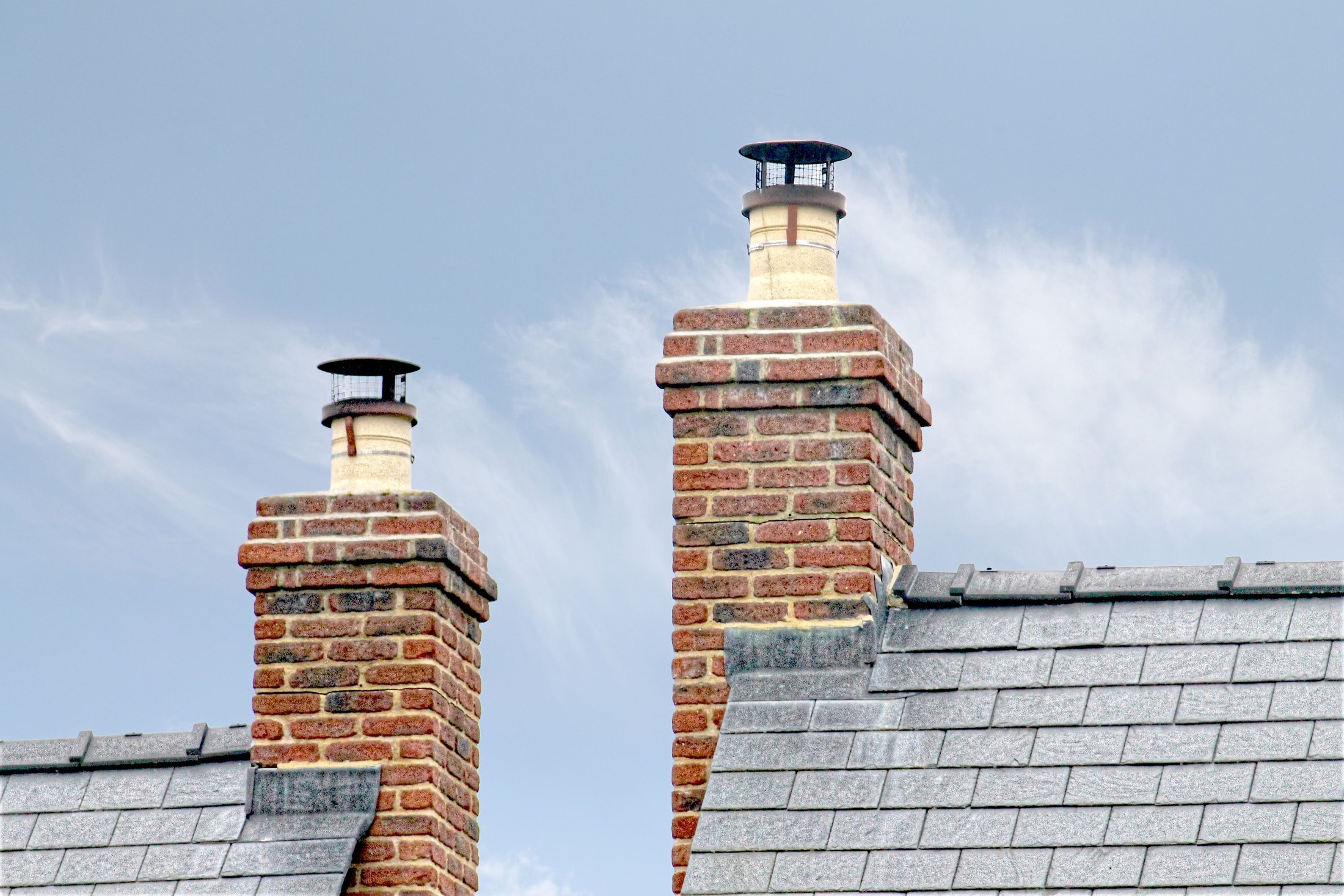
Roofing in Downton
Repairs, re-covers in matched clay and slate, leadwork, flat roofs and gutter work across Downton and the SP5 villages. Same team throughout, itemised in writing.
The site visit is free and so is the written itemised quote. Thomas Hannen prices every job himself.
In Downton the material on your roof is not entirely your own decision. The village has its own conservation area, so putting back what is already there is maintenance and needs nobody's permission, while swapping it for something cheaper is a change of appearance and does need permission.
Most people ring us about one of three things. A slate or a plain tile has come off and there is a wet patch on a ceiling. A chimney or a valley has started letting water in after a spell of driven rain. Or the roof is plainly tired, somebody has quoted for a full re-cover, and you want a second opinion on whether it is really finished.
We come out, survey the roof from the platform and from inside the loft, and photograph what we find. A quarter of the housing here predates 1919, so the answer depends far more on the timber, the fixings and the junctions than on the tiles you can see from the road. Site visit and written itemised quote both free.
The work
Under the old tiles there is torching, not felt
Old clay, and what is under it. A quarter of Downton predates 1919 and the largest single cohort was built before 1900. The traditional covering through the village is plain tile in clay, with natural slate on the Victorian work and concrete tile on the post-war houses. Stone slate is not a Wiltshire covering and you will not find it here. On the oldest roofs there is no membrane at all: handmade plain tiles hung on riven battens over lime torching, with no sarking board behind. Those roofs fail through nail sickness, where the covering is still perfectly sound and every fixing holding it has rusted away. Half a dozen slipped tiles in one winter is the usual first sign.
On an old roof a leak rarely enters above the stain. Water runs along a batten or down a rafter and comes through several feet away, which is why we look from the loft first and why patching the visible spot so often fails.
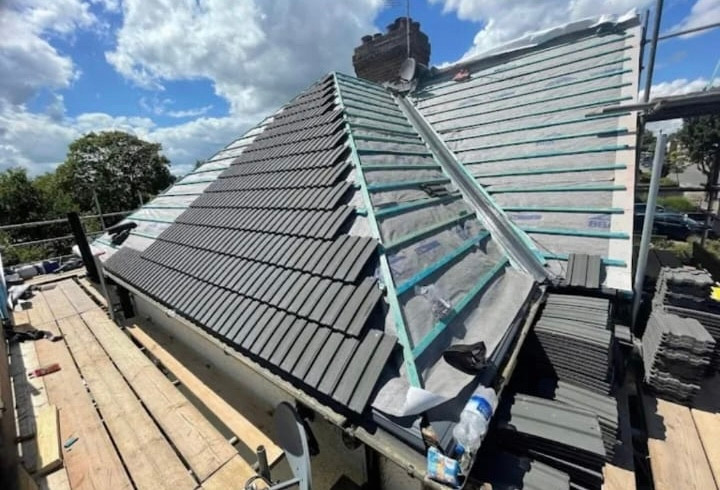
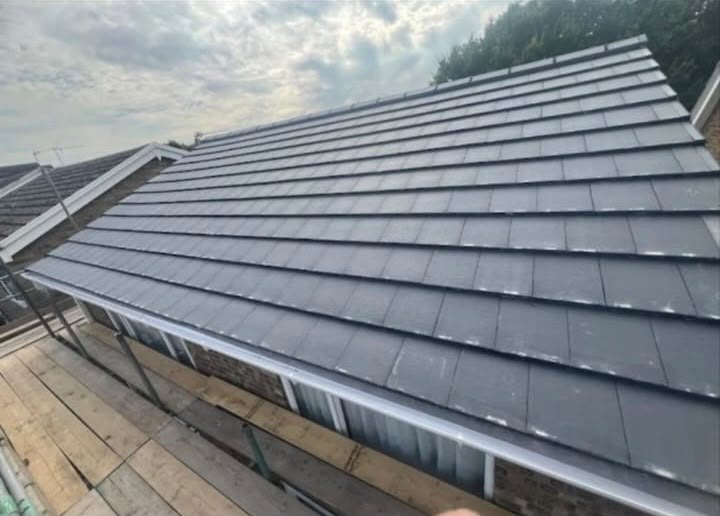
Strip and re-cover. When the nails have gone, the batten ends have softened and the torching is falling into the loft, patching stops being worth paying for. The covering comes off, sound tiles are sorted and set aside for re-use, soft rafter feet are cut out, and the new roof goes back on breathable membrane and treated battens. In a conservation area the tile that goes back on matters, so we price a re-cover in matched clay rather than assuming you want the cheapest concrete option. Where the roof is not visually sensitive we convert ridge and verge to a dry fix system screwed onto a ventilated roll, the mechanical fixing BS 5534 expects. Where it is, ridge tiles can be re-bedded in a lime rich mortar that suits the building instead.
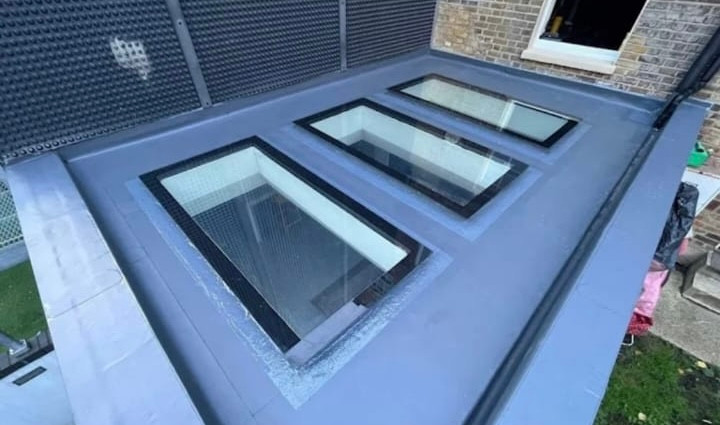
Old houses here have grown in stages, and every stage added another junction. Chimney flashings, soakers, secret valleys and the abutments where a later range meets an older one go back in code rated lead cut so it can move without splitting. Rear extensions, garages and porches come in felt, GRP fibreglass or EPDM rubber, and the deck gets looked at before anything else.
Cast iron gutters and downpipes on the older properties can usually be repaired and re-hung rather than ripped off. Rotten fascia and soffit almost always follow a gutter that has been running over for years, and clearing moss, algae and debris out of the run is ordinary maintenance. There is thatch in the parish and we are not thatchers: we will do the tiled roof and the leadwork alongside it and leave the thatch to somebody who does nothing else. Insulation, eaves ventilation and condensation are far cheaper to sort with the covering off, and Approved Document L sets the standard a renovated roof should reach.
How it runs
From your call to a written price
Same team throughout, one person to ring, no sub-contracting, and an itemised quote with each junction on its own line. Downton has its own conservation area and over a hundred listed entries, the Manor House and the Church of St Laurence among them, so the address has to be checked first. On an unlisted house outside it, a like for like re-cover, a repair and new rainwater goods sit inside ordinary householder permitted development, within the limits Planning Portal guidance sets out. Inside it, or on a listed building, a change of covering or a rooflight on a visible slope can need consent, and the Planning Portal sets out the other permissions you may require. Wiltshire Council for planning and building control.
Cost
What decides the price of a roof
No rate per square metre. Much of old Downton fronts straight onto the street in continuous runs, so a scaffold has to be planned around the neighbours and sometimes around the footway, and rear access is often down a long narrow plot rather than a drive. How long a platform stands matters as much as its size, and the work at height rules are why it is a priced line rather than an optional extra. Chimneys and valleys are priced one at a time. Ask whether battens and membrane are renewed or covered over, and what grade of lead goes on the chimney.
If it is leaking now
Water coming in today
Ring rather than use the form. Anything letting water in goes to the front of the queue, and the first visit makes it safe while you decide. While you wait, photograph the ceiling and shine a torch along the loft underside for daylight or wet timber. On these older roofs the entry point is usually well away from the stain. The phone is answered 24 hours for emergencies; scheduled work runs Monday to Friday, 8am to 6pm.
Worth knowing
The conservation area decides the covering
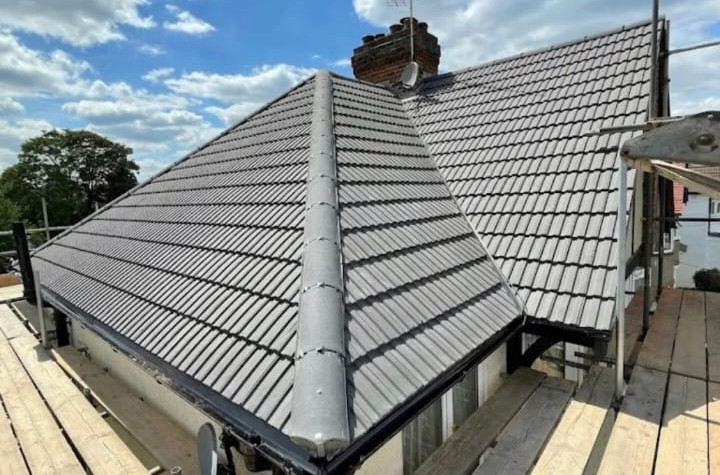
Downton is one of the settlements with a conservation area of its own. What that controls is appearance, and on a roof appearance means the covering. Putting back the same material in the same way is maintenance and needs no application. Taking off hand made clay plain tile and putting concrete interlocking tile in its place is a change of appearance, and that is a different conversation with the council.
This matters when you are comparing quotes. A re-cover in matched clay costs more than a re-cover in concrete, so a cheaper price sometimes turns out to be a cheaper roof that you may not be allowed to have. Ask any quote you are given which tile is going back on and whether it matches what came off.
The other half is the listed buildings, and the parish has a great many. If yours is one, consent is needed whatever the work, including repairs that look trivial. Send the address with the enquiry and we establish which of the three positions you are in before pricing.
Who you are dealing with
A local firm you can check
Just under twenty miles from us, covering Downton and the SP5 addresses along the Avon valley, with Wiltshire Council for planning and building control. Bournemouth Roofing & Building Ltd, registered in England and Wales, company number 15471719, which you can look up in a minute. Thomas Hannen's business, and he is the one who comes out to price the job, not a salesman. A verified customer's 10 out of 10 on Checkatrade. The visit and the written quote are both free.
Questions
Downton questions we get asked
Which council do I apply to for a Downton roof?
Wiltshire Council, which catches people out because so much of the surrounding work sits under Dorset or the New Forest. Downton has its own conservation area and 107 listed entries, the Manor House and the Church of St Laurence among them, so your address matters as much as the job does. Like for like remains maintenance. A change of covering is an appearance change and goes in as an application.
The walls are solid brick with no cavity. Does the roof care?
It does, because a solid wall has to breathe and the roof decides where water goes. Just over a quarter of Downton homes predate 1919 and the largest single group went up before 1900. On those we bed and point in lime rather than cement, which stays flexible and lets moisture out instead of trapping it behind a hard face that cracks within a few winters and then lets it in.
Does the River Avon designation stop work on my house?
Not roof work. Downton lies in the River Avon Special Area of Conservation catchment for nutrient neutrality, and that is engaged only where a scheme adds overnight accommodation. Re-covering, repairing or re-felting adds no bedrooms and never triggers it. Converting a loft into a bedroom does, and that goes to Wiltshire Council as part of the wider application rather than something settled up on the roof.
What should I look at on a very old roof?
The line of it. Sight along the ridge and down the eaves from the garden. A sag between rafters or a dip at the ridge on pre 1900 work usually means a rafter foot has rotted where it bears on the wall plate, not that the covering has failed. Then look at where the main roof meets an older addition, because that junction is where a lot of leaks in Downton begin.
There is no parking outside. Where does the scaffold lorry go?
We work that out at the visit rather than on the morning. Where a house in Downton fronts straight onto the road, the lift is unloaded in a short agreed window and the material stacked on the scaffold instead of the pavement. Where the only way in is through a garden we hand carry, which adds labour and gets said up front rather than appearing later.
Nearby, and next door
Roofing near Downton
Roofing nearby
Our other trades in Downton
Roofing guides
Concrete vs clay roof tiles: which is right? Planning, building regs or listed building consent Storm damage to a roof: the first 24 hoursEverything we do in Verwood Roofing, all areas Every area we cover
Free quote
Get a price for your Downton roof
A free site visit and a written itemised quote you can compare line by line. Send the postcode and what you have noticed.