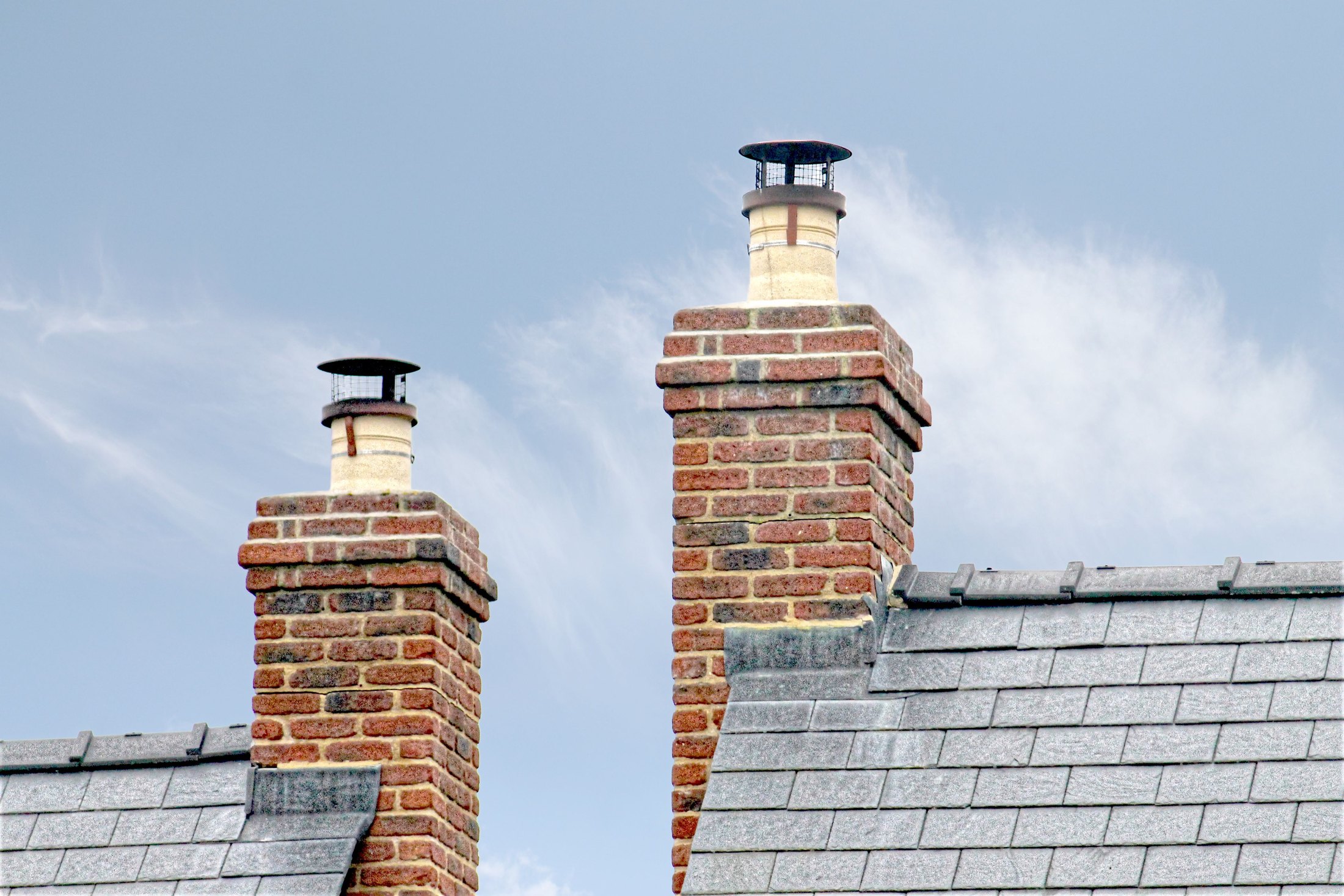
Roofing in Redlynch
Repairs, dry ridge and verge, re-covers, flat roofs, leadwork and guttering across Redlynch, Woodfalls and Morgan's Vale.
The site visit is free and so is the written itemised quote. Thomas Hannen prices every job himself.
Last updated
Re-covering a roof in Redlynch needs no planning permission on an unlisted house. Turning the loft under it into a bedroom is a different matter, with building regulations and sometimes planning to settle before the roof comes off.
Redlynch runs a long way. Morgan's Vale, Woodfalls and the top of the hill are all part of it, and the roofs change as you go along: post-war and 1960s houses and bungalows on the newer plots, older cottages dotted between them. On roofs like these the question is usually a leak or old age. Water is coming through a ceiling and you want it stopped. If that is where you are now, in Woodfalls, Morgan's Vale or Redlynch itself, ring 07435 839745. Or the roof has reached the age where every winter brings another tile down and you want to know whether to keep patching.
What we do about it is the same either way. Come out, get on the roof, look in the loft, and photograph the battens, the underlay and the rafter feet, which is where the answer usually is. You get told plainly whether you are looking at a repair, edge work, or a covering that has finished. The site visit and the written itemised quote are both free. If it turns out to be one loose hip, a dropped verge or a single leak by the stack on an otherwise sound roof, our page on roof repairs in Redlynch covers mending just that fault.
The work
A spread out roof is nearly all edge
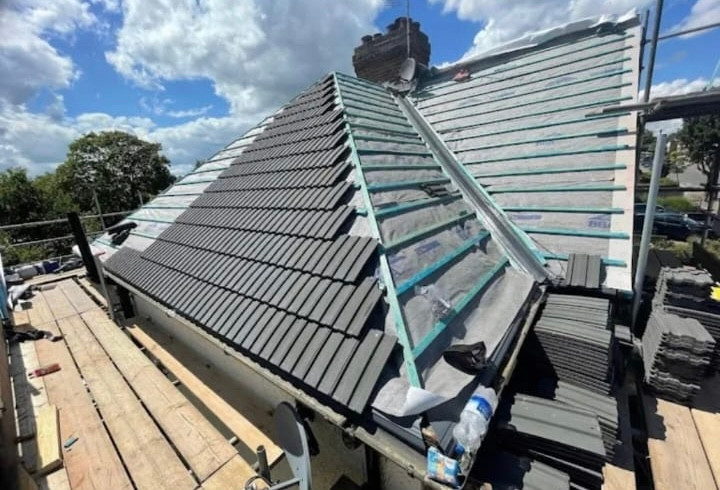
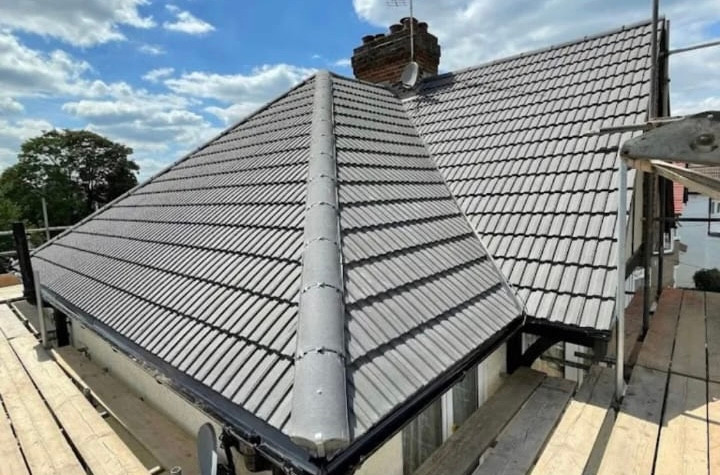
A spread out roof is nearly all edge. Redlynch is mostly detached houses and bungalows, and a spread out single storey roof carries a lot of edge for the floor area under it. Every hip is a run of mortar bedding that has been weathering since the house was built, and once it cracks the tiles start rocking. We take it off and fit dry ridge and dry verge screwed onto a ventilated roll, the mechanical fixing BS 5534 expects.
A fair amount of Redlynch predates the First World War. On the post-war houses it is concrete tile, mostly interlocking, and the covering nearly always outlives the nail or clip holding it, so the fault is a fixing. On the older cottages it is plain tile, clay tile or natural slate on battens with no sarking beneath, and there it is the tile that has finally worn out. Thatch we decline and say so up front: tiling and flashing to the edge of it is ours, the thatch is a thatcher's.
Rusted nails, soft batten ends and an underlay that tears in your fingers all arrive together, and that is when patching stops being value for money. The covering comes off, wet rafter feet come out, and it goes back on breathable membrane and treated battens with a matched tile. On a long low roof the area surprises people, so it is worth having the re-cover priced next to the repair rather than assuming. Where a flat roof runs into a tiled slope rather than up a wall, that junction is the part that fails. Chimney flashings, soakers, valleys and abutments in code rated lead. Shaded northern slopes hold moss, and clearing debris out of a valley is maintenance rather than repair, and Approved Document L sets the standard a renovated roof is expected to reach once the covering is off.
How it runs
Re-roofing a Redlynch cottage or bungalow, start to finish
Thomas drives up from Boscombe, walks round the house and looks at every slope from the garden and the lane. On a brick and flint cottage he goes into the loft as well, because the state of the battens, and whether there is any underlay at all, only shows from inside.
You then get a written quote with each part on its own line: scaffold, stripping the old covering, new battens and breathable membrane, the tiles or slates, lead at each chimney, valley and abutment, and the skip. The lot is priced together, so there is one figure to hold us to.
Access is settled on that first visit. Plenty of plots in Redlynch sit on falling ground, so the scaffold may have to be built up off a slope, and on the narrower lanes the scaffold lorry sometimes unloads short of the house. A post-war bungalow is usually simpler, with a level drive and room for a tower at the gable. No slope is left open overnight, old tiles and battens leave with us, and the ground round the house is cleared each evening. If a rafter or the wall plate is rotten once the covering is off, you see a photograph and a price before anything more is done.
Wiltshire Council handles planning and building control here. There is no conservation area over Redlynch, so on an unlisted house a repair or a like for like re-cover is permitted development within the limits in the Planning Portal guidance. The listed entries in the parish need consent whatever the work.
Cost
What moves the price on an old roof or a post-war one
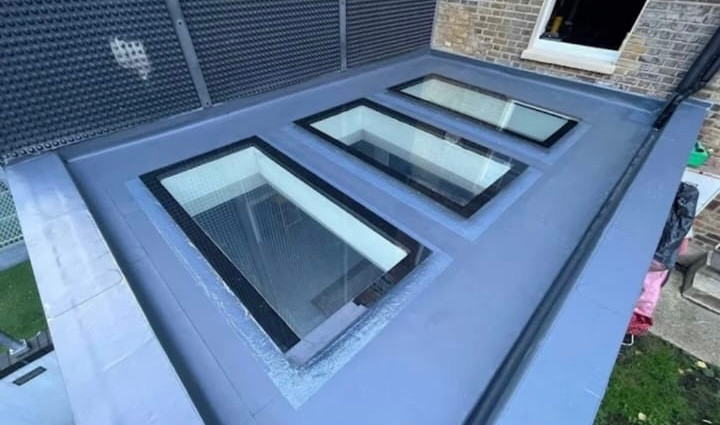
A roof in Redlynch parish has no rate per square metre. Two roofs of the same size in this parish can be very different jobs, for these reasons.
How old the roof is. The cottages built before the First World War often carry handmade clay tiles or slate on thin, uneven battens, with no underlay, and a ridge bedded in lime mortar. Re-covering one means new battens and membrane throughout, and care with the tiles worth saving. A post-war bungalow is more likely to have concrete interlocking tiles on felt gone brittle at the eaves, which strips faster.
The ground the scaffold stands on. On a sloping plot the scaffold is built up off uneven ground, which takes longer than a level drive, and a lane the lorry cannot get down means carrying tubes and boards in. The work at height rules are why the platform is a line of its own and not an extra you can drop.
Chimneys, valleys and abutments. Each stack, valley and wall abutment is priced one at a time, because each has its own lead or mortar work, and an old stack often wants repointing while the scaffold is up anyway.
What is under the tiles. Rot in a rafter foot or a wall plate only shows once the covering is off, which is why the quote says what happens if it is found.
Before you sign with anyone, ask whether the battens and membrane are new or reused, what lead goes on the chimney, and who pays for the scaffold and the skip.
If it is leaking now
Water through the ceiling after a storm
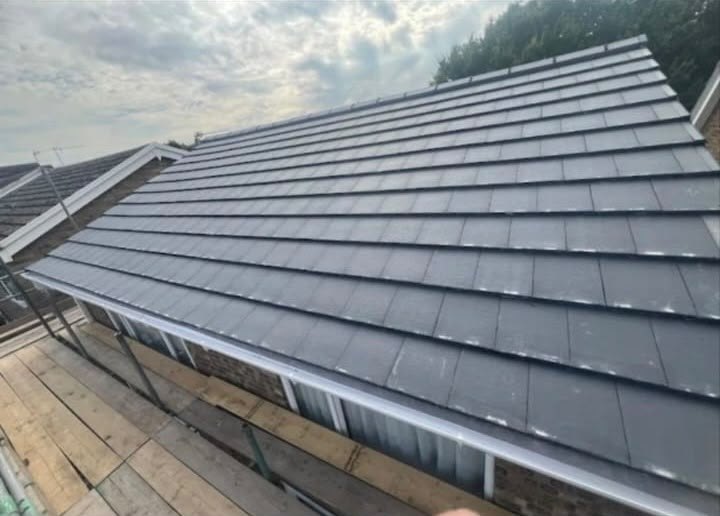
If water is dripping through, ring us rather than using the form. Stand a bucket under it, unplug anything nearby and stay off the roof. From the garden or the lane, look for a slipped tile or a gap by the chimney, because on an old roof water often runs along a batten and appears well away from the hole.
The first visit is to stop it: a sheet over the damaged slope, loose tiles refixed or a lead flashing dressed back, followed by a written price for the proper repair. Scheduled work runs Monday to Friday, 8am to 6pm. If you ring and nobody answers, we call you back as soon as we can.
Worth knowing
The loft conversion question, before you book a scaffold
Nutrient neutrality rules cover much of south Wiltshire and the New Forest. For a roof they are irrelevant, and nobody should tell you otherwise: repairs, re-covering, leadwork, gutters and rooflights add nothing and engage nothing. The rules are aimed at new homes, not an extra room in the house you already have, so a loft conversion is a building regulations question first.
The practical consequence is about sequence more than cost. If a conversion is in your plans at all, get the planning question answered before the roof comes off, not after. Any planning or building control question takes time to sort with Wiltshire Council, and the re-roof and the conversion want to happen in one go: insulating at rafter level, forming the openings and setting out any rooflight are all straightforward with the covering off and awkward once it is back on.
Do them together and you pay for one platform instead of two. The Planning Portal notes on other permissions you may require is the place to start.
Who you are dealing with
Who comes out to your roof in Redlynch
Redlynch is 18.2 miles from our base on Wolverton Road in Boscombe. We cover the whole parish, from the village out to Woodfalls, Morgan's Vale and Lover, and the SP5 roads south of Downton. Planning and building control here are Wiltshire Council's.
Thomas Hannen owns the firm and is the one who climbs the ladder and prices your roof. Its legal name is Bournemouth Roofing & Building Ltd, registered in England and Wales, company number 15471719. One verified customer marked us 10 out of 10 on Checkatrade. The site visit and the written, itemised quote are both free. Before you book a visit in Redlynch, you can read our customers' Google reviews, word for word, on our reviews page.
Planning at a glance
Do you need planning permission in Redlynch?
Most repairs in Redlynch need no application at all. What decides whether a change to the outside of your house does is who the council is, whether a conservation area or a listing applies, and whether the place sits in a protected landscape.
| Question | In Redlynch |
|---|---|
| Who decides | Wiltshire Council is the planning authority for Redlynch. |
| Conservation area | None covers Redlynch, so a like-for-like repair is ordinary maintenance. |
| Listed buildings | Yes, there are listed buildings in and around Redlynch. If yours is one, work can need listed building consent. |
| Protected landscape | No National Park or National Landscape covers Redlynch. |
Questions
Questions about roofing in Redlynch
What goes back on a pre 1900 roof around here?
Whatever came off it, as near as we can get. Many of the older Redlynch cottages were built before 1900, so on those roofs we salvage and re-lay the sound covering, buy reclaimed to make up the shortfall, and use lime rather than cement wherever mortar is exposed. Cement on an old wall traps water in the fabric below it. The survey sets out how much of the original we expect to save.
Which council do we apply to at Redlynch?
Wiltshire Council: it catches people out here, because the postal address points people at the wrong planning portal and the advice they then read does not apply. For a like for like re-cover it makes no odds, since there is no conservation area over Redlynch and that work is permitted development anyway. It matters for the twelve listed entries, for a skip licence on the highway, and for anything altering the roof line.
It is a big spread of roof. Which part comes first?
The lines, not the middle. Redlynch is mostly detached houses and bungalows, so these are wide, low roofs with a long run of eaves and gutter for the area they cover. That is where the moss collects, where the felt sags and where water backs up. We price the eaves, the gutter line and the valleys first and only then talk about the covering itself.
The slope under the trees is thick with moss. Scrape it?
Not with a scraper, and not with a pressure washer either, because both strip the surface off the tile and drive water up under the laps. On an old covering that is how a sound roof starts leaking. We brush it off dry, clear the gutters out, and cut back whatever is shading the slope, since the moss returns within a season if that side never sees the sun.
Will the job stop if it rains for a week?
The stripping stops, the rest carries on. We will not open a slope on a bad forecast, so through a wet spell the crew works on the scaffold, the leadwork, the gutters and any timber repair and takes the covering off when a window appears. That is why the quote sets the job out in stages instead of promising a single finish date. No roof of ours gets left open waiting on the weather.
Nearby, and next door
Roofing near Redlynch
Nearby places we also cover for roofing, with straight-line distances from Redlynch, and the other trades we offer in Redlynch itself.
Roofing nearby
Our other trades in Redlynch
Roofing guides
Concrete vs clay roof tiles: which is right? Planning, building regs or listed building consent Storm damage to a roof: the first 24 hoursEverything we do in Ringwood Roofing, all areas Every area we cover
Free quote
Get a price for your Redlynch roof
Send the postcode and what you have noticed. We come out, look in the loft as well as on the roof, and put an itemised price in writing.