
Driveways and patios in Redlynch
Drives, patios and paths across Redlynch, Woodfalls and Morgan's Vale, built from the bottom of the hole up rather than laid over what is already there.
The site visit is free and so is the written itemised quote. Thomas Hannen prices every job himself.
Around Redlynch the drive usually fails at the two ends first, where it meets the lane and where it meets the house. Both faults are about edges and levels rather than the surface, and both are fixable without relaying the whole thing.
Three calls come in more than any others. The gravel has thinned to bare ground in the wheel tracks and keeps washing out into the verge. A patio at the back rocks underfoot, holds water in one corner and has crept up the wall of an old cottage. Or a bungalow needs a level, non slip way from the car to the front door for somebody who is no longer steady on a step.
All three start with a spade rather than a brochure. We open a trial hole at the site visit, because what is under a surface decides far more than what goes on top of it. You get told what we find, including when the honest answer is that your drive is sound and a lift, relay and re-sand will do the job.
The work
Drives that come straight off a Redlynch lane
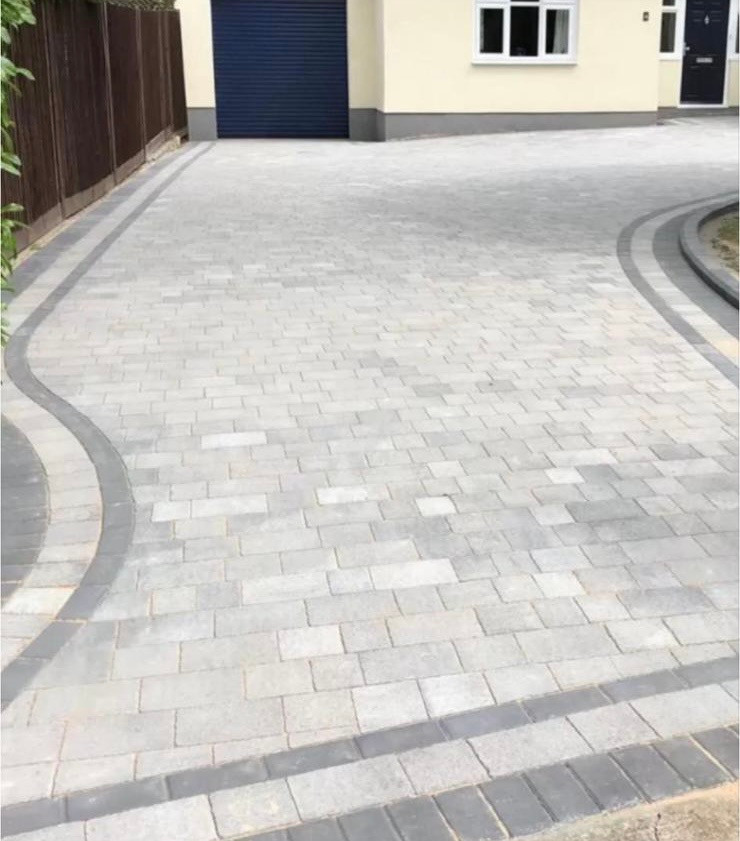
Gravel that will not stay where you put it. Most drives on these lanes are loose stone, and loose stone only stays put with something to push against and something firm underneath. Without an edge restraint haunched in concrete the shingle walks out into the verge; without a compacted sub-base it presses into soft ground until the ruts hold water and weeds come up through it. Rebuilding it is a strip out, a geotextile membrane at formation, sub-base compacted in layers, then a gravel grid to hold the stone, or resin bound over a sound base where you want something that stays swept.
The first two metres off the road. There is no kerb or footway along much of Redlynch, so the entrance takes every turning movement and every delivery lorry, and that is where the ruts and the washed out stone start. We usually bind those first two metres, set the fall back into your own ground rather than out into the lane, and put a channel drain across the entrance where the ground runs the wrong way.
Better than a quarter of the houses here predate 1919, built long before anyone poured a damp proof course, and their floors sit close to the ground outside. Every surface laid over the last one has taken the level up a little. We take it back down, finish the paving clear of the wall, and run a gravel border or a channel drain along the front where the ground will not allow the drop. Where the paving is natural stone it goes back on a full mortar bed with the jointing pointed by hand rather than brushed in. The soil here is sandy but it holds water rather than shedding it, so the dig is often deeper than people expect and a soakaway wants a percolation test before anyone draws it; where the test fails the water needs a positive outfall to a ditch or a surface water drain.
How it runs
From your call to a written price
Same team throughout, one person to ring, and an itemised quote with the excavation, sub base, edgings, surface and drainage on separate lines.
Paving a front garden stays permitted development while the water is dealt with on your own land. Lay more than five square metres of new hard surface that drains onto the lane and you need planning permission, as the Planning Portal guidance on paving your front garden sets out. Widening the opening onto the road is a dropped kerb application to Wiltshire Council as highway authority. The twelve listed entries around Redlynch are cottages and farmhouses, and where a boundary wall, gate pier or forecourt belongs to one of them there are other permissions you may require before it changes.
Cost
What decides the price of a driveway
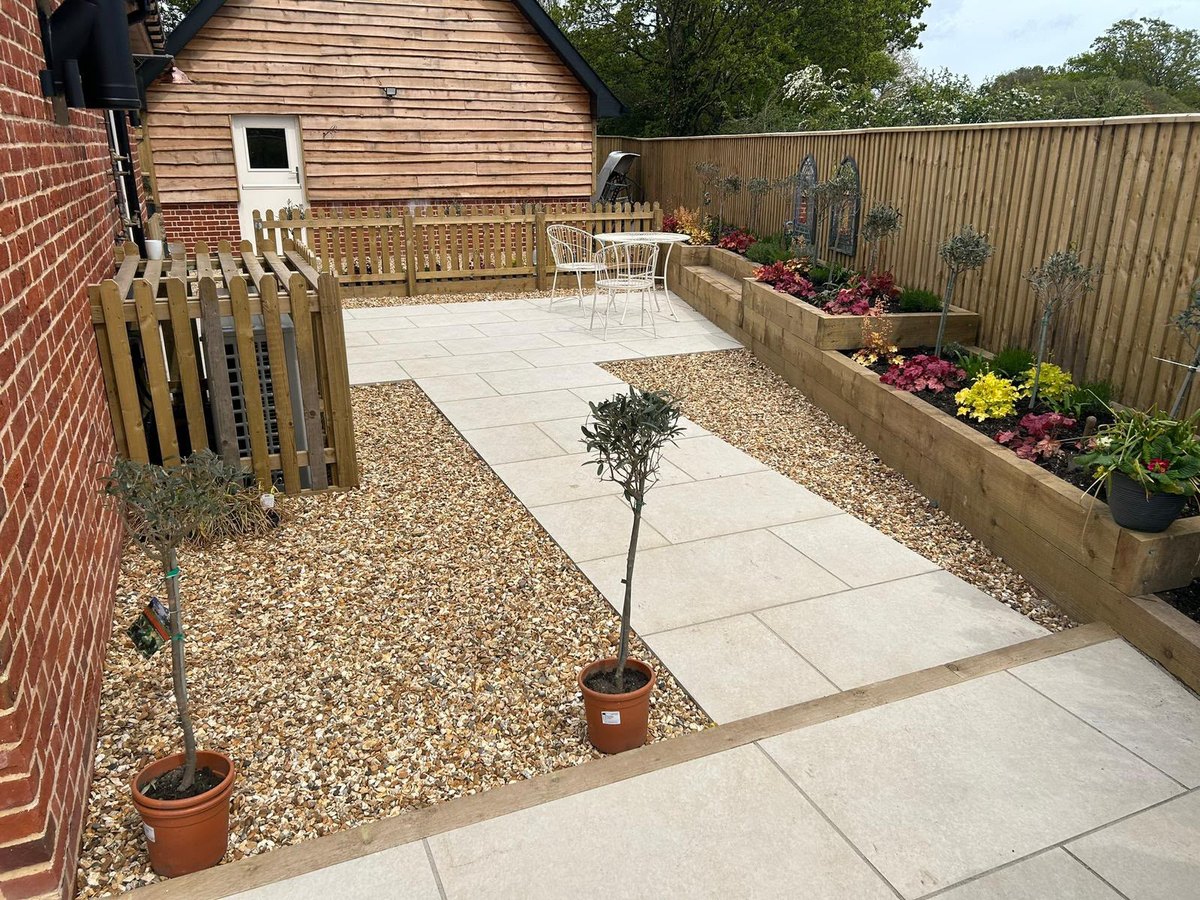
Where a lorry can stand is the first question on these lanes. A thatched cottage with nowhere to pull in, a bungalow with an open frontage you can back onto, and a detached house at the end of a shared gravel track with a narrow access are three different jobs before anybody lifts a slab. Then the ground: sandy soil that holds water rather than shedding it means a deeper dig and heavier spoil. Ask any quote what depth of stone is going in, where the surface water is going, and who is carting the muck away, because the grab lorry and the disposal are a real part of a dig this deep.
If it is urgent
A trip hazard, or a drive that floods
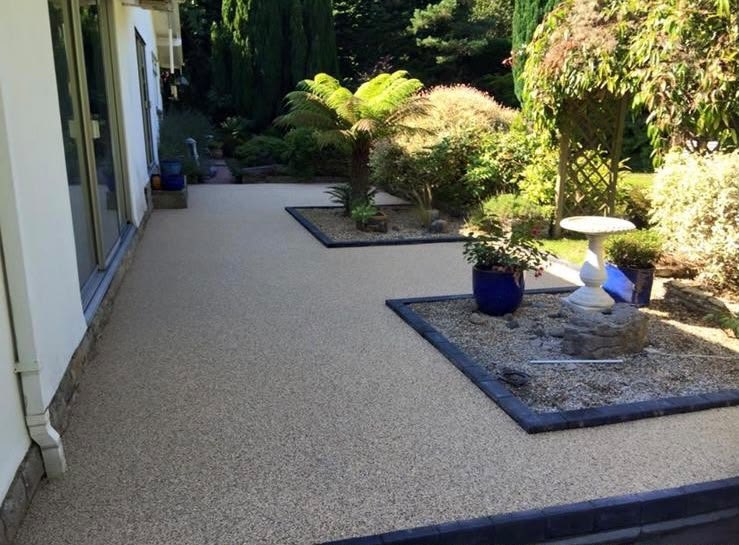
Ring rather than use the form. A lifted slab, a sunken bay by a doorway or a gully that has stopped taking water will not wait. If stone is washing out of your entrance into the lane, or the drive has rutted where it meets the road, say so when you ring, because that one gets worse with every downpour. We work Monday to Friday, 8am to 6pm, and outside that by arrangement.
The one local thing
Cottages that were built without a damp proof course
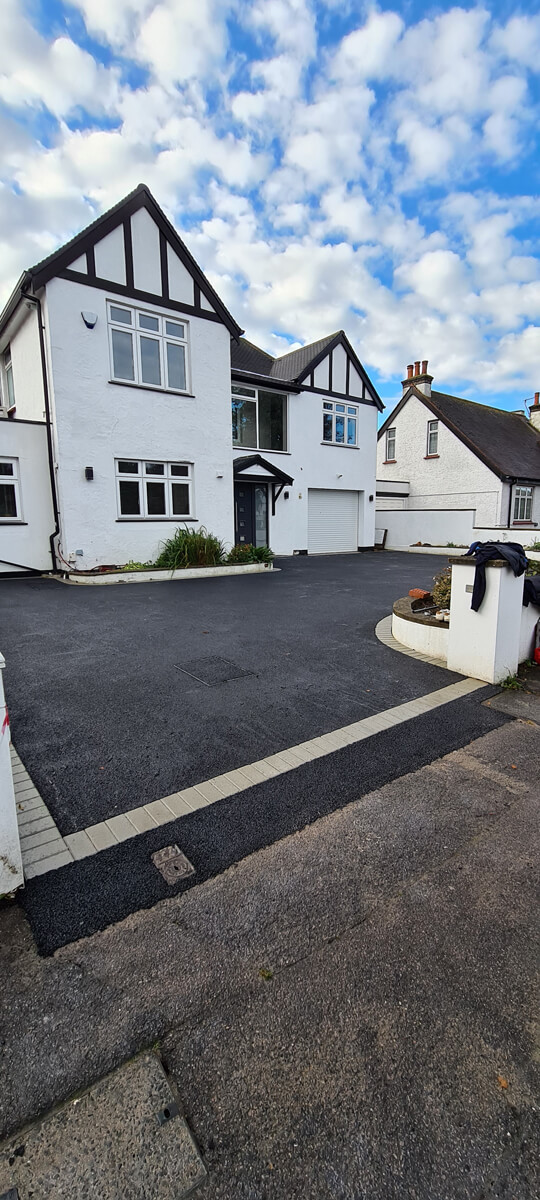
Getting on for three in ten homes in this parish went up before 1919. Those cottages have solid walls, no damp proof course under them, and internal floors sitting barely above the ground outside. Paving is the thing that quietly ruins them. Each new path or drive gets laid over the last one, the level creeps up, and eventually the ground outside is higher than the floor inside. Then water bridges the wall and a band of damp appears along the skirting, usually blamed on everything except the drive.
So on an old house here we set the finished level first and choose the surface second. The paving finishes low and falls away from the wall, and where the garden simply will not give us the drop we take a margin of gravel or a channel drain along the base of the building instead. We also keep hard, sealed surfaces slightly off the wall, because a solid wall needs to lose moisture through its face and a slab butted tight against it stops that. It also takes away the splash back that leaves a band of staining along the bottom of the brickwork.
The same care goes for the old brick and flint boundary walls and gate piers on these frontages. They are bedded in lime, not cement, and a machine bucket or a haunched kerb driven hard against the base will push one over. We hand dig close to them, support anything that looks tired before the ground beside it is opened, and rebed what has to come down in a lime mix that matches rather than a strong grey cement that will crack the brick faces off through the first hard frost.
Who you are dealing with
A local firm you can check
We cover Redlynch and the rest of SP5, out through Woodfalls, Morgan's Vale and Lover to Downton, Landford and the villages along the edge of the Forest. Bournemouth Roofing & Building Ltd, registered in England and Wales, company number 15471719, which you can look up in a minute. Thomas Hannen's business, and he is the one who comes out to price the job, not a salesman. A verified customer's 10 out of 10 on Checkatrade. The visit and the written quote are both free.
Questions
Redlynch questions we get asked
Could a new patio push damp into an old cottage wall?
It can if the level is wrong. 27.7% of Redlynch predates 1919, and those walls are solid and get rid of moisture through their own faces. Paving laid hard against one, bridging the height where the wall was meant to dry, traps that moisture and it turns up inside as a damp band. We keep the finished surface well below the internal floor, leave a gravel margin along the wall and fall the whole area away from it.
Is gravel a false economy on a long drive?
It works when it is built and edged and fails when it is simply tipped. On a long approach the stone travels to the low end and out into the lane, and on the naturally wet ground around Redlynch it presses down into soft subgrade and disappears. A stabilising grid over a compacted base holds it where you put it. Loose stone straight onto soil is the version needing another delivery every spring.
Who do we ask about widening the entrance onto the lane?
Wiltshire Council. They are the planning authority here and the highway authority for the lane, so a wider entrance or a better visibility splay goes through them, and the sightline is usually what they want to discuss. We build up to the boundary and price the entrance work separately once their answer is known. Have that conversation before settling on a surface, because it can change the shape of the whole drive.
Water runs off the lane onto our drive. Fixable?
That is a cut off drain rather than a new surface. Redlynch sits high with ground that stays wet, so water crossing the site is the thing to intercept before you spend anything on paving. A channel or a French drain across the top of the drive, taken to an outfall that still works in February, does more good than a thicker base. We trace where the water comes from first and price the surface second.
What surface suits a frontage on a pre 1900 cottage?
Something that reads as loose or quarried rather than moulded. Gravel over a stabilising grid, reclaimed stone, or a tar and shingle finish sit better in front of the older houses that make up much of Redlynch than a modern block laid in a rigid pattern. No conservation area covers the settlement, so this is judgement rather than a rule, but a frontage that argues with the house is expensive to undo later.
Nearby, and next door
Driveways and patios near Redlynch
Driveways and patios nearby
Our other trades in Redlynch
Everything we do in Ringwood Driveways and patios, all areas Every area we cover
Free quote
Want a straight answer on your drive?
Tell us the address and what you have noticed. We come out, open a trial hole, and put an itemised written quote in front of you. Both are free.