
Bricklaying and repointing in Redlynch
Lime repointing on solid walls, brick repair, boundary walls and chimney stacks across Redlynch, Woodfalls and Morgan's Vale.
The site visit is free and so is the written itemised quote. Thomas Hannen prices every job himself.
Bricklaying and repointing
Repointing in Redlynch: what needs doing, and what can wait
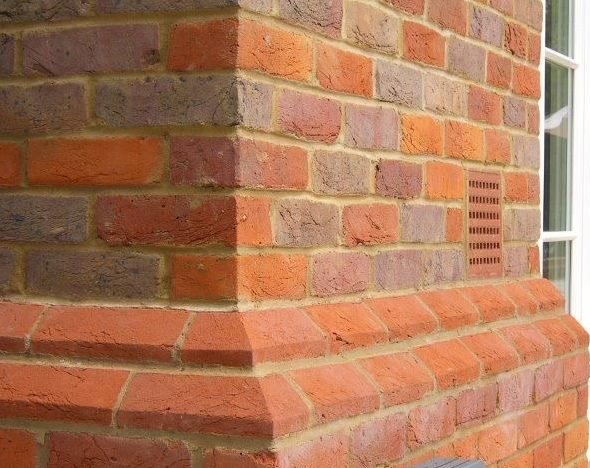
On the older houses along this parish the walls are solid brick, or brick and flint, with no cavity behind them and no damp proof course under them. They were bedded in lime, and the right repair is lime again. On the detached houses and bungalows built round Redlynch since the war the wall is a cavity, the mortar is cement, and the fault is nearly always one weather-beaten elevation rather than the whole building.
People ring us here about three things. Joints washed back on the elevation that faces the weather, deep enough to put a finger in. Brick faces that have blown and left a soft crumbling pocket where a hard cement repair was smeared over an old wall. Or something that has moved: a garden wall leaning into the lane, a pier off plumb, a stack out of square above the ridge.
We come and look at the building first, because in a parish that runs from Victorian brick cottages to nineteen-seventies detached houses the first question is what your wall is actually made of. You get a straight answer on what needs doing, what can be left alone for now, and an itemised written price if you want one. The site visit and the quote are both free.
The work
The brickwork jobs we do in Redlynch
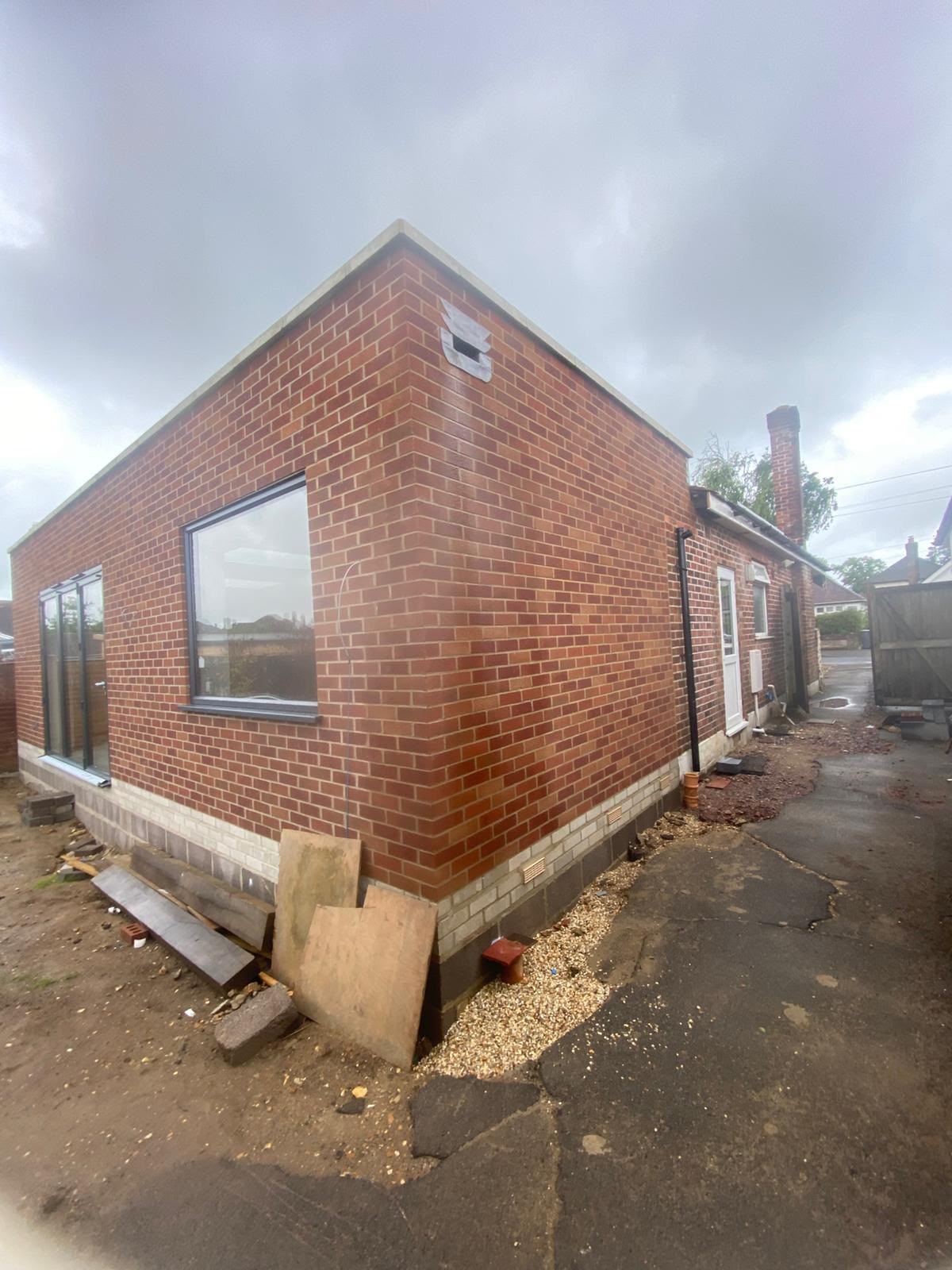
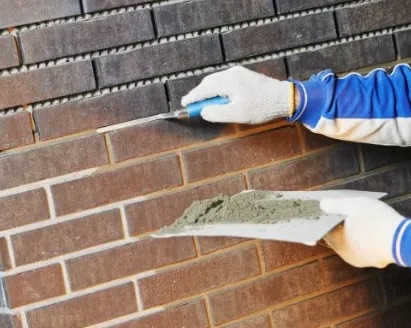
Lime repointing on solid walls. Better than a quarter of the housing here predates 1919. The old cottages through Redlynch, Woodfalls and Morgan's Vale are one brick thick, often with flint coursed in below the first floor. Joints are raked out by hand to about twice their width, with no disc cutter near a soft arris, and repointed in an NHL lime mortar mixed with a sand picked to match what came out for colour and grain. You approve a sample panel in daylight before we start an elevation. Plenty of walls here were repointed in a hard sand and cement mix in the seventies and eighties. It looks sound and it is the reason the brick faces are spalling: the joint is the only way a solid wall gets rid of water, so seal it and the water leaves through the brick instead, one frost at a time.
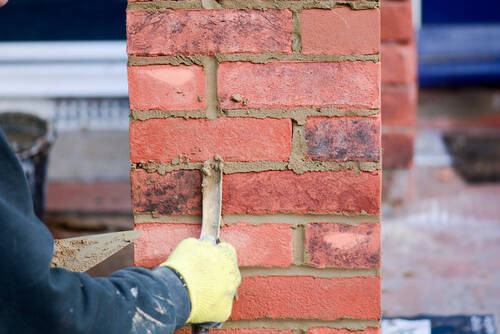
Victorian brick, lane walls and the postwar houses. The chapels, the school buildings and the estate cottages are hard Victorian brick in soft lime joints, usually with a gauged arch over each window. Arches drop and open at the skewback, so we cut out and re-set them rather than fill the crack, matching the sand so the repair is not a stripe. The lanes here are lined with brick and flint walls, most without a footing worth the name and with a brick-on-edge or tile coping that has lost its bedding, and once the coping goes the wall fills with water and pushes out at the top. On the detached houses and bungalows built from the fifties onwards we see horizontal cracking every few courses where the ties have rusted and lifted the bed joint, a cracked lintel over a garage opening, and cement pointing eroded on the south west face while the sheltered elevations are fine. On the forest edge a stack catches weather from every side, and access is its own line.
How it runs
From your call to a written price
One team from first visit to last, and the price broken out by elevation so you can compare it line by line. There is no conservation area over Redlynch, so on an ordinary house repointing and brick repair are repair and need no application. A dozen entries in the parish are listed, and on a listed building or wall repointing counts as alteration and needs consent from Wiltshire Council before anything starts, which other permissions you may require sets out. Changing how a wall looks rather than putting it back can need planning permission, and Planning Portal guidance on external walls shows where that line falls. A rebuilt garden wall has its own height limits under the guidance on fences, gates and garden walls, and a shared wall brings in the Party Wall etc. Act 1996.
Cost
What decides the price of a brickwork job
No rate per square metre: the joints decide the job, not the area. A cottage fronting straight onto the lane, a detached house set back behind its own drive and a bungalow whose gable is also the boundary are three different set ups before anybody lifts a chisel. A stack or a gable wants a scaffold and a garden wall wants nothing, and work at height rules make the platform a priced line. Raking by hand is the only safe way on soft old brick. Ask how deep the joints come out and whether the mortar was matched.
If something has moved
Loose brickwork, or a wall that has shifted
Ring rather than use the form. Anything overhead or leaning jumps the queue. The first visit is about making it safe and stable, and we price the permanent repair once we can see how far the movement goes. Here it is a roadside wall clipped in a narrow lane, or a stack shifted in a gale off the forest. The phone is answered 24 hours for emergencies; scheduled work runs Monday to Friday, 8am to 6pm.
The one local thing
Solid walls, and why the mortar has to be softer than the brick
A good quarter of the houses in this parish were built before 1919, and that one fact changes almost every decision about your brickwork. A solid wall has no cavity to stop water and no damp proof course to stop it rising. It handles wet the only way it can, by letting it in and letting it out again through the joints, which is why those walls were built in lime and why lime is soft enough to be sacrificial. The mortar is meant to weather and be renewed. The brick is not.
So the practical advice for an older house here is short. Do not let anyone repoint it in sand and cement, however neat the finish looks and however much cheaper the day rate sounds. Do not let anyone run a disc cutter down joints in soft handmade brick, because the cut widens the joint permanently and takes the arris off every brick it touches. Ask what the mix is, by name, and ask to see a sample panel on your own wall before a whole elevation is done.
If the wall is already struggling, look at what is feeding it before you look at the pointing: a downpipe discharging onto the brick, a raised path or a new drive that has buried the bottom two courses, or a flower bed banked against the wall will all keep it wet whatever the joint is made of. We check those first, because fixing them is cheap and repointing a wall that is still being soaked is not.
Who you are dealing with
A local firm you can check
Redlynch is at the northern edge of the patch, a shade under twenty miles from the yard, and we work the SP5 villages around it, Woodfalls, Morgan's Vale, Lover and Hamptworth, and down through Downton and across to Fordingbridge. We come out for the site visit whatever the size of the job, and we will be straight with you about when we can start.
Bournemouth Roofing & Building Ltd, registered in England and Wales, company number 15471719, which you can look up in a minute. Thomas Hannen's business, and he is the one who comes out to price the job, not a salesman. A verified customer's 10 out of 10 on Checkatrade. The visit and the written quote are both free.
Questions
Redlynch questions we get asked
Why does our old wall need lime rather than cement?
Because the wall has to breathe and cement stops it. 27.7% of Redlynch predates 1919, and a wall of that age has no cavity and no damp course, so moisture that gets in has to leave through the joint. Seal the joint with cement and it leaves through the brick or stone face instead, taking the face with it. Lime is soft enough to keep that route open.
What tells you a wall was built without a cavity?
The brick pattern. A solid wall shows headers, the short ends of bricks, every few courses, because it is tied through its own thickness. A cavity wall shows stretchers all the way up. On the pre 1919 houses in Redlynch you will see headers, and that changes the mortar we use and how deep we rake back. The thickness at a window reveal is the other giveaway.
Does Wiltshire Council have a say in a repair?
Not on an ordinary house here. Redlynch has no conservation area of its own and 12 listed entries, so unless the address is one of those there is nothing to apply for before repointing or rebuilding a wall. That is worth knowing, because people assume an old village carries blanket controls. It does not. We check the address at the visit so nobody finds out afterwards.
Would an annexe here run into the Solent nutrient rules?
It could. Redlynch drains into the Solent catchment, and nutrient neutrality bites where a scheme adds overnight accommodation, so an annexe, a holiday let or a new bedroom can engage it while masonry repairs never do. It is a matter to raise with Wiltshire Council at the outset rather than after the drawings are done. We can build it once the permission is sorted.
Can you rebuild the chimney stack while you are here?
We can, and it is often the right time to do it. On the older Redlynch houses the stacks are tall, bedded in lime and exposed on every side, so they lose bedding and flaunching before the walls below show anything. We take it down to a sound course, rebuild in a matching mix and reset the pots. Doing it while the scaffold is already up saves setting up twice.
Nearby, and next door
Bricklaying and repointing near Redlynch
Bricklaying and repointing nearby
Our other trades in Redlynch
Everything we do in Ringwood Bricklaying and repointing, all areas Every area we cover
Free quote
Want a straight price on your brickwork?
Tell us what the wall is doing and we will come and look at it. Free site visit, free itemised written quote, and an honest answer about what can wait.