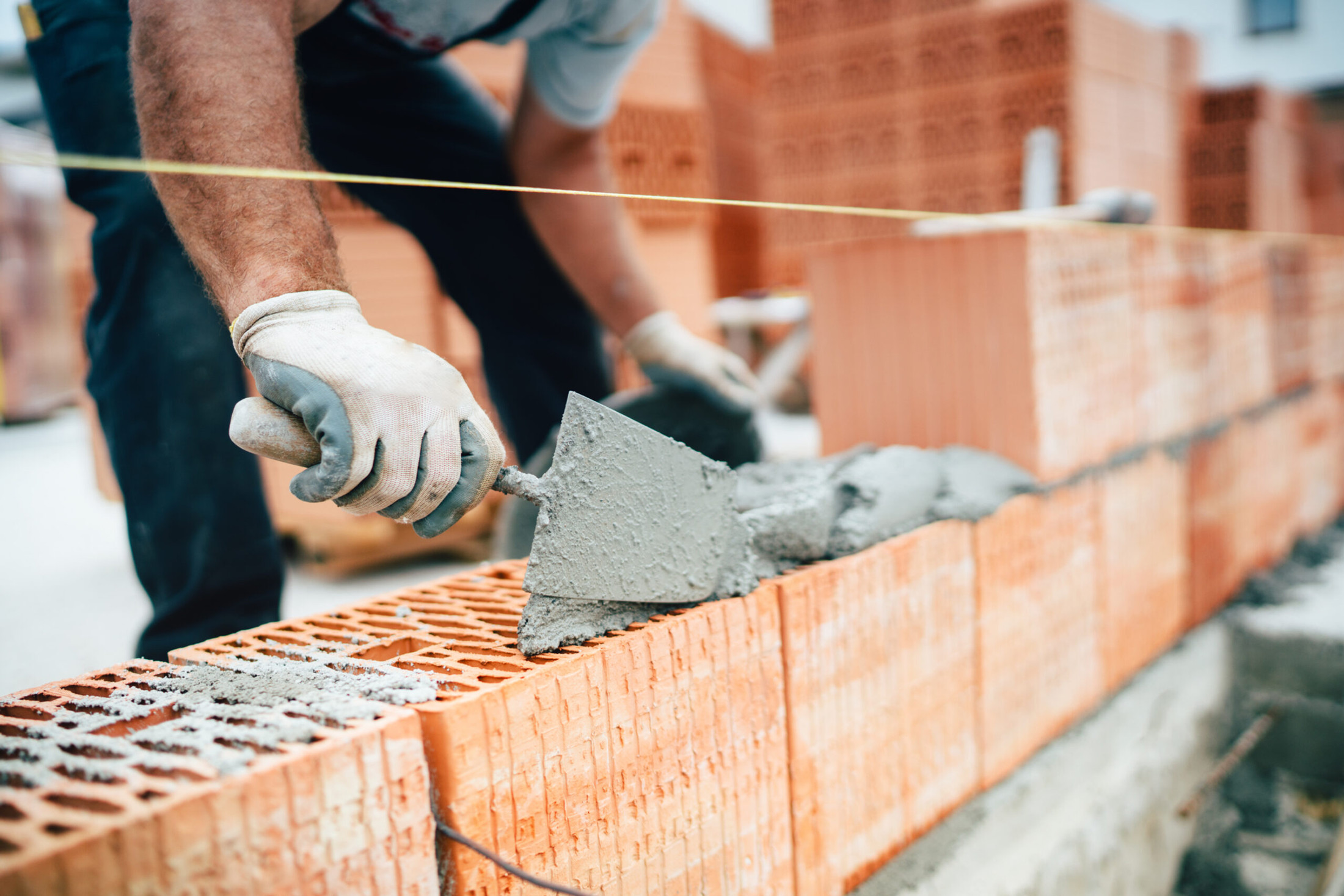
Bricklaying and repointing in Lover
Old soft brick, chimneys and boundary walls on the edge of the Forest, repaired in a mortar that suits the wall rather than the merchant's shelf.
The site visit is free and so is the written itemised quote. Thomas Hannen prices every job himself.
On the older brickwork around Lover the mortar should always be the softest thing in the wall. If yours has been pointed in cement and the brick faces are now crumbling, the cement is the cause and taking it back to lime is the cure.
The calls we get here fall into a few shapes. Brick faces flaking off a cottage wall, usually on the side that takes the rain, with the pointing standing proud of them like ribs. A chimney stack shedding mortar into the gutter. An outbuilding, a stable block or an old boundary wall that has bowed and nobody is sure whether it is safe.
And now and then a straightforward new job, an extension or a garage, on a plot where matching the existing brick matters more than anything else. All of it starts the same way: someone comes out, looks at the whole wall, photographs it and gives you an itemised written price with the mix on it.
The work
The jobs we do on old brickwork in Lover
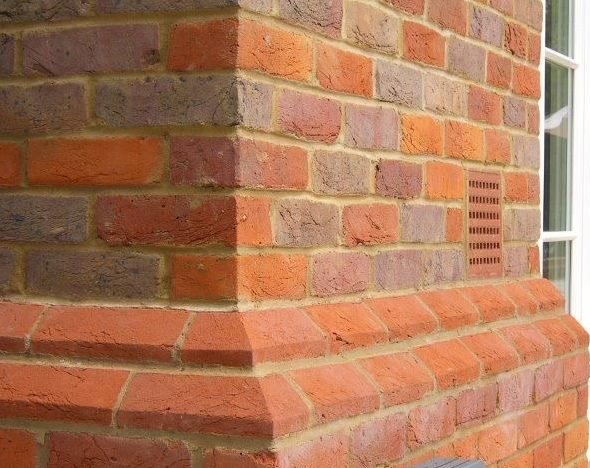
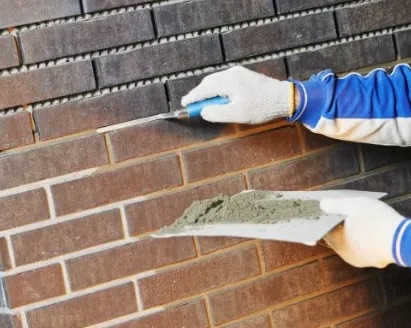
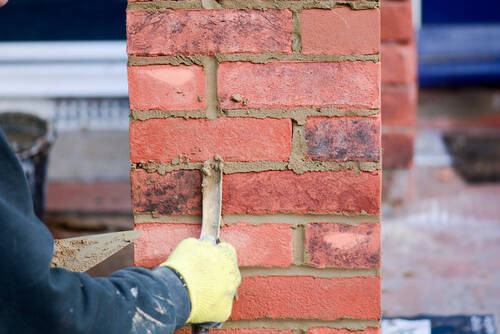
Lime repointing of soft brick. Better than a quarter of what stands here predates 1919, and a lot of it is handmade brick, softer and more irregular than anything made today, sometimes with flint or cob in the mix. We rake the joints by hand to about twice their width, never with a disc, because on brick this soft a cutter takes the arris off and leaves a wall that looks machined. Pointing goes back in an NHL lime gauged with a sand picked to match the colour of the original, finished flush or very slightly recessed so that water runs off the brick and not into the joint. We put up a sample panel first, since lime pales as it dries.
Where spalling has taken the face off, the brick will not recover and pointing round it just tidies the problem up. We cut the failed bricks out one at a time and bed in reclaimed stock of the same size and colour, which usually means finding it before we start rather than hoping. On an elevation that is more than a third gone we will tell you honestly that a patch will read as a patch, and give you the choice.
On a stack it is re-flaunching, repointing, rebedding pots and rebuilding from the last sound course where there is movement. Down at the bottom of the wall the usual culprit is ground: a path or a bed built up over the damp proof course, or on the oldest cottages no damp proof course at all, which changes what is worth doing. We look at the footing and the levels before we quote pointing that would only fail again.
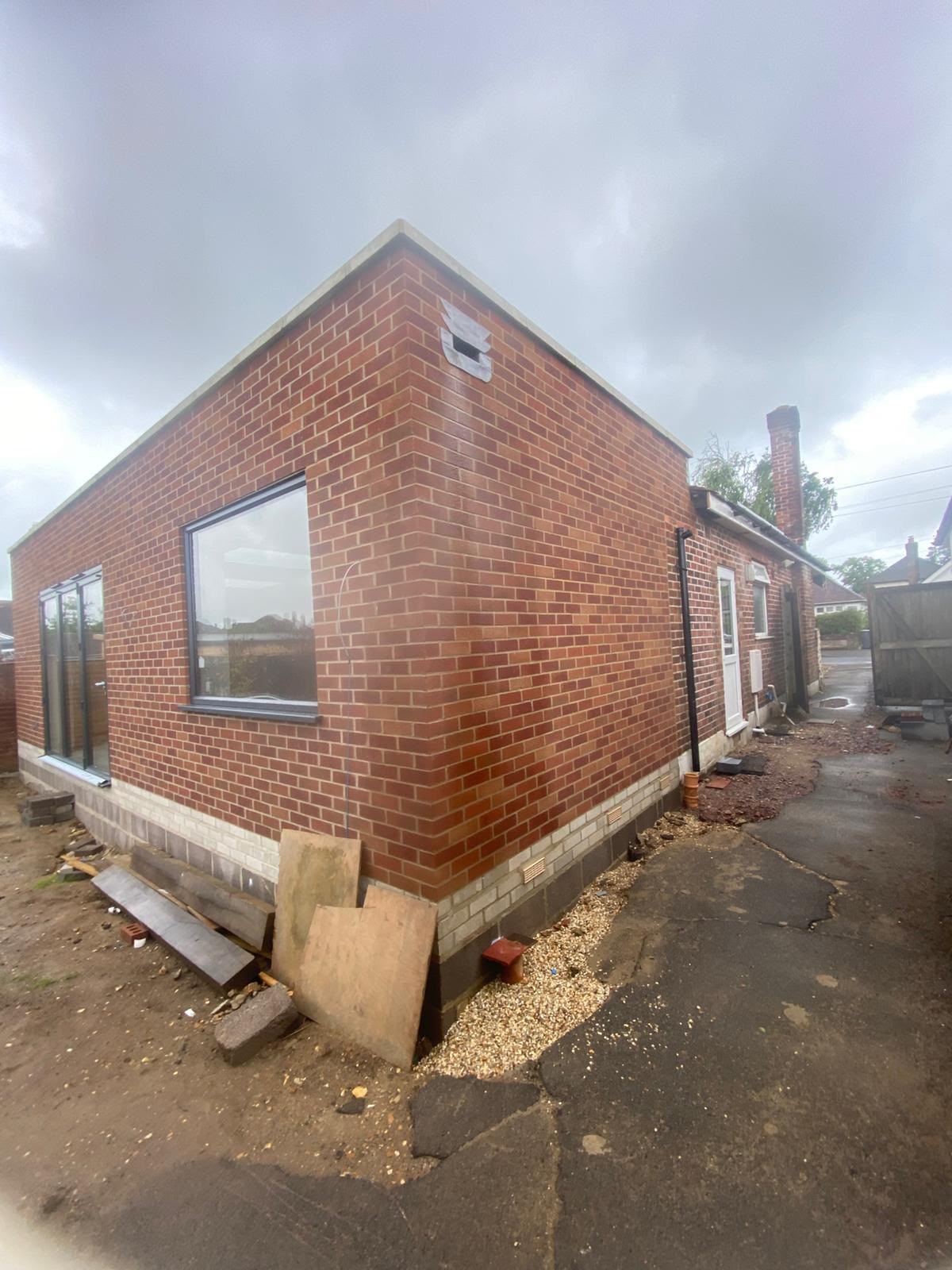
Brick and flint garden walls, brick piers and gate piers give plenty of warning: the coping loosens, the core wets up, then the wall bows. Taking a bowed length down to sound work and rebuilding it off the original footing, reusing the old bricks where they are worth reusing, is a day or two of work. For a new wall, Planning Portal guidance on garden walls sets the height you can go to without planning permission, and the Party Wall etc. Act 1996 covers anything built on the line with a neighbour. Extensions, garages and rebuilt gables go up in cavity construction: blockwork inner leaf, facing outer leaf in stretcher bond, ties at the right centres and a visible damp proof course. The difficult part is never the building, it is getting new brick and mortar to sit beside a hundred year old wall without shouting, so we bring samples out and agree them before anything is ordered.
How it runs
From your call to a written price
Same team from the first visit to the last, one person to ring, and the quote itemised: access, raking out, the mortar mix, the area of each elevation, any brick replacement and disposal on separate lines. Lover sits inside the New Forest National Park, so the National Park Authority is your planning authority rather than the district council. No conservation area covers the village and there are only eight listed entries in the parish, so most repointing here needs nothing at all. The National Park Authority's interactive property map will tell you in a minute whether your address is one of the exceptions, and we check it before we quote.
Cost
What decides the price of a brickwork job
No rate per square metre: the metre of wall tells you nothing until you see the joints. A brick boundary wall you can reach off the ground, a cottage gable and a stack on a two storey house are three different jobs. How long the platform stands matters as much as its size, and the work at height rules are why it is a priced line. Raking by hand is slow, so joint depth and spalled faces decide the hours, and matching a mortar or sourcing a brick takes trial panels. Ask how deep joints are raked, by hand or disc, and whether the scaffold is in.
If something has moved
Loose brickwork, or a wall that has shifted
Ring rather than use the form. Anything overhead or leaning goes to the front of the queue. Barns and old outbuildings here often have brickwork nobody has looked at in years, so if something is leaning near where you park or keep animals, say so when you ring. The first visit is about making it safe. The phone is answered 24 hours for emergencies; scheduled work runs Monday to Friday, 8am to 6pm.
Worth knowing
Solid walls have to breathe, and that decides the mortar
Better than a quarter of the homes around here went up before 1919, which in practice means solid walls: one thickness of brick or stone, no cavity, no barrier inside it. A wall like that is never bone dry and was never meant to be. Rain wets the outer face, the moisture moves through and comes back out again, mostly through the joints, which is exactly why the mortar was made softer than the brick.
It is a sacrificial layer. When it has taken a beating for eighty years you replace it, and the wall behind it is untouched. Point that same wall in cement and you have put a hard, impermeable frame around every soft brick. The water still gets in, but now the only way out is through the brick face, and one cold night is all it takes to pop it off.
So the single most useful thing you can do before accepting any quote here is find out which kind of wall you have and ask what mortar is going on it. A quick test: measure the thickness at a window reveal. Roughly nine inches or an odd number of brick lengths usually means solid; around eleven inches with a neat regular stretcher bond outside usually means cavity.
If it is solid, the answer should be lime, and a builder who shrugs at the question is the wrong one for this wall. If it is cavity, cement based mortar is right and lime would be soft for no reason. We write which one we propose, and why, into the quote before you decide anything.
Who you are dealing with
A local firm you can check
We cover Lover, Redlynch, Landford, Nomansland, Whiteparish, Downton and the villages along that edge of the Forest, and SP5 generally. Bournemouth Roofing & Building Ltd, registered in England and Wales, company number 15471719, which you can look up in a minute. Thomas Hannen's business, and he is the one who comes out to price the job, not a salesman. A verified customer's 10 out of 10 on Checkatrade. The visit and the written quote are both free.
Questions
Lover questions we get asked
What does failed pointing look like from the garden?
Joints sitting back a few millimetres behind the face of the brick, sand gathering on the sill or the path beneath, and mortar you can pick out with a fingernail. Look at the north east and south west faces first, since those are the exposed elevations at Lover and they go before the rest. Green algae low down, and a dark band that stays dark for days after rain, both say water is getting into the wall rather than running off it.
Our place is Victorian. Is cement mortar wrong on it?
On a solid wall, yes. 27.7% of the stock around Lover predates 1919 and walls of that age deal with water by letting it evaporate back out through the joints, which is precisely what a cement mix prevents. The moisture then leaves through the brick face and takes the surface with it, which is why hard pointed old walls end up crisp at the joint and eaten away across the brick. We use lime, matched to the original sand.
Do the National Park rules apply out at Lover?
The Authority is your planning authority, but Lover has no conservation area of its own and only 8 listed entries, so most repair work here needs nothing at all. Where the Park does bite is on anything new and visible: an outbuilding, a raised boundary wall on a lane, a change of material across a frontage. Repointing in matching mortar and rebuilding a wall as it stood are maintenance. We say at the survey which side of that line you are on.
What is on a written quote for a lime repointing job?
The elevations priced and the ones deliberately left, the depth we are raking back to, the mix and the sand being matched, how we are reaching the wall, and the making good and clearing at the end. Thomas Hannen writes it after standing in front of the wall at Lover, not off a photograph. It costs nothing and carries no obligation. Anything found once the joints are open gets priced and agreed before we carry on rather than afterwards.
Will the nutrient rules catch a barn conversion here?
If the conversion creates somewhere to sleep, it will. Lover drains to the Solent catchment, where the nutrient rules engage on schemes adding overnight accommodation, so a barn turned into an annexe is caught while the same barn repointed and re roofed is not. The New Forest National Park Authority handles that side. It is worth resolving before any new brickwork is set out, because the outcome can change what you are permitted to build.
Nearby, and next door
Bricklaying and repointing near Lover
Bricklaying and repointing nearby
Our other trades in Lover
Everything we do in Ringwood Bricklaying and repointing, all areas Every area we cover
Free quote
Get the right mortar on your wall
A free site visit around Lover, a sample panel before the elevation, and an itemised written quote with the mix written into it.