Roofing in Lover
Repairs, sorting and re-laying old tile, chimney leadwork, flat roofs and guttering at Lover and across the SP5 lanes.
The site visit is free and so is the written itemised quote. Thomas Hannen prices every job himself.
Better than one house in four at Lover was built before 1919, and an old roof has to be able to breathe. That single fact decides the underlay, the mortar and whether the old tiles come off to be sorted and re-laid or go in the skip.
Lover is a handful of lanes on the Wiltshire side of the forest, part of Redlynch parish, with old cottages standing next to post-war houses and very little in between. The calls come in two shapes. Something has come off an old roof and the ceiling underneath it is wet. Or a survey has said the roof is at the end of its life and you want to know whether that is true.
We come out, get on it where it is safe to and off a ladder where it is not, put our head into the loft and photograph the rafters, the battens and the back of the covering. That is where an old roof tells the truth. The site visit and the written quote are both free, however far out you are.
The work
Re-laying is the job nobody offers you
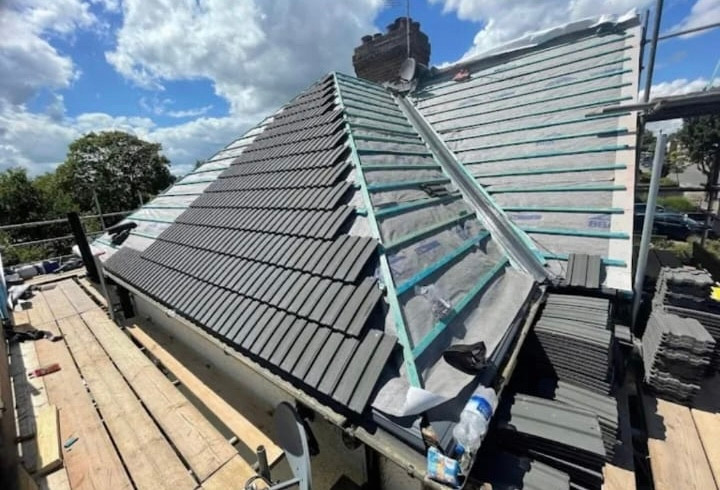
Re-laying is the job nobody offers you. Better than a quarter of the housing here predates 1919, and on a roof that old a good proportion of the covering is still sound. So we strip, sort on the ground, re-lay the best of it on the elevation that faces the lane and put new or reclaimed to the back. You keep the look of the house and buy a new roof underneath it. The old cottages run to plain tile and clay tile, some of it handmade and cambered, with natural slate on a few, and there is no stone slate in this corner of Wiltshire. The nib or the peg gives out long before the tile does, so a slipped tile is usually a fixing problem, and we keep salvaged tile by size and colour, because matching matters more here than on anything built since.
Most old roofs here have no sarking board and the very oldest had nothing under the battens at all. That roof has been drying itself through the covering for a century. Put a sealed underlay beneath it and the moisture stops where the rafters are, so we use a breathable membrane with a ventilated eaves detail on treated battens, and replace rafter feet that have gone soft rather than sistering over them. On the newer roofs in the village we convert to dry ridge and dry verge on a ventilated roll, the mechanical fixing BS 5534 expects. On old soft brick and old tile that is often the wrong answer, and the ridge goes back in a lime mortar bedding that will give a little rather than a cement one that cracks the tile it is meant to hold.
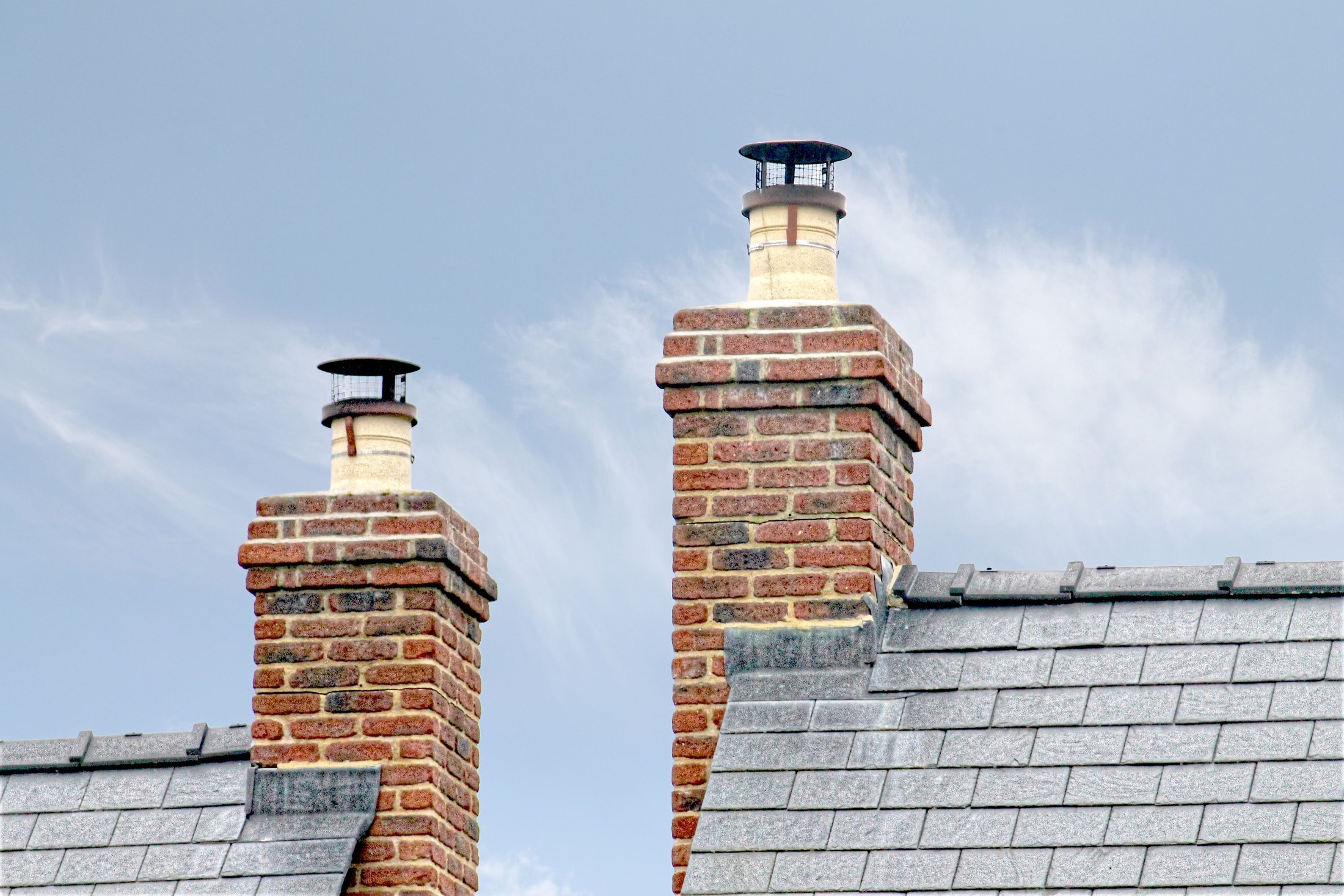
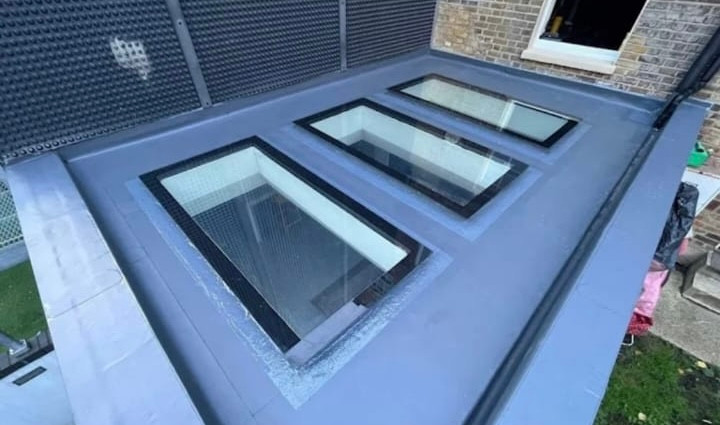
Cottages of this age carry big stacks, and the stack is where the water gets in: flashings, soakers, back gutters, valleys and the abutment where a lean-to meets the wall, all in code rated lead cut short enough to move without splitting, with cracked flaunching at the top a common and easy fix. The outshot, the lean-to and the later garage are felt, GRP fibreglass or EPDM rubber, with the deck, falls, upstands and outlet checked before anything is priced. Cast iron gutters are worth repairing rather than swapping for plastic, and a rotted fascia usually started as an overflowing gutter. Trees close in on these lanes, so clearing moss and debris comes round often. Thatch we decline. While a covering is off, insulation and eaves ventilation are far cheaper to sort, and Approved Document L sets the standard a renovated roof is expected to reach.
How it runs
From your call to a written price
One team, one person to ring, and an itemised quote you can compare properly. Lover has no conservation area of its own, and planning here is the New Forest National Park Authority rather than the council, with Wiltshire Council for building control. On an unlisted house a repair, a like for like re-cover, new rainwater goods and rooflights sit inside ordinary householder permitted development, within the limits Planning Portal guidance sets out. Two things change that: a dormer or anything that enlarges the roof is not permitted development on National Park land, and eight entries in the parish are listed, where consent is needed whatever the work. The National Park heritage guidance is worth a look before you commit to a material.
Cost
What decides the price of a roof
Lover is about twenty miles out and the lanes are narrow, so a scaffold lorry cannot always get to the house. Where it cannot, the platform is unloaded short and barrowed in, and that is a real line on the quote rather than something we absorb quietly and make up elsewhere. How long it stands matters as much as its size, and the work at height rules are why it is a line of its own rather than an optional extra. Ask whether the scaffold is in the quote, whether battens and membrane are renewed, and who takes the old tiles away.
If it is leaking now
Water coming in today
Ring rather than use the form. Anything letting water in goes to the front of the queue, and the first visit makes it safe and watertight. Take the weight off any ceiling that is bulging, because lath and plaster comes down in one piece rather than dripping politely. Then look along the ridge and verges for a gap. The phone is answered 24 hours for emergencies; scheduled work runs Monday to Friday, 8am to 6pm.
Worth knowing
An old roof has to keep breathing
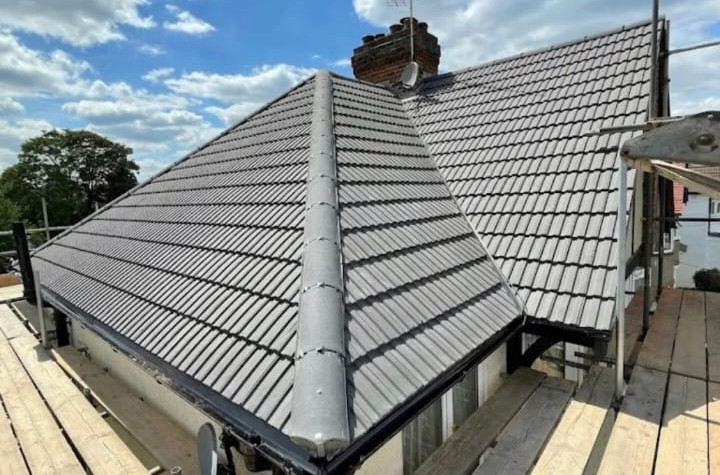
Better than a quarter of the houses at Lover predate 1919, and a good number of those are pre-1900. They were built with solid walls and no damp proof course, and they have stayed dry for well over a century by letting moisture move out through the fabric rather than by sealing it in. The roof is part of that. It is the single largest breathing surface on the house.
So the decisions that look like details are the ones that matter. A sealed bitumen underlay on an old roof pushes the moisture back to the coldest timber in the building. Cement mortar at a ridge or a verge is harder than the tile beside it and cracks it instead of moving with it.
Modern high strength pointing on the stack does the same to soft old brick. On these houses we use a breathable membrane, a properly vented eaves, lime where lime belongs, and salvaged tile matched by size rather than a modern near enough. It is not nostalgia. It is what keeps the timber dry.
Who you are dealing with
A local firm you can check
About twenty miles from us and out most weeks, covering Lover, Redlynch, Woodfalls and the SP5 addresses on the western edge of the forest, with the New Forest National Park Authority for planning and Wiltshire Council for building control.
Bournemouth Roofing & Building Ltd, registered in England and Wales, company number 15471719, which you can look up in a minute. Thomas Hannen's business, and he is the one who comes out to price the job, not a salesman. A verified customer's 10 out of 10 on Checkatrade. The visit and the written quote are both free.
Questions
Lover questions we get asked
Is Lover in a conservation area or just the National Park?
Just the Park. There is no conservation area of its own at Lover and only 8 listed entries in the surrounding area, so most houses here are clear of the heritage controls that catch a village centre. What does apply is the New Forest National Park Authority, which is your planning authority rather than a district council, and which looks closely at anything visible. A like for like re-cover on an unlisted house needs no application to them.
Are the old tiles worth saving on a Victorian cottage?
Often more than half of them are, and on the older stock here that is the difference between a match and a patchwork. Just over a quarter of the housing at Lover predates 1919, at 27.7 per cent, and those coverings were made in small batches that nobody produces now. We strip by hand onto the scaffold, sort the sound ones out and put them on the elevation you see from the road, with new material on the back slope.
Why does water get in around the dormer and not the tiles?
Because weather works at the joints. The most exposed elevation at Lover faces south west, and driven rain finds cheeks, flashings, soffit junctions and any opening in a slope long before it beats through a sound covering. A dormer packs four or five separate junctions into a small area, so it is the first thing to leak on an exposed roof. Re-forming those junctions in lead is usually the entire repair, with no need to touch the rest.
Should cast iron gutters be repaired or swapped for plastic?
On a pre-1919 cottage the cast iron is worth keeping wherever the sections are sound. It holds a straight line over a long run better than plastic does, and on the older frontages here it looks right where a white half round does not. The work is de-rusting, re-jointing and painting, plus new brackets where the fascia has moved. Where a section has split right through, a matching cast replacement goes in rather than mixing materials on one run.
Lover is a long way out. What about an emergency leak?
It is 19.6 miles from base, so an emergency here means a same day look rather than a same hour one. The first job is making it safe and dry: sheeting the slope, clearing the blockage or dressing a temporary flashing so the ceiling stops taking water. The permanent repair is then booked properly with the right materials on the van. Trying to do both in one visit at this distance usually means doing the second one twice.
Nearby, and next door
Roofing near Lover
Roofing nearby
Our other trades in Lover
Roofing guides
Concrete vs clay roof tiles: which is right? Planning, building regs or listed building consent Storm damage to a roof: the first 24 hoursEverything we do in Ringwood Roofing, all areas Every area we cover
Free quote
Get a price for your roof at Lover
Send the postcode and what you have noticed. We come out, look in the loft as well as on the roof, and put an itemised price in writing.