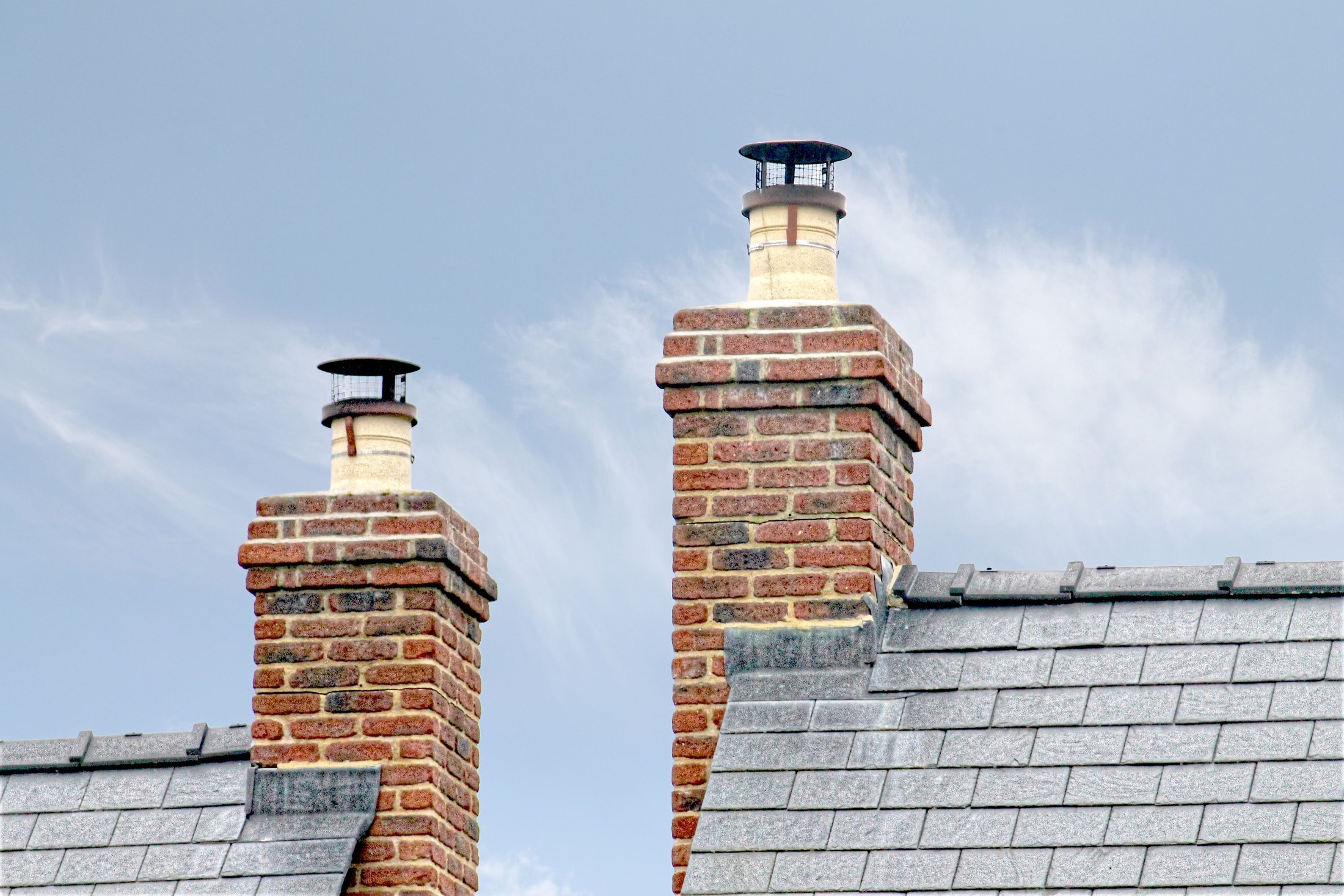
Roofing in Sandleheath
Slate and tile repairs, leadwork, edge work and re-covers on the older houses around Sandleheath and Fordingbridge, priced in writing.
The site visit is free and so is the written itemised quote. Thomas Hannen prices every job himself.
A fifth of the houses in Sandleheath were built before the First World War, and almost none of them are listed or in a conservation area. The fabric is old, the red tape is not, so you are free to put an old roof back properly rather than repeat what was there.
Three things bring people to the phone here. Slates keep coming off the same slope. Water is showing round a chimney, in a valley, or where a back addition meets the main roof. Or the covering on an old cottage has reached the end and the owner wants to know what a proper job involves.
We get on the roof, put our head in the loft and photograph what is there. On an old roof the survey matters more inside than out: with no underlay at all you can read the state of the battens and rafters straight off. The site visit and the written quote are both free.
The work
A membrane changes how an old roof dries
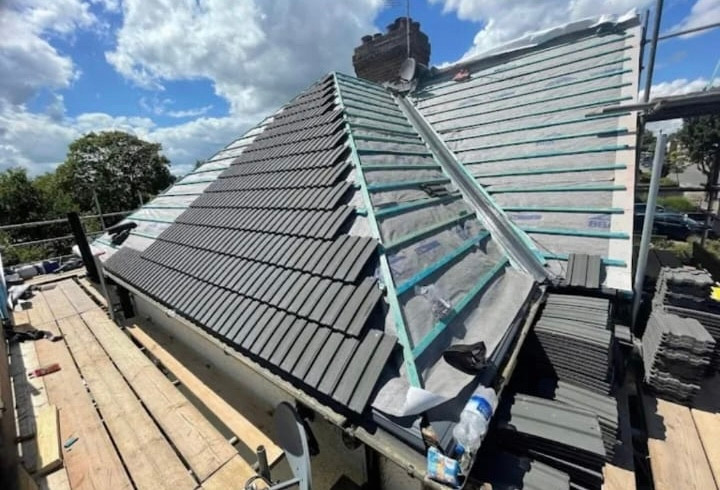
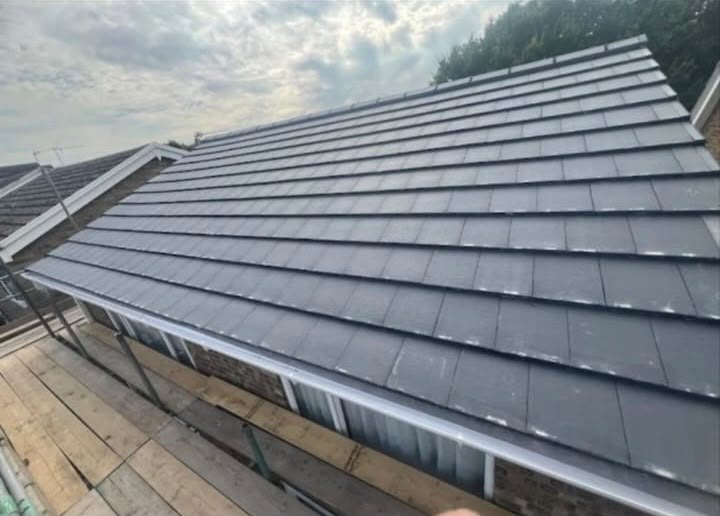
Slate, and the nail behind it. Natural slate on the older cottages, and slate seldom fails as slate. What goes is the nail. A slope that drops two or three every winter, from all over rather than one spot, has nail fatigue, and hanging another clip on each one is money after money. The honest answer is to strip, sort the sound slates and re-lay. Beside the slate there is plain tile and clay tile on the old ranges, and concrete tile, much of it interlocking, on the later houses. Stone slate is not a covering of this valley. On interlocking concrete the tile outlives what holds it down, so the fault is a nail or a clip. We do not work on thatch: where a tiled range adjoins a thatched one the flashing along that join is nearly always where the water gets in, and we work on our side of it only.
Ridge, underlay and ventilation. Mortar bedding cracks and washes out, and the tiles begin to rock. On a post-war house we convert to a dry fix system, dry ridge and dry verge screwed onto a ventilated roll, the mechanical fixing BS 5534 expects. On a Victorian roof a dry system can look wrong on the building, so there we re-bed in a softer mix that gives before the tile does. One roof in five here predates 1919, and those went on lath with no sarking board and no underlay whatever, which is why a re-cover on an old house is a bigger step up than one on a newer house: breathable membrane, treated battens and stainless nails go on, with soft rafter feet cut out first. Do the ventilation at the same time, because a membrane over a roof built to breathe changes how it dries, and Approved Document F covers what a roof space needs.
Old houses here carry more chimneys, valleys and abutments than modern ones, and every one is a junction. Flashings, soakers and abutments go in code rated lead cut so it can move without splitting, and cement fillets are replaced with lead rather than made good again. Extensions, garages and porches go in felt, GRP fibreglass or EPDM rubber, where the deck, the falls, the upstands and the outlet decide the life of it. Cast iron rainwater goods are worth repairing rather than swapping for plastic, and with trees close to a lot of these roofs, moss and leaf debris pack the run. Loft insulation, eaves ventilation and condensation are far cheaper to sort while the covering is off, and Approved Document L sets the standard a renovated roof should reach.
How it runs
From your call to a written price
One team, one person to ring, and an itemised quote you can hold against anyone else's. There is no conservation area over Sandleheath and only a couple of listed entries in the parish, so on nearly every house here a like for like re-cover, a repair, new rainwater goods and rooflights sit inside ordinary householder permitted development. No planning permission, no application, no building control sign-off, provided nothing stands more than 150mm above the roof plane, and Planning Portal guidance sets out the limits. If your plans run past the roof to a loft conversion, that is a different matter: this is the River Avon catchment, where anything adding a bedroom brings nutrient neutrality into it. New Forest District Council here.
Cost
What decides the price of a roof
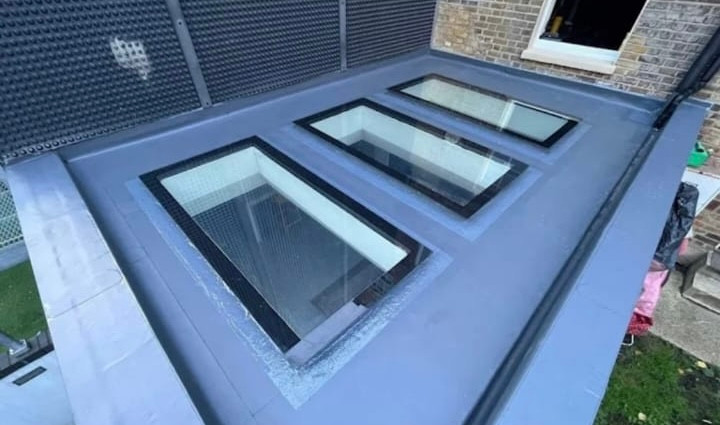
No rate per square metre. Rear elevations on the older houses are often reachable only through a garden gate, so the scaffold has to be carried in and built by hand, and a fragile old covering wants crawl boards and a roof ladder rather than anyone walking it. The platform is a priced line rather than an extra, because work at height rules apply. Comparing quotes, ask whether the scaffold is in the price, whether battens and membrane are renewed or covered over, and who pays for the skip.
If it is leaking now
Water coming in today
Ring rather than use the form. Anything letting water in goes to the front of the queue, and the first visit is about making it safe. Before we get there, go up into the loft in daylight with the light off and look for daylight through the covering, because on an old roof that tells you more than the stain does. The phone is answered 24 hours for emergencies; scheduled work runs Monday to Friday, 8am to 6pm.
Worth knowing
Old roofs here, but almost nothing to apply for
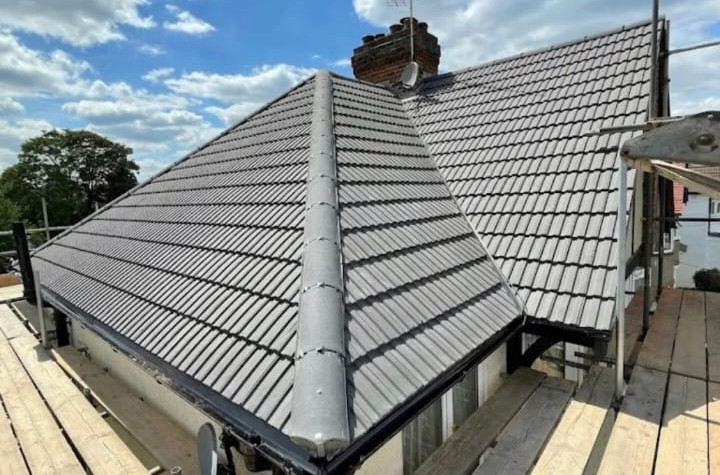
Sandleheath is an unusual combination. A fifth of the housing predates the First World War, which is a lot of lath, lime and hand-made covering for a village this size, and yet there is no conservation area and only a couple of listed entries in the whole parish.
That decides what you are allowed to do, and here the answer is nearly always whatever is best for the building. In a protected village you would be re-laying what was there with an application in hand. Here you are free to convert the edges to a mechanically fixed system, put breathable membrane under the covering, vent the roof space properly and add a rooflight, with no application at all. We still check the address first, because the handful of exceptions need consent whatever the work, and the difference is weeks rather than pounds.
Who you are dealing with
A local firm you can check
About fifteen miles from us, covering Sandleheath, Fordingbridge, Alderholt and the SP6 addresses along the Avon, with New Forest District Council for planning and building control. Bournemouth Roofing & Building Ltd, registered in England and Wales, company number 15471719, which you can look up in a minute. Thomas Hannen's business, and he is the one who comes out to price the job, not a salesman. A verified customer's 10 out of 10 on Checkatrade. The visit and the written quote are both free.
Questions
Sandleheath questions we get asked
What do you find when you strip an old roof here?
Sandleheath has a real tail of old stock, about one house in six built before 1900 and a fifth of everything predating 1919, and those roofs come off in layers. Under the covering there is frequently no underlay at all, just battens nailed straight to rafters that have been patched more than once. Sound timber stays put. Anything soft at the eaves or split around the nail holes gets replaced.
Only two buildings in the village are listed. Does that matter?
For most callers it means the paperwork is short. With two listed entries and no conservation area over Sandleheath, appearance is not controlled, so putting the roof back as it was needs no application at all. Wanting a different material or a different colour becomes a design decision rather than a planning one, and it is worth talking through before the order goes in rather than afterwards.
Why do the post war houses here fail differently from the old ones?
Different construction, different failure. Nearly four in ten homes in the village date from between 1945 and 1982 and those roofs were laid over felt; when the felt perishes, water gets past the tiles and finds the eaves timber. The pre 1919 group, which is a fifth of the stock, loses fixings and bedding instead while the covering carries on. Inter war building barely happened here, so there is little in between.
Can you work off my drive rather than the lane?
Where there is room for it, that is what we do. Getting on for three in ten houses at Sandleheath are detached with ground around them, which usually means the scaffold, the tile stacks and the muck away vehicle all sit inside your boundary and the lane stays clear for everyone else. On a tighter plot we agree beforehand which part of the frontage we need and for how many days.
What happens if the weather turns with my roof open?
We only ever open what we can close again. Stripping is done in sections, so by the end of each day the exposed area is either felted and battened or sheeted and weighted down properly. If the forecast is bad enough that a section cannot be made watertight, it does not get opened that morning. That is why an old roof here comes back slope by slope instead of all at once.
Nearby, and next door
Roofing near Sandleheath
Roofing nearby
Our other trades in Sandleheath
Roofing guides
Concrete vs clay roof tiles: which is right? Planning, building regs or listed building consent Storm damage to a roof: the first 24 hoursEverything we do in Verwood Roofing, all areas Every area we cover
Free quote
Get your Sandleheath roof surveyed inside and out
A free site visit, a proper look in the loft as well as on the covering, and an itemised written quote you can compare against anyone else's.