Driveways and patios in Downton
Block paving, resin bound, tarmac, gravel and stone patios across Downton and the SP5 villages. Free site visit, free written itemised quote.
The site visit is free and so is the written itemised quote. Thomas Hannen prices every job himself.
When a Downton drive sinks, ponds or breaks up along its edges, the fault is nearly always the sub-base underneath rather than the surface on top. A new surface laid over a tired base is money you spend twice, so we dig a hole and look before we price anything.
Three things bring people here to the phone. A concrete drive that went down with the house, now cracked along its joints and rutted where the same two wheels park. Gravel that will not stay where it was put, so half of it is out on the road and the rest is in the lawn. And a patio at the back of a cottage that has settled towards the house rather than away from it, so after rain there is a puddle at the back door and a tide mark on the brickwork.
None of those improve on their own, and all three get more expensive the longer water sits in the wrong place. What we do about them starts the same way. The free site visit means lifting a block or opening a small trial hole where we can, seeing what the ground underneath is actually doing, and telling you on the spot whether you are buying a re-lay, a new sub-base or a full dig out. Then the survey goes into writing with the method on it as well as the figure.
The work
Downton drives, and what is usually wrong with them
Old concrete, broken up and taken away. Getting on for half the village went up between the war and the early eighties, and those houses came with bay-laid concrete drives. They fail at the joints first, then rut where the car stands, then start staining and holding water in the low spots. Concrete cannot be levelled by adding to it, so it comes out: we break it, load the spoil straight into a grab lorry rather than filling your garden with it, and dig down to a firm formation. The depth depends on what is under there and on whether a vehicle is ever going to cross it.
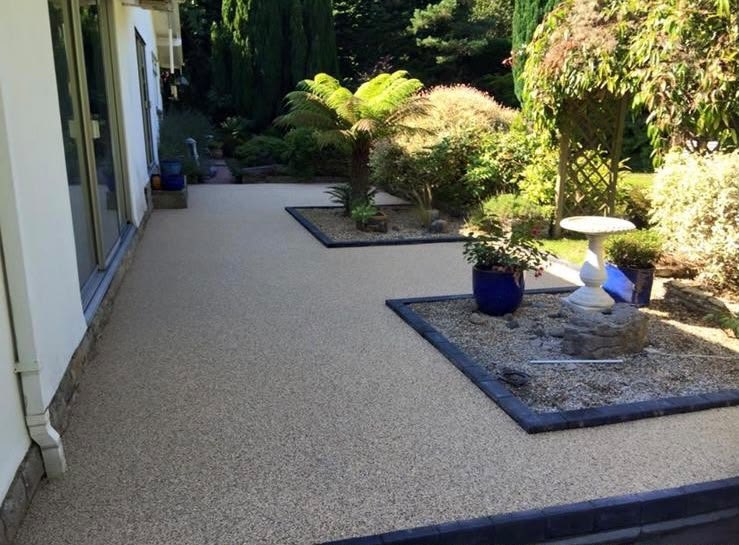
Gravel that has gone travelling. A quarter of the housing here predates 1919 and plenty of those cottage frontages are loose stone over nothing much, which always ends up on the pavement. Two things fix it. A bound strip at the entrance, resin bound or tarmac, so nothing is dragged out onto the highway. Or the whole surface changed to resin bound over a proper base, which keeps the gravel look and stays put. Both need an edge restraint with a haunch of concrete behind it, because a gravel drive without a border is just a slow leak.
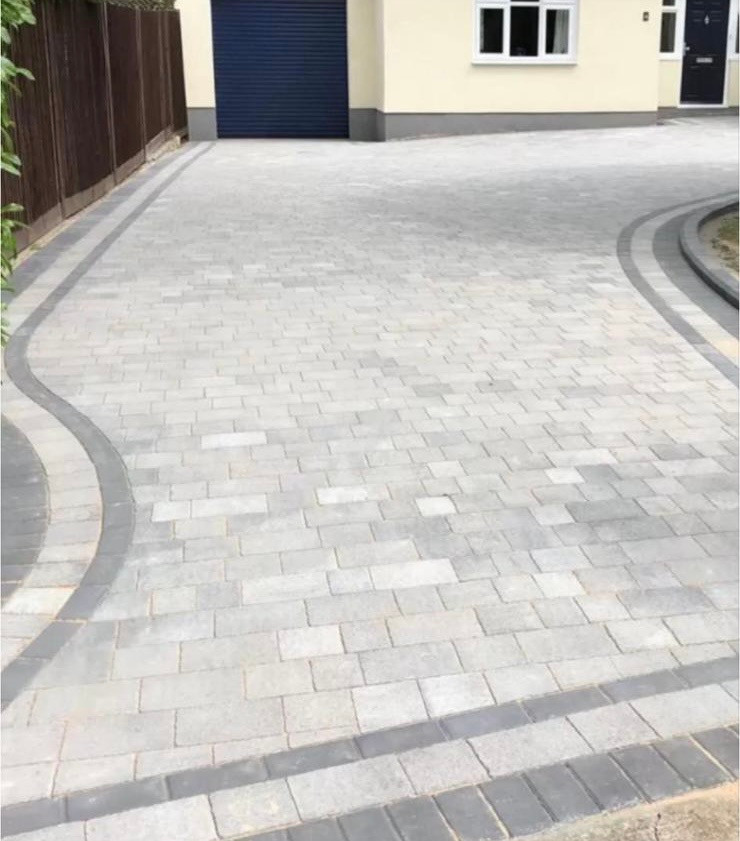
The nineties block drives around the village are rarely worn out. They have silted up, the jointing sand has washed out, weeds have taken the open joints and the whole thing has dished where the sub-base was thin. We lift the blocks by hand, keep what is sound, put right the base and the falls, re-lay on screeded sand and re-sand the joints with kiln dried sand brushed and vibrated in. That is a couple of days rather than a week, and it costs a fraction of a new drive.
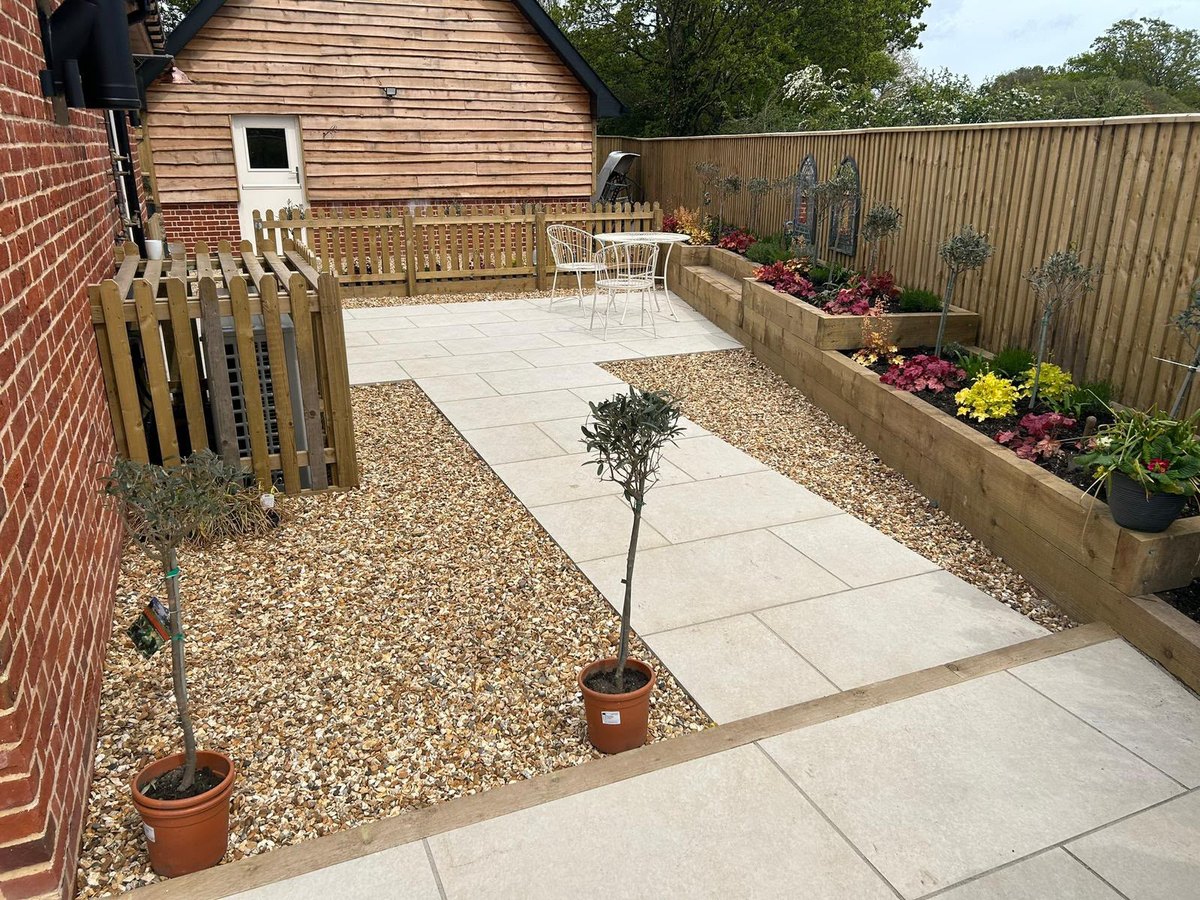
At the back of the older cottages the ground has usually crept up over the years. New natural stone or porcelain goes down on a full mortar bed with a fall running away from the wall, pointed properly, and set low enough to keep clear of the damp proof course and the threshold. Where the level cannot come down, a channel drain at the wall takes the water instead, and on a garden that falls away we build a step and a low retaining course rather than one long tilt.
Ground here is naturally wet, so nearly every job ends up being about drainage: a gully silted solid, a fall running the wrong way, a garage bay that ponds. Depending on what the ground will actually take we build permeable, dig a soakaway sized from a percolation test rather than a guess, or run a positive outfall to somewhere that will accept it. Approved Document H is the standard that sits behind all of that, and it sets the order those options should be considered in.
How it runs
From your call to a written price
Excavation, muck away, the sub base, edgings, the surface and the drainage each get a line of their own on the quote. Hard surfacing round a house is normally permitted development, and the one rule that catches most people is the paving one: more than five square metres of impermeable surface in a front garden needs planning permission unless the water is drained to somewhere it can soak away on your own ground, which the rules on paving a front garden sets out. Downton is a conservation area with 107 listed entries in it, which brings the front boundary into it as well, and Wiltshire Council is the planning and building control authority for this address.
Cost
What decides the price of a driveway
There is no rate per square metre, because what is under the surface decides more of the price than the surface does. A postwar semi with a straight run in off the road, a village cottage where the only way through is a gate you can barely get a barrow past, and a bungalow with a frontage wide enough to turn a machine on are three different jobs before anything is dug. On ground this wet, where the water is allowed to go carries a lot of the price. Ask what depth, what sub base, and who takes the spoil.
If it is urgent
A trip hazard, or a drive that floods
Ring rather than use the form. A slab that has lifted or a gully that has stopped taking water will not wait, because somebody falls or water ends up against the house. Around Downton that is usually a bay that has dropped by a garage threshold, or a silted gully sending water back towards a front door. The phone is answered 24 hours for emergencies; scheduled work runs Monday to Friday, 8am to 6pm.
Worth knowing
In Downton the wall matters more than the paving
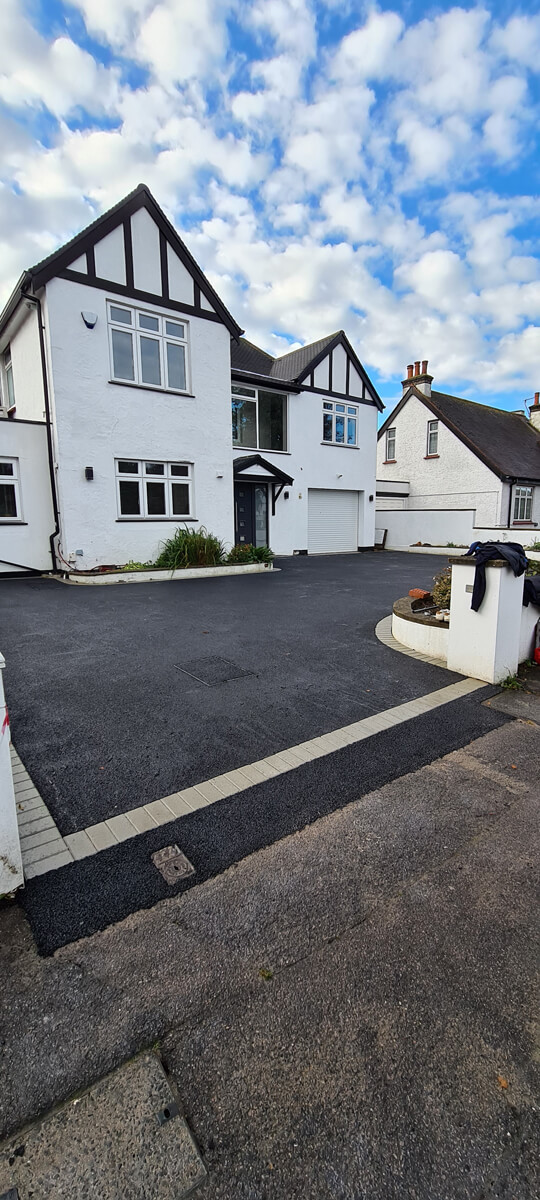
Most people ring up expecting a conversation about materials and find the first real question is the front boundary. The village is a conservation area, and in a conservation area you need planning permission to pull down a wall, gate, fence or railing over a metre high where it sits next to the road. That is exactly what a new driveway usually needs doing.
The paving itself is permitted development; the gap you make to reach it may not be. Planning Portal guidance on gates and garden walls covers where the line falls, and it is worth settling before anybody prices a surface, because the answer sometimes changes the design: a wider gate in an existing opening instead of a new one, or the wall taken down and rebuilt in the same brick with the old coping put back.
There are well over a hundred listed entries in and around the village, so the second question is whether your house is one of them. If it is, work in its curtilage can need listed building consent as well, and that reaches things people do not expect: old brick or stone setts lifted, a gate pier moved, railings taken out. None of it stops the job.
It changes the order, because consent comes before the dig rather than after somebody has already broken the wall out. We will tell you plainly which of these apply to your address at the site visit, and other permissions you may need is the plain English list to read alongside it.
Who you are dealing with
A local firm you can check
We cover Downton and the Avon valley either side of it, out through Redlynch and Lover and down the SP5 lanes towards Breamore and Fordingbridge, and Wiltshire Council is the planning and building control authority for this address.
Bournemouth Roofing & Building Ltd, registered in England and Wales, company number 15471719, which you can look up in a minute. Thomas Hannen's business, and he is the one who comes out to price the job, not a salesman. A verified customer's 10 out of 10 on Checkatrade. The visit and the written quote are both free.
Questions
Downton questions we get asked
Does Downton conservation area status reach the front garden surface?
It reaches anything visible from the street, front gardens included. Downton has its own conservation area and 107 listed entries, among them the Manor House and the Church of St Laurence, so the village core is closely looked at. Wiltshire Council is the authority. Like for like renewal is maintenance, a change of material is not, and the more of a frontage that faces the public, the more that distinction matters.
The ground stays wet. Will a soakaway cope with a drive?
Not reliably. Downton sits on naturally wet ground that holds water for long stretches, so a pit emptying nicely in September can be full by Christmas and useless when run off actually arrives. We dig and time a hole in the wettest part of the plot rather than the driest. Where it fails, the design becomes falls, a channel and a piped route to somewhere water can leave under gravity.
Do the River Avon protection rules stop a new patio?
No, not in the ordinary case. The River Avon catchment rules bite where a scheme adds overnight accommodation, since that is what adds load to the river. A drive, a terrace or a path adds no bedrooms and does not engage them. If the wider project includes an annexe or a holiday let, that is a different conversation, and it needs raising with Wiltshire Council before groundwork is priced.
How does material reach a cottage that fronts the street?
In small loads, with somewhere agreed to stand. A street frontage gives no compound, so a delivery is timed and taken straight in rather than left out overnight, and spoil goes into a grab or bags filled and removed the same day. Terraced houses are 23.2% of Downton, so this is the normal arrangement here. Where the street will not hold a lorry, material is shuttled in by small tipper.
What should the quote break down for a job here?
Every part separately: excavation and cart away, the depth of stone going back in, edgings, the surface itself, and the drainage, which on wet Downton ground is the item people underestimate. Any Wiltshire Council application for a crossing is shown apart from our labour. Thomas Hannen prices it after the visit, the written itemised quote costs nothing, and VAT is charged on top because the firm is a limited company.
Nearby, and next door
Driveways and patios near Downton
Driveways and patios nearby
Our other trades in Downton
Everything we do in Verwood Driveways and patios, all areas Every area we cover
Free quote
Get a written price for your Downton drive
A free site visit, a hole dug where it matters, and an itemised written quote with the method on it.