Plastering and rendering in Downton
Walls, ceilings, lime work and render across Downton and the SP5 villages. We come out, look properly, and put a price in writing.
The site visit is free and so is the written itemised quote. Thomas Hannen prices every job himself.
A cracked ceiling, a wall that has blown behind the wallpaper or a chimney breast to make good after a stove went in. That is the Downton work, one room at a time rather than a whole house, and all of it is a day or two. We will tell you which of those you have got before we price anything.
People ring us here for one of three reasons. A ceiling has started to crack or drop, and nobody can say whether the old lath and plaster is giving up or the room has simply moved. A wall sounds hollow when you knock it and the paper has stopped sticking to it. Or a room has been stripped back, the coving is off and the artex has gone, and it needs to be flat and ready to decorate by a date that is already in the diary.
We come out, tap the walls and ceilings over, lift a loose corner where there is one, and say which of the three it is. Downton runs from cottages older than the plaster inside them to post-war estate houses on the edges, and the right repair is a different repair in each.
The work
On the older cottages the backing coat is the whole job
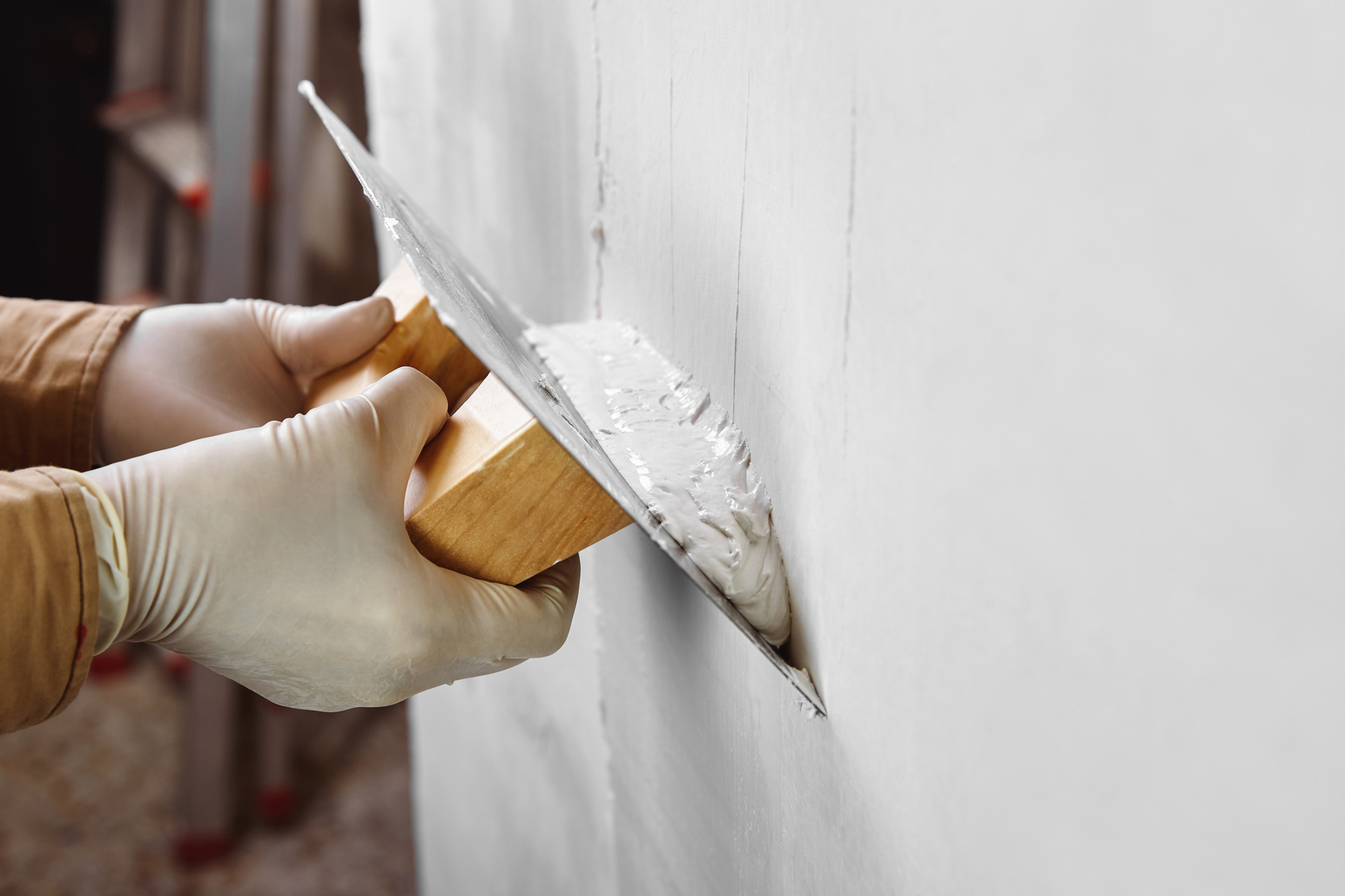
Re-skimming walls and ceilings. The everyday job. We prepare the surface, PVA where the background is porous, and lay two coats of finish plaster on with a trowel so the wall is flat and ready to paint. A bedroom ceiling is a day. A whole room, walls and ceiling together, is usually two. It only works over something sound, so if the old plaster is blown we will say so rather than skim over it and buy you a year.
Blown walls taken back and re-plastered. Where the old coat has let go it comes off, the brick is cleaned back, and a backing coat of bonding or hardwall is floated on and ruled flat before the finish coat. Browning where the background is porous enough to take it. A quarter of Downton predates 1919, and on those cottages in the Borough and the lanes behind it the backing coat decides the whole job: a gypsum render coat on a solid wall still carrying damp will blow a second time, so those go back in lime and stay breathable.
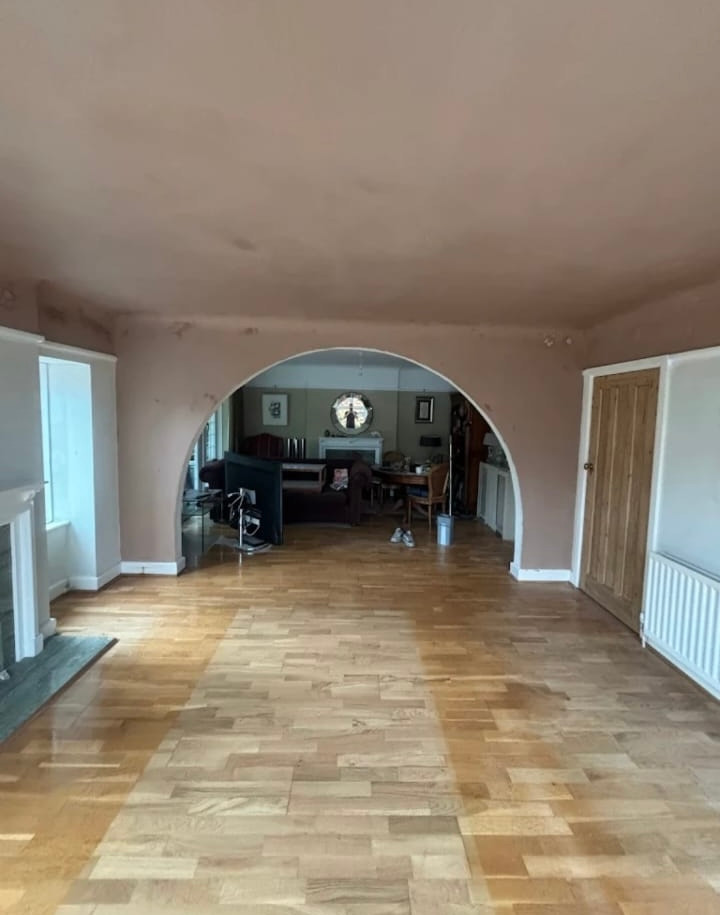
There are a lot of lath and plaster ceilings in the middle of the village. Where the lath is sound and only the surface has crazed we pull the loose material and re-skim. Where the plaster has parted from the lath and the ceiling is bellying down it comes down and goes back as plasterboard fixed to the joists, taped at the board edges and skimmed over the lot. In one of the 107 listed cottages that is a conversation to have first, because stripping original lath can need consent, and other permissions you may need covers it.
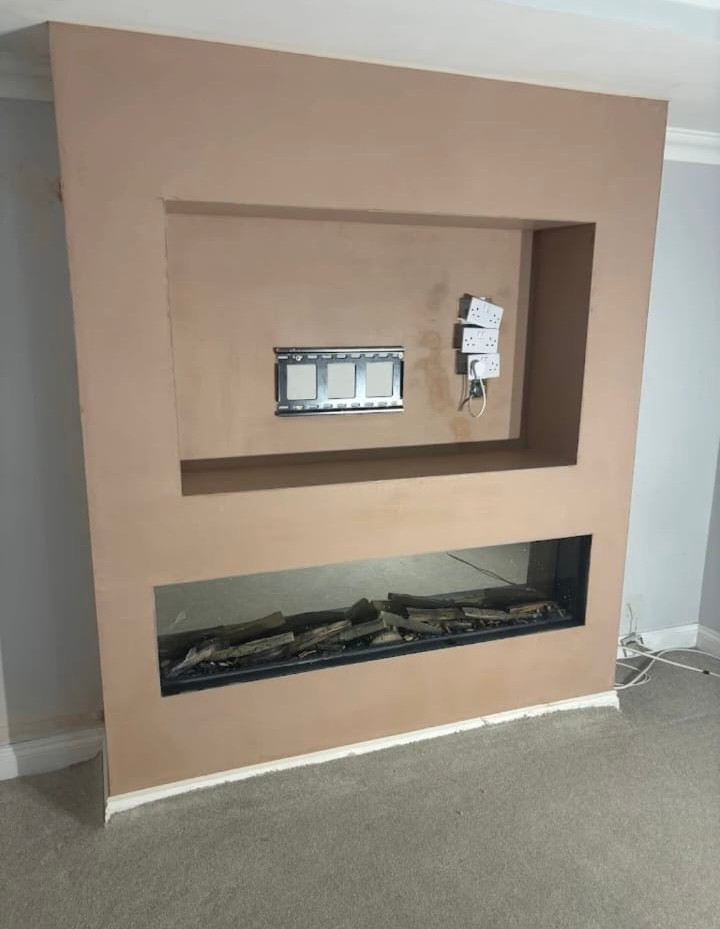
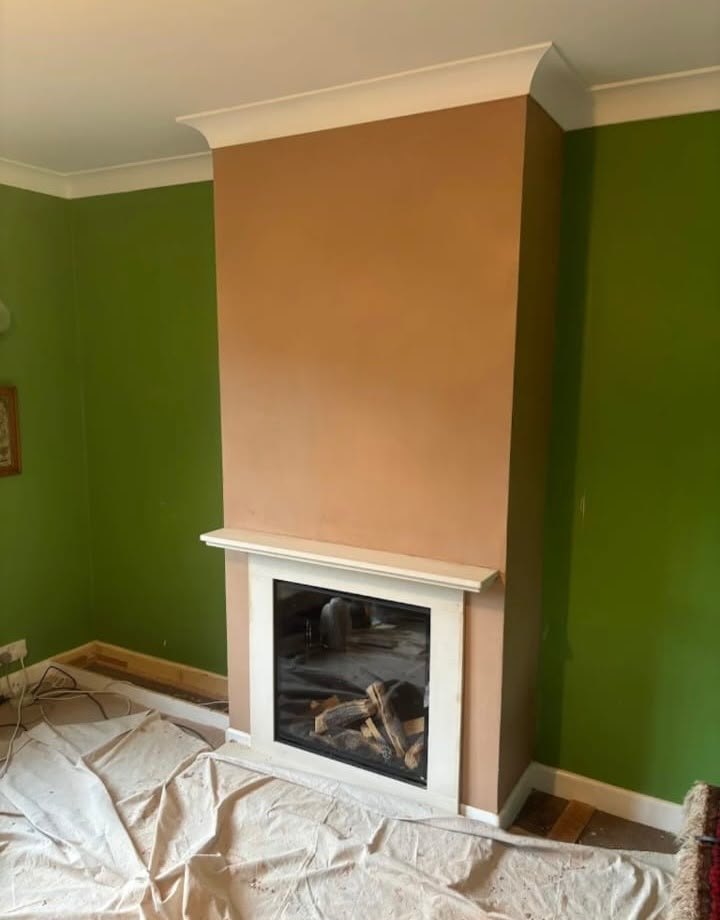
Dry lining, stud work and boarding out. Plasterboard on dabs where a wall is too far gone to patch, stud partitions where a long room is being split, and boarding out a chimney breast after a liner or a stove. Every external corner and window reveal gets an angle bead or a stop bead, because that is the edge the hoover and the pushchair find first.
Outside it is patch repairs where a panel has cracked and gone hollow, and full re-renders. Sand and cement over a scratch coat where that is what is already on the building, or a mesh-reinforced basecoat with a silicone thin coat, K render or monocouche where the elevation takes weather. A bell cast bead at the base throws water clear of the wall instead of into it. Pebbledash is patched and matched rather than replaced wholesale where only a section has failed.
Then the making good: cracks around door heads and window openings, patching after a leak has dried out, artex skimmed over or overboarded, and what a kitchen or bathroom fitter leaves behind. New plaster wants three to seven days to dry, longer in a cold house, then a watered-down mist coat before you decorate properly.
How it runs
From your call to a written price
The quote is itemised rather than one figure: preparation, hacking off, the backing coat, boards and beads, the skim and the making good on separate lines. Inside, none of this needs permission. The middle of Downton is a conservation area, and in one rendering or cladding a wall that was never rendered is not permitted development, so it needs an application to Wiltshire Council first. Repairing or renewing render that is already there is maintenance and needs nothing. Planning Portal guidance on external walls sets out where that line sits. On one of the village's listed buildings the plaster inside counts as well, so we check before anything comes off.
Cost
What decides the price of a plastering job
No rate per square metre. A 1960s bungalow with the rooms emptied, a brick terrace on the Borough with the furniture still in it, and a listed cottage where the plaster has to come off by hand are three different jobs before a bag is mixed. A wall that only wants a skim is a fraction of one hacked off and brought back in a backing coat, and we find out which by tapping it over rather than guessing. Outside, render needs a tower or a scaffold on its own line, because the work at height rules decide the platform.
If it has come down
A ceiling that has blown or come down
Ring rather than use the form. If a ceiling is sagging or dropping bits of plaster, keep everybody out of that room and move what you can from under it. If a wall has gone soft and dark, the water has to be stopped before a plasterer is any use. Downton is half an hour up the Avon valley, so a make-safe visit is usually same day or the next.
Worth knowing
Rendering a wall in the Downton conservation area
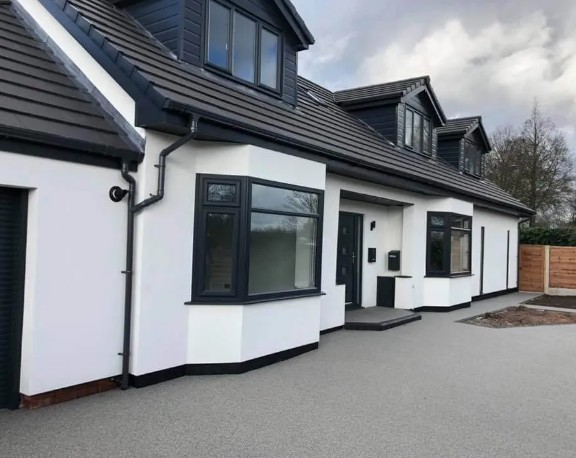
If you are thinking of rendering a brick or flint elevation that has never been rendered, check which side of the conservation area boundary you are on before you get quotes. Inside it, the permitted development right that lets everyone else clad or render a wall is switched off, so it becomes a planning application rather than something you and a builder settle between you.
That catches people out on a side or rear wall that takes the weather, where render looks like the obvious cure for a wall that is wetting through. It may still be the right answer, but the application comes first and it is worth knowing before you book the work around a holiday.
Repairs are the easier half. Renewing render already on the building is maintenance, with nothing to apply for, as long as what goes back matches what was there. That matters on the older cottages, where the existing coat is often soft and sandy for a reason: it lets the wall dry outwards.
We take a piece off, look at what it is, and put back like for like rather than sealing a wall in something modern and rigid. If you want the colour changed at the same time, say so at the quote stage, because on a through-coloured system the colour is decided before the topcoat is mixed.
Who you are dealing with
A local firm you can check
We cover Downton, Charlton All Saints, Morgan's Vale, Redlynch, Woodfalls and the SP5 villages up and down the Avon valley. Bournemouth Roofing & Building Ltd, registered in England and Wales, company number 15471719, which you can look up in a minute. Thomas Hannen's business, and he is the one who comes out to price the job, not a salesman. A verified customer's 10 out of 10 on Checkatrade. The visit and the written quote are both free.
Questions
Downton questions we get asked
Downton is in Wiltshire. Who handles the planning side?
Wiltshire Council. Downton is the Wiltshire end of our patch, so the conservation area here and any listed building consent go through them rather than through Dorset or the New Forest. There are 107 listed entries in the village, the Manor House and the Church of St Laurence among them, so it is worth checking your own address on the list before settling on a new finish.
Most of Downton predates 1900. What does that mean inside?
Solid walls, lath and plaster ceilings, and lime throughout. The largest single group of houses here went up before 1900 and 25.2% of the village predates 1919, so a good deal of what we take off is original haired lime on riven laths. Those walls have no cavity and no membrane; they dry through the plaster itself. Put gypsum on them and the moisture stops dead at the back of it.
Should we use lime putty or a hydraulic lime?
Which one depends on the wall and where it sits. For internal work on a Downton cottage, lime putty with hair in the backing coat matches what is already on the wall and stays soft enough to move with it. Outside, or anywhere taking driven rain, a natural hydraulic lime sets harder and faster and copes better. Mixing the two systems on one elevation is what causes the trouble.
Does the River Avon designation stop us converting the loft?
It does not stop it, it adds a step. The River Avon catchment rules come into play only when a proposal creates extra overnight accommodation, so a loft turned into a bedroom is in and a replastered dining room is not. Wiltshire Council settles that in the application, well before anyone boards anything. It is a planning matter rather than a plastering one, and it changes nothing about how we price the work.
How much of the house do you need at once?
One room at a time and a clear run to the front door. Downton has terraces, semis, bungalows and detached houses in roughly equal shares, so the answer moves with the layout: in a terrace everything comes through the hall and gets protected, and in a bungalow we can often work off the back. We agree at the visit which rooms will be out of use and in what order.
Nearby, and next door
Plastering and rendering near Downton
Plastering and rendering nearby
Our other trades in Downton
Everything we do in Verwood Plastering and rendering, all areas Every area we cover
Free quote
Get a price for your Downton plastering
Tell us the address and what you have noticed. We will come out, tap it over and put an itemised price in writing. No charge, and no obligation.