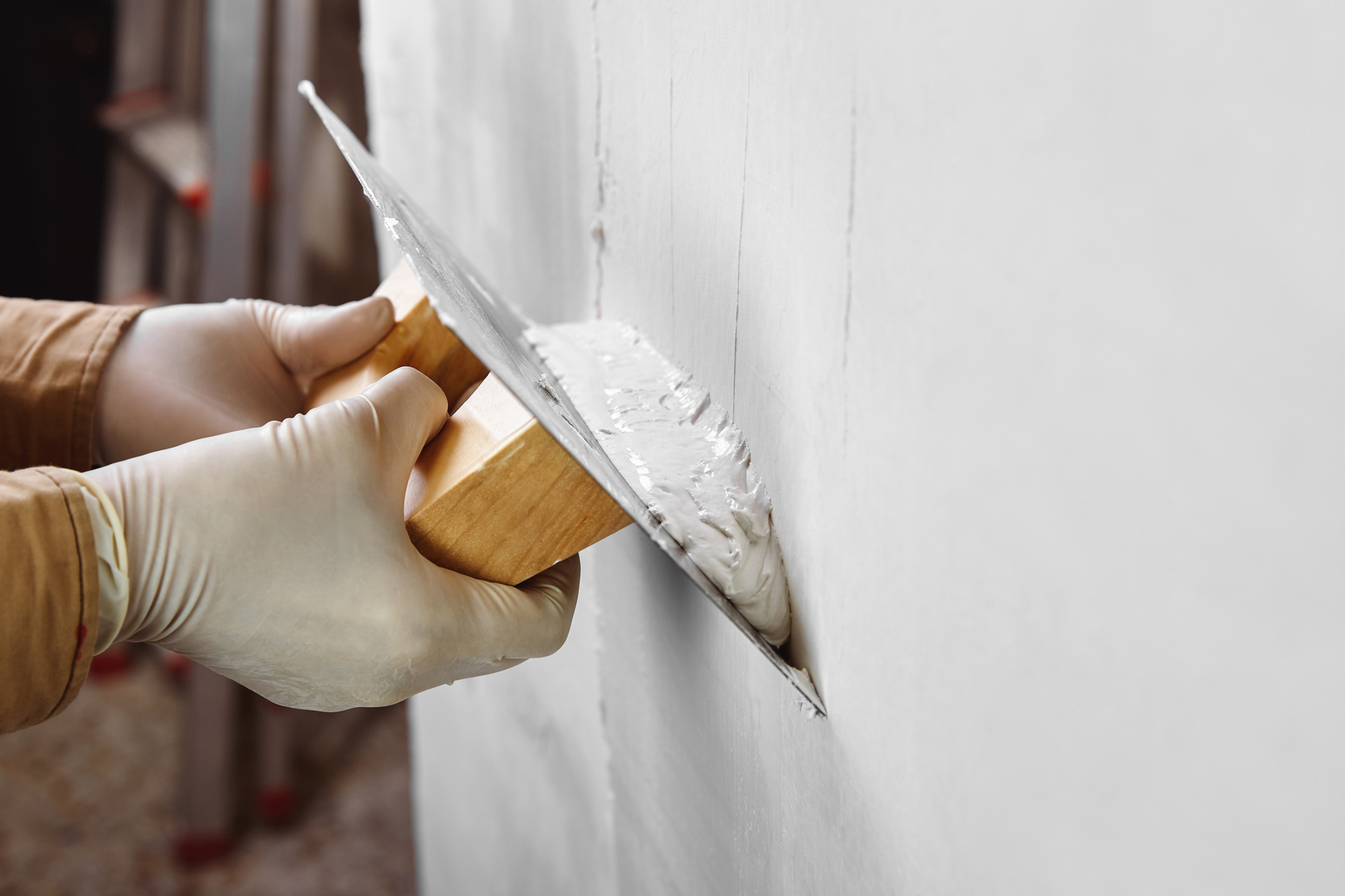
Plastering in Breamore
Lime and gypsum work across Breamore and SP6, matched to what the building is already made of and priced in writing.
The site visit is free and so is the written itemised quote. Thomas Hannen prices every job himself.
On the old buildings in Breamore the plaster wants to be lime, not gypsum. A solid wall with no cavity sheds the water it takes in through its own surface, and a hard modern coat over the top stops it doing that and blows off in plates a winter or two later.
People ring us here for one of three reasons. A lath ceiling has started to sag and drop dust on the furniture. A wall has gone soft and salty near the floor and the paint is lifting. Or a barn or an outbuilding is being brought into use and every surface in it needs a finish.
All three are jobs where the wrong material is worse than no work at all, so we start by finding out what is already on the wall. Lime and gypsum behave differently and it is usually obvious within a minute of scraping a corner. You get a written price saying what is coming off, what is going back on and why, and if the honest answer is to leave a wall alone and deal with the water reaching it, that is what the quote says.
The work
Dot and dab is the one thing we will not do here
Lime plaster on lath. The ceilings and partitions in the older Breamore buildings are riven laths with a haired lime backing coat pushed through them. Where the keys have snapped the ceiling sags between the joists and no amount of filler puts that back. If enough key survives we can consolidate and repair a section. If it does not, the ceiling comes down and goes back either in lime on new lath or, where you are not fighting to keep the original, in plasterboard with a lime finish so the room still breathes.
Dot and dab is the one thing we will not do here. Older buildings here were built without a damp proof course and have coped for centuries by drying out through the wall face. What breaks that is usually something recent: a cement render outside, a plastic paint, or ground and paving that have crept up the wall. We take the hard coat off, let the wall dry, then put a breathable lime backing coat and finish back on it. Board on dabs against an old solid wall leaves a void that goes cold and wet behind it, and that is why we will not do it here.
A lot of the older fabric in this parish is agricultural, and there are sixty-three listed entries in it. Converting a barn or an outbuilding means new stud partitions boarded and taped, insulation lined out, and the old walls left in lime so the new work and the old are not fighting each other. Not every job here is a heritage job: newer houses get what they should get, a hardwall, bonding or browning backing coat on blockwork, plasterboard ceilings, tape and joint or a full skim, and angle bead and stop bead at the corners and reveals.
Outside, a mesh reinforced basecoat with a silicone thin coat, K render or monocouche topcoat makes a good, long lived wall on a modern house. On a solid old wall it is the wrong answer, and so is sand and cement. There the render is lime, put on in a scratch coat and a topcoat, finished to match what is next door and painted in something mineral rather than plastic. Where a wall carries old pebbledash we sound it before deciding, because pebbledash that is still keyed is often better left than replaced. Where an extension meets an old wall the junction cracks, because the two halves move at different rates, and that is a joint to detail rather than a crack to fill every spring.
How it runs
From your call to a written price
The site visit is free and so is the written quote, itemised rather than one figure: prep and protection, hacking off, the backing coat, beads, the finish coats, making good and the waste on separate lines. If something turns up behind the surface that nobody could have seen, you get a photograph and a price before we carry on. Breamore is a conservation area and the parish carries a lot of listed fabric. Ordinary repairs, re-skims and like-for-like work need no planning permission, changing the material or the appearance of an outside wall can, and Planning Portal sets out where that line falls. Taking a whole elevation back to the brickwork is where Approved Document L and building control come in.
Cost
What decides the price
No rate per square metre: the square metres are the easiest thing to measure and the least useful thing to know. Plaster that is still stuck gets a skim. Plaster that sounds hollow has to come off, and then a backing coat first and a second visit for the finish, which moves the cost more than anything else. Most of what we price here is a cottage on the village street, a farm building coming back into use, or a newer house on the edge of the village. Ask any quote how many coats the render gets over what basecoat, and who takes the waste.
If it has let go
Plaster coming down today
Ring rather than use the form. A ceiling that has cracked and dropped at one end, or plaster bulging off a wall after a leak, goes to the front of the queue. On a lath ceiling the warning signs are a crack that runs with the laths and a bulge you can move with one finger, and those tend to come down in one piece rather than a bit at a time.
One local thing
What the conservation area changes
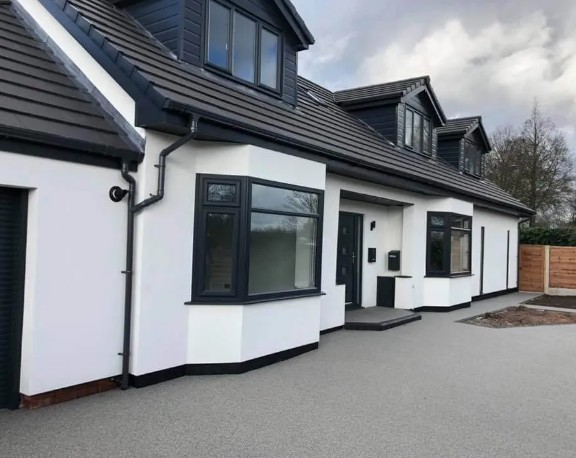
Breamore is a conservation area, and the parish has more than sixty listed entries in it, from the church and the big house down to barns and farm cottages. That reaches a plastering job in two ways, and people usually know about only the first. Outside, appearance is controlled: repairing a render like for like is maintenance, but swapping a lime render for a cement one, or a smooth finish for a textured one, is a change of appearance and may need permission before it goes on.
The boundary follows properties rather than the village sign, so check the address on the National Park property map rather than assuming.
The second one bites harder. If the building itself is listed, the protection is not skin deep: it covers the inside, and historic plaster, lath ceilings and cornices are part of what is protected. Hacking a room back to brick in a listed cottage because it looked tired is work that needed listed building consent first, and doing it without is a criminal offence rather than a paperwork slip.
It is also avoidable. Photograph the room before anybody touches it and ring the conservation officer, and a sensible lime repair is usually agreed without much fuss. We will look at a room and tell you which side of that line it sits on before you commit.
Who you are dealing with
A local firm you can check
We cover Breamore and SP6, up and down the Avon valley through Fordingbridge and Woodgreen, and across to Rockbourne, Sandleheath and Downton. Bournemouth Roofing & Building Ltd, registered in England and Wales, company number 15471719, which you can look up in a minute. Thomas Hannen's business, and he is the one who comes out to price the job, not a salesman. A verified customer's 10 out of 10 on Checkatrade. The visit and the written quote are both free.
Questions
Breamore questions we get asked
Does the Breamore conservation area cover the render finish?
It covers the way a building reads from outside, so the finish is part of it. Replacing what is there in the same material is maintenance. Swapping a traditional surface for a modern coloured system is a change, and that is a conversation with New Forest District Council before the scaffold goes up. Rear elevations screened from any public view get looked at less closely than the road frontage.
Can a listed barn be plastered out like a house?
Not without care and not without consent. Breamore has 63 listed entries and they include farm buildings, among them a barn south of Home Farm Cottages, so agricultural structures here carry the same protection as the houses. Lining a barn out with modern board and gypsum traps moisture in walls that were never built to hold it. Lime and a ventilated build up are what usually gets approved.
What paint can go over new lime plaster?
Something that lets the wall breathe. Limewash or a mineral silicate paint sits on lime properly and allows moisture to keep moving out through the surface. Vinyl emulsion seals it, and the first thing you see is the paint film lifting in patches while the plaster behind stays damp. Wait until the lime has carbonated and lost its dark patches before anything goes on it.
Does the Avon nutrient rule touch a barn conversion?
It does, because a conversion creating somewhere to sleep counts as new overnight accommodation and Breamore drains to the River Avon. That is a planning condition to resolve at application stage rather than a building matter. Straight repair work, replastering rooms in the existing house or re-rendering an elevation, sits outside it entirely. By the time we are on site it has been dealt with.
Will you come out to Breamore to price a job?
Breamore is 17.3 miles from the yard and it is New Forest District territory, so we know the ground and the planning route. Thomas Hannen drives out, looks at the walls and writes the quote himself. Neither the visit nor the written quote costs anything, and it is itemised stage by stage so you can see where the lime work and its waiting time are going.
Nearby, and next door
Plastering and rendering near Breamore
Plastering and rendering nearby
Our other trades in Breamore
Everything we do in Verwood Plastering and rendering, all areas Every area we cover
Free quote
Old wall, or a new one?
Tell us the address and what you have spotted. The visit is free and so is the written itemised quote.