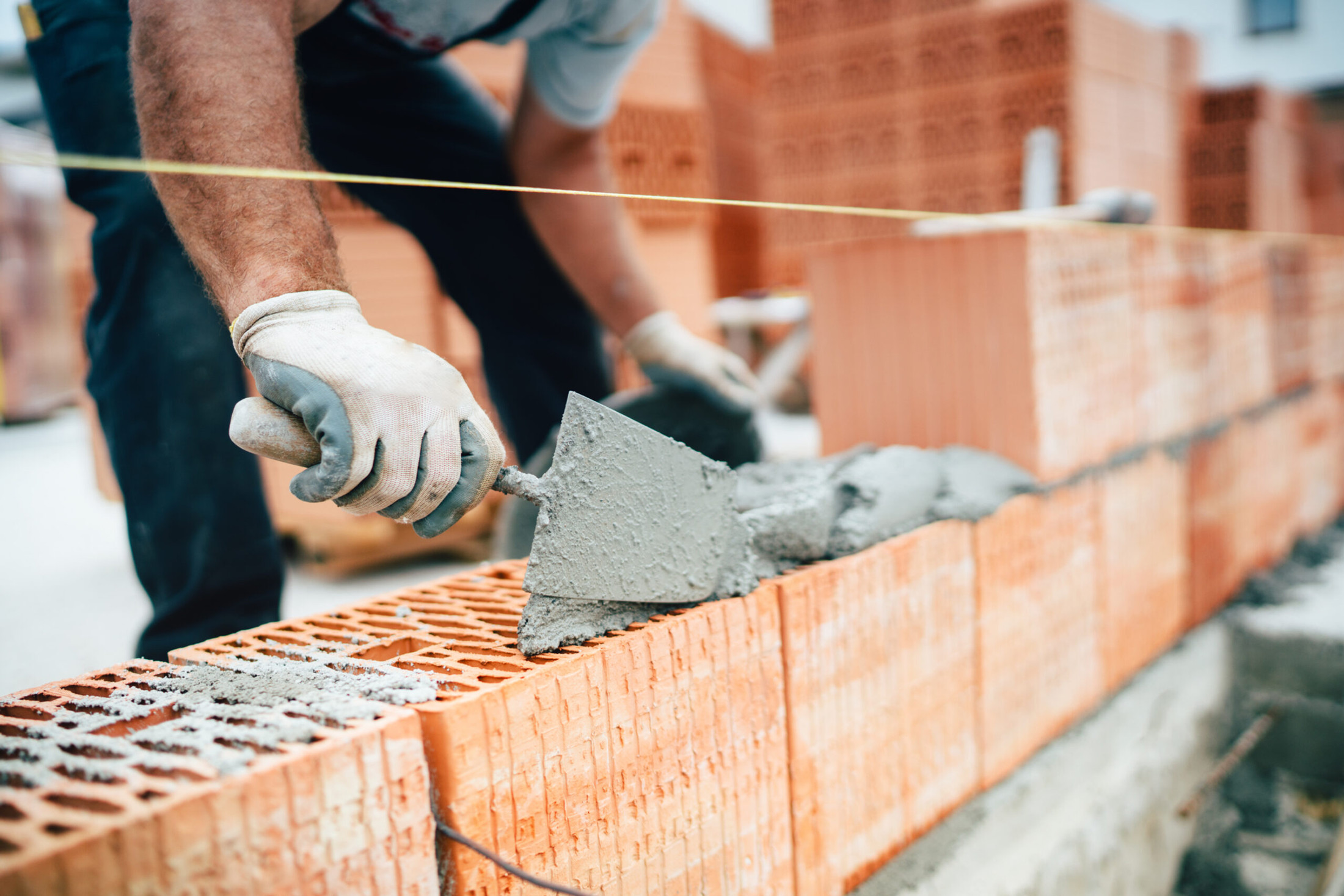
Lime repointing on old brickwork in Breamore
Hand raking, a mortar matched to the sand in the original, and chimneys in thatch worked without a grinder anywhere near the coat.
The site visit is free and so is the written itemised quote. Thomas Hannen prices every job himself.
Repointing is due when a joint has weathered back behind the face of the brick, when it comes away under a finger, or when a stack starts dropping grit down the roof. On the old brickwork here what goes back is lime, raked out by hand and matched to a sample of the original, never a hard sand and cement mix.
Three things bring most of the calls out of Breamore. A survey on a cottage that has just changed hands, flagging the pointing before anyone has moved in. A wall pointed in cement decades ago now losing brick faces in strips while the grey joints stand proud. Or a chimney gone soft at the top, which on a thatched roof is nobody's idea of something to leave until next year.
We come and look at the building rather than at a photograph of it: scratching a joint to find what the original mortar is, tapping along a course for the hollow note that says the pointing has parted from the brick, and getting a proper look at the stack instead of judging it from the lane. You get a straight answer on which elevations are due and which will keep, and the work in a written itemised quote. The visit and the quote are free.
The work
What the mortar work here actually involves
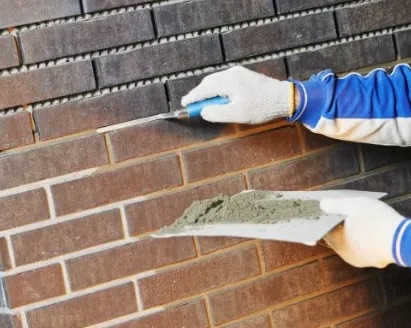
Raking out, by hand. The older houses here are solid wall, one brick thick with nothing behind the face, and pre-1919 work like that only stays dry by staying breathable. Handmade brick from before the railways is soft and porous, and the joint is meant to be the part that gives. We cut the old mortar out with a chisel and a hacksaw blade to roughly twice the width of the joint, perpends as well as beds, and stop at sound material rather than at a mark on a tool. A disc cutter or an angle grinder never goes near a wall like this: it widens the joint permanently and takes the arris off the brick either side. Joints are damped down before filling and brushed back once the mix has taken up.
Deciding what comes off and what stays. Not every cement joint in the village needs taking out this year. Where the brick behind is already spalling, where the joint has washed out or gone crumbling and friable, or where it sounds hollow under a tap, it has to go, and so it must wherever penetrating damp is showing inside. Where a later elevation carries a sound cement joint and the faces behind it are still crisp, disturbing it can do more harm than leaving it. That judgement is made face by face with a key in hand, which is why the quote comes back elevation by elevation.
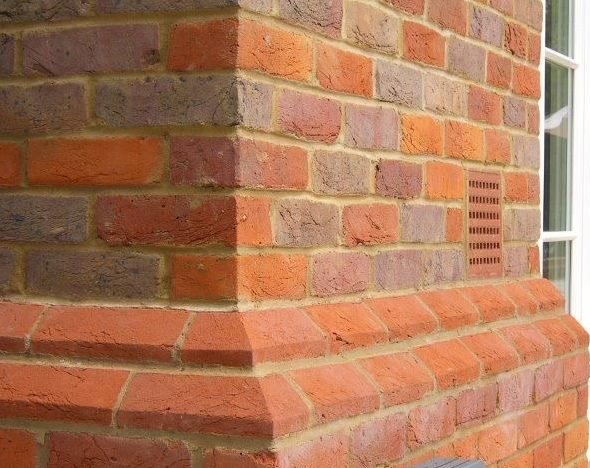
Matching the mix. A mortar match is a match of sand first and colour second. We take a sample of sound original from somewhere sheltered, look at the grain and colour range in it, and make up a trial panel on a discreet part of the wall in the mix we intend, usually an NHL lime or lime putty gauged against the original. You look at that dry and in daylight, because fresh mortar reads lighter than aged. The finish goes back to the profile the wall already has, on this stock usually flush or slightly recessed rather than the weather struck or bucket handle joint that belongs on later work.
Stacks and flaunching. A stack takes weather on four sides and has a cold flue up the middle, so it goes friable long before the walls do. Repointing above the roof line, cutting out perished brick and renewing the cracked flaunching that beds the pots is steady work here. On a listed building the stack goes back exactly as it was, so it is recorded and photographed before anything is opened.
Faces that have gone. Once a brick has lost its face, every frost takes another layer. We cut the unit out whole and bed a reclaimed brick of the right period in its place, laid so the bond reads correctly rather than as a patch. Sourcing is half of that job, and worth the fortnight it sometimes takes.
The head of a wall. On a free standing wall the coping is doing all the work. Once it has lost its bedding, water gets into the core and the wall comes apart from the top down. Rebedding coping and pointing the top courses first is the cheapest useful thing you can do to one.
How it runs
From your call to a written price
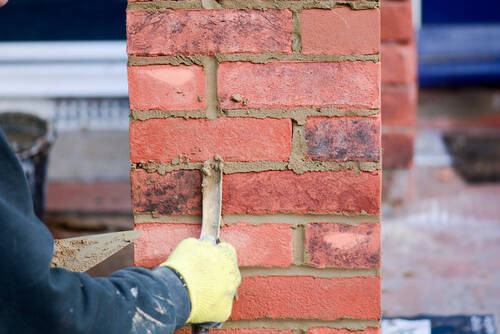
Same team from first visit to last, one person to ring, no sub-contracting. The quote is itemised: access, raking out, the mix, the area of each elevation, brick replacement and disposal on separate lines, so you can compare it against anyone else's.
Nothing is left open overnight and the site is swept at the end of each day. If something turns up that nobody could have seen, you get a photograph and a price first.
Putting the same mortar back into the same joint is upkeep, so there is no application to make and nothing for building control to sign off. Breamore is a conservation area and carries an unusual number of listed entries for its size, sixty three of them, so the paperwork question here is real rather than a formality. On a listed building the mix and the joint profile are part of the fabric that listed building consent covers, and the protection follows the garden wall and outbuildings as well as the house. We check the address before pricing and write the mix, the sand and the profile into the quote. New Forest District Council handles planning and building control here, and the Planning Portal note on other permissions is the place to start.
Cost
What decides the price of a repointing job
No rate per square metre. The area tells you almost nothing until somebody has looked at the joints.
Getting to it. A cottage with a hedge tight against the gable, a stack standing in thatch and a low front wall are three different platforms before a joint is opened. A chimney or a gable wants a scaffold; a boundary wall wants nothing. The work at height rules are why access is a priced line rather than a rate.
The joints decide it, not the wall. How deep they come back, and whether the faces have spalled, sets the hours far more than the area does.
Matching is the part that shows. Lime is slower to work and slower to cure, and right on most pre-1919 walls here.
Comparing quotes? Ask how deep the joints are raked and by hand or by disc, what the mix is and whether it was matched, how many spalled bricks are being replaced, and whether the scaffold is in the price.
If water is getting in
Open joints, and water coming through the wall
Ring rather than use the form. Joints washed out let driven rain through to the inside face, and on a chimney it finds the flashings. We come and look, sheet the worst if the weather is against us, and price the elevation once it has dried enough to see what is sound. Around here that is usually an open joint on a weather elevation putting rain onto an inside face, or a stack gone soft above a thatched roof. The phone is answered 24 hours for emergencies; scheduled work runs Monday to Friday, 8am to 6pm.
Worth knowing
Repointing a chimney that stands in thatch
A good many of the roofs in the village are thatched, and that changes a chimney job far more than the chimney does. The masonry is ordinary. Everything around it is not. No disc cutter, no angle grinder and nothing carrying a flame goes up there, so the joints come out with hand tools only, which is slower and shows on the quote as its own line. The coat is sheeted and boarded before a boot goes near it, and the platform is set out so nothing is dragged across the ridge.
It changes the mortar as well. Material goes up by hand and is mixed in small batches, because you cannot tip a barrow out on a thatched slope or leave a heap of lime where a shower will wash it down the coat, and lime staining on thatch does not brush off. It changes the order of work too: the flaunching round the pots, the top courses and the joints are done in one visit, because standing a platform over thatch twice is the expensive way. If your stack is in thatch, tell us when you ring.
Who you are dealing with
A local firm you can check
We are in the Avon valley villages most weeks, covering Breamore, Woodgreen, Hale, Sandleheath and down into Fordingbridge, broadly SP6, with New Forest District Council as the planning authority. You are dealing with Bournemouth Roofing & Building, trading name of Bournemouth Roofing & Building Ltd, company number 15471719. Thomas Hannen's business, and he prices every job himself rather than sending a salesman. A verified customer's 10 out of 10 on Checkatrade. The visit and the written quote are free.
Questions
Breamore questions we get asked
Our chimney stands in thatch. What does that change?
The method and the sequence, not the mortar. Hand tools only above the roof, nothing with a flame or a spark, the thatch sheeted and boarded, everything carried up rather than barrowed. The flaunching, the pots and the top courses go in the same visit, because the platform is the costly part.
Does all the cement pointing have to come out?
No, and we tell you where it does not. Cement over soft brick has to go wherever the faces are already spalling or the joint sounds hollow under a tap. Where the joint is sound and the brick behind it crisp, taking it out can cause more damage than leaving it. That is decided wall by wall with a key, not from the drive.
How long does one elevation take once you start?
Days rather than weeks for a cottage gable, longer for a whole cottage in lime, because raking by hand is slow and lime has to be worked in suitable weather and kept covered while it cures. The quote gives working days and says what would move them, which is nearly always the forecast.
Can you get the colour to sit with the rest of the lane?
That is what the sample panel is for. The colour of a mortar comes mostly from the sand, so we match the sand first, then put a panel up on a quiet part of the wall and let it dry before you judge it. Nobody should be signing off wet mortar.
Is our garden wall covered by the listing on the house?
It can be. Anything standing in the grounds of a listed building before 1948 can carry the same protection without appearing separately on the list, and walls, barns and old outbuildings are the usual surprises. Better settled before the mortar is ordered, so we ask at the survey.
Nearby, and next door
Repointing near Breamore
Repointing nearby
Our other trades in Breamore
Everything we do in Verwood Repointing, all areas Every area we cover
Free quote
Have the joints and the stack looked at together
Thomas comes out, samples the original mortar, gets a proper look at the chimney and puts the price in writing, itemised, at no cost to you.