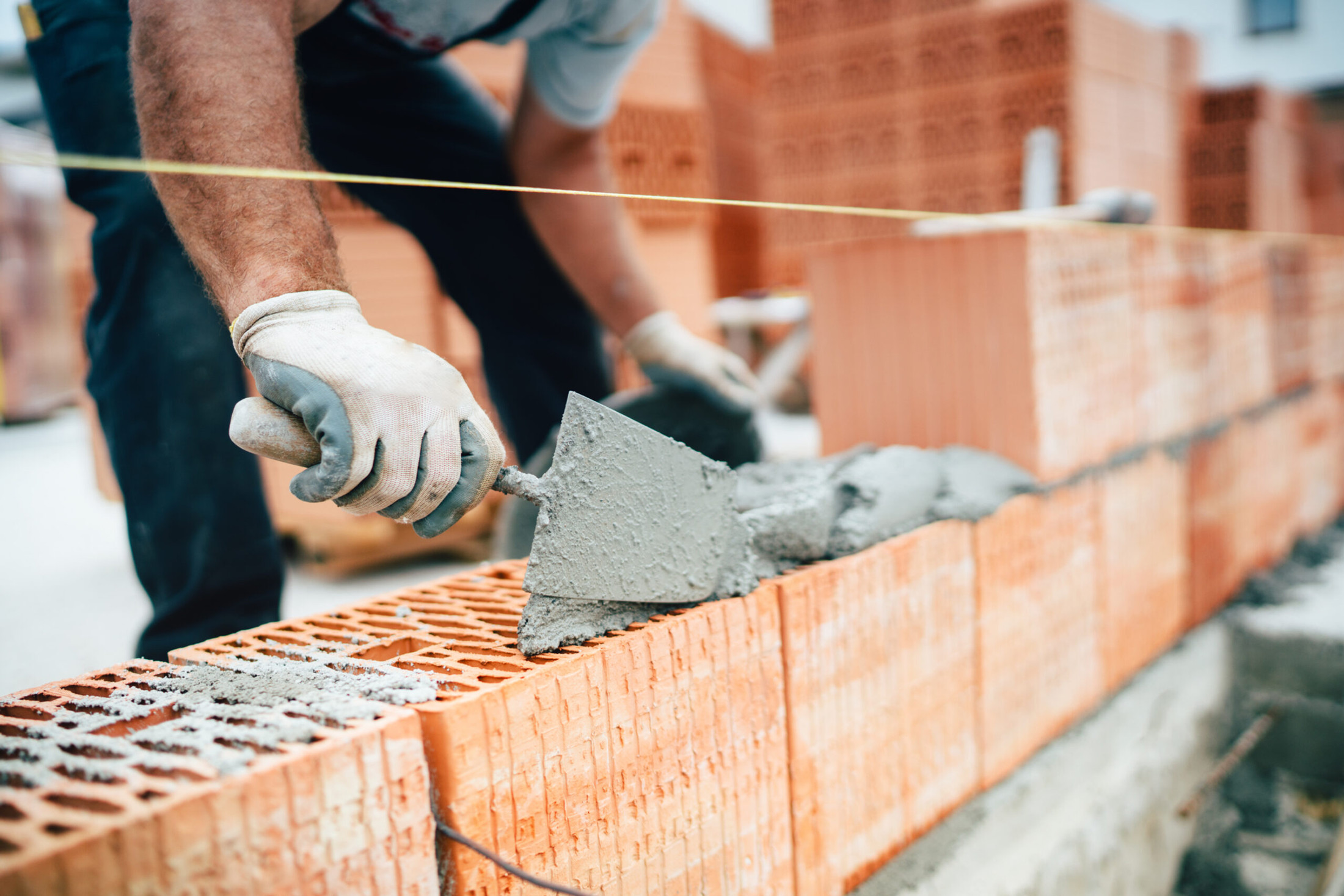
Repointing flint and brick walls in Rockbourne
Hand raking, a fat lime mix matched to what came out of the joint, and flints rebedded from the head of the wall down.
The site visit is free and so is the written itemised quote. Thomas Hannen prices every job himself.
A wall here wants repointing when a key pushed into the joint turns it to sand, when flints have started working loose out of a lane wall, or when the mortar has weathered back behind the face of the brick. What goes back is lime, matched to what came out, and it goes in at the time of year it can dry.
The calls from Rockbourne come in a few shapes. Flint dropping out of a lane wall after a wet spell, which is the mortar letting go rather than the flint. A cottage where the bottom courses have gone powdery under hard grey pointing. Brick faces flaking away around a doorway. A stack shedding sand and grit down a roof slope.
None of that is a wall coming down. All of it is mortar, and a fair share of it is mortar somebody else got wrong. We look at every elevation rather than the patch you rang about, scrape joints at two or three heights to see how deep the decay goes, and take a sample of sound original from somewhere sheltered to match to. It comes back in writing, face by face, with the elevations that will keep another few winters marked as such. The visit and the itemised quote cost you nothing.
The work
Flint, soft brick and the plinth underneath
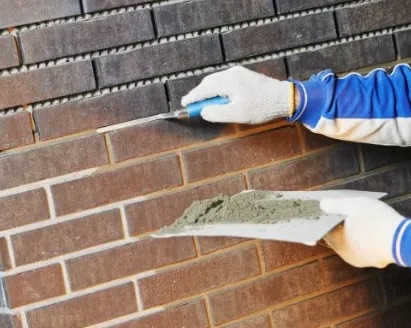
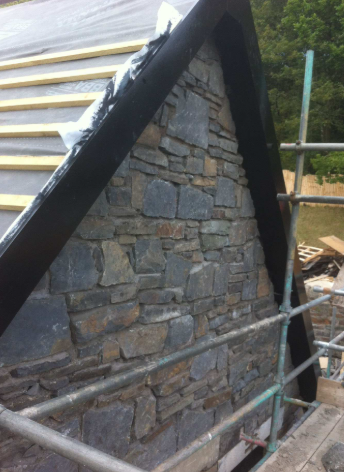
Flint walls, pointed to the flint. A good deal of the walling here is flint through the body with brick at the quoins and in lacing courses, and on that fabric close to half of what you see is mortar. When the joints wash back the flints loosen from the head of the wall down, so the top courses and coping come first. We rake out by hand with a chisel and a hacksaw blade, back to sound material rather than to a set depth, and point back in a fat lime brought up around each flint, galleted where the wall was built that way.
Getting cement back off soft brick. The brick in the village is handmade and soft and was laid in lime, so the wall gives water back through the joint. Point it in sand and cement and the water leaves through the brick face instead, and after a few frosts you have hard joints standing proud of a wall losing its skin. Taking that out without knocking the arris off what is left is slow hand work. Back in goes an NHL lime or lime putty gauged against the sample, finished flush or a shade behind the face rather than weather struck.
The plinth under a cob or chalk wall. Several buildings in the parish have an earth or chalk wall standing on a brick or flint plinth, which keeps the soft material above clear of splash off the ground. Once its joints go, water gets in behind and works upwards, and the damage shows in the wall above rather than the plinth. The mix has to stay open enough for the foot of the wall to dry.
Faces that have already blown. Where a brick has lost its face we cut the unit out whole and turn it, or replace it against a sample held on the wall, rather than filling the hollow: a mortar patch never matches and drops out in a couple of winters. Faces go first in the bottom few courses, in door reveals and where a downpipe has been running down the brickwork.
Stacks, and what sits under them. A stack is the most exposed masonry on any building here, weathered on four sides with nothing warming it from inside, so its joints run years ahead of the walls. Repointing above the roof line, cutting out perished brick and renewing the flaunching round the pots is regular work in the village. Where the roof beneath is thatch: no disc cutter, no angle grinder, nothing with a flame, and the coat sheeted before a boot goes near it.
One thing we will not do is point over movement. Cracking that runs through the bricks as well as the joints is a wall shifting, not mortar wearing out, and filling it hides that for a season.
How it runs
From your call to a written price
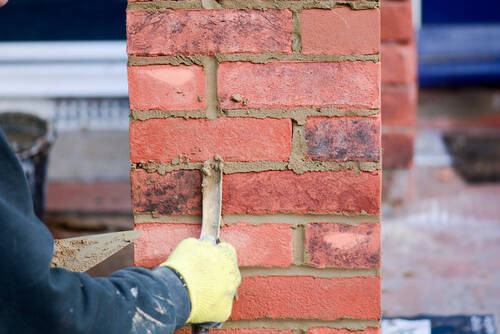
Same team from first visit to last, one person to ring, no sub-contracting. The quote is itemised: access, raking out, the mix, the area of each elevation, brick replacement and disposal on separate lines, so you can compare it against anyone else's.
Nothing is left open overnight and the site is swept at the end of each day. If something turns up that nobody could have seen, you get a photograph and a price first.
Repointing like for like is repair rather than development, so there is no planning application in it and nothing for building control to sign off. Two things change that here. The village is a conservation area, so appearance is controlled: the same mortar and joint profile is upkeep, while a grey cement joint across a flint elevation is a change anybody can see from the lane. Fifty two entries in the parish are listed, and on a listed wall the mix and finish are part of what consent covers. New Forest District Council is the planning authority, and the Planning Portal note on other permissions sets out what else can apply.
Cost
What decides the price of a repointing job
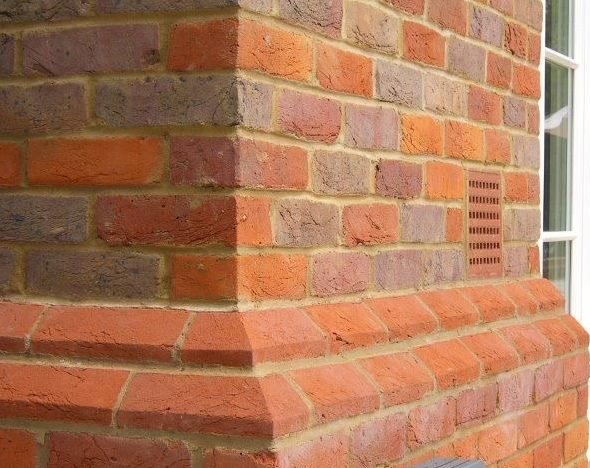
No rate per square metre. The area tells you almost nothing until somebody has looked at the joints.
Getting to it. A thatched cottage tight to the street, a flint lane wall and a stack standing clear of a roof are three different set ups before a joint is opened. A chimney or a gable wants a scaffold; a boundary wall wants nothing. The work at height rules are why access is a priced line rather than something absorbed into a rate.
The joints decide it, not the wall. How deep they come back, and whether the faces have spalled, sets the hours far more than the area does.
Matching is the part that shows. Lime is slower to work and slower to cure, and right on most pre-1919 walls here.
Comparing quotes? Ask how deep the joints are raked and by hand or by disc, what the mix is and whether it was matched, how many spalled bricks are being replaced, and whether the scaffold is in the price.
If water is getting in
Open joints, and water coming through the wall
Ring rather than use the form. Joints washed out let driven rain through to the inside face, and on a chimney it finds the flashings. We come and look, sheet the worst if the weather is against us, and price the elevation once it has dried enough to see what is sound. Here that is usually flint working out of a lane wall, or open joints on the weather side of a cottage putting water onto an inside face. The phone is answered 24 hours for emergencies; scheduled work runs Monday to Friday, 8am to 6pm.
Worth knowing
Why lime work here is booked for the warm half of the year
Rockbourne sits on the floor of a chalk valley with the stream only metres off the built edge, and the effect on mortar is not the flood everybody thinks of first. It is that the air and the ground alongside a wall here stay damp for months at a stretch. Lime does not set the way cement does: it takes up carbon dioxide slowly and has to lose its water gradually while that happens, so it wants a wall that can dry a little and nights that do not freeze. In a valley bottom both are seasonal.
The honest window for pointing an exposed elevation here runs from spring into early autumn, because fresh lime caught by a frost while it is still green goes to powder and has to come out again. So get the wall priced over the winter, book the weather elevations for the warm months, and use the cold weeks for what does not depend on the forecast: cutting out and replacing brick, rebuilding a bowed lane wall, resetting a coping. If anyone offers to point your exposed gable in lime in November, ask about the first hard frost.
Who you are dealing with
A local firm you can check
We cover Rockbourne, Whitsbury, Damerham, Martin and down the valley through Breamore to Fordingbridge, broadly SP6, with New Forest District Council as the planning authority. You are dealing with Bournemouth Roofing & Building, trading name of Bournemouth Roofing & Building Ltd, company number 15471719. Thomas Hannen's business, and he prices every job himself rather than sending a salesman. A verified customer's 10 out of 10 on Checkatrade. The visit and the written quote are free.
Questions
Rockbourne questions we get asked
Can a flint wall be repointed, or does it have to come down?
Repointed, in nearly every case. Flint walls come down far more often than they need to. If the flints are loose but the wall is still in line, we take out what has worked free, rake the beds back to sound lime and rebed from the top down. A rebuild is only the answer where a length has gone out of plumb.
Why is the hard grey pointing on our cottage a problem?
Because it is stronger than the wall it sits in. A solid wall built in lime gets rid of water by letting it evaporate out of the joint. A cement joint shuts that route, so the water leaves through the face of the brick or flint instead and frost takes the surface off. The giveaway is perfect joints standing proud of crumbling brick.
How do you work out what mix goes back in?
From what came out. We take a sample of sound original mortar from a sheltered spot, look at the sand for colour and grain, and make up a trial panel on a discreet part of the wall. You judge it dry and in daylight, because fresh mortar reads lighter than it will once weathered. The mix and joint profile go on the quote.
Is winter genuinely no good for this?
For lime pointing on an exposed face, yes. Green lime will not take a frost, and a wall that never dries cannot carry the mortar. Cutting out and replacing brick, rebuilding a wall and resetting coping all carry on through the colder months.
Do we need permission before anyone touches the mortar?
It depends on the address, which is why we check it first. The same mortar and the same joint on an unlisted building inside the conservation area is upkeep and needs nothing. On a listed building the mortar is part of what is protected, and consent comes before the work.
Nearby, and next door
Repointing near Rockbourne
Repointing nearby
Our other trades in Rockbourne
Everything we do in Verwood Repointing, all areas Every area we cover
Free quote
Get the joints looked at before the winter
Thomas comes out, scrapes a few joints, samples the original mortar and puts the price in writing, itemised, at no cost to you.