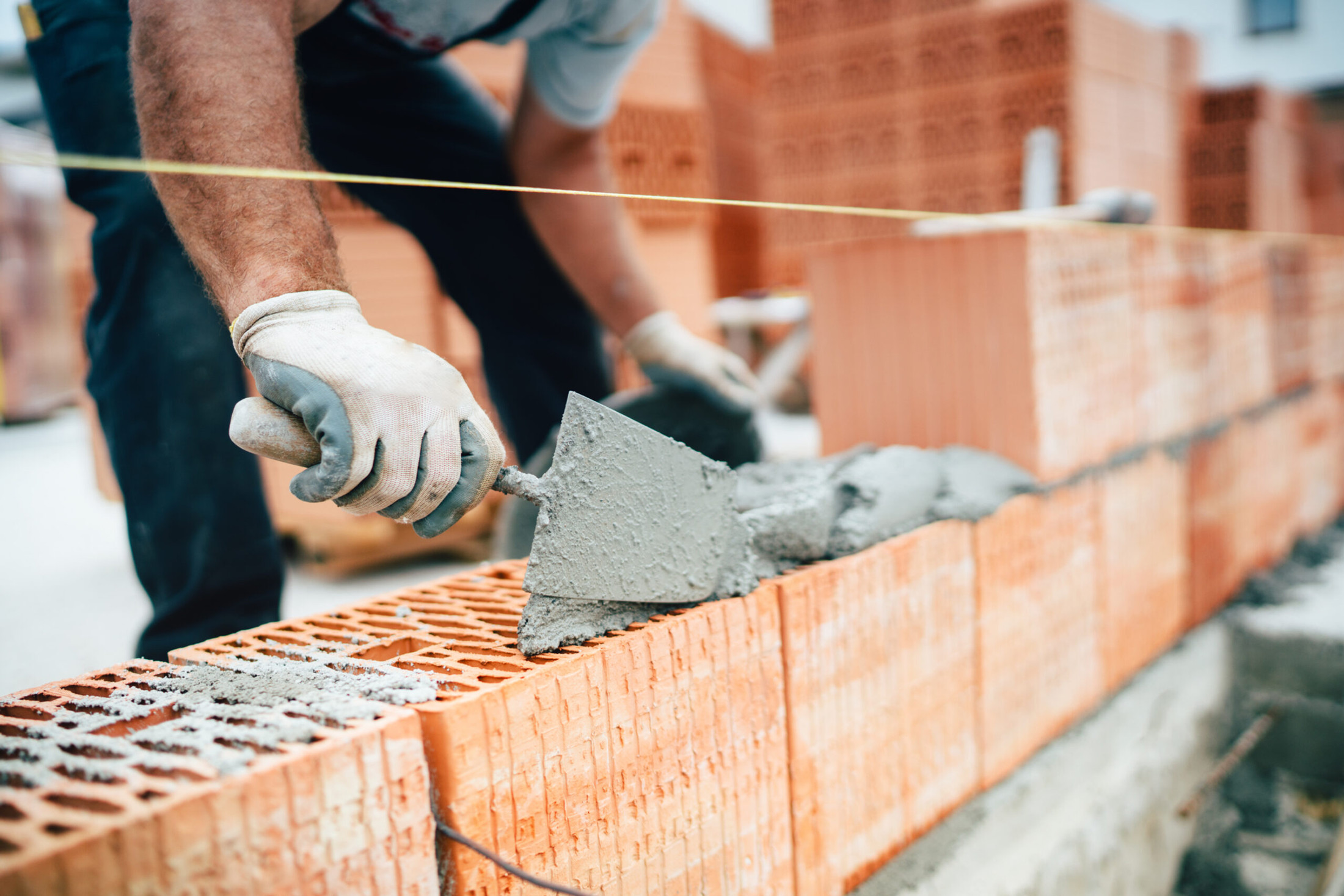
Lime repointing in Cranborne
Hand tools, a mix worked back from a sample of your own mortar, and the existing joints photographed before anything is opened up.
The site visit is free and so is the written itemised quote. Thomas Hannen prices every job himself.
On an old wall the mortar is meant to be the part that wears out. Repointing renews it, and on a building of this age that means a lime mix matched to the original rather than anything with cement in it, because the joint has to stay softer and more open than the brick around it.
Where it starts
The state most Cranborne walls are in when we see them
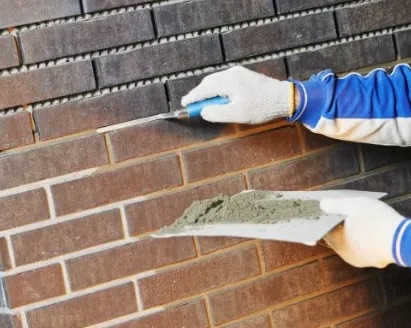
Two situations bring people to the phone here. The first is age: a joint washed out behind the face of the brick, sand collecting at the foot of the wall, mortar friable enough to crumble under a key. The second is somebody else's repair, an elevation pointed in a hard sand and cement mix at some point in the last few decades, the brick faces beside it now flaking while the joints look untouched.
Both are mortar work and neither means the wall is in trouble. What they mean is that the mix matters more than the schedule. We look at every elevation, test joints with a key, tap the courses for the hollow note that says the pointing has parted from the brick, take a sample of the soundest original mortar we can find, and photograph what is there before anything is touched. That comes back as a written itemised quote, elevation by elevation, free.
The work
Lime, hand tools and patience
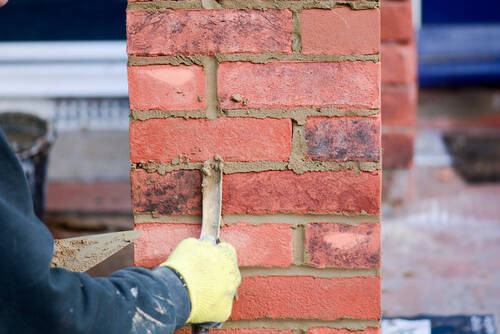
Raking out. Joints come back to twice their width, deeper where the mortar behind is soft, and they come back by hand. On old brickwork an angle grinder is not a shortcut but damage: it widens the joint, wanders off the line and takes the arris off the brick, and once an arris has gone no pointing puts it back. Perpends are worked with a plugging chisel. Everything is brushed out and damped down before a trowel goes near it.
Choosing the mix. A natural hydraulic lime is graded by how much set it has, and the right grade on a sheltered elevation is not the right one on a wall taking driven rain off open country. Lime putty gauged with a well graded sand is softer still, and right on the most porous handmade brick. The rule that never changes is that the mortar must be weaker and more permeable than the brick, so that when the wall takes water the joint gives up rather than the brick face.
Cement pointing, taken off. Where a solid wall has been pointed in sand and cement, the joint has stopped a breathable wall breathing. The moisture that used to leave through the mortar leaves through the brick instead, and the first hard frost lifts the face away. Removing a hard mix without chipping the edges is slow, quiet work with hand tools, and it reverses the damage rather than covering it.
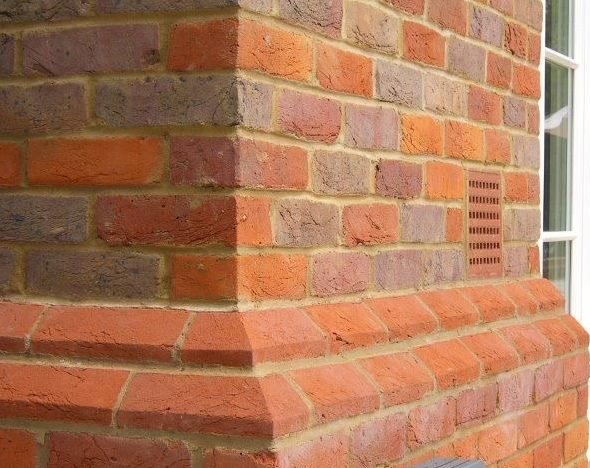
The joint profile. Old brickwork here is generally struck flush or very slightly recessed, following the face of the brick. A weather struck or heavily recessed joint on a period frontage reads wrong, and a ribbon of mortar standing proud of the brick, which happens when a wall is pointed over rather than raked out, is the worst thing done to a building like this. If a wall has had that treatment we take it off rather than work over it.
Spalled faces. Where a brick face has blown we cut it out whole and turn it if the back is sound, or replace it against a sample from the wall. Filling the hollow with mortar makes a patch that never matches and drops out within a few winters.
Chimneys and flaunching. A stack takes weather on four sides with nothing warming it from inside, so its joints wash out first and the penetrating damp that follows shows as a stain on a ceiling. Pointing a stack, cutting out frost damaged bricks and renewing the flaunching round the pots want the same platform and one visit.
How it runs
From your call to a written price
Same team from first visit to last, one person to ring, and no sub-contracting. The quote is itemised: access, raking out, the mortar mix, the area of each elevation, brick replacement and disposal on separate lines, so you can compare it against anyone else's.
Nothing is left open overnight, the site is swept at the end of each day rather than the end of the job, and what comes out leaves with us. Anything nobody could have foreseen gets a photograph and a price before we carry on.
Repointing like for like is repair rather than development, so no planning application is involved. Appearance is a different matter here. Cranborne has its own conservation area and twenty five listed entries in the village and the country around it, concentrated around Cranborne Manor House and the older centre rather than the newer housing. On a listed building the mortar is protected fabric and a change of mix, colour or joint profile needs listed building consent before a joint is opened, while inside the conservation area a change of appearance wants a word with Dorset Council first. We check an address before anything is agreed.
Cost
What decides the price of a repointing job
No rate per square metre, because the square metres tell you almost nothing until somebody has looked at the joints.
Getting to it. A cottage sitting straight on the street with nowhere to stand a base, a farmhouse gable in open country and a stack on a steep pitch are three different set ups. How long the platform stands matters as much as how big it is, and the work at height rules are why access is a priced line rather than one absorbed into a rate.
The joints decide it, not the wall. Raking out by hand is slow, and on soft brick it is the only safe way. How deep the joints come back, and whether the faces have already spalled, sets the hours far more than the area does.
Matching is the part that shows. Too strong a mix is the classic mistake: cement holds water against a soft brick and the face blows off in the first hard frost. Lime is slower to work and to cure, and it is the right answer on most pre-1919 walls.
Two quotes for the same job are usually two different jobs, so ask each one how deep the joints are raked and whether the scaffold is in the price.
If water is getting in
Open joints, and water coming through the wall
Ring rather than use the form. A wall with the joints washed out lets driven rain straight through to the inside face, and on a chimney it finds the flashings too. We come and look, sheet or temporarily point the worst of it, and price the full elevation once it has dried enough to see what is sound. Out here the elevation that goes first faces open country, and on a listed building anything done in a hurry is sheeting and protection rather than mortar, because temporary work has to come off without a mark. The phone is answered 24 hours for emergencies; scheduled work runs Monday to Friday, 8am to 6pm.
Worth knowing
Record the joint before you destroy the evidence
In a village where the listed entries run into the twenties and the whole centre sits inside a conservation area, the mortar on your wall is not only a technical choice. It is what tells anyone looking what the building was. The moment a joint is raked out that record is gone, and if the work turns out to have needed consent there is nothing left to show what the original was like.
So the sequence matters. Before a chisel goes into a wall here, photograph the existing joints close up in daylight, keep a lump of sound original mortar from somewhere sheltered, and note the profile the joints are struck to. Those three things take twenty minutes and they become the evidence for the specification, the basis for matching the sand, and the answer if a conservation officer asks what was there before. It is also what makes a trial panel meaningful: the panel is judged against the sample, not a colour chart. We do all of it as a matter of course and leave you the photographs.
Who you are dealing with
A local firm you can check
We cover Cranborne, Alderholt, Wimborne St Giles, Verwood and the villages up onto the chase, broadly BH21, under Dorset Council. You are dealing with Bournemouth Roofing & Building, the trading name of Bournemouth Roofing & Building Ltd, registered in England and Wales, company number 15471719. Thomas Hannen's business, and he is the one who comes out to price the job, not a salesman. A verified customer's 10 out of 10 on Checkatrade. The visit and the written quote are both free.
Questions
Cranborne questions we get asked
Our wall was pointed in cement years ago. Can that be undone?
Yes, and on a solid wall it is usually worth doing. The cement comes out with hand tools rather than a disc, which is slow because the point is to leave the brick edges intact, and a lime mix matched to the original goes back. Where the faces have spalled behind that hard joint, those bricks are cut out and replaced at the same time.
How is the grade of lime chosen for a particular wall?
By working back from how porous and how soft the brick is, and how much weather that elevation takes. A very porous handmade brick on a sheltered face wants something at the soft end, because the joint has to stay weaker than the brick beside it. The same brick on a gable taking driven rain off open country needs more set in the mix. We match to a sample of your existing mortar rather than one grade for the whole building.
How long does lime pointing take to harden, and what happens meanwhile?
It is firm within days and goes on gaining strength for months. For the first week or two it wants keeping damp, shaded and off a frost, which means hessian over the work and a light misting rather than leaving it to the weather. That protection is part of the job and part of the price, and it is why lime work is booked into a settled stretch.
Can lime mortar be worked here in the middle of summer?
It can, with care. The risk in hot weather is the opposite of the winter one: the mix dries before it has set, and mortar that has flashed off is weak and dusty. That means damping the joints down properly first, working in the shade where possible, and keeping the finished work covered and misted. On a still, warm, overcast week it is close to ideal.
Is a trial panel worth the delay?
On a building of this age, yes. A panel of a square metre or so on a discreet elevation shows the colour, the texture and the profile together, which no description does. Fresh mortar reads lighter than aged mortar, so the panel is assessed on how it will look weathered in.
Nearby, and next door
Repointing near Cranborne
Repointing nearby
Our other trades in Cranborne
Everything we do in Verwood Repointing, all areas Every area we cover
Free quote
Get the wall recorded and sampled first
Thomas comes out, tests and photographs the joints, takes a mortar sample and puts the specification and the price in writing, at no cost to you.