Lime repointing in Sixpenny Handley
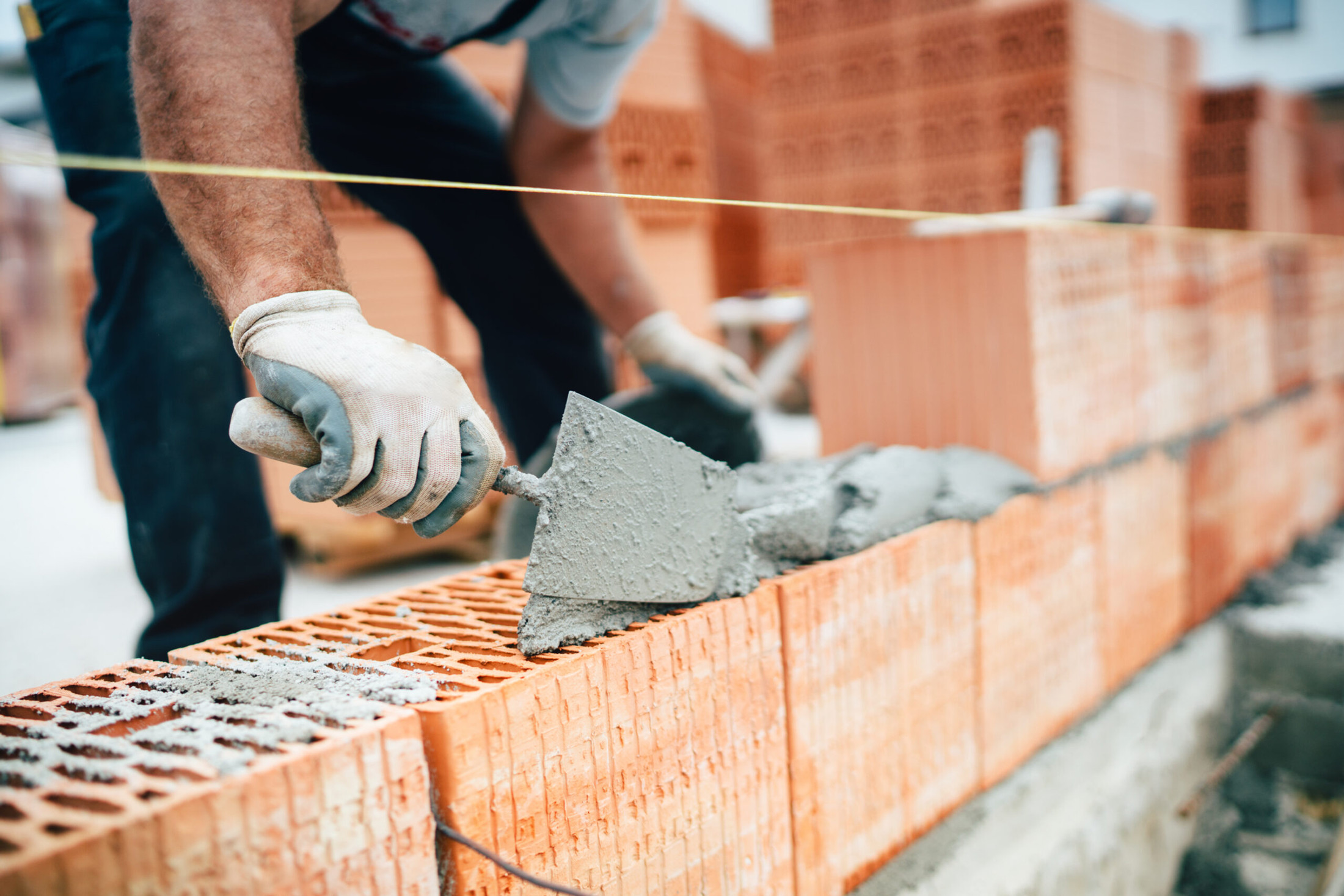
Hand raking, a mix specified elevation by elevation, and flint rebedded and galleted the way the wall was built.
The site visit is free and so is the written itemised quote. Thomas Hannen prices every job himself.
Two different kinds of wall stand on the same street here, and they do not take the same mortar. Working out which one you have comes before anybody mixes anything, because a joint that suits late Victorian brick will pull a flint and lime wall apart.
What people ring about is fairly consistent. Joints on the weather side that have weathered back far enough to take a finger. Flints working out of a wall along one of the lanes, usually starting under a coping that has slipped. Brick faces flaking off below a cill after a hard winter up on the downs. Or a stack dropping grit into the gutter and looking a shade out of square from the road.
All of those are mortar rather than structure, and all of them want looking at close up rather than from a verge. We get to the wall, scrape joints on more than one elevation because they are rarely in the same state, and take a sample of sound original so the replacement can be matched to it. What comes back is a written itemised quote, face by face, with the elevations we would leave alone for now marked as such. The site visit and the quote are both free.
The work
The mortar work we get called to on the Chase
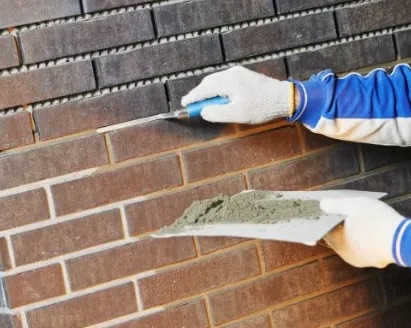
Late Victorian solid brick. A good deal of the village centre is solid wall brick with no cavity behind it, bedded in a soft mortar that usually had lime in it as well as anything else. Walls like that shed water by letting it evaporate back out of the joint, so the joint has to stay softer and more open than the brick. We rake out by hand with a chisel and a hacksaw blade to a depth of about twice the joint width, take the perpends as well as the beds, damp the joints down before filling and brush them back once the mix has taken up. The profile goes back to whatever the wall carries, usually flush or slightly recessed rather than the weather struck or bucket handle finish you find on later work.
Getting cement out of a soft wall. Plenty of that brickwork has been repointed in sand and cement since. Once the joints are sealed the moisture leaves through the brick face instead, and one hard frost up here takes the faces off while the pointing still looks perfect. Cutting that out without damaging what is left is slow hand work, and it is the only repair that actually fixes the cause rather than the symptom.
Flint with brick quoins and lacing courses. The older walling in the parish is flint rubble through the body with brick at the corners, around the openings and in courses running through to level it up. Flint has almost no bond of its own, so the lime is doing all the work, and once the head of the wall lets water in the flints loosen from the top down. We take out what has worked free, rebed it in a fat lime, gallet the joints with small chips the way the wall was built and put the coping back so the top sheds water instead of holding it.
Faces that have spalled. Once the face is off a brick, each frost takes another layer. We cut the unit out whole and bed a matched replacement in rather than filling the hollow with mortar, which never matches and drops out in a couple of winters. It goes worst under cills, beside downpipes and in the bottom few courses where a path has been laid up against the wall.
Stacks and flaunching. A stack has weather on four sides and a cold flue up the middle, so it goes friable long before the walls do, and open joints up there put water into a roof space rather than onto a wall. Repointing above the roof line, cutting out perished brick and renewing the cracked flaunching around the pots is a single visit if it is planned as one, and three visits if it is not.
How it runs
From your call to a written price
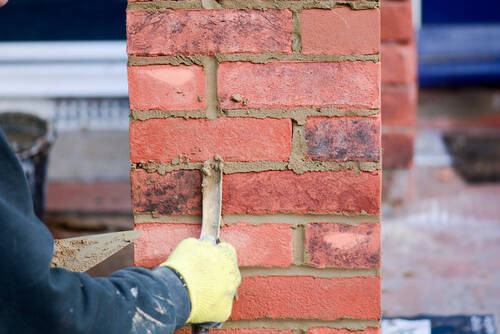
Same team from first visit to last, one person to ring, no sub-contracting. The quote is itemised: access, raking out, the mix, the area of each elevation, brick replacement and disposal on separate lines, so you can compare it against anyone else's.
Nothing is left open overnight and the site is swept at the end of each day. If something turns up that nobody could have seen, you get a photograph and a price first.
Repointing like for like is repair rather than development, so there is no planning application in it and nothing for building control to sign off. Handley has no conservation area of its own, but it sits inside the Cranborne Chase National Landscape, where design gets scrutinised on anything that reads from a road. A repoint in a matching mix changes nothing anyone can see. Painting brick or flint that has never been painted, or running a grey cement joint across an old elevation, is a change of appearance and a different conversation. Seven entries in the parish are listed, the church among them, and on a listed wall even the mortar colour or the joint profile is covered by listed building consent from Dorset Council. We check the address before we price.
Cost
What decides the price of a repointing job
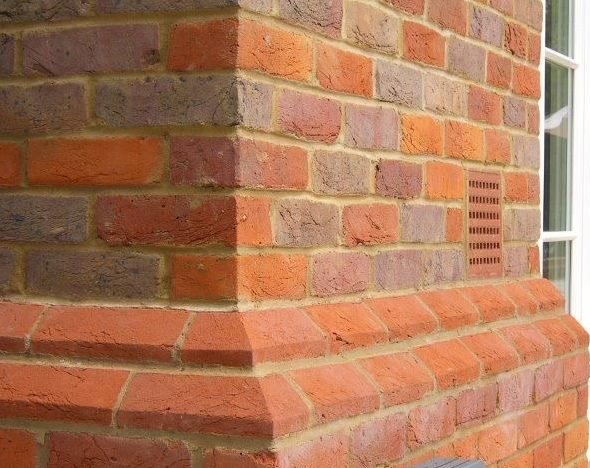
No rate per square metre. The area tells you almost nothing until somebody has looked at the joints.
Getting to it. A pair of cottages sharing one stack, an outbuilding in a yard behind a house and a flint wall standing on a roadside bank are three different set ups before a joint is opened. A chimney or a gable wants a scaffold; a boundary wall wants nothing. The work at height rules are why access is a priced line rather than something absorbed into a rate.
The joints decide it, not the wall. How deep they come back, and whether the faces have spalled, sets the hours far more than the area does.
Matching is the part that shows. Lime is slower to work and slower to cure, and right on most pre-1919 walls here.
Comparing quotes? Ask how deep the joints are raked and by hand or by disc, what the mix is and whether it was matched, how many spalled bricks are being replaced, and whether the scaffold is in the price.
If water is getting in
Open joints, and water coming through the wall
Ring rather than use the form. Joints washed out let driven rain through to the inside face, and on a chimney it finds the flashings. We come and look, sheet or temporarily point the worst if the weather is against us, and price the elevation once it has dried enough to see what is sound. Up here that is most often an open joint on a south west gable putting driven rain through to an inside face, or flints dropping out of a lane wall after a wet week. The phone is answered 24 hours for emergencies; scheduled work runs Monday to Friday, 8am to 6pm.
Worth knowing
The fire left two kinds of wall on one street
Much of the middle of the village was rebuilt after the fire of the 1890s, and the practical result is that Handley has two quite different kinds of wall standing side by side, sometimes in the same building. What went up after the fire is late Victorian brick in a soft, lime gauged mortar. What survived is older and softer again: flint through the body with brick at the corners, laid in a fat lime that has no strength to spare. From a car they read as one street. They do not take the same mix.
That matters because a mortar has to be weaker than what it sits between, and weaker is not one number. Point the older flint work in a mix that suits Victorian brick and you have put something too hard into a wall whose only strength is its mortar. Point the Victorian brick in a mix soft enough for flint and it erodes back inside a few winters and you pay for the elevation twice. So the first thing we settle here is which wall is in front of us, at each elevation rather than at each address, because a rebuilt frontage sitting on an older rear wall is common. Ask anyone quoting you to write down which mix is going on which face. If the answer is one mix for the whole building, nobody has looked properly.
Who you are dealing with
A local firm you can check
We cover Sixpenny Handley, Pentridge, Woodyates, Cranborne, Tollard Royal and the rest of SP5, with Dorset Council as the planning authority. You are dealing with Bournemouth Roofing & Building, trading name of Bournemouth Roofing & Building Ltd, company number 15471719. Thomas Hannen's business, and he prices every job himself rather than sending a salesman. A verified customer's 10 out of 10 on Checkatrade. The visit and the written quote are free.
Questions
Sixpenny Handley questions we get asked
How do we tell which of the two walls we have?
Mostly by looking at what is under the render or the paint, and by what the mortar is made of. Flint rubble with brick corners is the older build. An even brick elevation with regular coursing is generally post fire. Plenty of buildings are both, front and back. We settle it at the survey by scraping a joint on each elevation, because that is the only way to be sure.
Can one mortar mix do the whole house?
Only if the whole house is one kind of wall, and here that is often not the case. The mix has to be weaker than the material either side of it, and flint and Victorian brick do not want the same thing. Where a building is mixed we specify a mix per elevation and put both on the quote so you can see what is going where.
Does the frost up here really take more off a wall?
It takes more off a wall that is holding water, which is what an open or a sealed joint both do in different ways. Height and exposure mean colder nights and more of them, so a face that has been letting water stand in the joints all autumn loses more surface over a winter than the same wall in a sheltered valley would. The fix is not a harder mortar, it is a joint that sheds.
How deep should the joints be raked out?
As a rule of thumb about twice the width of the joint, so a ten millimetre joint comes back around twenty. But the real answer is until you reach sound material, and on old work that varies across one elevation. Raking too shallow leaves the new mortar with nothing to grip and it falls out. Ask whoever is quoting what depth they are working to and whether it is by hand.
Will a lime joint look pale beside the rest of the wall?
It will for a while, and then it will not. Fresh mortar always reads lighter than aged mortar, which is why a sample panel is judged on how it will weather rather than on how it looks the week it goes in. Matching the sand is what gets it right in the long run, since that is where most of the colour comes from.
Nearby, and next door
Repointing near Sixpenny Handley
Repointing nearby
Our other trades in Sixpenny Handley
Everything we do in Verwood Repointing, all areas Every area we cover
Free quote
Find out which mix your wall actually wants
Thomas comes up, scrapes a joint on every elevation and puts the price in writing, itemised, at no cost to you.