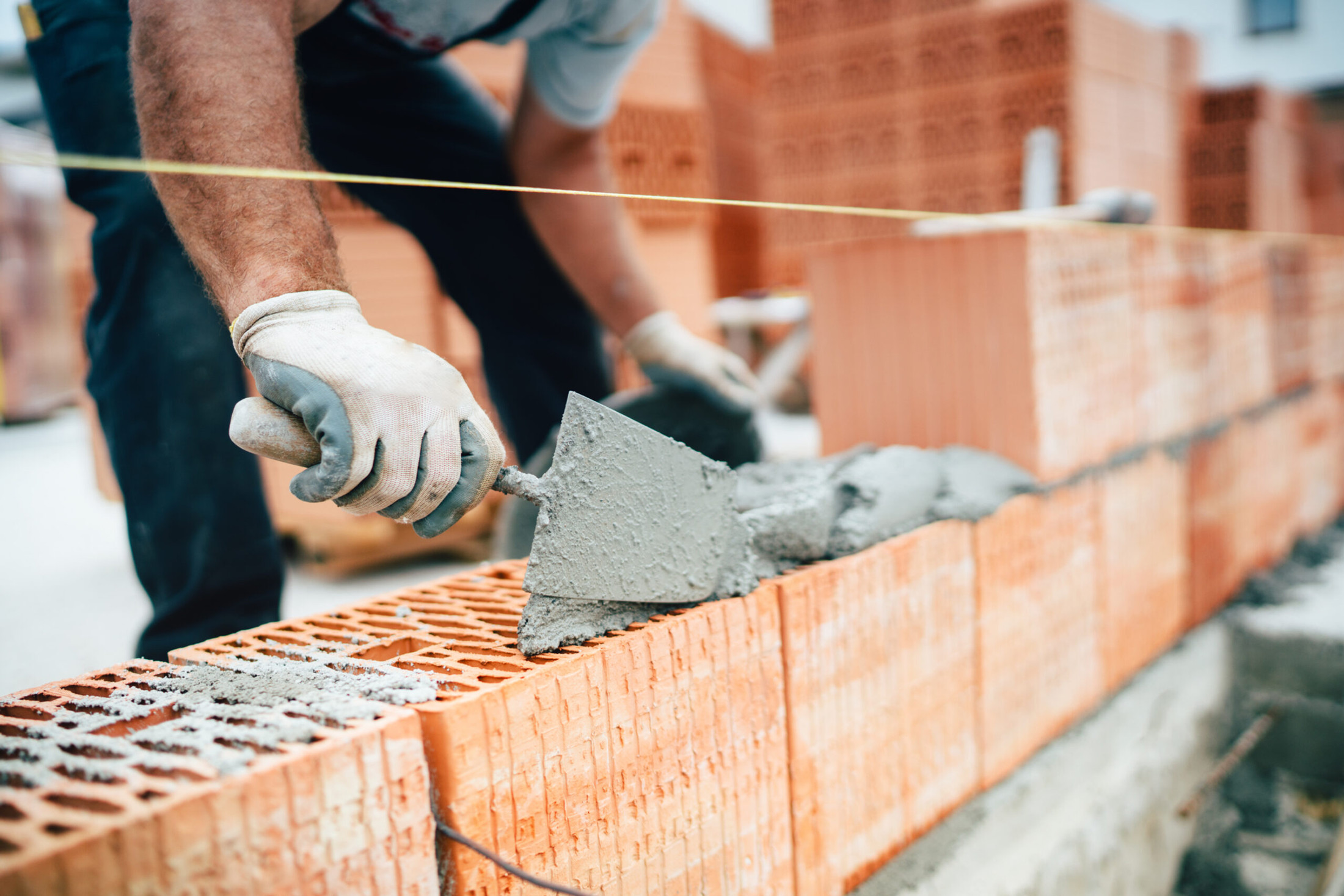
Bricklaying and repointing in Sixpenny Handley
Lime repointing, flint and brick repair, chimney stacks and boundary walls, done the way downland walls need doing.
The site visit is free and so is the written itemised quote. Thomas Hannen prices every job himself.
Repointing an old wall at Sixpenny Handley is a lime job, not a cement one. The mortar is meant to be softer than the brick and the flint around it, and most of the damage we get called up here to look at was done by somebody pointing a soft wall in something harder than it.
Three things bring people on the Chase to the phone. Mortar you can rake out of a joint with a finger, so the wall is holding rain instead of shedding it. Brick faces flaking away under a sill or beside a downpipe after a hard winter, which means the wall is losing its skin a course at a time. Or a boundary wall on one of the lanes that has gone out of plumb, lost its coping, or been caught by something wider than the gap.
We come out, look at the whole elevation rather than the patch that shows, and say plainly what is happening and what it will cost you to put right. Sometimes that is a morning of cutting out and pointing. Sometimes it is a wall to watch through one winter before you spend anything on it. Sometimes it is a job that needs an answer from the council before anybody lifts a chisel, and we would far rather tell you that at the survey than halfway through.
The work
The brickwork we are called to around Handley
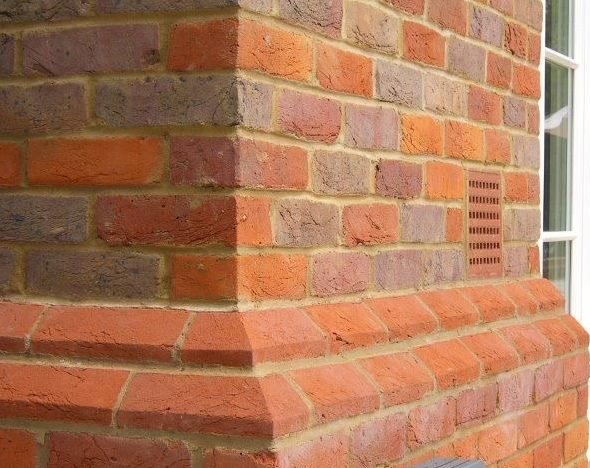
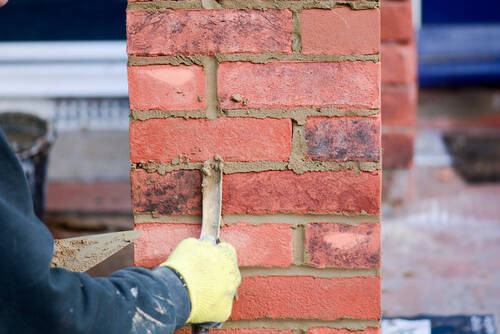
Repointing flint and brick in lime. The older walls here are flint rubble through the body of the wall, brick at the corners and around the openings, often a brick lacing course running through to level it up, and lime mortar holding the lot together. On that fabric the joint is the sacrificial part: water goes into the mortar and comes back out of the mortar, and the brick and the flint stay sound. We rake out by hand with a chisel and a hacksaw blade rather than a disc, back to sound material, then point in a lime mix knocked up to match what is there for colour, sand and strength. The joint goes back to the profile the wall has always had.
Getting cement back off a soft wall. Much of the village centre was rebuilt after the fire in the 1890s, so a good deal of what reads as old here is late Victorian brick bedded in a soft mortar, and plenty of it was repointed in cement since. A solid wall like that has no cavity and often no DPC either, so once the joints are sealed the moisture leaves through the brick face instead. One hard frost up on the downs and the faces are spalling while the pointing still looks perfect. Taking the cement out is slow hand work and the only honest fix.
Walls along the lanes take ivy, tractors, and water sitting on the top where the coping has slipped, and flint bedded in lime does not tolerate being pushed, so once a length is bowed we take that section down and rebuild it off the same footing, resetting the flint and putting the coping back. A stack takes weather from four sides, so the joints go first and then the flaunching cracks and feeds water down inside, which needs a tower or a scaffold and is priced as its own line.
How it runs
From your call to a written price
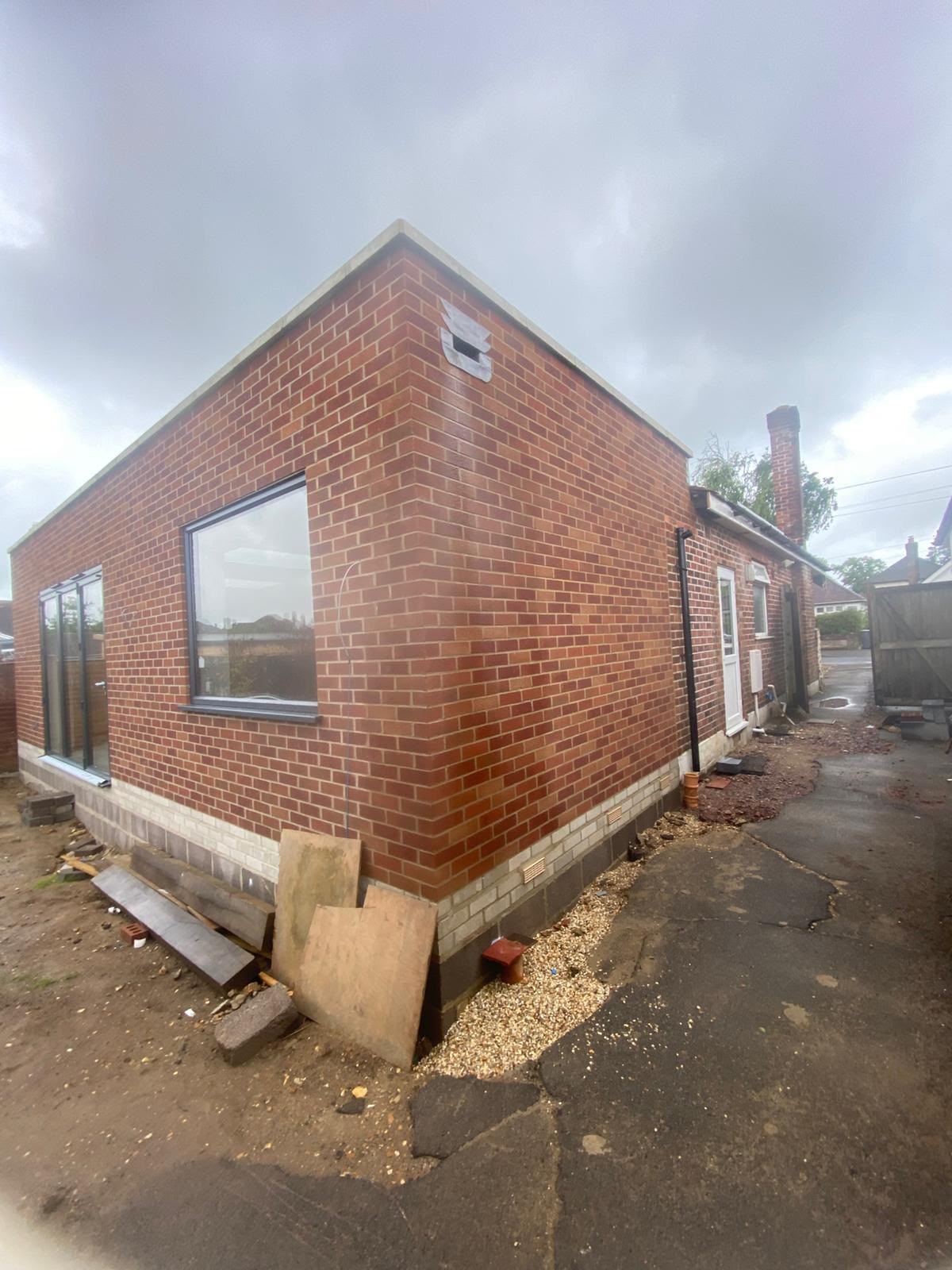
The quote is itemised and priced by elevation: access, raking out, the mortar mix, brick replacement and disposal on separate lines, and if something turns up that nobody could have seen you get a photograph and a price before we carry on. On permission: repointing and repairing like for like on an unlisted building is maintenance, so there is no planning permission and no building control in it. Handley has no conservation area of its own, but it sits in the Cranborne Chase National Landscape, where design scrutiny falls on anything visible, and there are seven listed entries in the parish, the church among them. On a listed wall even a change of mortar can need listed building consent from Dorset Council.
Cost
What decides the price of a brickwork job
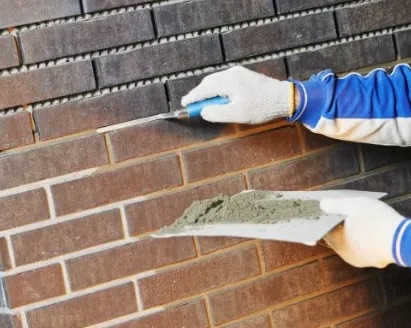
No rate per square metre: the metre of wall tells you nothing until you know what the joints are like. A cottage on the street with a lane too narrow to leave a scaffold standing, a farm building out on the downs with room all round, and a flint wall on a bank all price differently. How long a platform stands matters as much as its size, and the work at height rules are why it is a priced line rather than an optional extra. Ask the rake depth, hand or disc, and whether access is in.
If something has moved
Loose brickwork, or a wall that has shifted
Ring rather than use the form. Anything overhead or leaning goes to the front of the queue: the first visit makes it safe, and we price the permanent repair once we can see how far the movement goes. We are seventeen miles up the A354 and through the village often enough that a leaning wall gets seen quickly. The phone is answered 24 hours for emergencies; scheduled work runs Monday to Friday, 8am to 6pm.
The one local thing
In the Chase, what the wall looks like is a planning matter
Handley sits inside the Cranborne Chase National Landscape, and the practical effect of that on brickwork is about appearance rather than structure. Repairing what is already there does not engage it at all: a like for like repoint in a matching lime mix is maintenance wherever you live. What the designation changes is anything that alters how the outside of the building reads.
On this land the permitted development right to clad or render an external wall has been taken away, so covering brick or flint with render, pebble dash, tile or timber is a planning application here rather than a free choice, and the Planning Portal guidance on external walls sets out where that right applies and where it has gone.
So the useful advice up here is about materials, and it is worth settling before anybody orders anything. If a stretch of wall has to be rebuilt or a run of brick replaced, what goes back should be the same size, the same colour range and the same texture as what came out, because a modern wirecut brick beside soft handmade work never settles down however good the joint is.
We build a sample panel where the wall will take one, so you and a planning officer are both looking at the same thing instead of a description, and the mix, the sand and the joint profile go in the quote in the words an officer needs to read. Sourcing reclaimed brick and picking flint takes time, so say early if the wall faces the road, because that is the elevation anyone is going to comment on.
Who you are dealing with
A local firm you can check
We cover Sixpenny Handley, Pentridge, Cranborne, Farnham, Tollard Royal and the rest of SP5, and the travel is a line in the quote rather than something hidden in the rate. Bournemouth Roofing & Building Ltd, registered in England and Wales, company number 15471719, which you can look up in a minute. Thomas Hannen's business, and he is the one who comes out to price the job, not a salesman. A verified customer's 10 out of 10 on Checkatrade. The visit and the written quote are both free.
Questions
Sixpenny Handley questions we get asked
Does the Cranborne Chase designation reach an ordinary repair?
It reaches anything visible, which is not the same as everything. Sixpenny Handley sits inside the Cranborne Chase and West Wiltshire Downs landscape designation, so design gets scrutinised on work that reads from the road. A repoint in matching mortar changes nothing anyone can see and raises no question at all. A new boundary wall to the lane, a rebuilt pier or a change of brick is a different proposition and worth checking with Dorset Council first.
The church is listed. Could our cottage be caught too?
It can be, if you are inside its curtilage. Seven listed entries are recorded in Sixpenny Handley, the Church of St Mary among them, and anything standing in the grounds of a listed building before 1948 can carry the same protection without appearing separately on the list. Walls, barns and old outbuildings are the usual surprises. The list entry for the main building is the place to look before work is ordered.
You are a long way out. Will you come and price it?
Yes. Sixpenny Handley is about seventeen miles from us and we work across that side of Dorset, so the distance changes the diary rather than the answer. Thomas comes out himself, walks the wall, and writes the quote afterwards as itemised lines you can read against each other. Both the visit and the written quote are free. We would rather look at a small job and tell you it can wait than not come.
Where does the raked out mortar end up?
In a barrow, then a bag, then off the site. Repointing makes far more spoil than people expect, most of it fine grey dust that gets into a lawn and stays there, so we sheet the ground under the working elevation before a tool comes out and lift the sheets at the end of each day. Planting against the wall gets covered rather than trampled. Nothing is buried in the garden or washed into a drain.
What can I look at myself before you come out?
Three things, all from the ground. Run a key along a joint at waist height and see whether it turns to sand or stops on something solid. Look for joints recessed noticeably deeper than the rest, usually under the cills and on the weather side. And look at where the soil and the paths sit against the brick. If you can tell us that before we drive over, we know what to bring with us.
Nearby, and next door
Bricklaying and repointing near Sixpenny Handley
Bricklaying and repointing nearby
Our other trades in Sixpenny Handley
Everything we do in Verwood Bricklaying and repointing, all areas Every area we cover
Free quote
Get the wall looked at before another winter
Tell us what the wall is doing and we will come and look at it. A free site visit and a written itemised quote, with the mortar mix and the method written down.