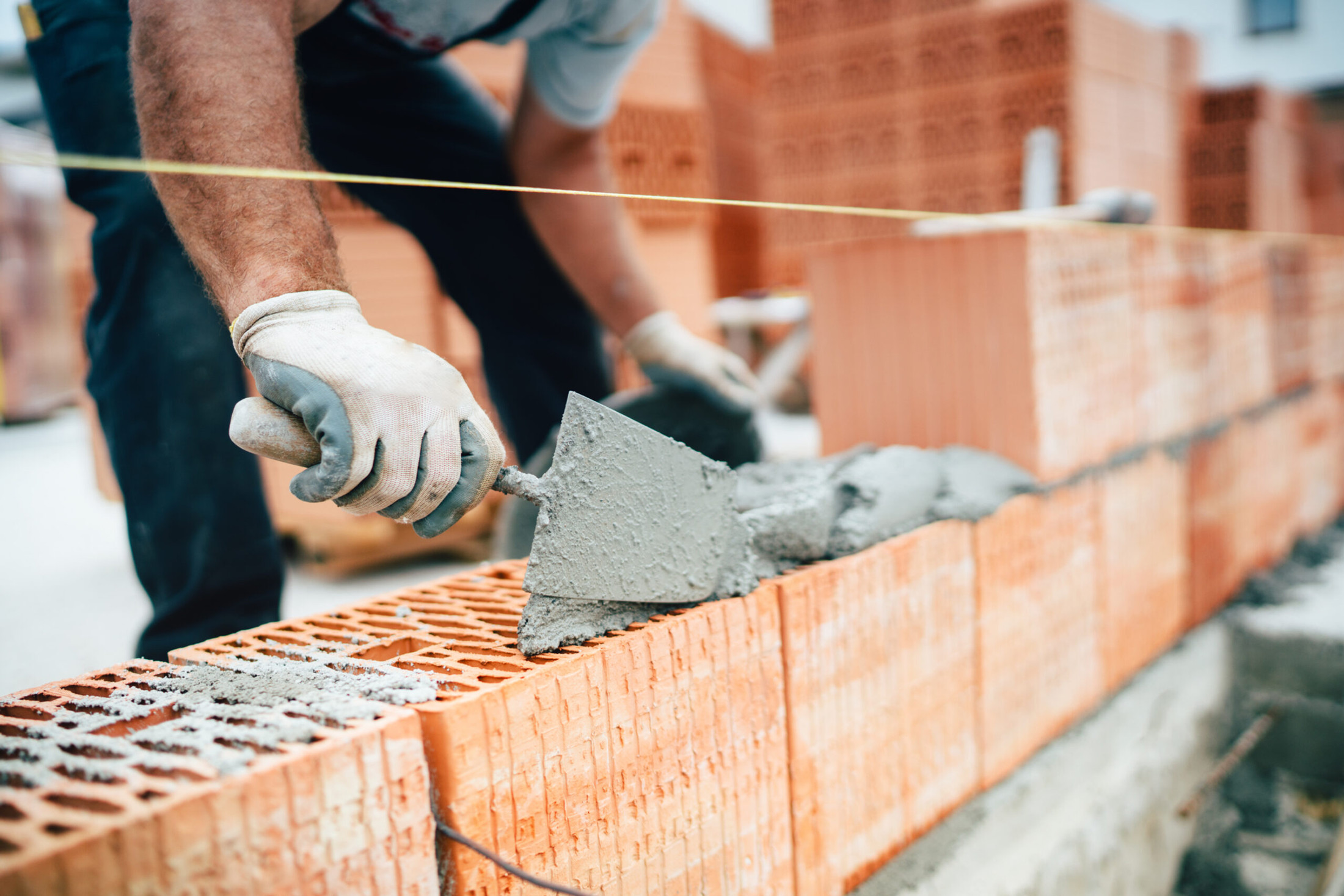
Bricklaying and repointing in Tarrant Monkton
Lime repointing, wet base courses put right, thatched chimney stacks, garden walls and gate piers, priced off a proper look at the wall.
The site visit is free and so is the written itemised quote. Thomas Hannen prices every job himself.
Bricklaying and repointing
Repointing in Tarrant Monkton: what we do about a damp wall base
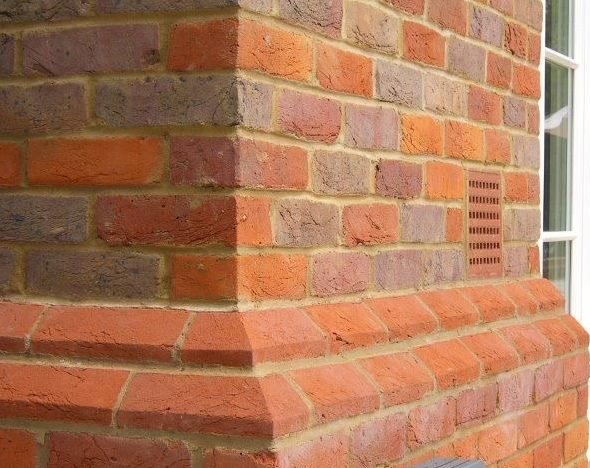
In a village standing on the floor of the Tarrant valley, brickwork gives way from the ground upwards rather than from the sky down. The joints in the lowest courses go first, because that is where a solid wall is trying to get rid of the water in the ground beneath it. We rake back what has perished on a Tarrant Monkton wall, put a mortar in that is softer and more porous than the brick and flint around it, and leave every sound joint alone.
Water is the short explanation for most of the walls we are asked to look at here. The river runs a few strides from some of them, the ground underneath is silt and gravel with the water table sitting high in it from about November, and a solid wall copes by letting that moisture evaporate out of its joints. Fill the joints with something hard and it leaves through the face of the brick instead, which is the expensive route.
Calls out of the village tend to be one of three. Base courses gone soft and powdery behind a band of cement somebody applied years ago. A length of flint boundary wall bellied out after a wet winter. Or a stack standing clear of the thatch that has begun dropping grit into the gutter.
We come and stand in front of the wall, tap it, and get down to the bottom of it where the story usually is. You get a plain survey and a written itemised price for the part that will not wait. Looking costs nothing and neither does the price.
The work
Brickwork jobs we do on the floor of the Tarrant valley
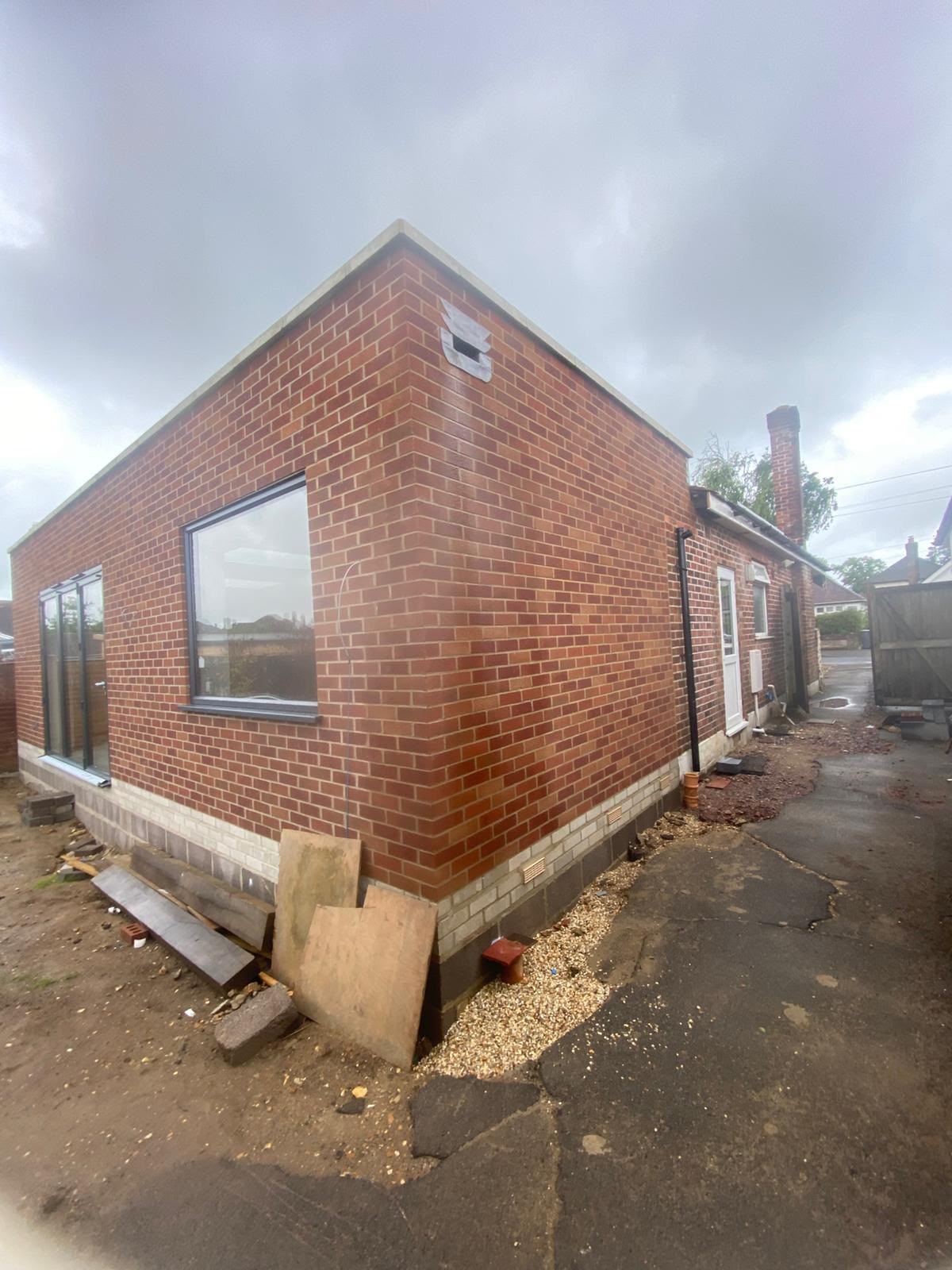
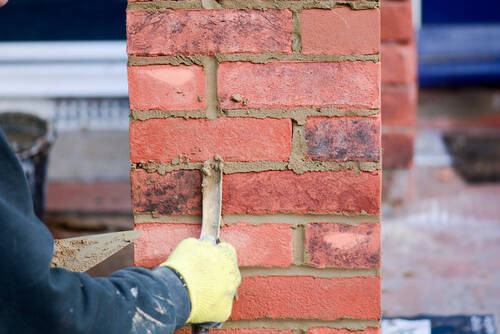
The lowest four or five courses. On the walls nearest the water this is where nearly every job starts. Ground that stays wet for months feeds moisture and salt up into a solid wall, the wall gives it back through the joints, and where the joints have been sealed it comes out through the brick face instead. What you see is mortar you can pull out with a finger, brick faces spalling off in coin sized pieces after a frost, and a pale tide line of salt above them. No sealer fixes that. We rake that band out by hand, cut out the dead bricks and match them from a reclaimed batch, point it back breathable, and cut in a damp proof course at the base where the construction will take one.
Flint with brick banding, pointed back and not over. Most of the older fabric along the street is a solid wall of flint with brick bands, quoins and window dressings, all bedded in lime. Flint absorbs nothing itself, so all the weathering lands on the joint, and that joint is holding the stones in as well as shedding rain. We rake by hand and only as deep as the wall will safely give up, and the new mix is an NHL lime kept under the strength of a soft handmade brick, with the sand matched for grain and colour.
A chimney on a thatched roof finishes well above the ridge, leaving a lot of soft period brick out in the weather on every side, so the stack comes down to sound work and goes back up course by course with the flaunching re-formed. That is work at height off a tower or a scaffold under work at height rules, priced on a line of its own. The flint and brick walls between the cottages and down towards the ford almost all fail downwards from the top, so we rebuild the bowed and bellied lengths, reinstate brick on edge or tile creasing, and reset gate piers shoved out of plumb, on a proper footing where the original was built on next to no foundation. A crack stepping out of the corner of a window head is usually the lintel rather than the mortar.
How it runs
From your call to a written price
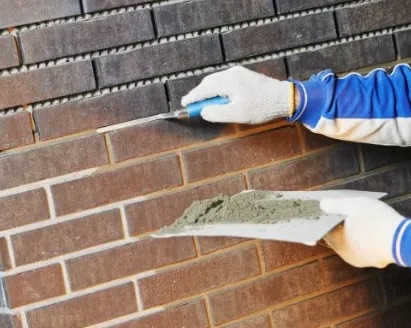
The quote is itemised by elevation: access, raking out, the mix, brick replacement and disposal on separate lines. Twenty seven entries here are listed, and on a listed cottage, its outbuilding or its garden wall, repointing counts as alteration, so it wants listed building consent before the first joint. Everything else in the village sits inside the Tarrant Valley Conservation Area, with the Cranborne Chase National Landscape over the top of it, and there a like for like repair is maintenance, needing no planning permission and no building control. Rebuilding or raising a boundary wall runs into the height limits in Planning Portal guidance on garden walls, and a wall standing on a shared line brings Party Wall etc. Act 1996 into it.
Cost
What decides the price of a brickwork job
No rate per square metre: the metre of wall tells you nothing until you know what the joints are like. A thatched cottage tight against the village street, a farmhouse at the end of its own track, and a flint wall you can only reach across somebody else's grass all price differently. How long a platform stands matters as much as its size, and the work at height rules are why it is a priced line rather than an optional extra. On a wall wet at the base for months, how far up the damage runs decides the hours. Ask the rake depth.
If something has moved
Loose brickwork, or a wall that has shifted
Ring rather than use the form. Anything overhead or leaning goes to the front of the queue: the first visit makes it safe, and we price the permanent repair once we can see how far the movement goes. Here it is most often a stack over thatch, or flint wall bellied out where the ground has been saturated since November. The phone is answered 24 hours for emergencies; scheduled work runs Monday to Friday, 8am to 6pm.
The one local thing
One conservation area covers the whole village, walls included
Tarrant Monkton sits inside the Tarrant Valley Conservation Area, and not on the edge of it: the designation takes in the street, the cottages and the boundary walls between them. What it controls is appearance, not repair.
Put the same material back in the same mix with the same joint and you are maintaining a building. Change how the wall reads and you have altered the character of a designated area, and a soft red and flint elevation finished in grey cement with a hard ribbon joint announces itself from the far side of the lane.
Being inside the conservation area is not the same as being listed, and this parish has plenty of both, so check your own address rather than the village. The listing net reaches past houses too: the footbridge over the ford is listed in its own right, which tells you how easily an outbuilding or a garden wall is caught by one, and on anything listed the consent is needed even when what goes back is what was there.
Who you are dealing with
A local firm you can check
We cover Tarrant Monkton and the Tarrant valley, Blandford Forum, Blandford Camp, Spetisbury and the rest of the DT11 villages, and we are fourteen miles away, near enough to come back a second time if the first look leaves a question open.
Bournemouth Roofing & Building Ltd, registered in England and Wales, company number 15471719, which you can look up in a minute. Thomas Hannen's business, and he is the one who comes out to price the job, not a salesman. A verified customer's 10 out of 10 on Checkatrade. The visit and the written quote are both free.
Questions
Tarrant Monkton questions we get asked
What does the Tarrant Valley Conservation Area mean for pointing?
The finish of the joint is the part it cares about. A conservation area controls appearance, and on an old elevation the mortar is most of what you actually see from a distance, so the profile and the colour are not a free choice. Like for like is repair. Anything altering the look, including striking a flush joint back into a deep recess, is a change, and Dorset Council would want asking about it.
Is All Saints the only listed building in the village?
Nowhere near it. Tarrant Monkton records 27 listed entries and the Church of All Saints is only the obvious one. Most of the rest are cottages, barns, and in some cases boundary and garden walls in their own right. That last group surprises people, because a wall can be listed without the house behind it being listed. Look the address up before ordering work on anything that looks older than the road.
Does the Cranborne Chase designation affect a rebuilt wall?
Only if the rebuild changes what people see. The landscape designation over Tarrant Monkton puts design under scrutiny wherever the work is visible, so putting a wall back on the same line in the same brick and the same bond raises nothing whatsoever. Facing it in something different, raising the height, or rebuilding in rendered block where brick stood, does. The test is whether the finished thing looks like the thing it replaced.
Can a low cottage be pointed without a full scaffold?
On a single storey elevation, usually. We work off a low tower or a hop up, which means no ties drilled into the wall and nothing standing outside for weeks on end. Above that height, or where the ground falls away behind the wall, scaffold is safer and quicker. Here we also keep the standards off the lane where we can, because the road through Tarrant Monkton is not wide enough to lose a metre of it.
Will one repointed elevation look different from the others?
For the first year it will look newer, then it settles down. Lime lightens as it carbonates and takes a couple of seasons to lose the fresh look, so a wall pointed in September is still obviously new the following spring. We mix the whole job from one delivery of sand so there is no variation inside it, and where an elevation returns around a corner we stop the new work at the corner rather than mid wall.
Nearby, and next door
Bricklaying and repointing near Tarrant Monkton
Bricklaying and repointing nearby
Our other trades in Tarrant Monkton
Everything we do in Blandford Forum Bricklaying and repointing, all areas Every area we cover
Free quote
Get a written price for the brickwork in Tarrant Monkton
Tell us what the wall is doing and we will come and look at it. Free visit, itemised written quote, and a straight answer about what is wrong.