Insulation in Tarrant Monkton
Loft, rafter, wall and floor insulation for cottages and newer homes in the Tarrant valley, surveyed before it is priced.
The site visit is free and so is the written itemised quote. Thomas Hannen prices every job himself.
Nearly all of this work happens on the inside of the building, so on most Tarrant Monkton homes it never touches the conservation area or the listed side of things at all. A tiled roof with a proper loft under it is usually a single day. A thatched roof or a cob wall is a different job that wants a different material, and telling you which one you have is what the free visit is for.
Three calls come in from the valley more than any other. A cottage that eats fuel all winter and still has cold rooms at the back. A newer house where somebody has looked in the loft for the first time and found a thin, flattened layer between the joists. And a room in the roof, a converted attic or a barn bedroom, that is unbearable in February and worse in July.
None of those has one answer, so we look before we price. That means getting into the roof space where there is one, putting a rule into whatever is already up there, checking whether the eaves are open and the ventilation still works, finding the tank and the pipe runs, and tapping the walls to see whether there is a cavity or a foot of cob behind the plaster.
On a thatched roof we look at how the ceiling is built and what is above it before anybody suggests a material. Then you get a written itemised quote with the method on it as well as the number.
The work
Under thatch, the mistake is packing it tight
Under thatch, knowing what not to do. Thatch is already a thick warm covering and the problem is rarely depth. The problem is what happens when somebody packs quilt hard up under the coat: the thatch cannot dry from underneath, the timbers stay wet, and a fire barrier designed with air behind it no longer has any. Where there is a ceiling with a void over it we insulate at ceiling level and leave a clear ventilated gap below the thatch. Where a room is open to the rafters, we would rather talk to you about a breathable board and the fire separation than sell you a roll of mineral wool.
There is no cavity wall to fill in the old part of the village, so the choice is internal or external, and on a cottage in the Tarrant Valley Conservation Area the internal route is nearly always the one that gets built. Wood fibre board bedded and finished in lime lets a cob or chalk wall carry on drying inwards. A foil faced rigid board sealed against the same wall traps the moisture in the fabric, and we will talk you out of it every time, whatever it does for the U-value on paper.
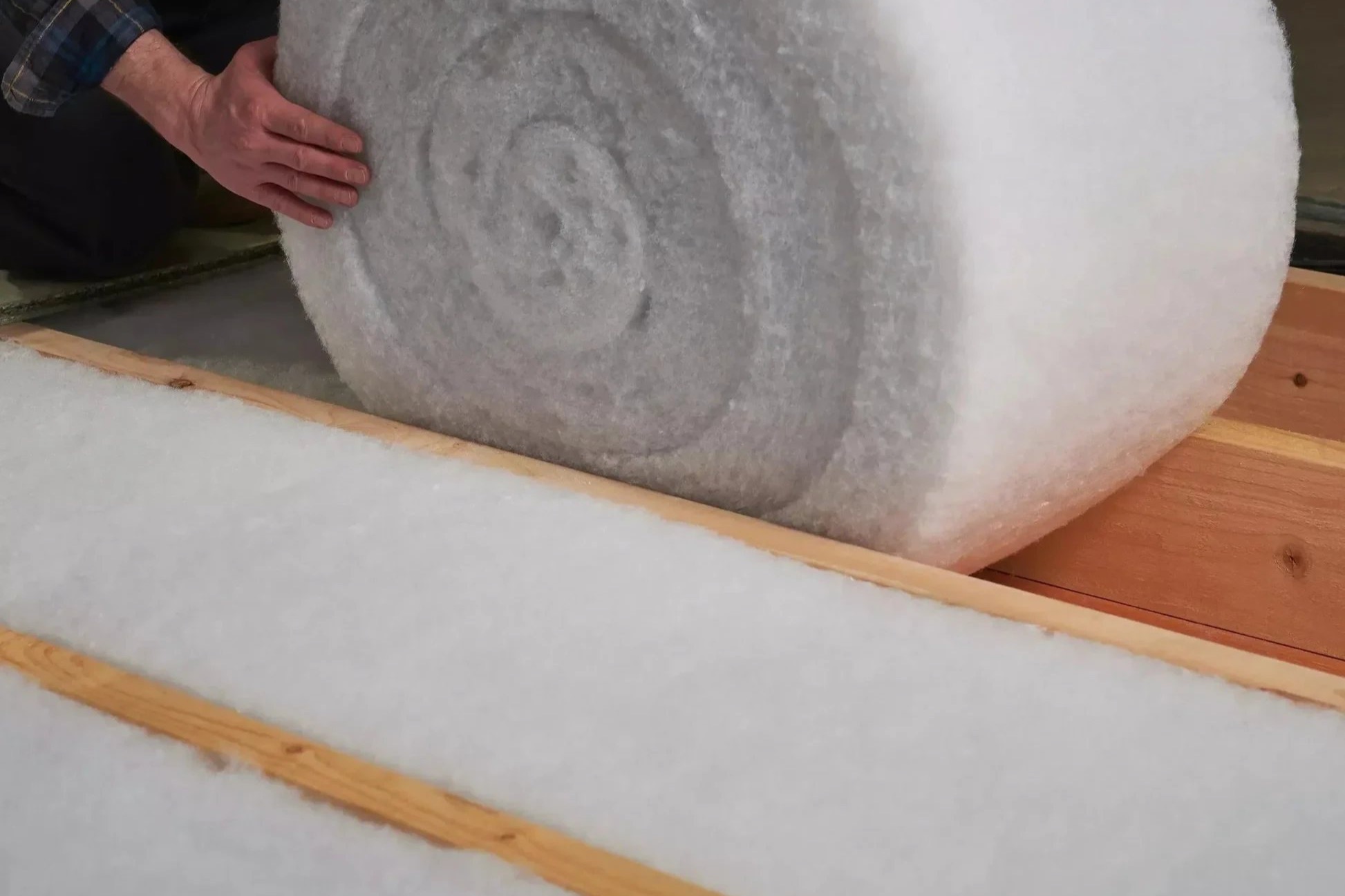
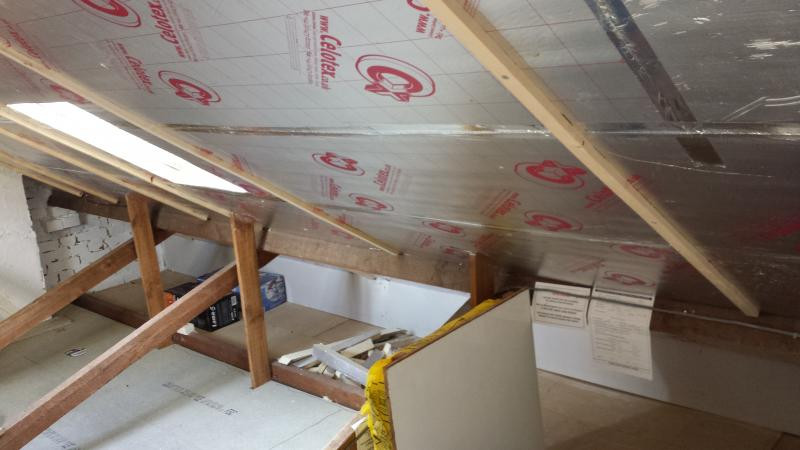
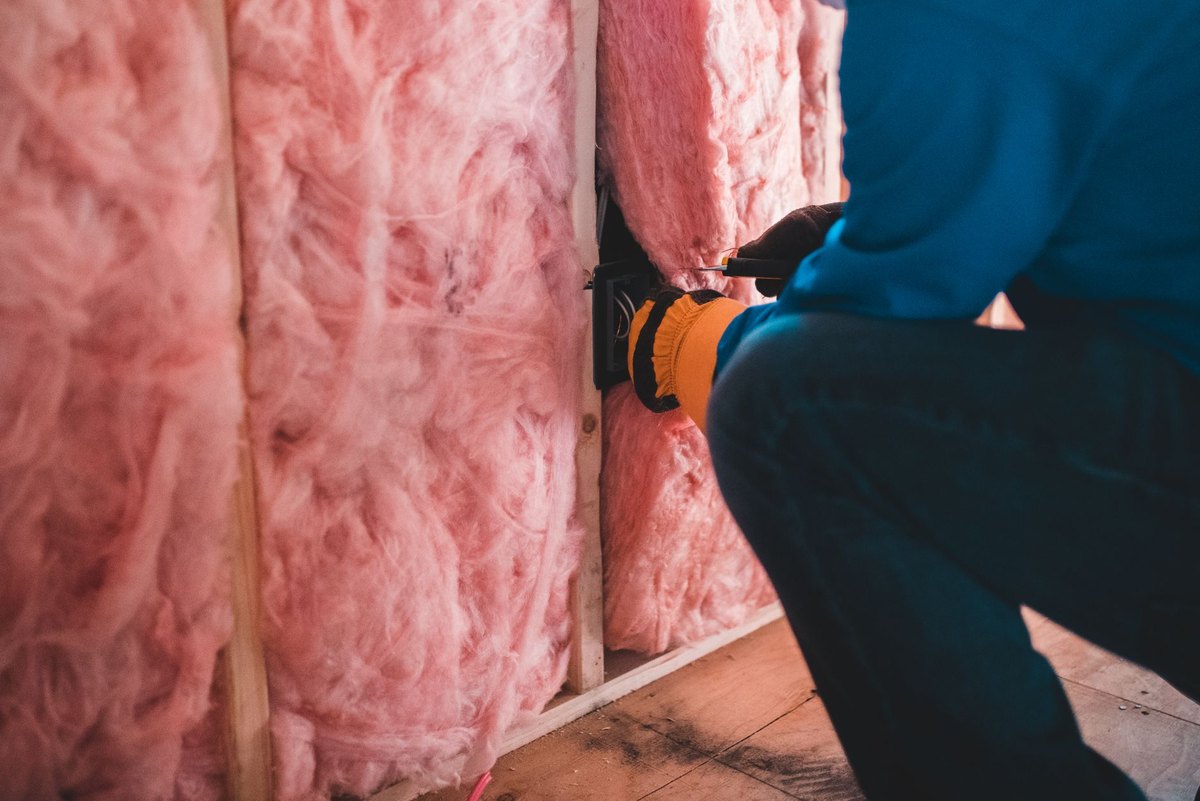
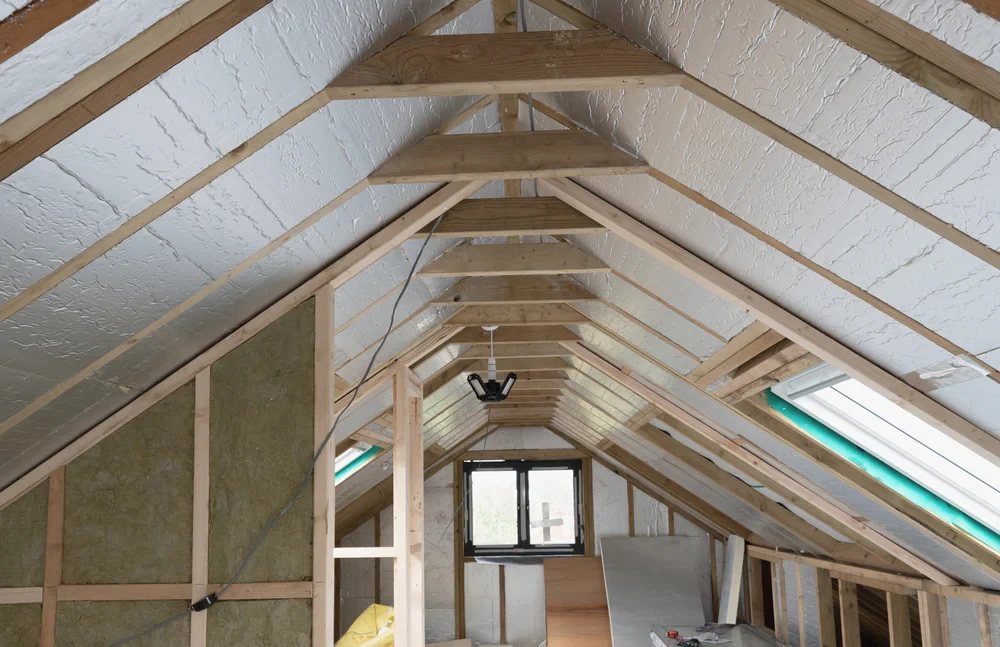
Where the roof is tiled and the loft is a proper loft, the original layer has usually settled, been compressed by boxes, or stops a foot short of the wall plate, so the boarding comes up, the depth goes in underneath and a raised deck gives the storage back, with a fire rated cover over any downlighter below. We lay between and over: fresh mineral wool between the joists, a second eco roll run at right angles across the top so the timbers stop bridging the cold, 250mm to 270mm all in, which is what carries a ceiling to the 0.16 U-value Approved Document L expects of a renovated roof. Where an attic is already a room in roof it is rigid board instead, PIR between the rafters with a clear air gap above or a multi-layer quilt such as TLX where a sloping ceiling has no depth to give, and on the older cottages the airbricks under a suspended timber floor stay clear, always.
How it runs
From your call to a written price
Insulating a loft, a floor or the inside face of a wall is an improvement rather than development, so no planning permission is involved and it sits inside permitted development, which is what the Planning Portal's insulation guidance says. Building control is engaged once a thermal element is renovated, when insulation goes in at rafter level during a re-roof, or when a loft becomes a room. Tarrant Monkton sits inside the Tarrant Valley Conservation Area and there are twenty-seven listed entries in and around the village, so anything that changes the outside face of a building gets checked before it is priced. Dorset Council is the authority here and holds the records on listed building consent.
Cost
What decides the price of an insulation job
No rate per square metre. A thatched cottage with a trap door on a narrow landing, a brick and flint cottage with a low collar roof you cannot stand up in, and a newer house with a proper loft ladder are three different days before any material is bought. Old material that has to be bagged and taken away is a cost before anything new goes down, and so is a loft that has to be emptied first. Approved Document L sets what the finished work has to reach. Ask any quote what depth is going down and whether the eaves stay clear.
If it is urgent
Damp, condensation or a room you cannot heat
Ring rather than use the form. A loft dripping with condensation, mould that keeps coming back, or a room that will not hold heat gets looked at quickly. The first visit tells you whether it is insulation, ventilation or both. Tarrant Monkton is a straight run up the valley for us, so you will get an honest day on the phone rather than a promised hour we would miss.
Worth knowing
In the conservation area, the inside is yours
The whole of Tarrant Monkton sits in the Tarrant Valley Conservation Area, and there are twenty-seven listed entries in and immediately around the village. People assume that means insulation is a fight. Almost always it is the opposite. Conservation area control and listed building consent are about what the building looks like and what its historic fabric is made of.
A loft is neither. Laying quilt over your own ceiling joists changes nothing anybody can see from the lane, and it needs no permission from anyone. The same goes for lagging a tank, insulating a hatch, or lifting floorboards and putting insulation between the joists.
The line gets crossed when the work reaches the outside face. External wall insulation changes the depth, the texture and the shadow line of a wall, and on a cottage here that is a planning conversation before it is a technical one, and on a listed building it needs listed building consent in its own right. New vents cut through a wall or a roof slope, a rooflight put in to light a converted attic, and a flue or extract terminal all fall the same way. So does anything that involves stripping and re-covering the roof.
Our advice is dull and it works: do the internal jobs now, because they are unrestricted and they are where most of the heat is going anyway, and only take the external question to Dorset Council if the internal work has genuinely run out of road. If it does come to that, the wall build-up matters more than the paperwork. An old cottage wall has to keep drying, so the specification is a breathable one, and Approved Document F is the other half of the same argument: the tighter you make a building, the harder you have to think about where its air comes from.
Who you are dealing with
A local firm you can check
We cover Tarrant Monkton and the Tarrant valley villages on DT11, out through Blandford Forum and across to Spetisbury and Stourpaine, and Dorset Council is the planning and building control authority for this address. Bournemouth Roofing & Building Ltd, registered in England and Wales, company number 15471719, which you can look up in a minute. Thomas Hannen's business, and he is the one who comes out to price the job, not a salesman. A verified customer's 10 out of 10 on Checkatrade. The visit and the written quote are both free.
Questions
Tarrant Monkton questions we get asked
The ground stays wet round here. Does that reach the house?
It reaches the floors. The soil around Tarrant Monkton drains badly, so the void under a suspended timber floor holds damp air for most of the winter. Anything fitted under those boards has to sit clear of the ground and the air bricks have to stay open, or the joist ends pay for it in the end. None of that changes what we do in the roof, which is a dry space.
Would anything visible be scrutinised out here?
Yes, because the Cranborne Chase and West Wiltshire Downs landscape designation covers this valley and puts weight on what can be seen from open ground. That reaches a change of covering, external cladding, panels and rooflights on a prominent slope. It does not reach material laid between joists or a ceiling lined from below. Anything you can only see by climbing through a hatch sits outside the argument.
What material would you use in an old roof void?
Mineral quilt for most of it, laid in two layers with the second running across the joists so there is no cold stripe left above the timber. Where a roof at Tarrant Monkton has irregular rafter and joist spacings, which the old ones nearly always do, quilt beats rigid board because it fills the gaps instead of leaving them. Sheep wool is an option where somebody wants a breathable material throughout.
There are listed cottages here. What do you check first?
The entry itself, before quoting anything. There are 27 listed entries in the parish, the Church of All Saints among them, and listing catches internal alterations as well as the visible outside. So a lined ceiling or a widened hatch in a listed cottage becomes a consent question for Dorset Council rather than a decision for me. On the unlisted house next door the same work needs nothing.
Why does condensation appear in the loft afterwards?
Because the void goes colder once the ceiling is doing its job, and cold air holds less moisture than warm air. If the eaves gap is blocked, or the exposed east north east side of the roof has no through path, the vapour that always came up from the house now settles on the underside of the felt instead. The cure is air movement, so vent trays go in at the same visit.
Nearby, and next door
Insulation near Tarrant Monkton
Insulation nearby
Our other trades in Tarrant Monkton
Everything we do in Blandford Forum Insulation, all areas Every area we cover
Free quote
Get a look before you get a price
A free site visit in Tarrant Monkton, a rule put into whatever is up there now, and a written itemised quote with the method on it as well as the number.