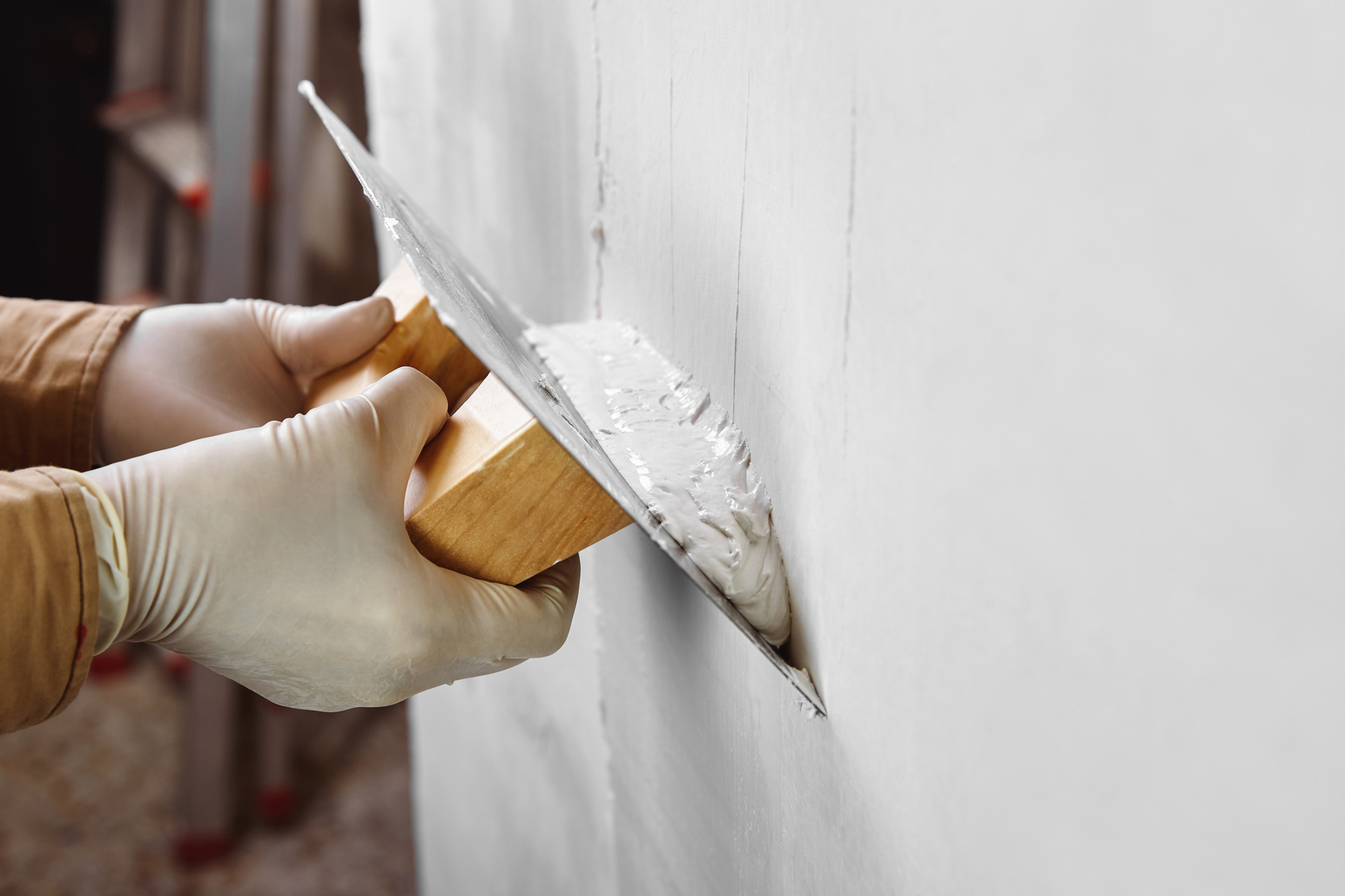
Plastering in Tarrant Monkton
Lime on the old walls, gypsum on the newer ones, and a written price that tells you which one your house is.
The site visit is free and so is the written itemised quote. Thomas Hannen prices every job himself.
Two houses a few doors apart in Tarrant Monkton can want completely different work. An old solid wall wants lime, because it gets rid of water through its own surface. A later one takes a gypsum backing coat and a skim. We sound the wall before we price it and tell you which of the two you have.
Calls from the village nearly always start in one of three places. A ceiling has cracked or begun to sag, usually an old lath one losing its grip on the joists. A patch of wall has gone soft or come away behind the wallpaper, most often low down on an outside wall or in a cold corner. Or the render outside has hairline cracked, sounds hollow in a patch, and water is sitting behind it instead of running off.
What we do about it has the same shape every time. We knock every wall and ceiling in question, work out what is behind it, and separate what only wants a finish coat from what has to come off. Both go on one written price with the making good included, so nothing appears later as an extra. The site visit and the quote are free.
The work
Rooms here are priced by the corner, not the wall
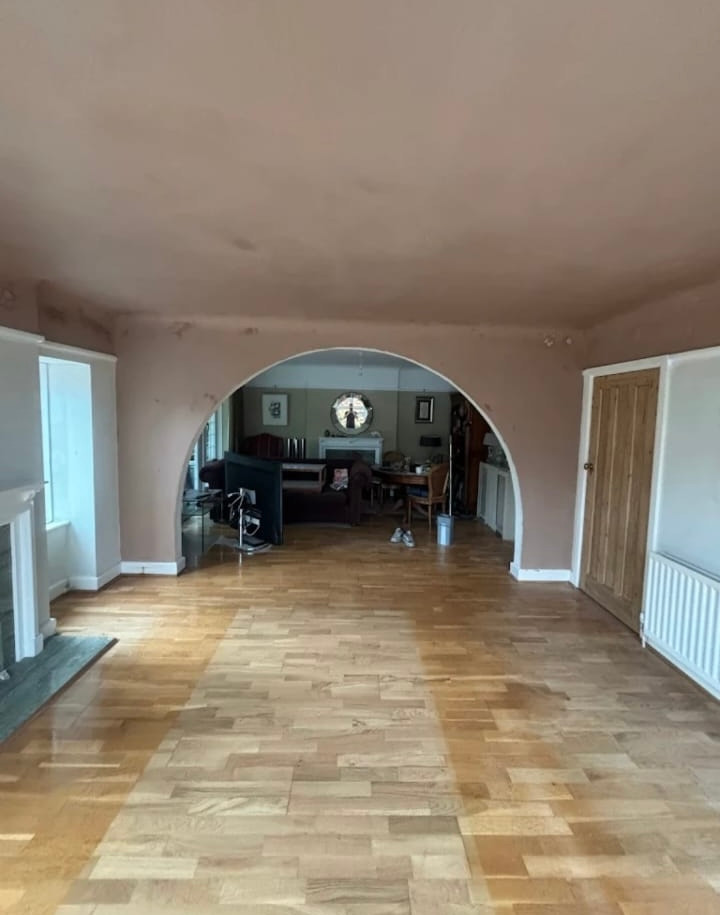
Rooms here are priced by the corner, not the wall. Old houses in this valley are short of straight lines, and that is where the hours go. An angle bead sets an external corner, a stop bead finishes plaster where it meets timber or dies into a reveal, and a deep reveal in a thick wall has to be run by eye so it looks right rather than measured so it reads wrong. Rooms with beams, sloping ceilings and out-of-square openings are priced by the corner rather than by the wall.
The old houses here are solid wall construction, finished in lime plaster, usually a render coat, a float coat and a fine finish over the top. Put gypsum or a cement backing coat on one and the finish blows above the skirting inside two winters. We keep the build-up breathable and take material off only where it has genuinely parted from the wall. An old ceiling here is lime pushed through riven lath, hanging on the nibs that squeezed out above it, and when those break it sags between the joists. If most of the key is still holding it can be stabilised and skimmed. If it is on the move it comes down, and then you choose: plasterboard fixed to the joists and skimmed, which is quicker, or re-lathing to keep the fabric, which is what a protected ceiling usually needs.
Not everything in the parish is old. On the twentieth century houses the backing coat is gypsum: bonding where the face is dense or painted, browning or hardwall where it is absorbent. Newer rooms and outbuilding conversions are dry lining, board on dabs or on a stud, joints taped, then a skim. Outside, an old wall takes lime render finished with limewash or a mineral paint, and a modern one a scratch coat, a mesh reinforced basecoat, a primer and a silicone topcoat, with a bell cast bead at the bottom.
How it runs
From your call to a written price
Same team from the first visit to the last, one person to ring, and nobody sub-contracted in. The quote is itemised line by line, from protection to disposal. Tarrant Monkton sits inside the Tarrant Valley Conservation Area, so repairing render in the same material is maintenance, but rendering a wall that is not rendered now needs planning permission here where it would be permitted development a few miles away, and Planning Portal guidance on external walls sets out where the line falls. Twenty-seven entries in the parish are listed, and listed building consent covers internal plaster as well as external render. Where most of an elevation comes off, Approved Document L asks whether the wall should be insulated.
Cost
What decides the price
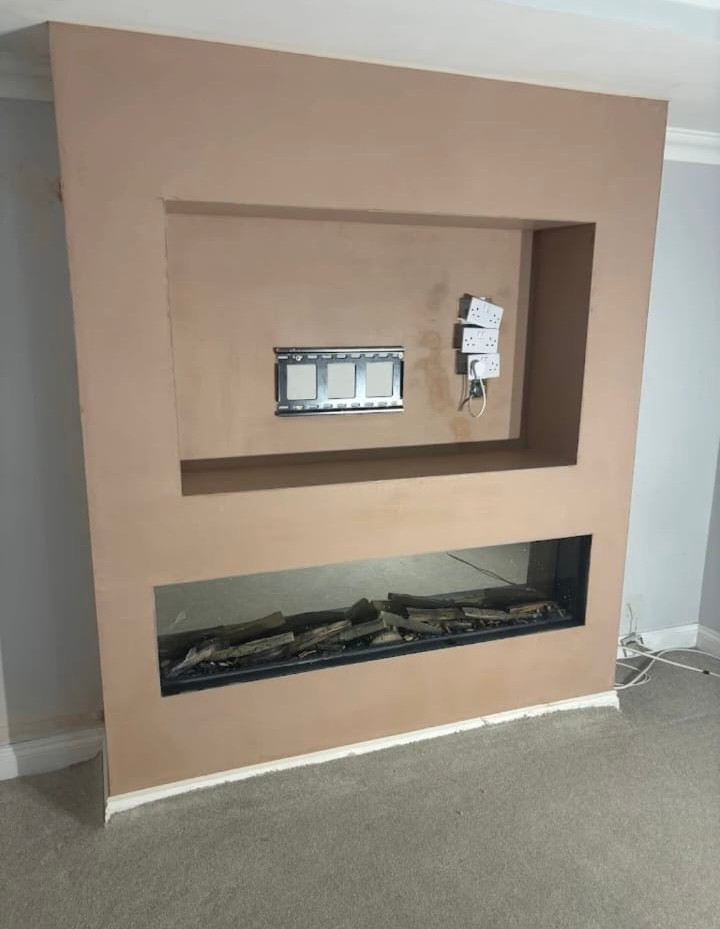
No rate per square metre, because two rooms the same size can be a day apart. A sound wall that only wants a skim is a different job from one where the backing coat has blown and has to come off back to the masonry. A room with deep window reveals and a chimney breast has far more corners to bead than a plain box. Round here access is usually a cottage on the village street where every bag comes out through the house, or a converted farm building with rooms that were never square. Outside, a tower or a scaffold is a priced line.
If it has come down
A ceiling down, or plaster blown off the wall
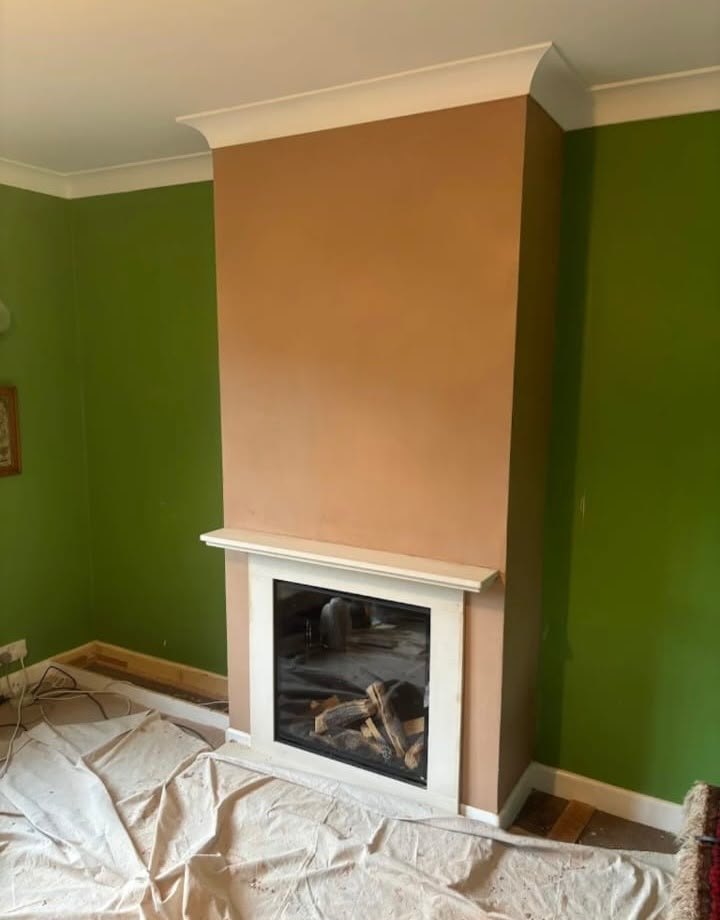
Ring rather than use the form. A ceiling that has cracked and dropped, plaster coming off in sheets, or a wet patch spreading across a wall all go to the front of the queue. We are about fourteen miles out towards Blandford, so a same-day look is usually possible, and if it is going to be first thing tomorrow instead we say so on the phone rather than leaving you waiting in.
Worth knowing
What goes on top of lime render decides how long it lasts
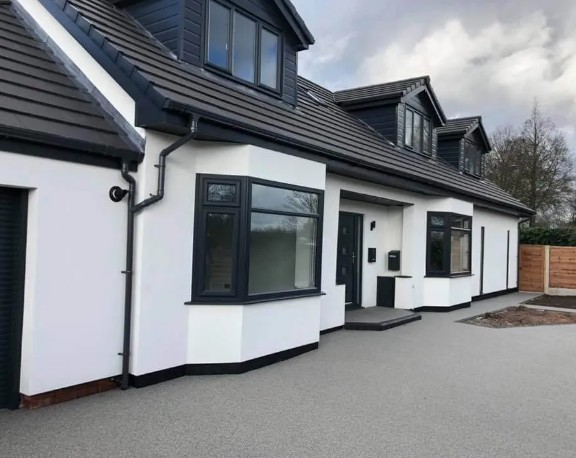
If your house is rendered and that render is lime, the paint matters more than the render does. Modern plastic masonry paint dries as a film. The wall carries on taking water in at the joints and off the ground, the film will not let it back out, and it collects behind the paint until the face lifts off in sheets.
People blame the render, strip it, and pay for the whole thing twice. Limewash and the mineral paints are porous on purpose: the wall dries through them, they wear thin instead of peeling, and they can be washed over again without stripping. If you are being quoted for a rendered elevation on an old house here, ask what is going on top before you agree the figure.
The same thinking decides what you are allowed to do. In a conservation area, putting back what is there in the material that is there counts as repair. Changing the material, or rendering a wall that is bare now, is a change of appearance and needs consent, and colour is part of what gets looked at on a street like this one. Settle that before the tower goes up rather than after, because it changes the specification, the drying time and the order the work runs in.
Who you are dealing with
A local firm you can check
About fourteen miles from us, covering Tarrant Monkton, the other Tarrant villages and the DT11 addresses around Blandford, with Dorset Council for planning and building control. Bournemouth Roofing & Building Ltd, registered in England and Wales, company number 15471719, which you can look up in a minute. Thomas Hannen's business, and he is the one who comes out to price the job, not a salesman. A verified customer's 10 out of 10 on Checkatrade. The visit and the written quote are both free.
Questions
Tarrant Monkton questions we get asked
Which conservation area covers Tarrant Monkton, and what does it control?
The Tarrant Valley Conservation Area, and it controls appearance rather than what you do indoors. Putting back the same external render in the same finish reads as maintenance. Swapping it for a different material, or changing the colour, is an alteration and goes to Dorset Council first. Internal replastering in an unlisted house in the village needs nobody's permission at all, so a re-skim can be booked the week you decide on it.
How do we find out if our cottage is listed?
The national list is searchable by address and it takes a couple of minutes. Tarrant Monkton has 27 listed entries including the Church of All Saints, which is a lot for a village of this size, so it is genuinely worth looking rather than assuming. A listing covers the whole building inside and out, so historic plaster and lath fall under it. I will not strip a listed interior without seeing the consent.
We are on the edge of Cranborne Chase. Does that count?
It adds a second layer of scrutiny to anything visible. Tarrant Monkton sits inside the Cranborne Chase and West Wiltshire Downs designation as well as its own conservation area, so a change to the outside of the building gets judged against both at once. Neither of them stops repair. Both make a like-for-like specification the easier route, which is what I would put on an old wall in any case.
How long will an old cottage need between the coats?
Longer than a modern room, because every coat has to dry before the next one goes on. On a solid village wall we put the backing coat on, leave it to firm up and shrink, then come back rather than chasing it the same week. A cottage in the Tarrant valley usually means two or three visits with gaps rather than one continuous run, and those gaps are the part that stops it cracking a year later.
Where does the waste go from a village job like this?
Out on the van, the same day where we can manage it. There is often nowhere to stand a skip on a Tarrant Monkton lane without blocking it, and in a conservation area a skip parked outside for a fortnight is the sort of thing neighbours notice, so we bag the spoil and take it with us. Old lime plaster and lath is bulky and heavy, so a cottage ceiling can be two or three loads.
Nearby, and next door
Plastering and rendering near Tarrant Monkton
Plastering and rendering nearby
Our other trades in Tarrant Monkton
Everything we do in Blandford Forum Plastering and rendering, all areas Every area we cover
Free quote
Get your Tarrant Monkton walls sounded first
A free site visit, every wall and ceiling knocked rather than glanced at, and an itemised written quote that keeps a skim and a full replaster apart.