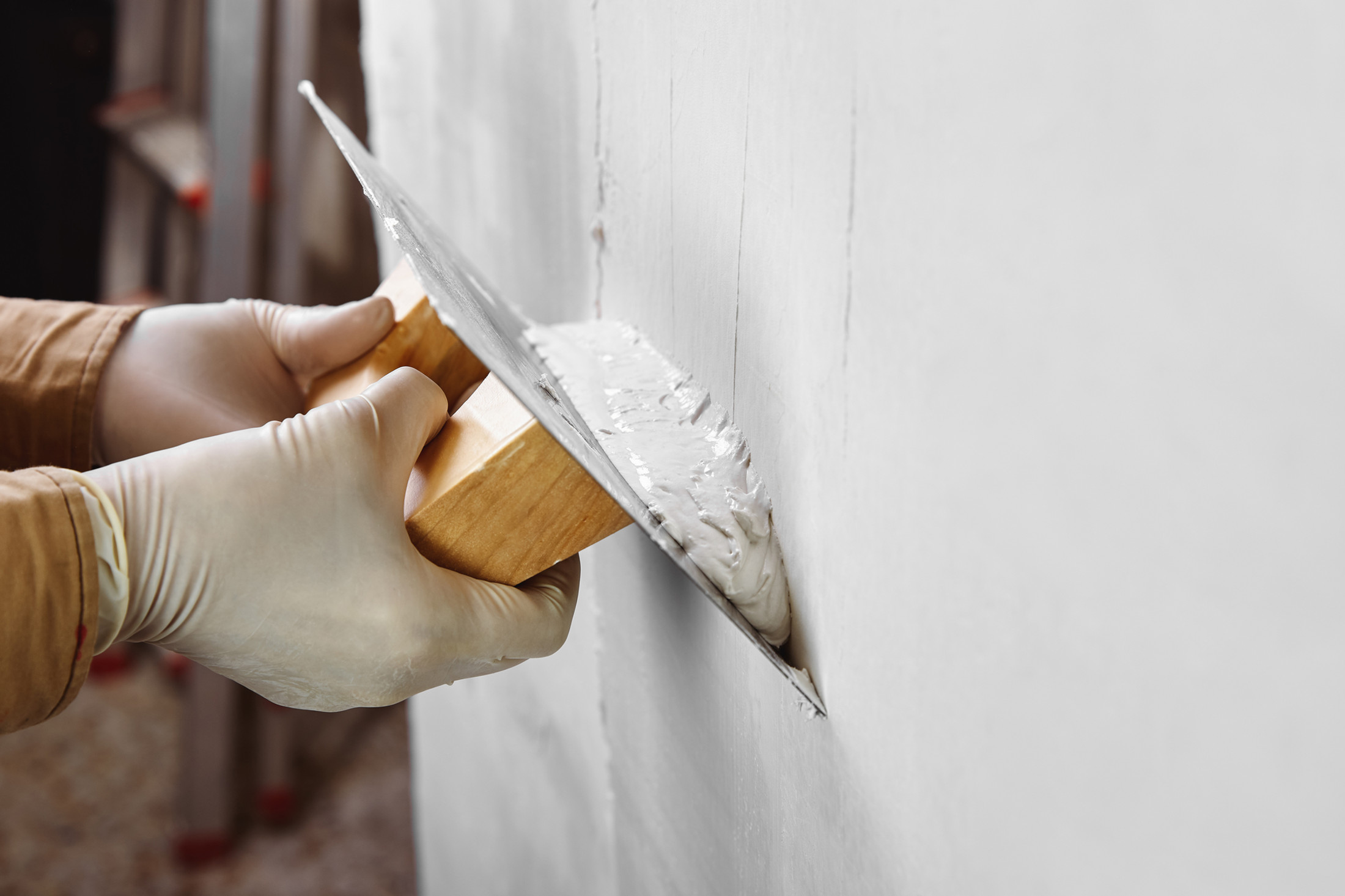
Plastering in Stourpaine
Lime render and lath ceilings on the old cottages, re-skims and dry lining on the newer houses, across Stourpaine, Durweston and the DT11 villages.
The site visit is free and so is the written itemised quote. Thomas Hannen prices every job himself.
Last updated
Plastering in Stourpaine divides neatly in two. Inside a modern house it is a skim and a coat of paint. On an old cob, chalk or flint wall the material matters more than the trowel work, and using the wrong one is what puts you back on the phone in two winters.
What needs doing in a Stourpaine house is usually visible from the doorway. Render on the front of a cottage that has cracked, lifted or gone hollow where the rain drives in. A ceiling that has begun to sag and drop dust. A patch inside that keeps coming through the paint at skirting level. Or a room stripped for decorating that turns out to need a lot more than filler.
We come and tap the surface, look at what is behind it and at what is happening outside the same wall, and then say which of those you are dealing with. Stourpaine is nineteen miles up the valley from us, so when we come out we look properly, not a glance from the gate.
The work
The rain comes off the downs and finds the same spots
The rain comes off the downs and finds the same spots. Stourpaine sits under the downs and the weather comes across them, so render fails in the same places again and again: the head and sill of a window, the base of the wall below a leaking gutter, and the corner of the elevation that faces the wind.
We deal with the water first, then the render, in that order. For the outside walls, see rendering in Stourpaine.
The older cottages in Stourpaine are solid walled and soft, finished in a lime render. They fail where somebody has patched them in sand and cement or sealed them with a plastic masonry paint, because the wall then holds water it used to give back. We cut out the hard patches, put on a lime scratch coat and float coat and finish to match what is already there, even where something else would be quicker. Inside those same cottages it is lime plaster on the solid walls and haired lime on lath ceilings. We are honest about what flat means in a building like this: a three hundred year old wall can be made true enough to hang a picture on and take paint evenly, but straightening it completely means losing the character you paid for. A cracked ceiling that is still firm gets overboarded and skimmed. One that moves under your hand has lost its keys and comes down, then goes back in board, tape and joint and a skim.
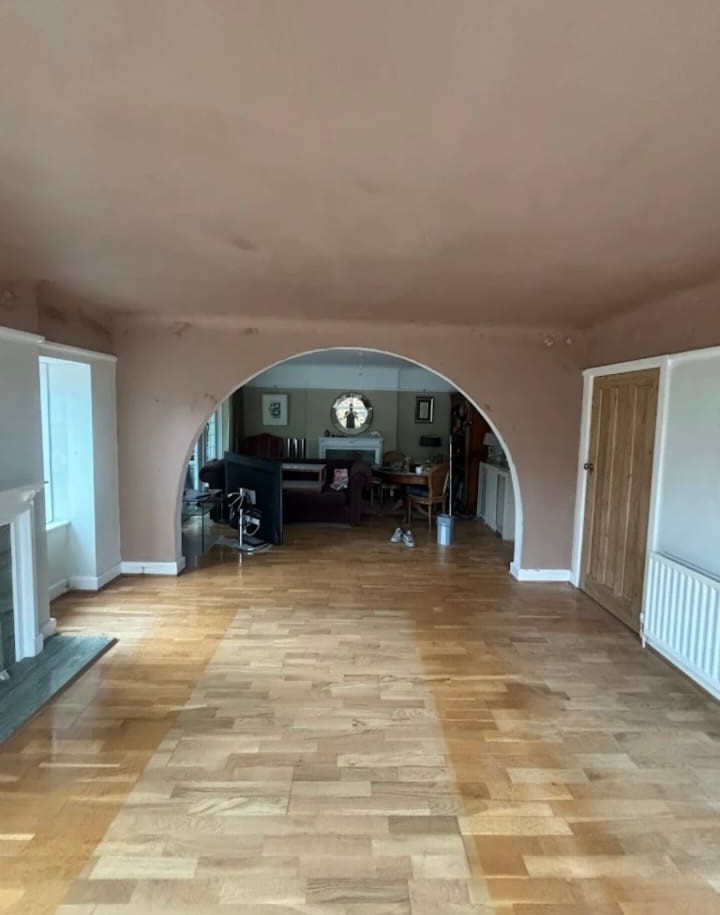
The post-war and later houses in Stourpaine take ordinary gypsum work: a re-skim, hacking off and re-backing with bonding or hardwall where a wall has blown, and dry lining on dabs or studs in a converted garage. Where an extension is blockwork, a mesh reinforced basecoat with a bell cast bead and a silicone thin coat topcoat is the right system. It has no business on the old part of the house, and we will say so before you order it.
How it runs
Plastering an older house: dust sheets to final skim
Thomas comes out and prices it himself. He taps the walls and ceilings to find what is hollow, checks whether it is lime on lath, lime on a solid wall or modern hardwall, and asks what the room is used for. His written quote lists the preparation, what is to be hacked off, the backing coat, beads and any new plasterboard, the finishing skim, making good and taking the rubble away. Every coat is on that one quote.
Floors are covered, doorways sealed with sheeting and the dust kept to one room. Old plaster is bagged and carried out, not left on the drive, and the room is swept at the end of each day. When the old plaster reveals a rotten lath, a cracked lintel or damp, Thomas photographs it and prices the repair, and nothing extra starts without your agreement.
Inside work on an unlisted house needs no permission. On a listed building, listed building consent covers historic plaster inside as well as out, and Dorset Council holds that record. Outside, a change of finish can need planning permission, particularly if a conservation area covers your address, which is worth checking. Re-rendering a whole elevation is building control work, because Approved Document L treats it as a renovated thermal element.
Cost
Lath, lime and hardwall: what the plaster job depends on
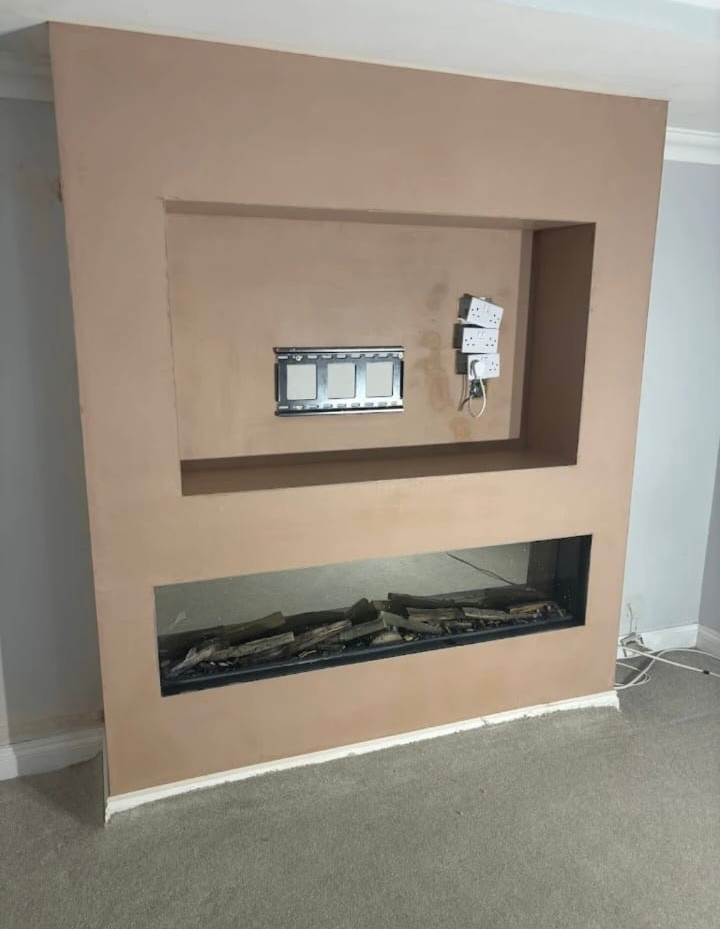
Plastering is priced by what is behind the surface, not by the square metre. What the wall is. An old cottage wall of flint, brick or cob wants lime, which goes on in thinner coats and takes longer to cure. A post-war blockwork wall with gypsum hardwall is quicker. A lath ceiling can sometimes be repaired, or it may need overboarding with plasterboard and a skim.
How much is blown. We tap every wall before quoting, because a patch that sounds hollow has already let go and will come away as soon as the next coat goes near it. Hacking off and taking it away is a cost before any new plaster goes on.
The fiddly parts. Reveals, chimney breasts, stair walls and corners each need a bead cut and fixed, and floating them true takes longer than a flat wall.
Outside work. External render needs a tower or scaffold, and the weather sets the pace, because each coat has to take up before the next.
Ask any other quote whether it is lime or gypsum, whether hollow areas are coming off or being skimmed over, and whether the beads and making good are included.
If it has come down
A sagging ceiling or plaster off the wall after a leak
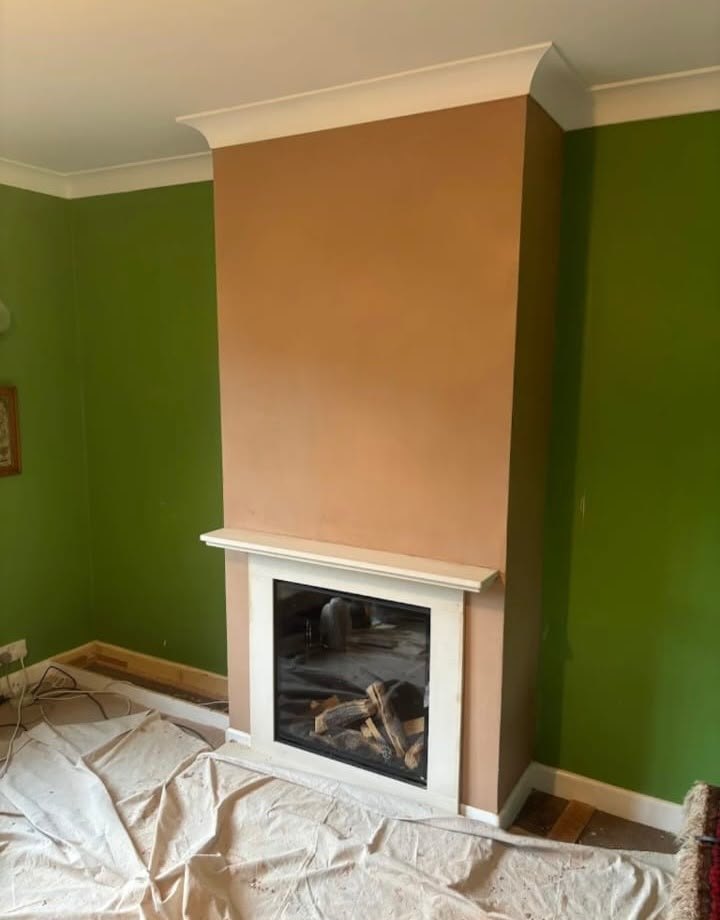
Ring rather than use the form. A ceiling that has started to bow, or plaster that has come off a wall after a leak, can drop without warning. Keep everyone out of the room and switch that circuit off at the consumer unit, not at the light switch.
If water is still coming through, the leak above needs stopping first. On the first visit we make the ceiling safe, take down anything loose and find what caused it, then price the repair. Scheduled work runs Monday to Friday, 8am to 6pm. If you do not reach us, we will ring back as soon as we can.
Worth knowing
What the conservation area changes about the outside
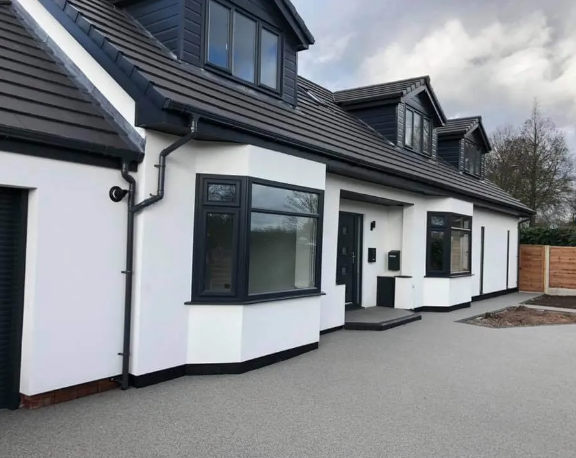
The heart of Stourpaine is a conservation area, and that matters on the outside of the building, not the inside. Repairing and matching what is already on the wall counts as maintenance.
Changing it does not always: taking a soft colourwashed lime render off and putting a modern thin coat system on, or painting an elevation that has never been painted, changes how the building reads in the street, and in a conservation area that is exactly what the council is there to look at. If the cottage is listed, consent reaches indoors too, so stripping historic lime plaster or taking down a lath ceiling should be checked before anyone starts.
There is a practical reason to work with that rather than round it. The soft lime finish is also what keeps these walls dry, so the conservation answer and the building answer are usually the same answer. First, we make up a sample panel and let you and the council see the colour and the texture against the existing before the whole elevation goes on.
Second, lime work is weather dependent: it needs frost free conditions and time between coats, so external work here is planned for spring through to early autumn rather than squeezed into December. If you want the front of the cottage done next year, the conversation is worth having this year.
Who you are dealing with
A Boscombe firm plastering around Stourpaine
From our base in Boscombe it is nineteen miles to Stourpaine. We plaster in the village and across DT11, out through Durweston, Pimperne, Shroton, Bryanston and Blandford Forum, all under Dorset Council. Bournemouth Roofing & Building Ltd is registered in England and Wales and its company number is 15471719. Before you book a visit in Stourpaine, you can read our customers' Google reviews, word for word, on our reviews page.
Thomas Hannen owns it. He comes to tap the walls and writes the price himself. We have a verified 10 out of 10 from a customer on Checkatrade. The visit and your written, line by line quote cost nothing.
Planning at a glance
Do you need planning permission in Stourpaine?
Most repairs in Stourpaine need no application at all. What decides whether a change to the outside of your house does is who the council is, whether a conservation area or a listing applies, and whether the place sits in a protected landscape.
| Question | In Stourpaine |
|---|---|
| Who decides | Dorset Council is the planning authority for Stourpaine. Dorset Council's heritage pages set out what it controls. |
| Conservation area | Yes: Stourpaine Conservation Area. Check whether your street is inside the boundary before changing anything visible. |
| Listed buildings | Yes, there are listed buildings in and around Stourpaine. If yours is one, work can need listed building consent. |
| Protected landscape | Inside the Dorset National Landscape (formerly AONB), so anything visible from outside gets more attention. |
Questions
Questions about plastering in Stourpaine
Does Stourpaine's conservation area apply to the back of the house?
The Stourpaine Conservation Area applies to the building, not only the elevation you see from the road. Stourpaine Conservation Area covers the village, so a change of external finish on a rear wall is still a change even if nobody but you ever looks at it. In practice the council takes most interest in what is publicly visible, which is why like-for-like repair round the back rarely causes trouble and a new coating on the front often does.
Is a cottage near the Church of the Holy Trinity likely listed?
It might be, and standing near the church does not settle it either way. The listed entries in and around Stourpaine run from the Church of the Holy Trinity and its lychgate to Havelins Farm House, and listing follows the individual building instead of the street it sits on. If yours is listed, internal plaster is covered and taking it off needs consent first. If it is not, the conservation area still controls the outside and leaves the inside to you.
What order do you work in on a whole cottage?
Roof and gutters first, then the outside coats, then anything internal. There is no sense putting a finish on a wall while water is still getting into it from above, and in a conservation area the external side often needs its own conversation with Dorset Council, which takes longer than the plastering ever does. So we settle the permissions and the water, then book the wet trades. That order is written into the quote from the start.
What happens if it rains halfway through the outside coats?
We sheet the scaffold and stop for the day. A render coat that gets rained on before it has taken up will craze, and on a nineteen mile run out to Stourpaine we would rather lose a day than come back to it in the spring. An undercoat can sit under sheeting safely for a while, so the sequence is not wasted. If bad weather is coming, the dates move. The work is never pushed on regardless.
Who actually turns up, and who prices the job?
Thomas Hannen comes out to look and price it himself, so the person quoting is the person who has to make it work. The firm is Bournemouth Roofing and Building Ltd, registered in England and Wales, company number 15471719, and both the site visit and the written itemised quote are free. On a village job nineteen miles out he will want to see it once in person rather than working from photographs.
Nearby, and next door
Plastering near Stourpaine
Nearby places we also cover for plastering, with straight-line distances from Stourpaine, and the other trades we offer in Stourpaine itself.
Plastering nearby
Our other trades in Stourpaine
Plastering and rendering guides
Silicone, cement or lime: which render? Cracked render: which cracks matter Hollow-sounding wall: blown plaster or dot and dabEverything we do in Blandford Forum Plastering, all areas Every area we cover
Free quote
Get the ceiling or the damp wall looked at before next winter
We will tell you what is failing and why, show you a sample where the finish has to match, and give you a free written itemised price.