Roofing in Stourpaine
Roof repairs, chimney and valley leadwork, re-covers, flat roofs and gutters across Stourpaine and the DT11 villages. Same team throughout, itemised in writing.
The site visit is free and so is the written itemised quote. Thomas Hannen prices every job himself.
Being in a conservation area does not stop you repairing your roof. Putting back what is already there is maintenance and needs no application at all. What needs permission is changing the look of the roof, and that is a much shorter list than most people in Stourpaine assume.
The three things people ring about here are a stain that has appeared under a chimney breast, a tile or slate that has come off a steep old slope, and a roof that has quietly reached the end without anybody noticing. The last one usually turns up when a survey flags it during a sale.
We come out, get a proper look from a platform, put our head into the loft and photograph what is actually there. Then you are told which of those you have and what it will take to put right. Eighteen miles from us and we are up the Stour valley most weeks. The site visit and the written itemised quote are both free.
The work
It nearly always starts at the stack
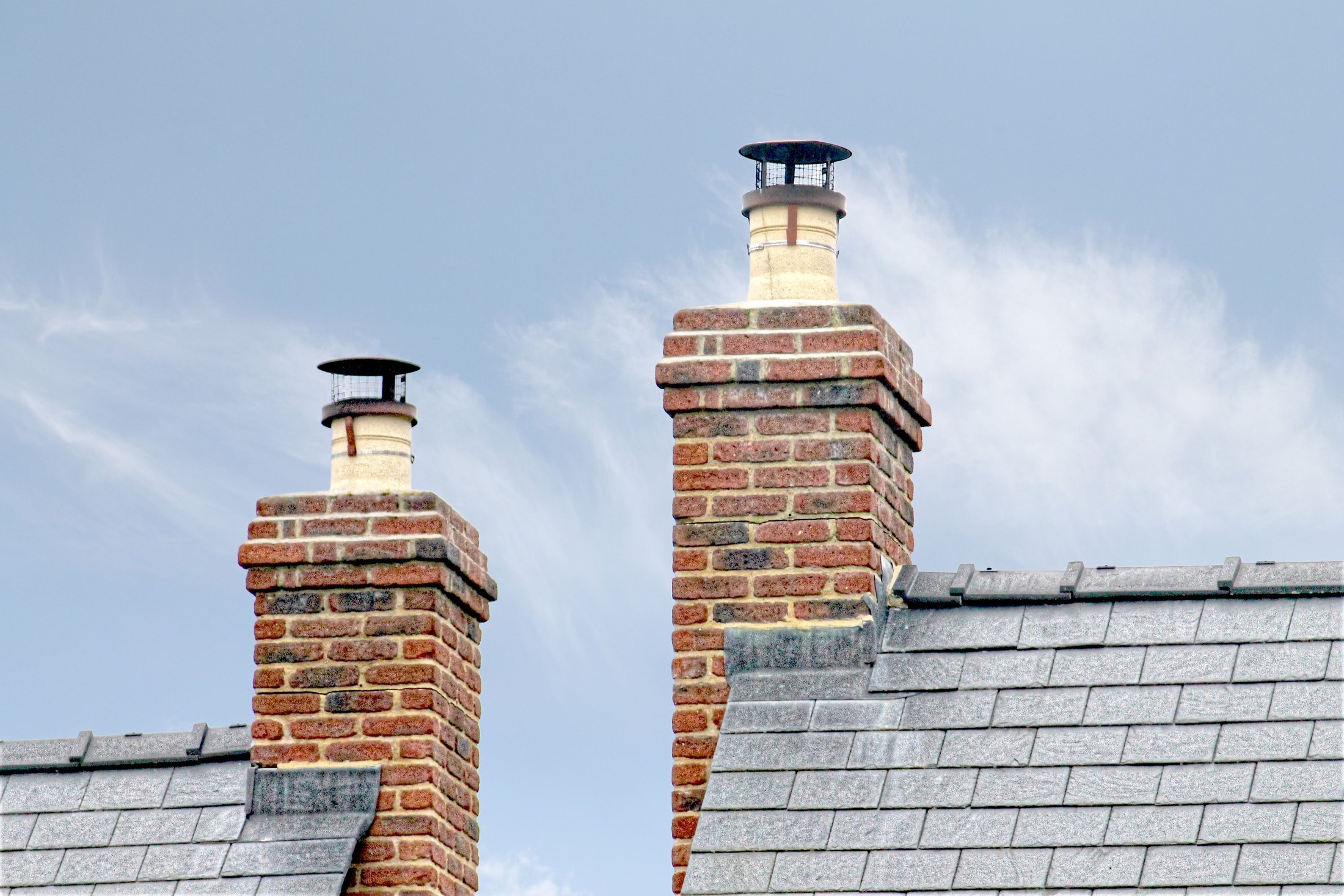
Chimneys and the junctions round them. More of our work here starts at a stack than anywhere on the slope. The old brick chimneys are tall and exposed, and the flashing round them is often a mortar fillet that has cracked away rather than lead. We cut in code rated lead flashings, soakers and back gutters, replace broken flaunching, and cap redundant stacks with a vent rather than sealing them, so the flue can breathe. Cottages here have grown in stages, and every stage added an abutment or a valley. One lined with anything other than lead is usually why we have been called.
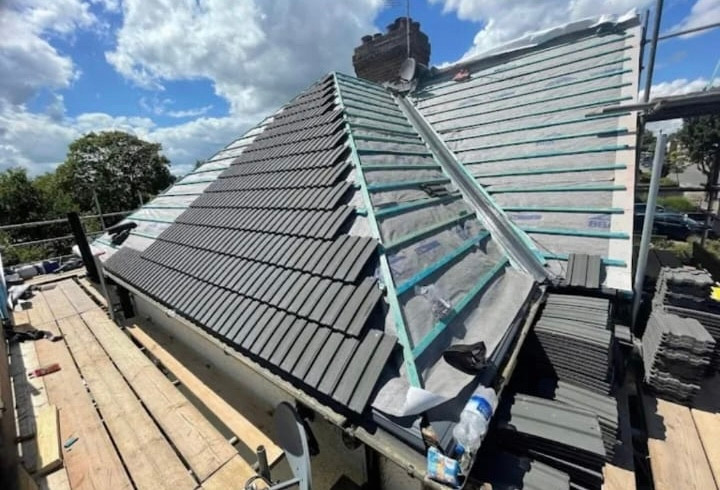
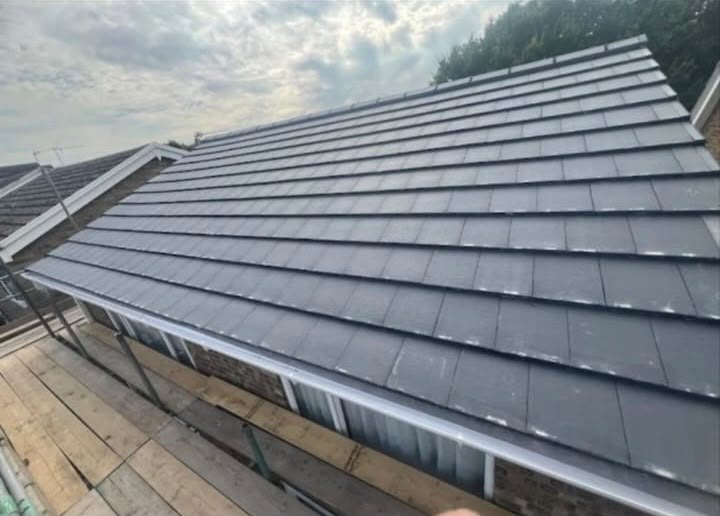
Coverings, pitch and edges. The village runs to plain clay tile on the older cottages, natural slate on the Victorian work, and interlocking concrete tile on the later infill. A plain tile roof of that age is hung on nibs and pegs rather than nailed throughout. Several roofs here were thatched once and tiled afterwards. Thatch is laid at a steep pitch and not every covering that replaced it suits the slope, so where the pitch is marginal driven rain gets under the lap. That is a specification problem rather than a fault, and we will say so. On a modern roof we strip the cracked mortar bedding and convert to a dry fix system, dry ridge and dry verge screwed onto a ventilated roll, the mechanical fixing BS 5534 expects; on a sensitive roof in the conservation area the ridge is re-bedded in a lime rich mortar to match.
Older roofs here have battens straight over the felt with no sarking board behind, so a re-cover goes back on breathable membrane and treated battens after soft rafter feet come out. A steep roof throws a lot of water into a small gutter, so an undersized or sagging run overflows before it blocks. Leaf debris fills it anyway, so clearing the rainwater goods, gutters and downpipes both, saves the fascia and soffit behind them, and algae greens any slope that never dries. There is thatch in the village and we are not thatchers: we take the tiled roof beside it and the lead at the junction only. Insulation and eaves ventilation are far cheaper with the covering off, and Approved Document L sets the standard a renovated roof should reach.
How it runs
From your call to a written price
One team, one person to ring, and an itemised quote you can hold against anyone else's. Stourpaine has a conservation area of its own and around two dozen listed entries in the parish, so we check the address before we price rather than afterwards. A repair and a like for like re-cover are maintenance either way and need no application, within the limits Planning Portal guidance sets out. Changing the covering for a different material, or putting a rooflight or panels on a slope that can be seen from the street, is a change of appearance and needs planning permission here. A listed building needs listed building consent whatever the work. Dorset Council for building control.
Cost
What decides the price of a roof
No rate per square metre. The lanes through the village are narrow and a lot of houses front straight onto them, so where the platform stands, scaffold or tower, has to be worked out before a date is booked. Old roofs here are steep, which makes them better at shedding water and slower to work on. The platform is a priced line rather than an extra, because work at height rules apply. Ask any quote whether the scaffold is included, whether the underlay is renewed, and who takes the old covering away.
If it is leaking now
Water coming in today
Ring rather than use the form. Anything letting water in goes to the front of the queue, and the first visit is about making it safe. If you are in the conservation area, putting a temporary cover over a hole needs nobody's permission and nobody's consent, so deal with the water first and sort the permanent repair afterwards. The phone is answered 24 hours for emergencies; scheduled work runs Monday to Friday, 8am to 6pm.
Worth knowing
What the conservation area actually stops
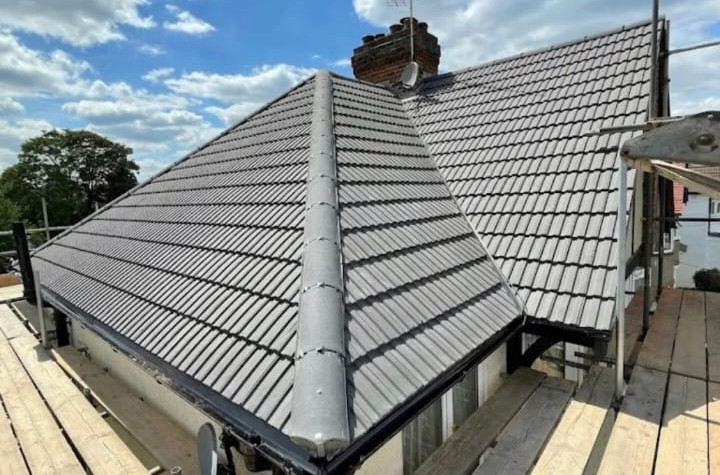
Stourpaine is in a conservation area of its own, and the single most useful thing we can tell you about it is what it does not do. It does not stop you fixing a leak, re-fixing a slipped tile, re-bedding a ridge, renewing a gutter or stripping and re-covering in the same material. All of that is maintenance and no application is needed.
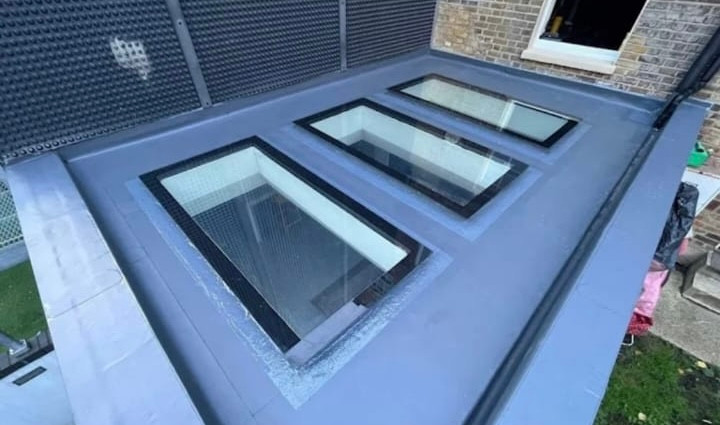
What it controls is appearance. A change of covering, panels or a rooflight on a slope that is visible from the road, and work that alters a chimney are the things that get looked at. Around two dozen entries in the parish are listed as well, and those need consent whatever the work, however small.
We say this because people here put off repairs for a year on the assumption that the council has to be involved, and a year is exactly how long it takes a small leak to turn into new rafter feet and a new ceiling. Send the address with your enquiry, we will establish which of the three positions your house is in, and it will be on the quote in writing.
Who you are dealing with
A local firm you can check
Eighteen miles from us, covering Stourpaine and the DT11 villages up the Stour valley towards Blandford, with Dorset Council for planning and building control. Bournemouth Roofing & Building Ltd, registered in England and Wales, company number 15471719, which you can look up in a minute. Thomas Hannen's business, and he is the one who comes out to price the job, not a salesman. A verified customer's 10 out of 10 on Checkatrade. The visit and the written quote are both free.
Questions
Stourpaine questions we get asked
Like for like in the conservation area, is that just maintenance?
In the main it is. Stourpaine Conservation Area controls appearance, so replacing what is there with the same thing, in the same colour and the same coursing, reads as repair rather than change. It stops being maintenance the moment the material, the profile or the colour shifts, or a new opening appears in a visible slope. Dorset Council holds the boundary map and will say whether your address is inside it.
How do I find out whether my cottage is listed?
The list is public and Dorset Council will confirm it from your address in a phone call. There are 26 listed entries in and around Stourpaine, from the Church of St Nicholas to Durweston Bridge, and plenty of ordinary looking cottages sit on it. Listing is separate from the conservation area. One follows the building and the other follows the boundary, and many places here are under both.
The roof is seen from the hill above. Does that change anything?
It brings the finish into the argument. Stourpaine falls inside the Dorset landscape designation, where whatever is visible attracts design scrutiny, and a village roof read from higher ground is about as visible as roofs get. A tile that weathers in and lies flat photographs very differently from a glossy one. We would sooner agree a sample with the council than lay the same roof twice.
The leak is at the chimney flashing. Is that a stack job?
Not usually. Most chimney leaks turn out to be the flashing, the soakers or the cement fillet round the base rather than the stack itself, and those are replaced without disturbing the brickwork. What forces the bigger job is spalling brick above the roof line and a pot that is no longer bedded, which you can often pick out from the ground on a clear day. We look before quoting either.
How many days does a small area of stripping take?
One slope on a cottage is normally two to four days on the roof, plus a day either side for the scaffold going up and coming down. Older roofs overrun more often than newer ones because what is under the covering stays unknown until it is off. If we find rotten rafter feet we stop, show you what we have found, and price that separately before going on.
Nearby, and next door
Roofing near Stourpaine
Roofing nearby
Our other trades in Stourpaine
Roofing guides
Concrete vs clay roof tiles: which is right? Planning, building regs or listed building consent Storm damage to a roof: the first 24 hoursEverything we do in Blandford Forum Roofing, all areas Every area we cover
Free quote
Get your Stourpaine roof priced properly
A free site visit and a written itemised quote you can compare line by line. Send the postcode and what you have noticed.