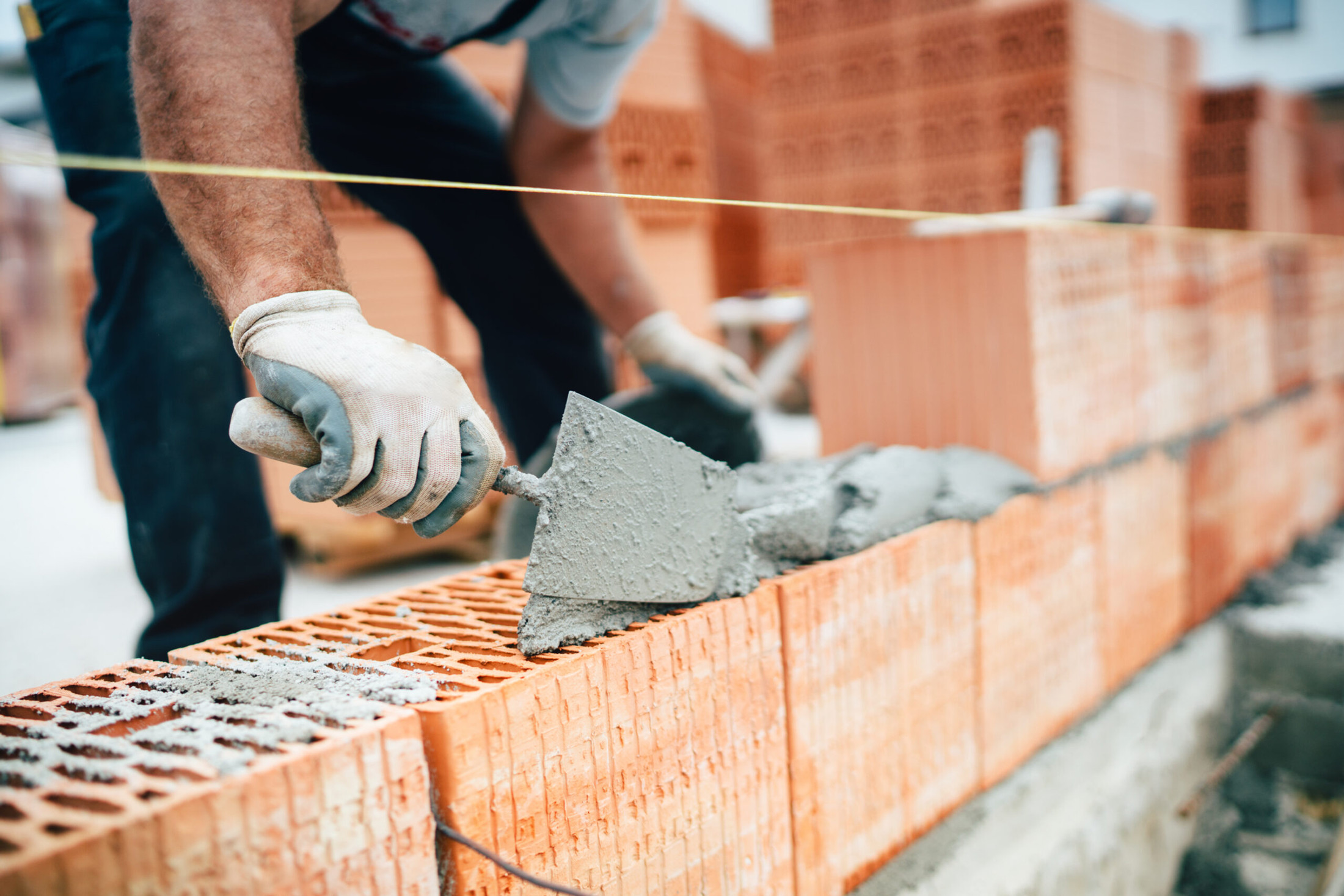
Bricklaying and repointing in Stourpaine
Lime repointing on flint and brick, chimney stacks, copings and boundary walls in Stourpaine and the Blandford villages.
The site visit is free and so is the written itemised quote. Thomas Hannen prices every job himself.
Bricklaying and repointing
Repointing in Stourpaine: what we do, and what we put back
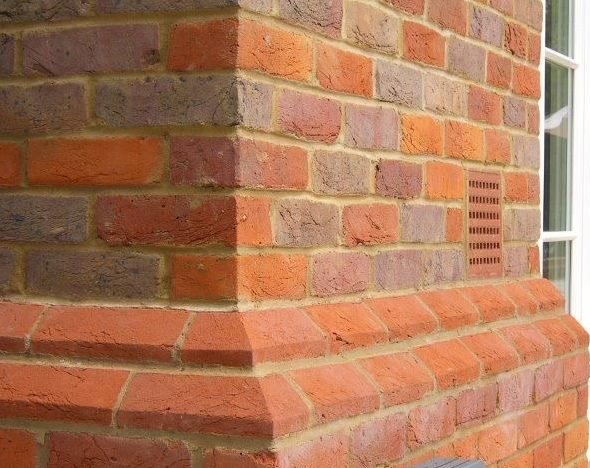
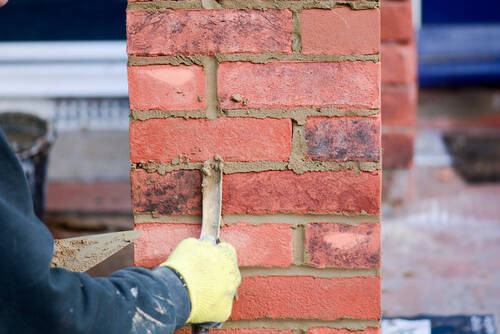
Somebody pointing over the flint faces in hard cement has done nearly all the damage we find in Stourpaine. Most of the walls we are called to here are flint with brick banding and dressings, and on that kind of wall the mortar is doing two jobs at once. It keeps the rain out and it holds the flints in. So the joint gets raked back by hand and replaced in an NHL lime mix, and the sound work is left alone.
Three sorts of call come in from the village. Flints working loose out of a wall, usually at the top of a boundary run or under a broken coping. Soft red brick around a window or a doorway crumbling behind a band of cement pointing that is still hard. And a chimney stack shedding flaunching, sometimes onto thatch, which is the one nobody should leave.
We come and look at the wall in daylight and tap it, because a face that sounds hollow and a face that is only dirty want completely different work. You get a survey in plain language, a note of what will keep for a few years, and an itemised written price for the part that will not. The site visit and the quote are both free.
The work
The brickwork jobs we do in Stourpaine
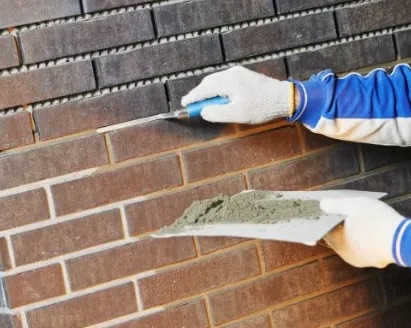
Flint walls, pointed to the flint and not over it. Flint takes in no water itself, so every bit of the weathering happens in the joint. The commonest fault we undo here is a wall pointed with the mortar smeared out over the face of the stones, which looks solid for a decade and then sheets off taking flints with it. Done properly the mortar sits back at the flint face, the stones read as stones, and the joint sheds water. We rake out by hand only as deep as the wall will safely give up, brush and damp it down, and point in an NHL lime mix with the sand matched for colour and grain.
Cement on soft brick, and when to leave it. The brick banding, quoins and window dressings are soft and were laid in lime, and hard cement in those joints traps water in the brick so the first serious frost takes the face off. Where the cement has cracked away and is holding water it comes out and goes back breathable. Where it is sound and the brick behind it is whole, we say leave it. That judgement is made wall by wall on the first visit, not by a rule.
A stack over thatch has to stand well clear of the ridge, which leaves a lot of soft brickwork exposed on every side, so we rebuild course for course, keep the original brick where it will still serve, and re-form the flaunching so it sheds. That is work at height off a tower or a scaffold under work at height rules, and the platform is its own line. The flint and brick walls along the lanes and around the churchyard start going at the top: we rebuild bowed lengths, reinstate brick on edge or tile creasing, and reset gate piers shoved by roots or a vehicle.
How it runs
From your call to a written price
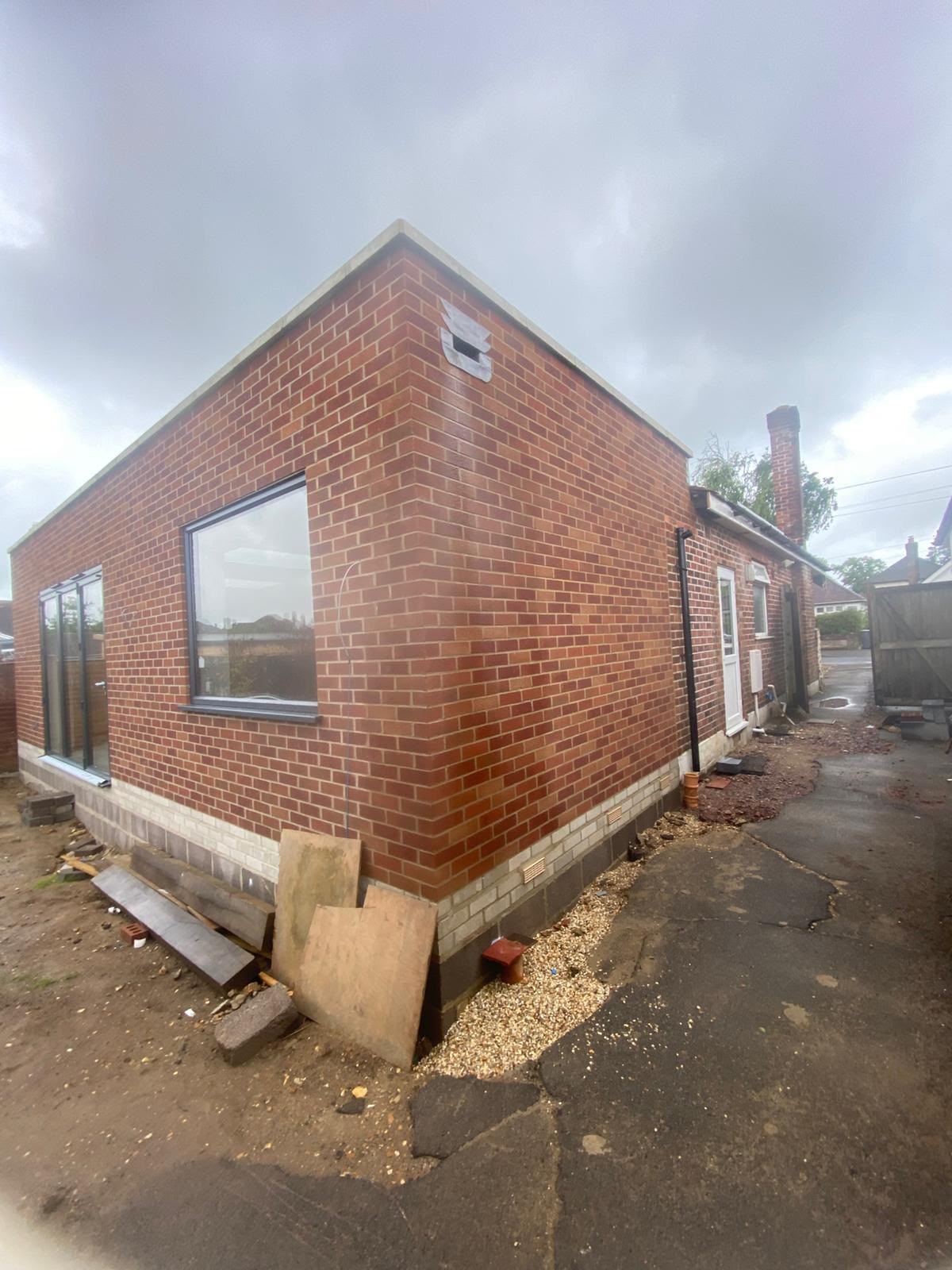
The quote is itemised by elevation: access, raking out, the mix, brick replacement and disposal on separate lines. The village sits in the Stourpaine Conservation Area, inside the Dorset National Landscape. Repairing like for like is still maintenance and needs no planning permission. If your house, its outbuilding or its garden wall is one of the twenty six listed entries here, repointing is alteration in its own right and needs listed building consent before a joint is opened. A new or raised boundary wall has height limits set out in Planning Portal guidance on garden walls, structural work goes through building control, and anything on a shared boundary brings in the Party Wall etc. Act 1996.
Cost
What decides the price of a brickwork job
No rate per square metre: the metre of wall tells you nothing until you know what the joints are like. A cottage on the village street with the footway right under its wall, a house with its own drive and room for a tower, and a long flint wall on a bank. How long a platform stands matters as much as its size, and the work at height rules are why it is a priced line rather than an optional extra. On flint the joints are deep and irregular with nothing flat to work off, so the hours come from the wall itself.
If something has moved
Loose brickwork, or a wall that has shifted
Ring rather than use the form. Anything overhead or leaning goes to the front of the queue: the first visit makes it safe, and we price the permanent repair once we can see how far the movement goes. In the village it is most often a stack on an older roof, or flint wall bulged at the top. The phone is answered 24 hours for emergencies; scheduled work runs Monday to Friday, 8am to 6pm.
The one local thing
In a conservation area the argument is about what was there before
Stourpaine is a conservation area from end to end, and the practical effect on brickwork is narrower than people fear. The repair itself is not controlled. What the wall looks like when you have finished is. Put back the same material, the same mix and the same joint and you are maintaining a building, which needs no application.
Change the look of it and you are altering the character of the area, and a soft flint and red brick elevation repointed in grey cement with the mortar run out over the stones reads as a different building from thirty yards down the lane, whatever the invoice says. That is the one that gets somebody a letter.
So the useful thing you can do costs nothing. Before anybody opens a joint, photograph it close up in good light and keep a lump of the old mortar in a bag. If a question is ever asked, that is the evidence of what was there, and without it the conversation becomes an argument about memory. Two more points worth knowing.
Being in the conservation area is not the same as being listed, and the parish has plenty of both, so check your own address rather than assume. And start early: an application takes weeks, while lime wants mild damp weather to cure in and will not be rushed in a July heatwave or a February frost. Spring and autumn are the seasons for this work, and they book up.
Who you are dealing with
A local firm you can check
We cover Stourpaine, Blandford Forum, Durweston, Iwerne Minster and the DT11 villages, and we are about eighteen miles out, so we come out to look properly rather than price a wall off a photograph. Bournemouth Roofing & Building Ltd, registered in England and Wales, company number 15471719, which you can look up in a minute. Thomas Hannen's business, and he is the one who comes out to price the job, not a salesman. A verified customer's 10 out of 10 on Checkatrade. The visit and the written quote are both free.
Questions
Stourpaine questions we get asked
What is controlled by the Stourpaine Conservation Area?
How the village looks, and that includes the mortar. Repairing like for like needs nothing from Dorset Council. Two things catch people out in Stourpaine: taking down a boundary wall is not automatically permitted inside a conservation area, and a change of material still counts when the wall faces the back garden rather than the street. We check what is designated and what is proposed before anything is demolished, not afterwards.
Radon shows on the map here. Does it affect repointing?
Not repointing, no. Stourpaine falls in the lowest mapped band, 1 to 3 percent, where no radon protection is required at all, so it does not even reach an extension here in the way it would elsewhere in the county. It has no bearing on mortar, on ties, or on a wall rebuilt above ground. It is worth saying because people ask, not because it changes a single thing we do.
Durweston Bridge is listed. What about the cottages?
Some of them are. There are 26 listed entries recorded in Stourpaine, Durweston Bridge and the Church of St Nicholas among the better known ones, and plenty of ordinary village addresses appear as well. Listed building consent covers a repoint, because the mortar is part of the historic fabric rather than a finish applied over it. Look your address up first and, if it is there, that conversation happens before the scaffold does.
How do you settle on a mix for an old wall?
By copying what came out. Colour in a mortar comes from the sand rather than the binder, so we take a sample of the original from a sheltered joint, break it down and mix against it. Then we lay a test panel about a metre square somewhere out of sight and leave it to dry, because wet mortar always looks darker than it will finish. You approve the panel before the elevation is started.
Where does the scaffold go on a wall against the lane?
Partly on the highway in most cases, which means clearing it with Dorset Council before it goes up rather than after a complaint. On a village street we keep the standards tight to the wall, board out a walkway underneath where there is a footpath, and light the ends of it. If the lane is too narrow for any of that, we work off a tower in shorter sections and move along the elevation.
Nearby, and next door
Bricklaying and repointing near Stourpaine
Bricklaying and repointing nearby
Our other trades in Stourpaine
Everything we do in Blandford Forum Bricklaying and repointing, all areas Every area we cover
Free quote
Get a written price for your brickwork in Stourpaine
Tell us what the wall is doing and we will come and look at it properly. Free visit, itemised written quote, and no pressure afterwards.