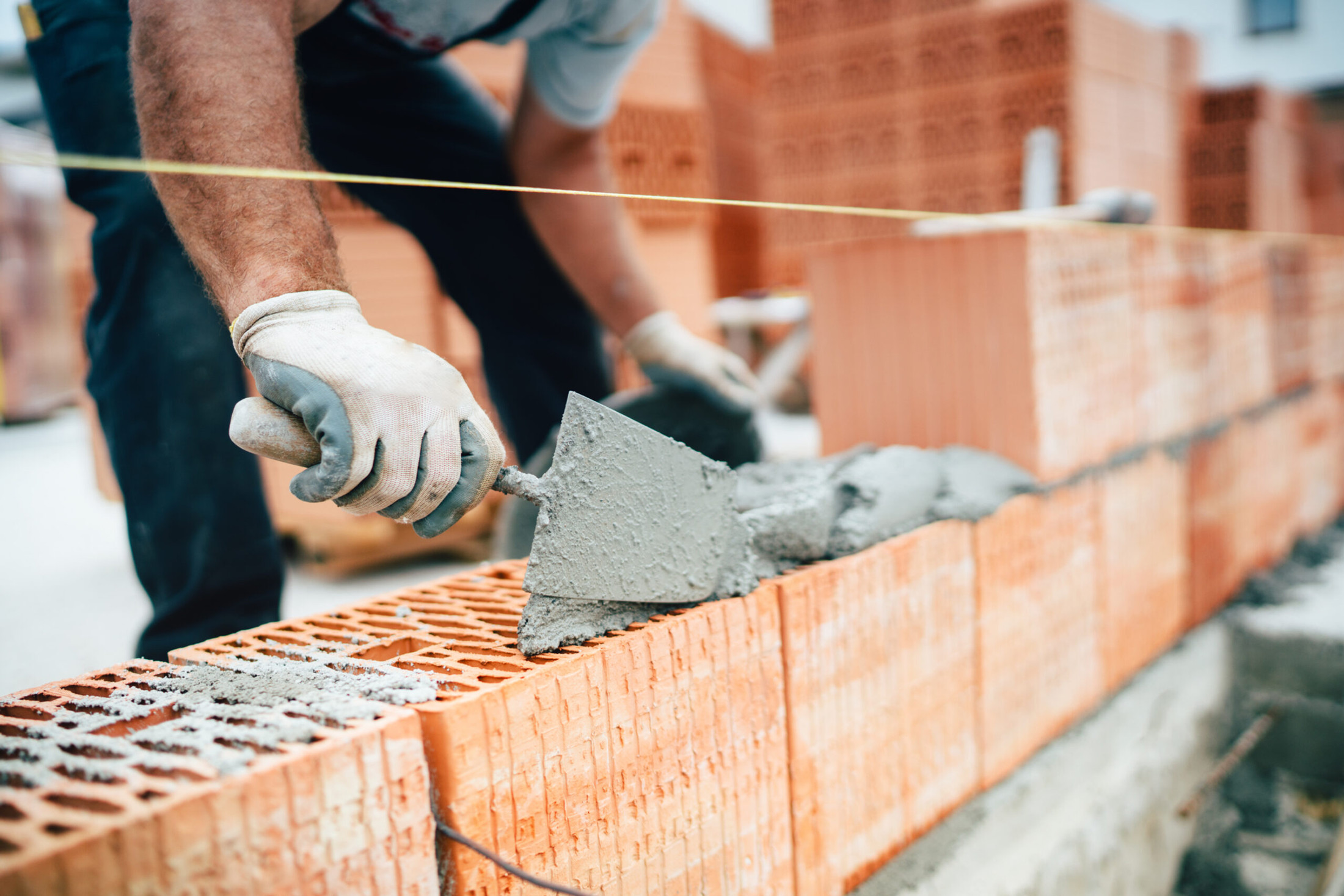
Bricklaying and repointing in Iwerne Minster
Flint, brick and lime work in the Iwerne valley. Raked out by hand, pointed back in a mix matched to your wall, and a written price before anything starts.
The site visit is free and so is the written itemised quote. Thomas Hannen prices every job himself.
Most walls in Iwerne Minster that look like they want rebuilding only want the joints raking out and repointing. On flint and soft old brick that has to be a lime mortar, because the joint is meant to be the part that wears rather than the wall.
People here ring us about one of three things. A wall that was pointed in hard cement at some point in the last fifty years and is now dropping brick faces and flint after every cold snap. A boundary wall along the lane that has started to lean, bulge or shed a coping stone. Or a chimney stack that has gone soft at the top and is washing mortar down into the gutter.
All three are repairs rather than rebuilds if they are caught before the wall itself starts to move, and the sooner someone looks the smaller the job stays. We come out for a free site visit, look at the whole elevation rather than the patch you have noticed, photograph what we find, and put the mix and the method in writing so you know exactly what you are buying.
The work
The brickwork jobs we do around Iwerne Minster
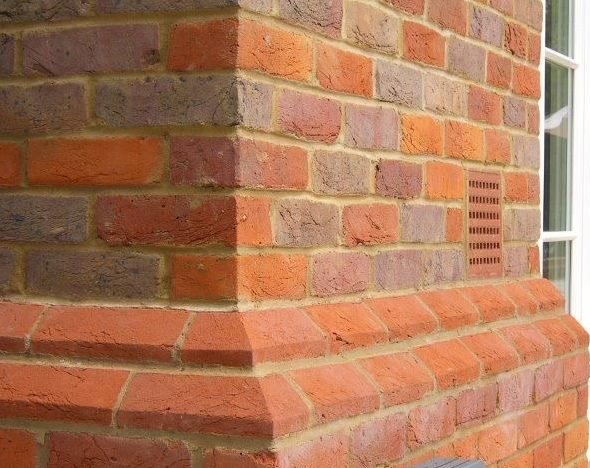
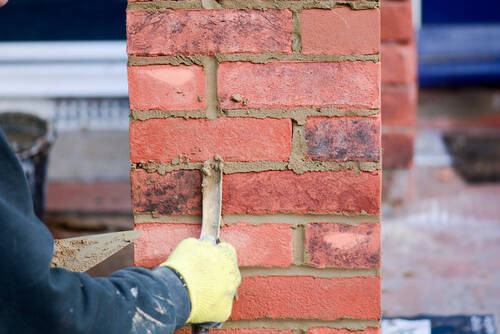
Repointing flint and brick. A good deal of the older village is flint and greensand rubble with brick dressings round the openings and brick quoins at the corners, and there is banded flint and brick on plenty of it. Nearly four in ten homes here predate 1919. That wall went up in lime and it has to stay in lime. We rake the joints out by hand to roughly twice their width, wet them out, and point back in an NHL lime gauged with a sand matched to what is already there. On flintwork the finish is normally a slightly recessed flush joint, sometimes galleted with small chips pressed into the mortar the way the original was done. We make up a sample panel first and leave it a few days, because lime lightens as it dries.
Undoing a cement repoint. This is the most common job we do in the village. A solid wall is breathable by design, and hard cement stops water leaving through the joint, so it leaves through the brick or the flint instead and takes the face off at the first hard frost. Once spalling has started we cut out the worst bricks, replace them with reclaimed or handmade stock of the same size, and take the pointing back to lime so the joint does the suffering again. Stacks up here are exposed on every side and usually fail first: re-flaunching, repointing, cutting out spalled brick and rebedding the pots. Where a stack has real movement we rebuild from the last sound course rather than point over it.
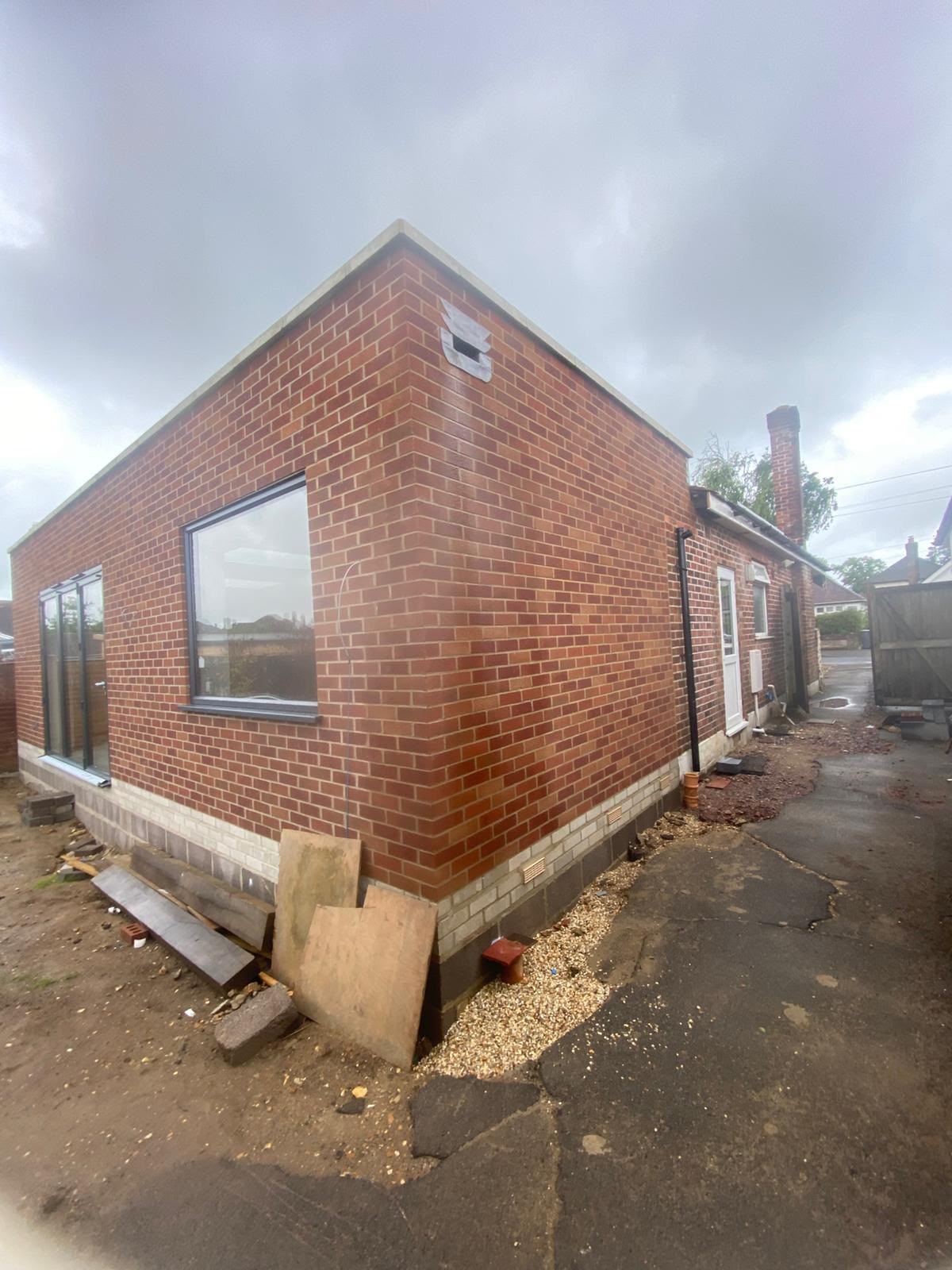
Flint and brick walls run along the lanes and the driveways, with brick piers, half round or saddleback coping and a gate pier at the entrance. They almost always fail from the top down: once the coping lets water into the core the wall bows, then the piers move. Rebuilding a bowed section back onto its own footing and getting the coping properly bedded is usually a day or two. If you are putting up a new wall rather than repairing an old one, Planning Portal guidance on garden walls sets out the height you can go to without planning permission, and if it sits on the line with next door then the Party Wall etc. Act 1996 applies. Extensions, garages and rebuilt gables are cavity work: blockwork inner leaf, facing brick outer leaf, ties at the right centres and a damp proof course you can see. Cutting a new lintel into an existing wall, or rebuilding a brick arch over an old window, is building control work rather than maintenance, and we say so before we quote rather than after.
How it runs
From your call to a written price
Same team from the first visit to the last, one person to ring, and the quote itemised: access, raking out, the mortar mix, the area of each elevation, any brick replacement and disposal on separate lines. Iwerne Minster has its own conservation area and 40 listed entries in the parish, the church and The Chantry among them, so we check which side of that line your address falls on before we price anything. Repointing like for like is repair and needs no application. Changing the mortar, the brick or the look of the wall on a listed building needs listed building consent from Dorset Council first, and Planning Portal guidance on external walls covers the unlisted case.
Cost
What decides the price of a brickwork job
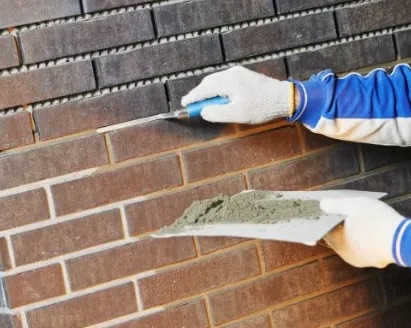
No rate per square metre: the metre of wall tells you nothing until you see the joints. A flint boundary wall you work off the ground, a village semi with a brick gable and a stack on a detached house all differ. How long the platform stands matters as much as its size, and the work at height rules are why it is a priced line. Raking by hand is slow, so joint depth and spalled faces decide the hours, and matching a mortar or sourcing a brick takes trial panels. Ask how deep joints are raked, by hand or disc, and whether the scaffold is in.
If something has moved
Loose brickwork, or a wall that has shifted
Ring rather than use the form. Anything overhead or leaning goes to the front of the queue. Several of the older flint and brick boundary walls here run straight along the lane, so if one is leaning towards a footpath say that when you ring and it goes first. The first visit is about making it safe. The phone is answered 24 hours for emergencies; scheduled work runs Monday to Friday, 8am to 6pm.
Worth knowing
Repointing in the conservation area, and what needs consent
Conservation area status controls how the village looks, not whether you are allowed to maintain it. Repointing an unlisted wall in the same mortar, to the same joint profile, is maintenance and there is nothing to apply for.
What is not maintenance is a change: rendering a brick front, swapping a recessed flush joint for a proud weather struck one, or using whatever brick happens to be on the merchant's pallet instead of a matched one. Those alter the appearance from the street, which is the thing the designation exists to hold on to, so it is worth a phone call to the conservation officer before you commit rather than after.
If your house is listed the test is stricter again, and it does catch repointing. Cement pointing on a listed cottage has caused a lot of grief in villages like this one, because it quietly damages the fabric it was meant to protect and putting it right afterwards costs more than doing it in lime would have.
Consent covers the whole building inside and out, and a boundary wall standing in the curtilage of a listed house is usually listed with it, which catches people out. Our practical advice is simple: get someone to tell you in writing what mix is going on your wall before you accept a price. We photograph the elevation, write the mix and the joint finish into the quote, and you have something you can send to the council.
Who you are dealing with
A local firm you can check
We work through Iwerne Minster and the villages up and down the valley, Iwerne Courtney, Fontmell Magna, Child Okeford, Stourpaine and into Blandford, and across DT11 generally. Bournemouth Roofing & Building Ltd, registered in England and Wales, company number 15471719, which you can look up in a minute. Thomas Hannen's business, and he is the one who comes out to price the job, not a salesman. A verified customer's 10 out of 10 on Checkatrade. The visit and the written quote are both free.
Questions
Iwerne Minster questions we get asked
How is repointing handled inside the Iwerne Minster conservation area?
Like for like repair counts as maintenance and needs no application. The Iwerne Minster Conservation Area controls appearance, so returning the same mortar to the same joint profile is fine while altering the material or the finish is not, and Dorset Council decides. What does get noticed is grey cement worked into a ribbon joint in a village where 39.6% of the buildings predate 1919. We match the sand and keep the joint flush or very slightly set back from the face.
Why is the inside wall damp when the pointing looks fine?
Because a solid wall dries in both directions, and if the outer face has been sealed the moisture takes the only route left to it. Nearly four in ten dwellings at Iwerne Minster predate 1919, the largest block of them pre 1900, so most of these walls have no cavity anywhere in them. Hard mortar, plastic paint or a cement render all trap water inside. We reopen the joints and let the wall breathe before anyone talks about damp proofing.
The Church Of St Mary is listed. Are the cottages too?
A great many of them are. Iwerne Minster carries 40 listed entries, the Church of St Mary and The Chantry among them, and in a village this size that reaches plenty of ordinary houses and their boundary walls. Listing takes in the whole building, mortar included, so consent comes before any cutting out. Dorset Council will confirm whether yours is on the list, and we check that ourselves rather than discovering it with a disc in hand.
Will the Cranborne Chase designation affect a new garden wall?
It shapes how the wall looks rather than whether you may have one. Iwerne Minster sits inside the Cranborne Chase and West Wiltshire Downs landscape designation, where anything visible from the road or across the valley attracts design scrutiny. A wall in matching stone or brick with a traditional coping passes without comment. A long run of bare concrete block, or a height that shuts off a view, is what draws objections. We build in what the village already uses.
Can a leaning boundary wall be saved, or does it come down?
It turns on where the lean starts. If the wall is out of plumb from the footing upwards the ground has moved and it comes down and goes back on a proper base. If only the top few courses have rolled and the rest is straight, the coping and that section come off and get rebuilt. On the freely draining ground at Iwerne Minster the usual culprit is a footing that was never more than a trench of rubble.
Nearby, and next door
Bricklaying and repointing near Iwerne Minster
Bricklaying and repointing nearby
Our other trades in Iwerne Minster
Everything we do in Blandford Forum Bricklaying and repointing, all areas Every area we cover
Free quote
Get a straight answer on your wall
A free site visit in Iwerne Minster, photographs of what we find, and an itemised written quote with the mortar mix on it.