Bricklaying and repointing in Ashmore
Lime repointing, brick and flint repair, chimney work, boundary walls and new brickwork in Ashmore and SP5. Free site visit, free written itemised quote.
The site visit is free and so is the written itemised quote. Thomas Hannen prices every job himself.
On an old wall in Ashmore the mortar is meant to be the part that wears out. It should be softer than the brick or the flint around it, so the weather takes the joint and not the face. If somebody has repointed in cement and the brick faces are now flaking, that is the mortar doing damage rather than the wall failing, and it can be put right.
Most of the brickwork we are asked to look at in Ashmore is old. The village has its own conservation area and twenty six entries on the national list, so a good deal of what we price is a cottage, a barn, an outbuilding or a wall along a lane rather than anything modern. The usual calls are open joints letting weather into a solid wall, brick faces flaking off after an earlier repointing job, a chimney with the mortar gone, or a boundary wall that has started to lean out over the verge.
None of that is emergency work, and none of it is quick work either. The survey is where the job is decided: what the original mortar actually is, how deep the joints are sound, whether the wall is drying through the mortar or through the face, and whether consent is going to be needed before a trowel comes out. The site visit is free, the written quote is free and itemised, and we would rather tell you a wall wants leaving alone than take money for making it worse.
The work
What we do to brickwork in Ashmore
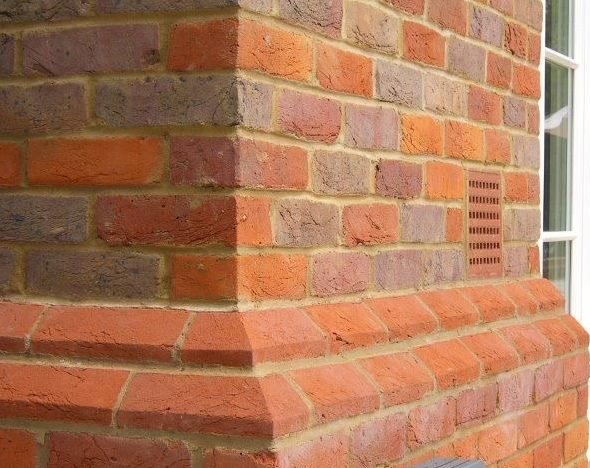
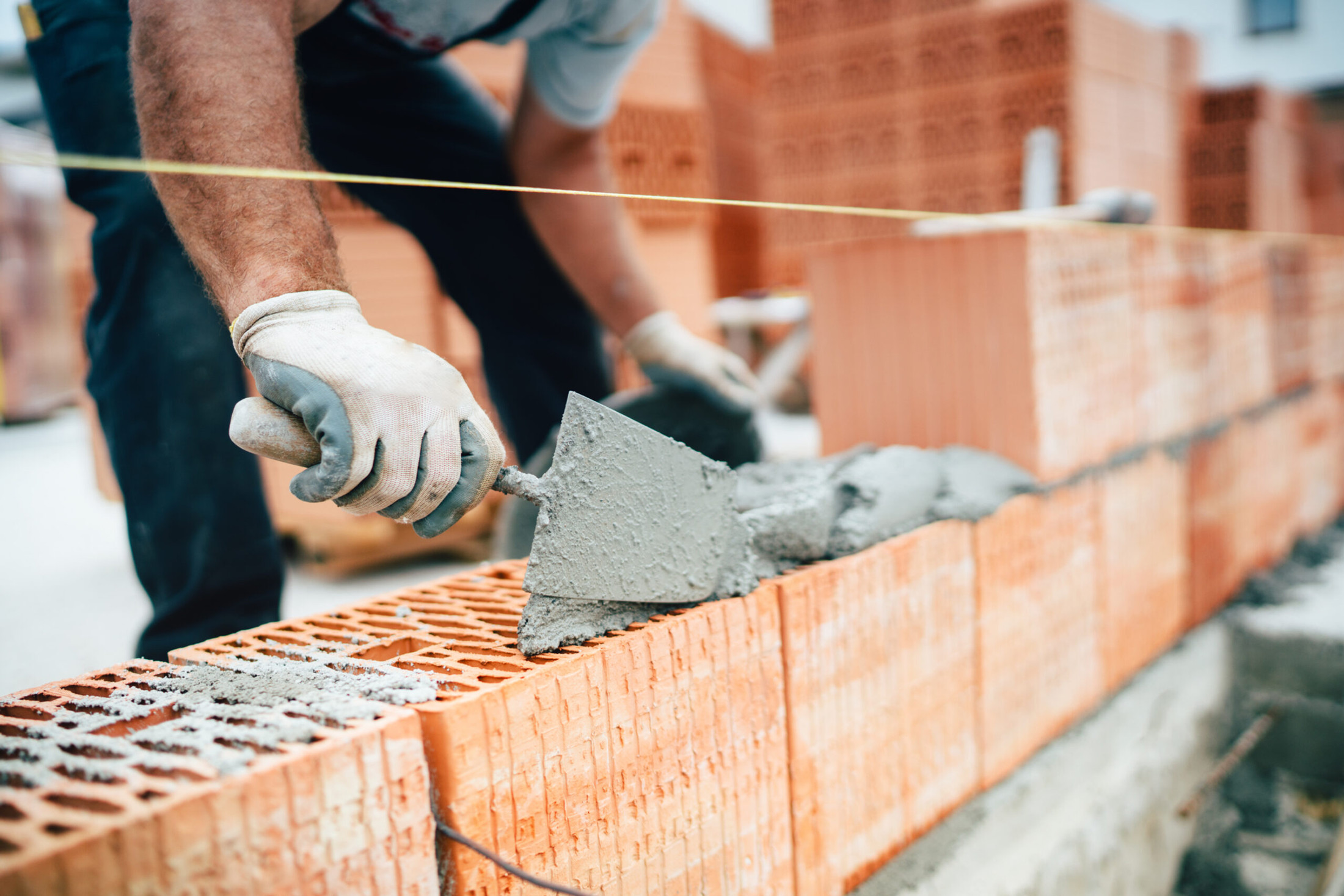
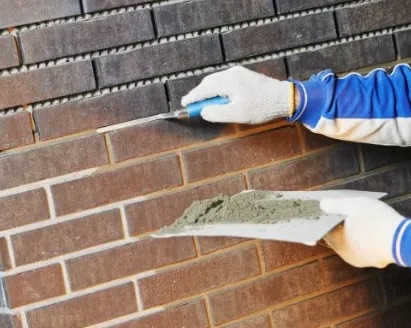
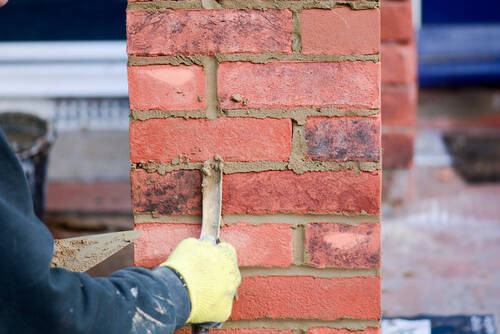
Lime repointing on solid walls. An old wall in Ashmore has no cavity. It keeps the weather out by being thick and it dries out through its own surface, so the pointing has to stay breathable. Joints are raked by hand, never with a disc cutter, to about twice their depth and back to mortar that is genuinely sound, then put back in a lime mix, usually an NHL with a well graded sharp sand matched to what was there for colour and texture. The finish is normally flush or slightly recessed on an irregular brick rather than weather struck. The work is damped down, covered and left to carry for days rather than hours, and that protection and that waiting time are real work that belongs on the quote.
Flint, brick, and the walls of the lanes. Where a wall is flint with brick dressings, or flint with brick lacing courses, the repair is a different trade again. Raking too deep on flint takes the bedding out from under the stones and loosens more than it fixes, so the depth is judged face by face. Loose flints are re-bedded, galleting goes back where it was, and the brick quoins, arches and cills that frame the panels are cut out only where the face has genuinely gone. A flint boundary wall that has lost its coping is worth capping again quickly, because the water goes straight down through the core and then the frost does the rest. The lanes here are lined with walls that have been clipped, rooted and rained on for a long time. Bowed lengths come down and are rebuilt off a sound footing in the original material, and gate piers go back plumb.
The commonest damage on old walls in this village was done with good intentions. A hard sand and cement mortar over a soft handmade brick stops the joint breathing, so water leaves through the brick instead, and the first sharp frost lifts the face off in flakes. The cement has to come out and the worst bricks cut out and either turned or replaced, and we source reclaimed brick of the right size and colour rather than settle for a modern one that will never match. Stacks on the old cottages take weather from every side and carry the oldest mortar on the building, so they are repointed, the flaunching renewed and the courses above roof level rebuilt where they have gone soft. The ground here shrinks and swells, which makes where rainwater ends up beside a foundation a structural question and not only a damp one.
How it runs
From your call to a written price
The quote is itemised: access, raking out, the mix, each elevation, brick replacement and disposal on separate lines. Ashmore is different from most of the villages we work in, because appearance here is controlled. The whole village sits in the Ashmore Conservation Area and there are twenty six listed entries in it, so before anything starts we tell you which of three situations applies. Repair like for like is maintenance and needs no planning permission. A change of appearance, or taking down a boundary wall, may need consent under the conservation area rules. Work on a listed building needs listed building consent even for repointing, because the mortar is part of the character. A shared wall brings in the Party Wall etc. Act 1996 on top of all of it.
Cost
What decides the price of a brickwork job
No rate per square metre. Until you have seen the joints the area means nothing. Most of what we price here is a cottage in the village, a barn or outbuilding in a yard, or a flint and brick boundary wall along a lane, and the lanes decide how much can get to the job at once. A chimney or a gable wants a scaffold, and how long it stands is why work at height rules make access a priced line. Raking by hand is slow, and joint depth and spalled faces decide the hours. Ask how deep, by hand or disc, what mix, and whether scaffold is in.
If something has moved
Loose brickwork, or a wall that has shifted
Ring rather than use the form. Anything overhead or leaning goes to the front of the queue, and the first visit makes it safe before we price the permanent repair. In Ashmore that is usually a flint boundary wall that has lost its coping and is shedding into the lane, or a stack with the joints washed out below the pots. The phone is answered 24 hours for emergencies; scheduled work runs Monday to Friday, 8am to 6pm.
One local thing
What the conservation area really controls
Conservation area status does not stop you repairing your house, and that is the thing people here most often get wrong in both directions. Repointing a wall like for like, in the same material and the same joint finish, is maintenance and nobody needs to approve it.
What the designation actually controls is change: painting or rendering over bare brickwork, swapping a coping for a different one, or demolishing a boundary wall above a modest height. That last one catches people out, because a garden wall feels like your own business, and in a conservation area taking one down can need consent even when rebuilding it does not. If your wall fronts a lane and it is going to come down, ask first.
On the listed properties, and there are a good many here, the mortar itself is part of what is protected, so the practical route is to settle the specification before the scaffold goes up rather than after. That means agreeing the mix, the aggregate and the joint profile, then building a small trial panel in an out of the way spot and having it looked at while it is still a square metre and not an elevation.
It costs a fortnight at the front of the job and it is far cheaper than being asked to rake a finished wall back out. Plan the dates around it too: lime work cannot be laid in frost, so a consent that lands in November usually means a start in spring, and knowing that early is better than finding out in the middle of it.
Who you are dealing with
A local firm you can check
We cover Ashmore and SP5, out across the chase through Sixpenny Handley and Tollard Royal, and down by Fontmell Magna and Iwerne Minster towards Blandford. Bournemouth Roofing & Building Ltd, registered in England and Wales, company number 15471719, which you can look up in a minute. Thomas Hannen's business, and he is the one who comes out to price the job, not a salesman. A verified customer's 10 out of 10 on Checkatrade. The visit and the written quote are both free.
Questions
Ashmore questions we get asked
Does the Ashmore Conservation Area control what my pointing looks like?
It controls the appearance, yes. Inside the Ashmore Conservation Area a like for like repair counts as maintenance, but a change of material or finish does not, so swapping a soft lime joint for a hard cement one is exactly the sort of thing that gets objected to. Dorset Council holds the designation. We work to what is already on the wall, and where the original has gone we take the mix from a sheltered joint under a cill.
How do I find out whether my cottage is listed?
The national list is public and searchable by address, and Dorset Council will confirm it for you. Ashmore carries twenty six listed entries in a very small village, so the odds are far higher here than in most places we work. If yours is on it, repointing in the wrong mortar is work to a listed building and needs consent rather than good intentions. We will not open a joint on a listed wall until that is settled in writing.
Does the Cranborne Chase designation affect a garden wall?
It affects anything visible in the landscape more than it affects the pointing. Ashmore sits within the Cranborne Chase and West Wiltshire Downs, where design scrutiny applies to what can be seen from beyond the plot, so the height and the coping of a new roadside wall matter more than they would elsewhere. Rebuilding an existing wall on its own line at the same height is a different conversation from putting up something new and taller.
You are a long way out. Will you come for a small repair?
We will, but not for an hour of work. Ashmore is close to twenty miles from the yard, so half a day of pointing on its own does not stack up for either of us. What does work is banking the small items together: a cracked cill, a loose coping, two piers and a run of failed joint, priced as one visit. Send photographs and we will tell you honestly whether it is worth the trip.
Why does the wall at the bottom of my garden lean?
Usually because it has no footing worth the name and the ground beneath it moves. Around Ashmore the soil is freely draining, with cohesive pockets that shrink and swell, and an old wall built straight off the topsoil rides that movement until the lean passes its own centre of gravity. Once a wall leans further than its own thickness it is a rebuild and not a repoint, and we will say so rather than patch it.
Nearby, and next door
Bricklaying and repointing near Ashmore
Bricklaying and repointing nearby
Our other trades in Ashmore
Everything we do in Blandford Forum Bricklaying and repointing, all areas Every area we cover
Free quote
Get an honest answer on your Ashmore brickwork
Tell us what the wall is doing and whether the building is listed. We come and look, and the written price includes the protection and the waiting time.