Roofing in Ashmore
Repairs, re-covering, leadwork, flat roofs and rainwater goods in Ashmore, matched to what is already on the roof.
The site visit is free and so is the written itemised quote. Thomas Hannen prices every job himself.
Inside Ashmore Conservation Area a like for like re-covering counts as maintenance and needs no application. Putting a different material on the roof is the part that can be refused, so the tile is settled before the scaffold is booked.
People ring us here for three reasons. Slates have slipped after a blow and are sitting in the gutter. A stain has come through a bedroom ceiling and nobody can say where the water got in. Or the roof has been patched by four different people over twenty years and you want somebody to tell you straight whether it wants doing properly.
We come out and look, which means getting on the roof rather than squinting at it from the lawn, putting a head into the roof space where there is a hatch, and photographing what we find. It is a fair way up the lanes from us and we still come out for a repair, not only for a whole roof.
The work
Plastic verge is the one thing we talk you out of
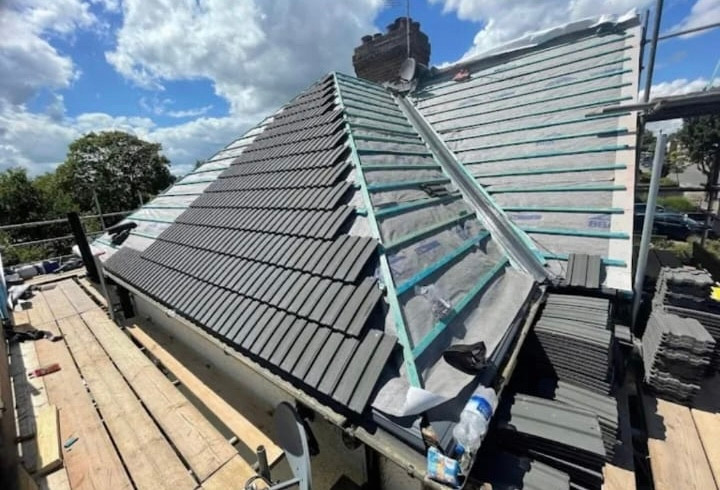
Matching the covering, before anything else. Plain clay tile and natural slate are what we are mostly working on up here, and the material is the first thing settled and the last thing to compromise on. We sort as we strip, so sound tile goes back on the elevation facing the lane, and we look for reclaimed before new to fill a run.
Plastic verge is the one thing we talk you out of. Mortar bedding is the detail that goes first on an old roof, and re-bedding it only buys the same lifespan over again. BS 5534 expects ridges and hips to be mechanically fixed, and a dry ridge system sits underneath a traditional ridge tile where nothing shows from the ground. A plastic dry verge reads wrong from the road in a conservation area village, and a clipped undercloak with a fixed tile and a half does the same job quietly.
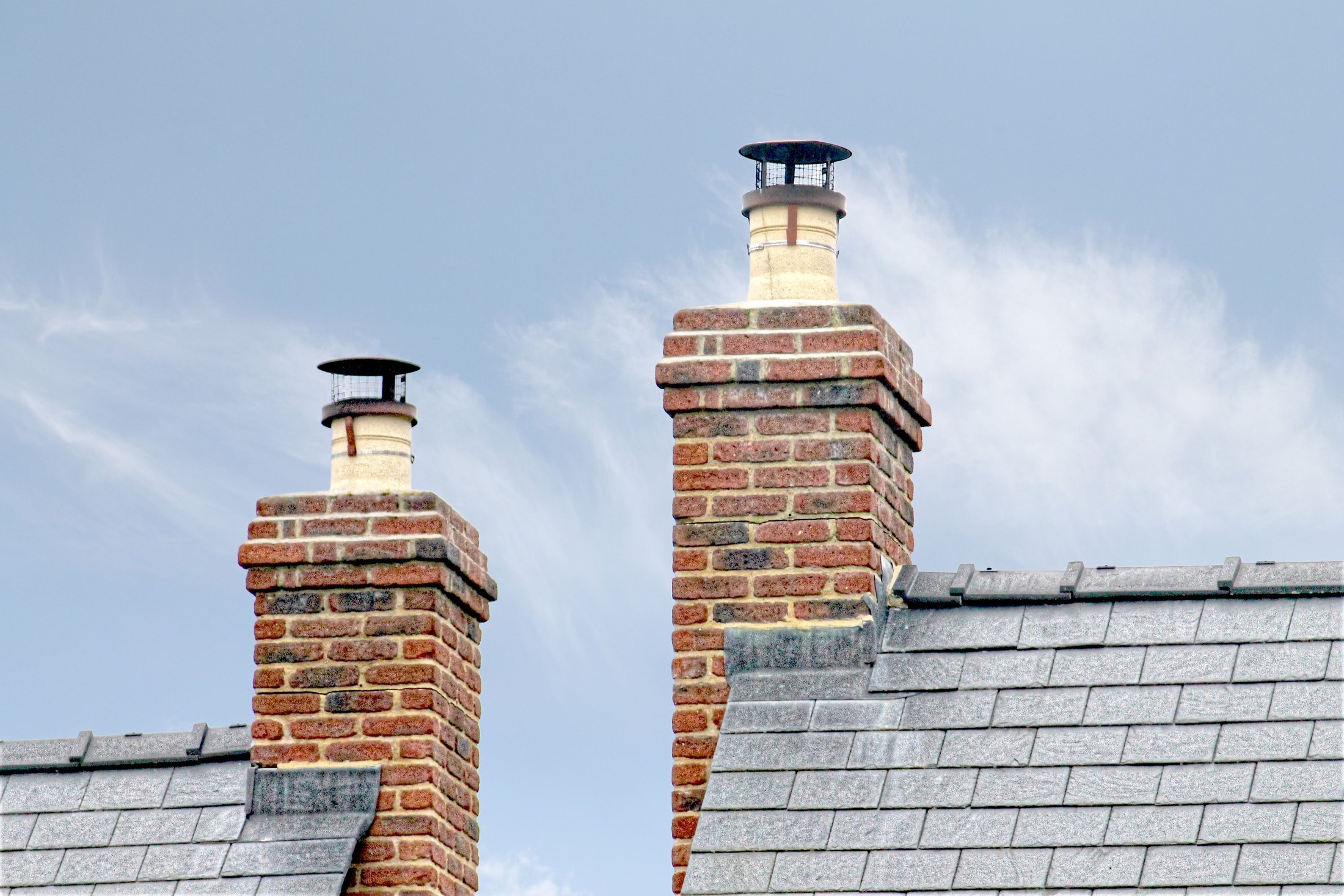
Repairs are slipped, cracked and missing tiles, storm damage, a ridge tile that rocks under your hand, and leaks traced back to where water genuinely enters. What has usually finished is a fixing or a junction rather than the covering. Lift a slate on an older roof here and there is often no membrane under it at all, only hand cut battens and daylight. That is not a fault in itself. What finishes the roof is the nails: once they have rusted through, slates slip one at a time and every one is a separate visit.
When nails, battens and underlay have gone together the covering comes off and goes back on breathable membrane and treated battens, with soft rafter feet cut out and stainless nails and clips where exposure asks for them. A cement fillet where a lead flashing should be is the commonest leak we chase in these villages, and it cracks because mortar cannot move and lead can. Flashings, soakers, valleys and abutments go back in code rated lead.
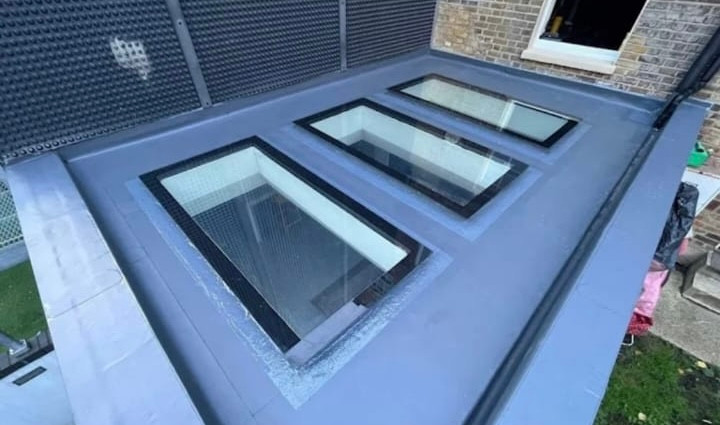
Rear extensions, garages and outbuildings in felt, GRP fibreglass or EPDM rubber, with the deck looked at before the falls, upstands and outlet. Cast iron rainwater goods are still on plenty of these houses and are usually worth repairing rather than swapping for plastic on a frontage, and we do not pressure wash a clay tile. With the covering off, insulation and eaves ventilation are far cheaper to deal with, and Approved Document L sets the standard a renovated roof is expected to reach.
How it runs
From your call to a written price
The same two or three of us start and finish the job, and the price is written out line by line rather than as a single figure.
On permission, people get this backwards in both directions. For an unlisted house a like for like re-covering, a repair, new rainwater goods and rooflights sitting no more than 150mm above the roof plane all stay permitted development inside Ashmore Conservation Area, within the limits Planning Portal guidance sets out. What the conservation area bites on is a change of covering. With twenty six listed entries here, listed building consent is needed on plenty of addresses whatever the work, so we check before anybody orders a tile. Dorset Council for both.
Cost
What decides the price of an Ashmore roof
No rate per square metre: the area is the easiest thing to measure and the least useful thing to know. Sound tile or slate that can be lifted, sorted and relaid changes what a re-cover costs more than anything else, and reclaimed material to match an old roof is bought when it comes up rather than ordered.
The lanes are narrow with nowhere to leave a lorry, so where a scaffold and skip can stand is settled on the free site visit. The work at height rules are why the platform is a priced line. Ask what grade of lead is going on the chimney.
If it is leaking now
Water coming in today
Ring rather than use the form. Anything letting water in goes to the front of the queue, and the first visit makes it safe rather than prices it. If a slate has come off, leave it where it landed and photograph it, because where it fell tells us which slope let go. The phone is answered 24 hours for emergencies; scheduled work runs Monday to Friday, 8am to 6pm.
Worth knowing
Working inside the conservation area
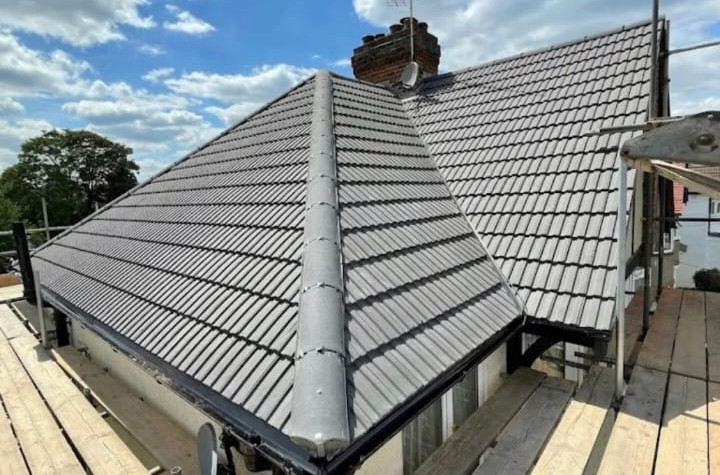
Ashmore Conservation Area covers the village, and what it controls is appearance. For a roof that has one practical consequence. Repairing or re-covering like for like is maintenance: the same tile, the same slate, the same profile, and nobody has to apply for anything. Swapping a clay tile roof for concrete interlocking, or a slate roof for something that only passes for slate at thirty feet, is a change of appearance, and that is the decision somebody can refuse.
So the covering is the first conversation we have rather than the last. The village also carries a good number of listed entries, and on a listed building the roof needs consent whether the material changes or not. If you are not certain which of those your house is, send the address and we will find out before anything is ordered.
Who you are dealing with
A local firm you can check
Getting on for twenty miles out from us, through Sixpenny Handley and across the Chase, and far enough that we group work up that way. Dorset Council for planning and building control. Bournemouth Roofing & Building Ltd, registered in England and Wales, company number 15471719, which takes a minute to look up. Thomas Hannen's business, and he is the one who comes out to price the job rather than a salesman. A verified customer's 10 out of 10 on Checkatrade. The visit and the written quote are both free.
Questions
Ashmore questions we get asked
My house is in Ashmore Conservation Area. What can I change?
Like for like is maintenance and needs no application. Ashmore Conservation Area controls appearance, so the same covering going back in the same pattern is repair, while a change from clay to concrete, or slate to something that reads differently from the lane, is not. There are twenty six listed entries in a village this size, so check whether yours is one before anything is ordered. A delivered pallet is no argument.
Can I put a rooflight in without it looking wrong?
It has to sit in the plane of the covering. Ashmore lies within the Cranborne Chase and West Wiltshire Downs landscape, where design scrutiny covers anything visible from the surrounding downland, rooflights and flue terminals included. A conservation pattern light fitted flush with the slates gets through where a standard one standing proud of the surface will not. Position counts too, and a rear pitch is always the easier argument.
Rain off the roof runs straight onto the bank. Problem?
More than it would on free draining ground. The subsoil around Ashmore is cohesive and rated for shrink and swell, which means water dumped beside a wall keeps that patch of ground moving through every wet and dry cycle. Downpipes discharging onto a bank or into a broken gully are worth fixing at the same visit as the roof. It is a foundation question, not a decorating one.
What usually goes on a roof in a village like this?
The lead and the bedding, ahead of the covering. The listed buildings at Ashmore have been patched and repointed by different hands over the years, and the weak points are always where two things meet: chimney flashings, valleys, and mortar at ridge and verge that was skimmed over rather than cut out. A slate can sit on a roof for a century. The mortar behind it manages forty years, and the nail decides the rest.
You are twenty miles out. Will you still come and look?
Yes. Ashmore is close to twenty miles from the yard and the visit costs nothing either way, so there is no reason not to. Distance changes how we schedule rather than whether we come: we look at jobs up on the Chase in the same run, and once yours starts the crew stays on it until the scaffold comes down instead of splitting days between here and the coast.
Nearby, and next door
Roofing near Ashmore
Roofing nearby
Our other trades in Ashmore
Roofing guides
Concrete vs clay roof tiles: which is right? Planning, building regs or listed building consent Storm damage to a roof: the first 24 hoursEverything we do in Blandford Forum Roofing, all areas Every area we cover
Free quote
Get a written price for your Ashmore roof
Tell us the address and what the roof is doing. We come out, look properly and put an itemised price in writing.