Roofing in Bryanston
Slate and clay tile repairs, strip and re-cover, chimney leadwork, parapet gutters and flat roofs across Bryanston, Blandford St Mary and DT11.
The site visit is free and so is the written itemised quote. Thomas Hannen prices every job himself.
Putting back what is already on a Bryanston roof is maintenance, and inside a conservation area it still needs no application. Swapping the covering for something else is the part that gets people into trouble, so decide that before anyone lifts a slate.
The calls here divide fairly neatly. Older brick houses shedding slates one at a time, where the covering is fine and the nails holding it are not. Chimney stacks with lead patched by three different people. And on the newer terraces, a ridge line that has opened up and started dropping mortar. We get on the roof, look at it from inside the loft as well, and photograph the whole of it so you can see what we are pricing. The site visit and the written itemised quote are free.
The work
Some of these roofs have no gutter at the eaves
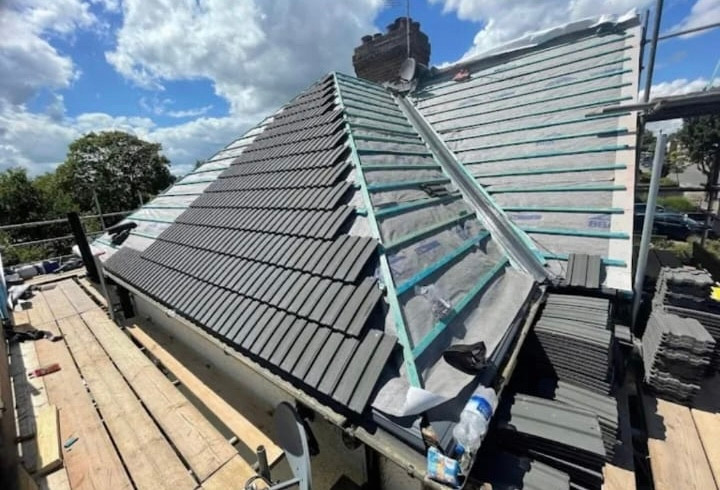
Slate and plain tile repairs. Slipped, cracked and missing tiles, storm damage, and leaks traced back to where water genuinely enters rather than patched at the stain. Nearly a fifth of the housing here predates 1919, and on a natural slate roof of that age the slate outlives its nails, so slates arrive on the lawn while the covering itself is still sound. A handful can be re-hung. When they come down across the whole slope the fixings have gone, not the slate. On a strip the covering comes off, soft rafter ends and batten are cut out, and it goes back on breathable membrane and treated battens. Sound slate is sorted and re-laid on the elevation that faces the road, and a clay plain tile is matched to what came off rather than to a catalogue. Ridges and hips are screwed down to BS 5534 rather than bedded in mortar. Most of these roofs have no sarking board, so the underlay is doing all of the work.
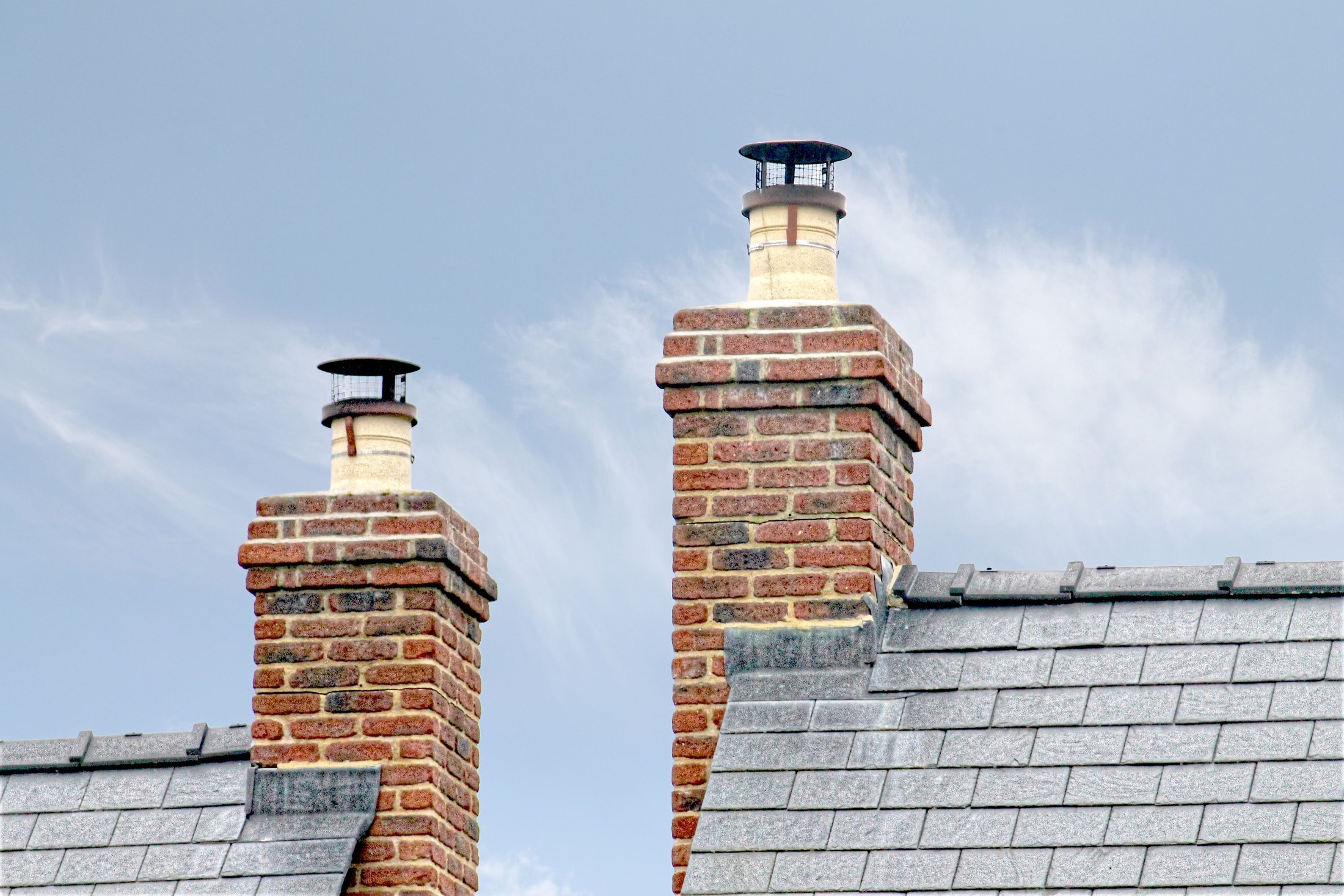
Parapet and valley gutters. On the older and larger buildings the rainwater never reaches a gutter at the eaves. It runs along a lead lined channel behind a parapet to an outlet, and when that outlet blocks the water goes through the wall head instead. We clear it, find where the lead has split or the fall has gone flat, and re-line the section that needs it. There are a lot of stacks on the older houses here and they are where the leaks are: flashings, soakers, valleys and the abutments where a roof runs into a wall, renewed in code rated lead cut into short enough lengths that it can move without splitting, and the flaunching made good at the top.
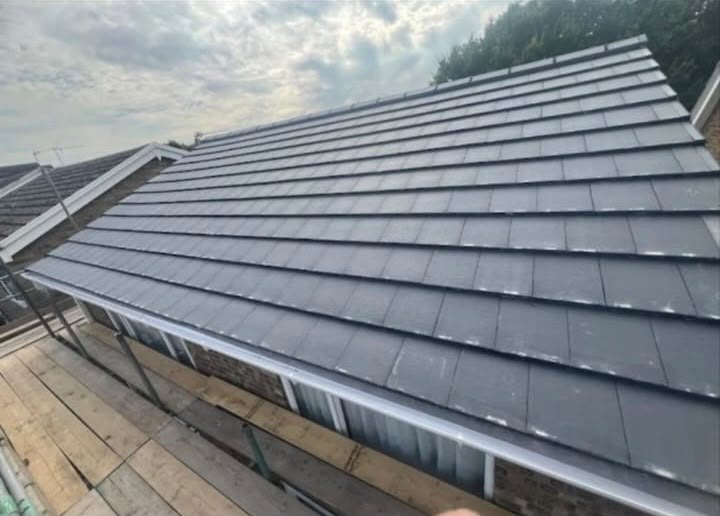
More of the settlement is post-war than period, with the largest cohort going up in the 1970s and early 1980s. Those terraces and semis, and a third of the housing here is terraced, carry concrete interlocking tile with mortar bedding at every edge, and mortar is a fixing with a shelf life. We convert to a dry fix system: dry ridge screwed over a ventilated roll, dry verge clipped down the gable.
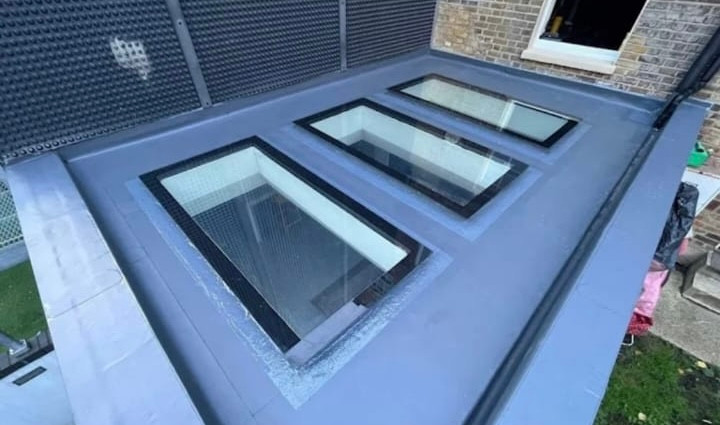
Rear additions, dormer tops, porches and garages come in felt, GRP fibreglass or EPDM rubber, and the deck comes first, then the falls, the upstands and the outlet. Cast iron gutters and downpipes are still up on a lot of these houses and are often worth repairing rather than ripping off. Clearing moss, algae and debris is maintenance, and it heads off the rainwater damage that follows. There is thatch on this patch and we say so rather than have a go: we will sort the tiled or slated part of a building that adjoins it, and the leadwork where the two meet. Insulation, eaves ventilation and condensation are far cheaper to deal with while the covering is off, and Approved Document L sets the standard a renovated roof is expected to reach.
How it runs
From your call to a written price
Same team throughout, one person to ring, no sub-contracting, and an itemised quote you can compare line by line against anyone else's. Much of the settlement sits inside the Blandford St Mary and Bryanston Conservation Area, and eleven entries here are listed, the Portman Chapel and Bryanston School among them. Inside a conservation area a like for like re-cover and a flush rooflight are still permitted development, and a change of covering material is judged on how it looks from the street. On anything listed, listed building consent applies to a repair as much as to an alteration. Dorset Council for both, and we check the address before we price it.
Cost
What decides the price of a roof
No rate per square metre. Lanes here are narrow with soft verges and estate walls, so where a scaffold and a skip can stand is settled before anything else is priced. How long a platform stands matters as much as its size, which is why the work at height rules make it a priced line. Chimneys, parapet gutters and abutments are priced one at a time, because that is where the leadwork hours go. Ask whether the scaffold is in the price, whether battens and membrane are renewed or covered over, and who pays for the skip.
If it is leaking now
Water coming in today
Ring rather than use the form. Anything letting water in goes to the front of the queue, and the first visit makes it safe while you decide. If water comes in at the head of a wall rather than the ceiling, say so, because that usually means a blocked parapet gutter and clearing the outlet can stop it that day. The phone is answered 24 hours for emergencies; scheduled work runs Monday to Friday, 8am to 6pm.
Worth knowing
Inside a conservation area, appearance is the test
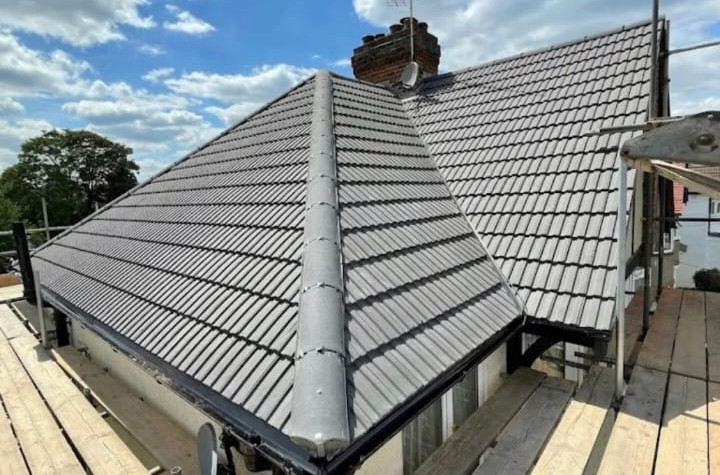
Conservation area status does not stop you maintaining your roof. It controls what the place looks like, so the test the council applies is appearance, not paperwork for its own sake. Put the same covering back in the same pattern and you are maintaining a building. Take natural slate off and put a modern concrete tile on, and you have changed the character of the street, which is exactly the thing designation exists to catch.
In practice that is short. Photograph the roof before anything comes off. Keep the sound slate, because reclaimed material that already weathers like the rest of the row is worth more here than anywhere else on our patch. If you want to change material, ask the council before you commit rather than after the scaffold is up. And check whether your building is one of the listed ones, because people are wrong about that in both directions.
Who you are dealing with
A local firm you can check
About sixteen miles from us, covering Bryanston, Blandford St Mary and the DT11 addresses either side of the Stour. Dorset Council for planning and building control. Bournemouth Roofing & Building Ltd, registered in England and Wales, company number 15471719, which you can look up in a minute. Thomas Hannen's business, and he is the one who comes out to price the job, not a salesman. A verified customer's 10 out of 10 on Checkatrade. The visit and the written quote are both free.
Questions
Bryanston questions we get asked
Is Bryanston inside the Blandford St Mary conservation area?
Part of it is. The designation is called the Blandford St Mary and Bryanston Conservation Area, and it controls how a building looks from outside rather than banning work. Putting the same covering back in the same way stays maintenance. Changing to a different material or profile is an appearance change and Dorset Council will want to see it. Eleven entries here are listed, including the Portman Chapel at Bryanston School.
My terrace shares a roof with next door. Whose repair is it?
The covering over your own property is yours, but the work rarely stops neatly at the party wall. Terraced housing is 31.1 per cent of the stock around Bryanston and Blandford Forum, so a slipped course or a failed valley usually straddles the boundary. We can price your length on its own, and we will tell you plainly if the fixings on the neighbour's side are what is actually letting water in.
Our estate went up in the late seventies. What fails first?
The mortar and the nails, long before the tiles do. The largest single group of homes around Bryanston dates from the 1970s and early 1980s, and those ridges were bedded in sand and cement that has now taken forty odd winters. Bedding cracks along its length, verge pointing drops onto the path, and nail fatigue lets the bottom courses creep. The tiles themselves are usually still perfectly serviceable.
What do you actually look at on a Bryanston survey?
The edges, the loft and the ground, in that order. On the roof it is ridge bedding, verge, valleys and flashings. Inside the loft it is daylight, damp at the rafter feet and torn underlay. From the ground we photograph the elevation, because inside the conservation area Dorset Council cares what the finished roof looks like from the street. Nearly a fifth of the housing here predates 1919, so matched materials come into it.
You are sixteen miles away. Is that a same week visit?
Bryanston is about sixteen miles from the yard, so a live leak is normally looked at the same week and sooner if water is coming through a ceiling. That first visit costs nothing. If it is raining when we arrive we get a temporary cover on and price the permanent repair afterwards, because nothing bedded or pointed in the wet is worth paying for twice.
Nearby, and next door
Roofing near Bryanston
Roofing nearby
Our other trades in Bryanston
Roofing guides
Concrete vs clay roof tiles: which is right? Planning, building regs or listed building consent Storm damage to a roof: the first 24 hoursEverything we do in Blandford Forum Roofing, all areas Every area we cover
Free quote
A written price for your Bryanston roof
Send the address and tell us what the roof is doing. We look at it properly, inside and out, and price it in writing.