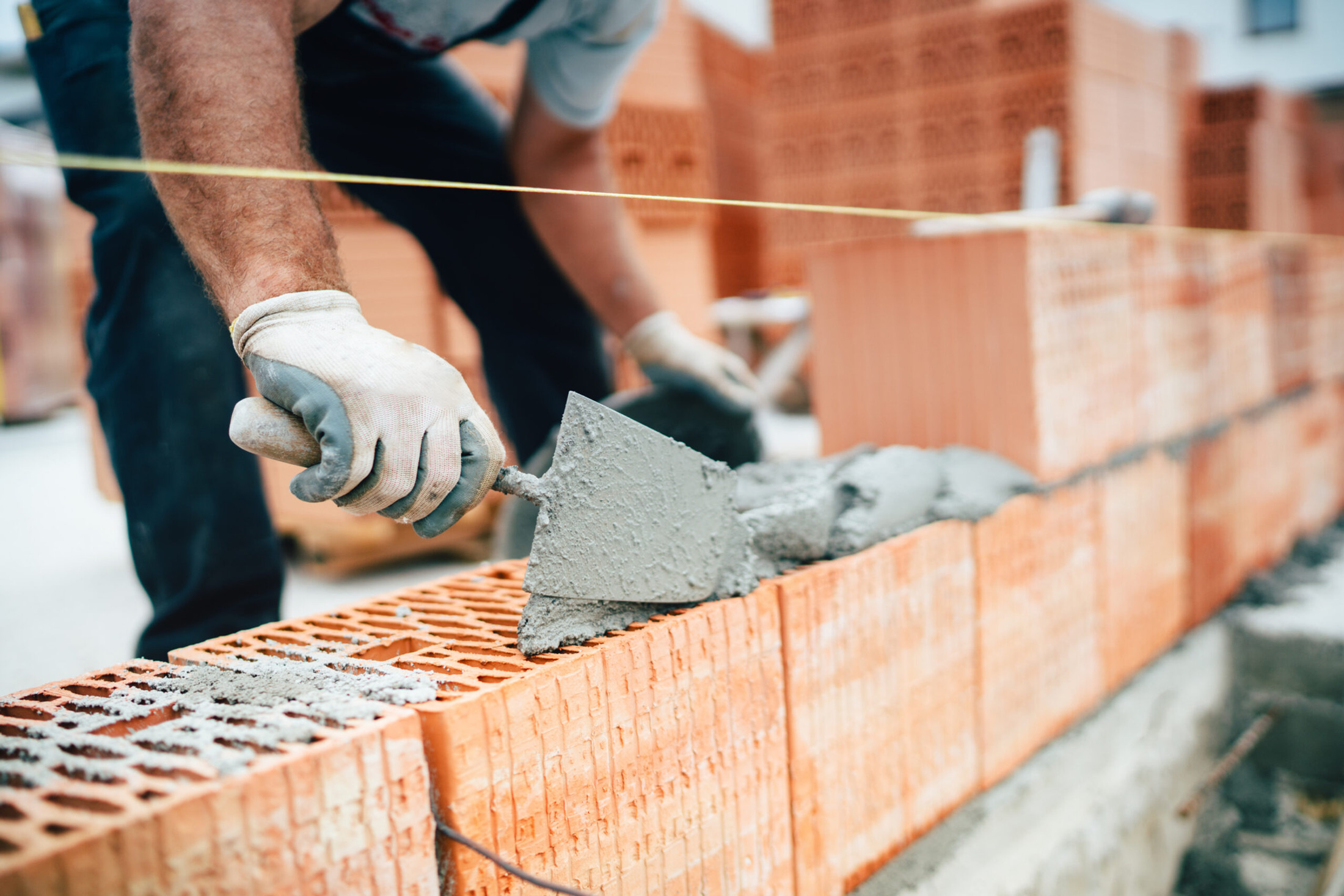
Bricklaying in Bryanston
Repointing, shared stacks, parapets, brick replacement and new brickwork in Bryanston and around Blandford Forum.
The site visit is free and so is the written itemised quote. Thomas Hannen prices every job himself.
Last updated
Repointing an old wall at Bryanston is a matching job before it is a bricklaying job. Get the mortar and the joint profile wrong and the new work reads as a patch against the old brick for the next twenty years, which is why we mix and dry a sample before anything goes on the wall.
Around Bryanston and the Blandford side of the river the faults come in three shapes. The joints on a front elevation have gone back and the brick faces are flaking with them. A stack that sits over a party wall has started shedding mortar and neither neighbour is sure whose it is. Or a garden or boundary wall has leaned far enough that somebody has stopped parking next to it.
Those are three different repairs and none of them can be priced from the pavement. We come out, get up to the wall, work out what is actually failing, and put it in writing in a form you can show a neighbour or a freeholder if you need to. The site visit and the written quote are both free.
The work
The usual brickwork jobs in and around Bryanston
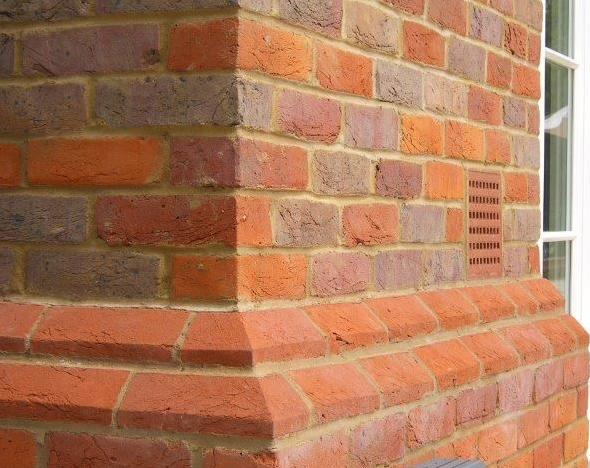
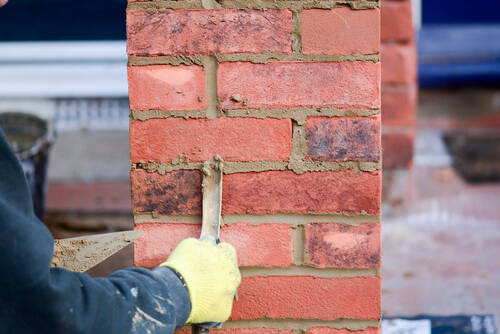
Repointing to match. Old brick is the hardest brickwork to repoint well because the new joint is judged against the weathered joints around it.
We rake out by hand to about twice the joint width, take the colour from the sand, not a pigment, and copy the joint profile already on the rest of the wall, whether that is flush, bucket handle or weather struck. On the older soft brick the mix goes to an NHL lime so the wall keeps breathing. On newer brick that was laid in cement, a gauged mix matched for strength is right instead. Where a previous owner has pointed in hard sand and cement and the faces are spalling behind it, that cement comes out first.
Stacks and parapets. Where a stack sits on a party wall and serves two houses, half of it belongs next door. A stack is the most weathered brickwork on any house: the flaunching around the pots fails first, then the top few courses. Repointing a stack, renewing flaunching, resetting a coping and rebuilding a top that has gone soft are a day or two of work once the scaffold is up, and doing it once for both halves saves putting the scaffold up twice. Where a roof runs into a wall that carries on past it, the top of that wall is exposed on three sides and gets no help from anything, and coping stones that have lost their bedding, open joints on the upstand and failed flaunching at the head of it are a standing source of damp in the rooms below.
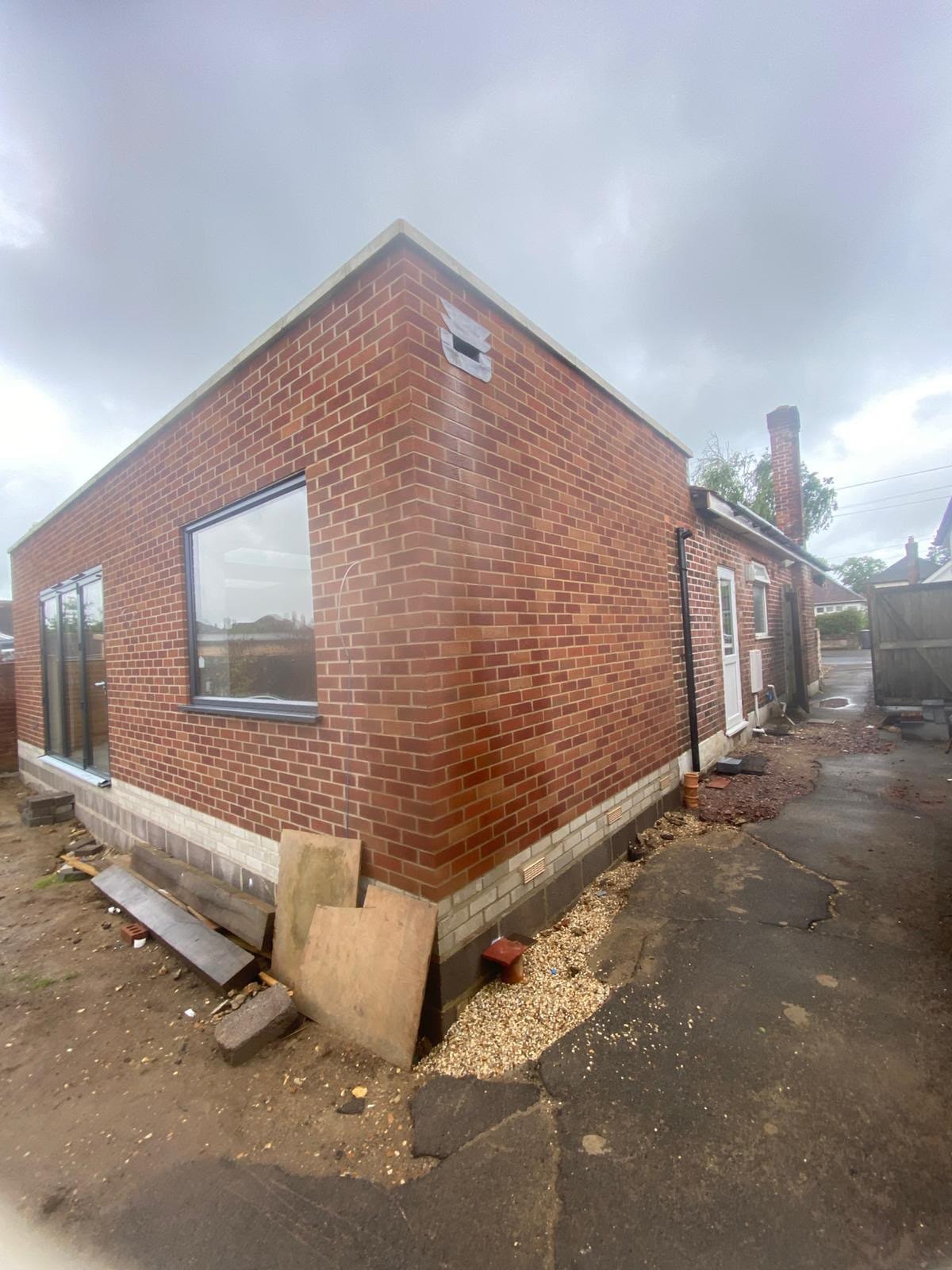
Once a face has blown, every frost takes another layer. We cut out the failed units and set in a matched brick, reclaimed or handmade where the original is no longer made, keeping the bond correct so the repair does not show, which on a street elevation inside the Blandford St Mary and Bryanston conservation area matters more than anywhere else on the building. Garden brickwork weathers in its own way too: boundary walls, garden walls, dwarf walls under railings and gate piers on and off the lane. Free-standing walls weather from both faces and lean before anything attached to a building does, and we rebuild bowed lengths back to plumb on a proper footing rather than pointing over the cracks in them. New work is extensions and garden rooms in blockwork with a facing skin, laid in stretcher bond with the cavity, wall ties and damp proof course detailed properly, a lintel cut in over a widened opening, and brickwork stitched rather than filled where a footing has moved.
How it runs
Brickwork repairs in Bryanston, from first look to last joint
Thomas looks at the wall or chimney from close to, not from the lane, and works out the price himself. His quote itemises access, raking out, the mortar mix, each elevation, how many bricks are cut out and replaced, and the rubble.
How we reach it depends on the wall. A boundary wall beside the lane is repaired from the ground behind barriers, so the road stays open. A chimney or gable needs a scaffold, and with soft verges and estate walls we agree its footing before the day. The mortar is matched to what is there, which on older brick and flint generally means lime, not cement. Work is sheeted when rain comes in, the ground is swept every evening, and bags of spoil leave with us. Where a brick crumbles behind the face or a lintel is cracked, we stop, photograph it and price it, and carry on only when you say so.
Repointing like for like is maintenance, but a new mortar colour or a different finish alters the elevation, and the Planning Portal sets out where repair ends and alteration starts. Bryanston is in the Blandford St Mary and Bryanston Conservation Area, so it is sensible to check a change with Dorset Council, and on a listed building such as the Portman Chapel, repointing can need listed building consent where it alters the character. Building control only comes in on new structural work.
Cost
The joints, not the area, decide a brickwork quote
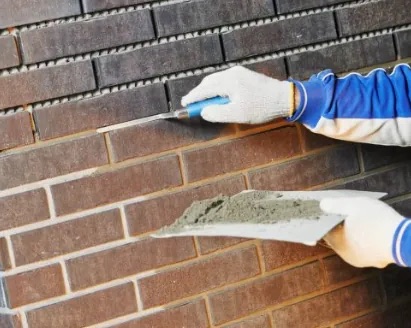
Brickwork is not priced by the square metre. Walls of the same size can be days apart once you look at the joints.
How the platform goes up. A low boundary wall needs nothing more than a board to stand on. A chimney or a tall gable needs a scaffold, and on a lane with estate walls either side it has to be planned round the road. Under the work at height rules the platform is a priced line, not a favour.
How deep the joints go. Mortar that has washed back a long way takes longer to rake out than a shallow joint. Raking by hand is slower than a disc, but on soft brick a disc widens the joint and chips the edges.
How many bricks have spalled. A frost-damaged face has to be cut out and a matching brick found. Old handmade bricks are harder to match than modern ones, and flint panels take their own time.
The mortar. Lime mortar on an older wall is slower to work and needs protecting while it cures. Cement on a soft brick traps water and makes the faces blow.
Put these to any other quote: how deep is the rake, is it by hand or by disc, what is the mix, and how many bricks are included in the brick count?
If something has moved
A chimney or wall that has started to lean
If a chimney has moved, a parapet has loosened or a garden wall is leaning towards a path, keep people clear of it and phone us; the form is the wrong tool for this.
Scheduled brickwork runs Monday to Friday, 8am to 6pm, and an unanswered call gets returned once we are down off the scaffold. Making it safe comes first: taking down loose bricks, propping or fencing off a wall, and checking whether roots, a vehicle strike or failed mortar caused it. A stack that has moved on a shared roof takes priority, because falling brick lands on someone else's tiles as well as yours.
Worth knowing
When a wall is shared with next door
Where a house is joined to next door, some of its brickwork is shared. That is not a legal footnote, it is a timetable. If the work means cutting into a wall you share, taking a shared stack down and rebuilding it, underpinning near a neighbour's foundation or building right up to the boundary, the Party Wall etc. Act 1996 applies and your neighbour has to be given written notice before anything starts. The notice periods are measured in weeks, not days, and they run from when the notice is served rather than from when you decide.
The practical advice for a shared wall is simple. Find out early whether your job touches a shared wall, because that answer moves the start date more than the scaffold does. Talk to the neighbour before the letter arrives, since a notice landing out of the blue is what turns an agreement into a dispute.
And where the stack or the parapet is genuinely shared, ask us to price the whole of it and split it, not each side repointing its own half a few years apart in two different mortars. One scaffold, one mix, one sample panel that both of you have looked at, and the wall stays one wall instead of becoming a patchwork.
Who you are dealing with
The bricklayer behind the quote
We work in Bryanston, 17.3 miles from our base in Boscombe, and across the DT11 villages along the Stour: Blandford Forum, Blandford St Mary, Stourpaine, Spetisbury and Winterborne Stickland. Dorset Council deals with planning and building control there.
Bournemouth Roofing & Building Ltd is registered in England and Wales under company number 15471719. The firm is Thomas Hannen's own, and he does the looking and the pricing rather than a salesman. Our Checkatrade page carries a 10 out of 10 from a verified customer. You pay nothing for the visit, and the itemised quote in writing is free. Before you book a visit in Bryanston, you can read our customers' Google reviews, word for word, on our reviews page.
Planning at a glance
Do you need planning permission in Bryanston?
Most repairs in Bryanston need no application at all. What decides whether a change to the outside of your house does is who the council is, whether a conservation area or a listing applies, and whether the place sits in a protected landscape.
| Question | In Bryanston |
|---|---|
| Who decides | Dorset Council is the planning authority for Bryanston. Dorset Council's heritage pages set out what it controls. |
| Conservation area | Yes: Blandford St Mary and Bryanston Conservation Area. Check whether your street is inside the boundary before changing anything visible. |
| Listed buildings | Yes, there are listed buildings in and around Bryanston. If yours is one, work can need listed building consent. |
| Protected landscape | Inside the Dorset National Landscape (formerly AONB), so anything visible from outside gets more attention. |
Questions
Questions about bricklaying in Bryanston
Should a stack shared with next door be repointed in one go?
Asking the neighbour is worthwhile, because a stack on a party wall weathers as one piece whatever the deeds say. Point your half alone and there is a visible line where the new mortar stops, most obvious for the first couple of winters. Both halves together also means one lot of access instead of two. Each owner still gets their own written itemised quote.
What does the Blandford St Mary and Bryanston designation control?
Appearance, which in brickwork means the mortar more than anything else. Inside the Blandford St Mary and Bryanston Conservation Area a like for like repoint is maintenance, while a different mortar colour, a new joint profile or a change of material is a change and Dorset Council can take a view on it. There are 11 listed entries locally, including The Portman Chapel at Bryanston School, and those are a separate matter again.
Where does scaffold go when a wall fronts the lane?
Where a frame has to stand on the path or the verge, that is arranged before a start date, not on the morning. It needs to be signed, lit and left passable for people going by, and anything on the highway is cleared with Dorset Council first. Rear elevations are easier and usually come off a lighter frame in the garden.
Should new joints be struck flush or weathered here?
Match whatever is already on the wall. On the older houses the original joint was struck flush or slightly recessed, and a modern weathered ribbon reads as wrong from across the street. On a newer wall laid in cement a bucket handle is normally right. Profile is not only cosmetic, because a joint standing proud of the brick face holds rain against the arris and frost takes the edge off.
Do you need to get into next door's garden?
Sometimes, for the return at a gable end or to get a board past a party boundary. We ask you to speak to them first, and we work off our own boards rather than standing anything on their planting. Where access genuinely cannot be had, a gable can be worked from a tower on your side in shorter lifts. Better to know that before the job is booked than on the first morning.
Nearby, and next door
Bricklaying near Bryanston
Nearby places we also cover for bricklaying, with straight-line distances from Bryanston, and the other trades we offer in Bryanston itself.
Bricklaying nearby
Our other trades in Bryanston
Brickwork and repointing guides
Lime or cement mortar: which do you need? Single storey extension: planning and building regs Subsidence cracks: which ones matterEverything we do in Blandford Forum Bricklaying, all areas Every area we cover
Free quote
Get your Bryanston brickwork priced properly
Tell us which wall is the problem. We come out, look at it close up, and put the repair in writing you can share.