Insulation in Bryanston
Loft insulation, floors over cold spaces, cavity and solid wall work around Bryanston and Blandford. We find where the heat is going before we price the job.
The site visit is free and so is the written itemised quote. Thomas Hannen prices every job himself.
In a terrace or a flat at Bryanston, the cold usually gets in somewhere specific rather than everywhere at once: the strip of loft over the bedroom wall, the gap where the party wall stops short of the roof, or a floor sitting over an unheated garage. Finding which one you have is the whole job.
Most people ring about one room. A back bedroom that never warms up, a top floor flat that is freezing in January and unbearable in July, or mould in the corner of a ceiling that keeps coming back after every wash.
Some ring because the loft is full and they want the insulation done properly before the boards go down. We come out, get into the roof space, look at the edges and the party wall as well as the middle, and give you a written price for the work that will actually change how the room feels.
The work
If you can see into next door, you heat next door
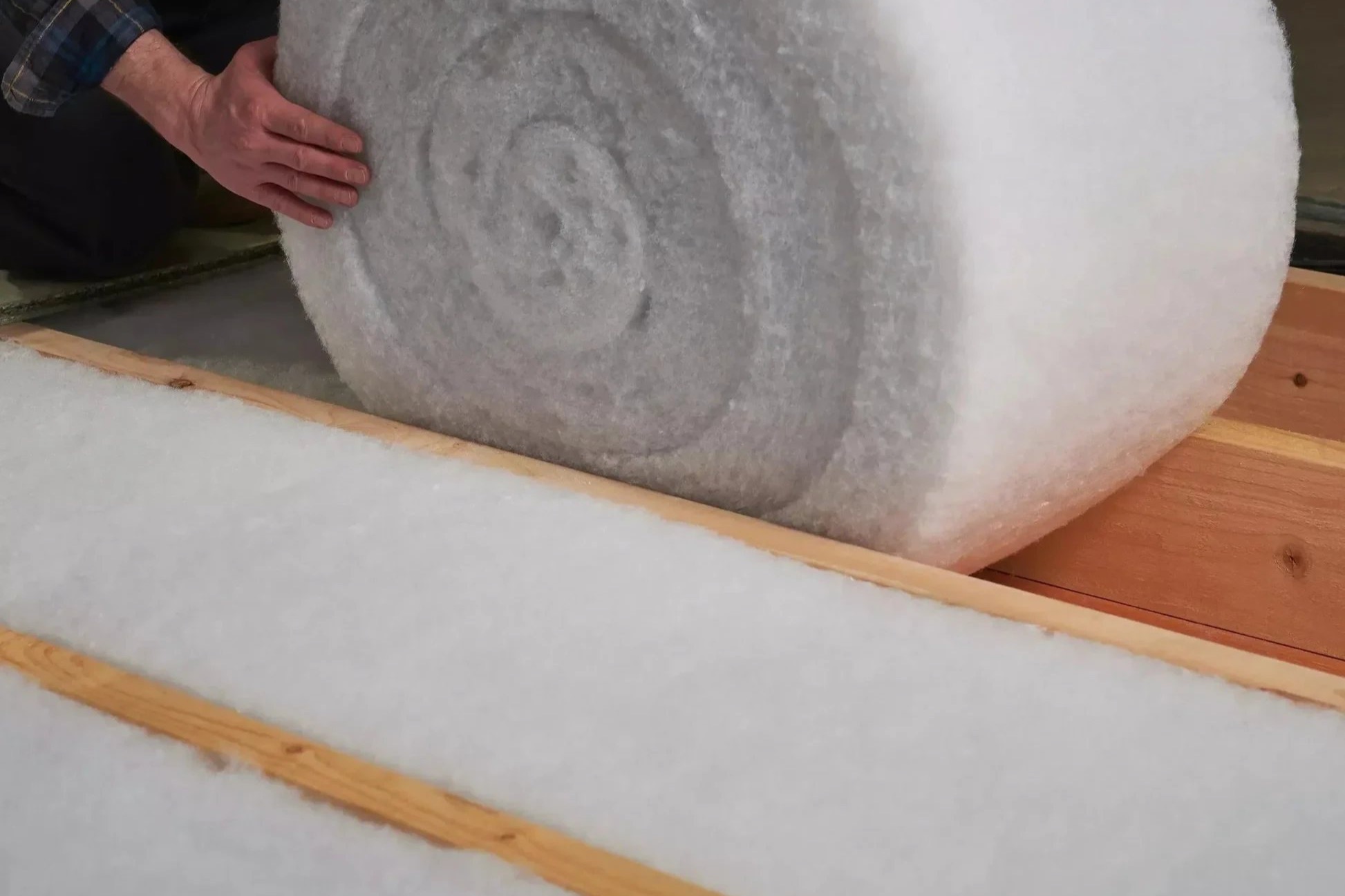
Terraced lofts, and what happens at the party wall. Terraces are 31.1 per cent of the dwellings here, and a terraced loft is a narrow strip with an outside wall at one end and a shared wall at the other. In a lot of the older rows the party wall was never taken up to the underside of the roof, so there is an open gap over the wall head. If you can see or feel into next door's roof space you are heating theirs as well as yours, and that gap is a fire separation matter as much as a heat one, so it is worth raising with building control rather than quietly stuffing something into it. We lay mineral wool, ordinary eco roll, to 270mm between and over, and take an even 250mm out across the wall plate where the ceiling meets the bedroom wall instead of stopping where it gets awkward, which is what brings a ceiling to the 0.16 u-value expected of a renovated element.
Flats, maisonettes and floors over cold spaces. Flats are 23.7 per cent of the housing here. In a top floor flat the roof space above you almost always belongs to the freeholder and is dealt with through the service charge, so the first move is finding out who manages the building, and we will look and put it in writing for you to send them. Where a flat or a room sits over a garage, a bin store or an open passageway, the floor is where the heat loss happens, and insulating between those joists from below is straightforward and routinely overlooked because nobody thinks of a floor as a cold surface.
Most of the stock here went up between 1945 and 1982, with the peak in the 1970s and early 1980s, and that generation was insulated to whatever the standard was on the day, usually 100mm laid one way between trussed rafters. It is not failed, it is short, and a cross layer over the top brings it up to depth in a morning. Trussed roofs are awkward to move around in, so where you want storage we fit raised loft legs and board a defined area rather than flattening everything under a deck.
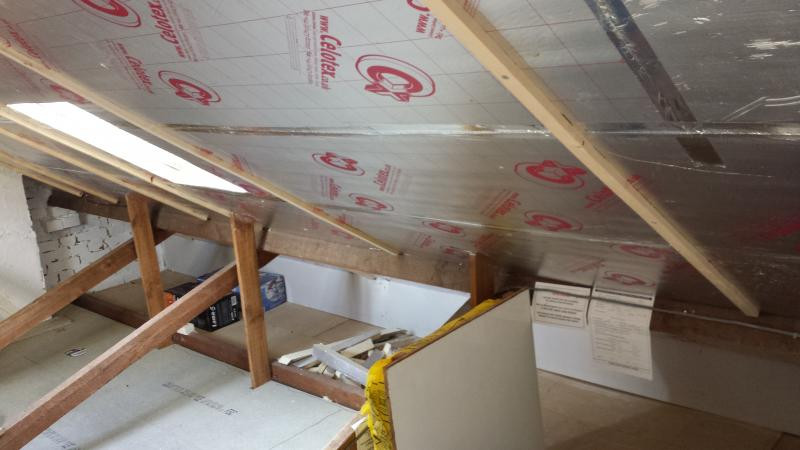
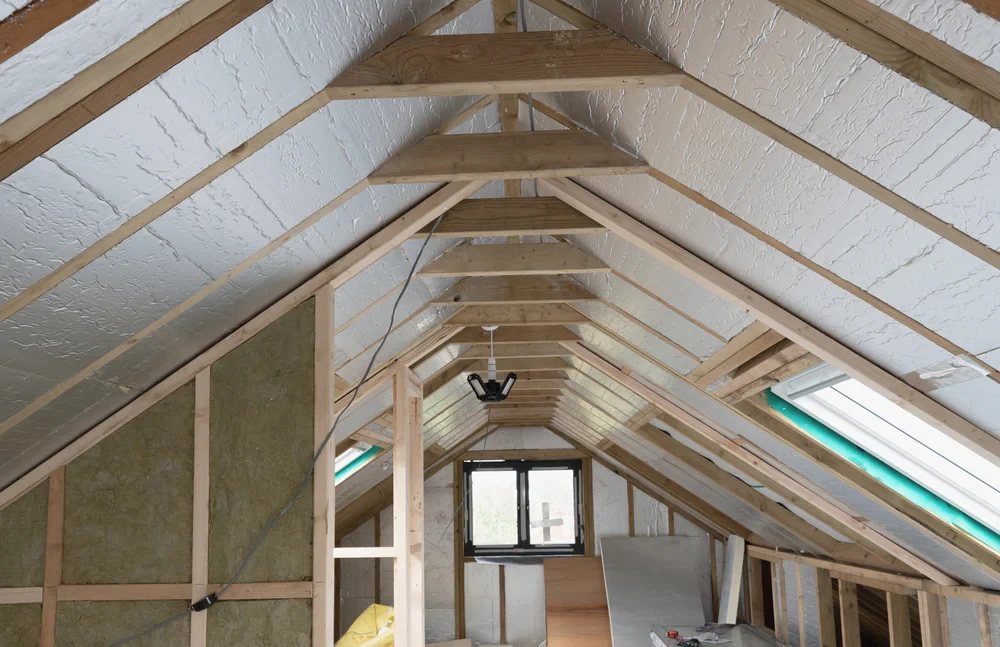
Where an older house has had the roof space turned into a room in the roof, usually with a dormer on the back built as a warm roof, the insulation goes to rafter level: rigid board, PIR and foil faced, cut between the rafters with the ventilation gap kept open above, a layer under the rafters, and the small voids behind the knee walls done at the same time. Where a sloping ceiling has no depth to give, a multi-layer foil quilt such as TLX gets part of the way. The pre-1919 houses, nearly a fifth of the stock, have solid walls with nothing to fill, so it is internal wall insulation, which costs a little room size and means moving skirtings and sockets, or external wall insulation, EWI on a quote, which is a planning question here before it is a building one. Anything from the 1930s on has a cavity wall, and that gets a borescope check first, because a cavity filled decades ago and since slumped looks identical from the pavement to one that was never filled.
Then the insulated and draughtstripped hatch, vent trays so the eaves stay open once the depth goes up, tank and pipework lagging, and fire rated covers over downlighters before anything is laid over the top of them.
How it runs
From your call to a written price
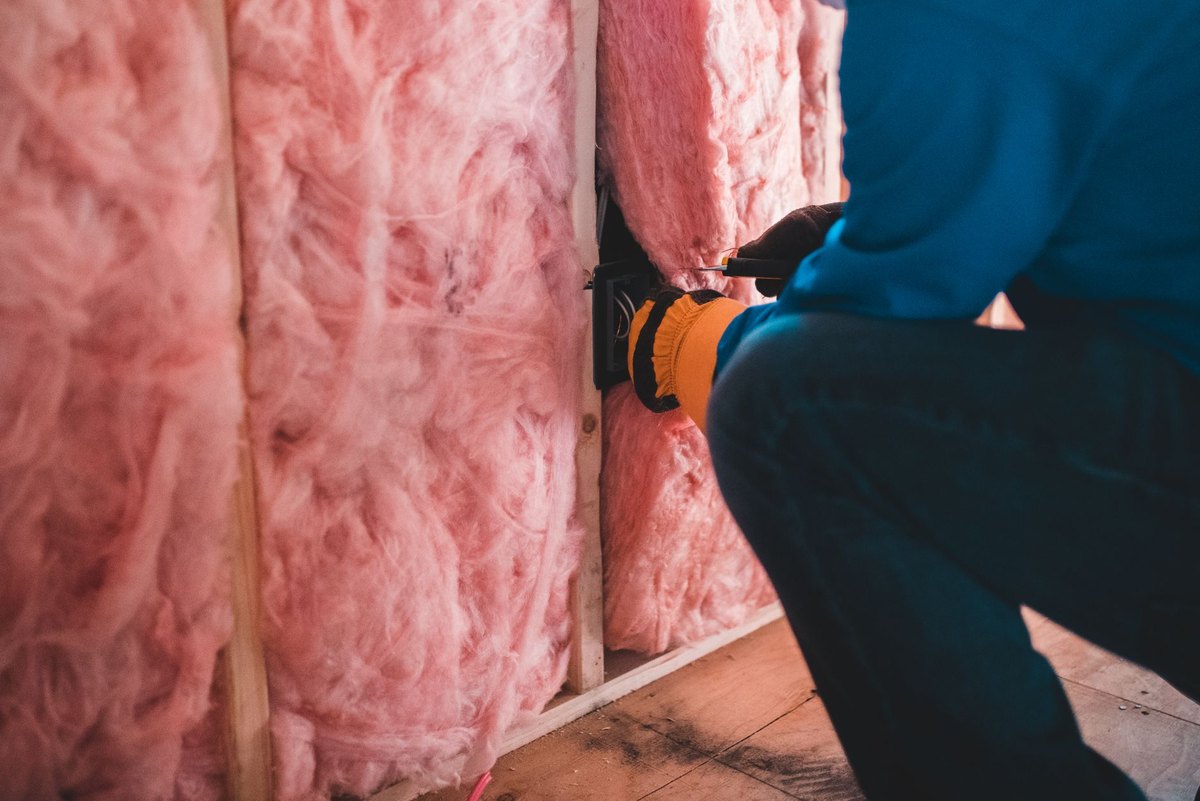
The quote is itemised: survey, clearing, the material and its depth, ventilation works and disposal on separate lines, and nothing is left open overnight.
Loft, cavity and floor insulation is maintenance rather than development, so there is nothing to apply for and nothing for building control to sign off on most addresses here, and the Planning Portal sets out where that changes. Bryanston and Blandford St Mary share a conservation area, which does not touch work you cannot see, and the eleven listed entries are concentrated around the Bryanston School estate rather than in the housing. Where a building is listed, listed building consent comes before anything touches the fabric, inside as well as out.
Cost
What decides the price of an insulation job
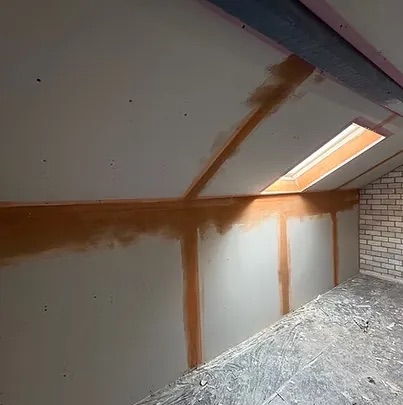
A terrace with a small hatch over the stairs and nowhere to stand a ladder, a 1980s house with a clear loft off the landing, and a top floor flat reached through a communal stair are three different days before any material is unwrapped. Old material to bag and take away, storage to move and put back, eaves kept clear and depth into the corners all come first, and Approved Document L sets what the work has to reach. Comparing quotes, ask what depth is being laid, whether the old material is removed or covered, and whether the hatch and pipework are included.
If it is urgent
Damp, condensation or a room you cannot heat
Ring rather than use the form. A loft dripping with condensation, mould coming back faster than you can wash it off, or a room that will not hold heat gets looked at quickly. Insulating a roof space that cannot breathe makes it worse, so the first visit settles which of the two you have. Bryanston is a straight run up the A350, so you get a day rather than a maybe.
Worth knowing
The conservation area decides how you insulate a solid wall here
Bryanston sits in a conservation area shared with Blandford St Mary, and that is worth knowing before anyone sells you a wall insulation scheme. Almost nothing about insulation is visible: a loft, a cavity and a floor are all invisible from the road, so a conservation area changes none of them and there is nothing to apply for. The exception is external wall insulation.
It thickens the walls, buries the reveals, changes the finish and moves the eaves and the door surrounds, which is exactly the kind of change designation exists to control. The rules on external walls set out the general position, and in a conservation area you should assume it needs permission and may well not get it.
So on a solid walled house here, the practical route is usually an internal lining done room by room, with the vapour control thought through so you are not trapping moisture in a wall that has always breathed. Two things worth doing before you commit.
Check whether your address is in the designated area and whether the building itself is listed, because the listed entries around Bryanston are mostly on the school estate rather than in the ordinary housing and people assume wrongly in both directions. And be wary of any quote for insulating the outside of a wall here that does not mention planning at all: it is the clearest sign the person pricing it has not looked at where the house is.
Who you are dealing with
A local firm you can check
We cover Bryanston, Blandford Forum, Blandford St Mary, Durweston, Stourpaine and Pimperne, and most of DT11. Bournemouth Roofing & Building Ltd, registered in England and Wales, company number 15471719, which you can look up in a minute. Thomas Hannen's business, and he is the one who comes out to price the job, not a salesman. A verified customer's 10 out of 10 on Checkatrade. The visit and the written quote are both free.
Questions
Bryanston questions we get asked
In a Bryanston terrace, where does the insulation stop?
At the party wall, and the party wall is where it usually goes wrong. Terraces make up 31.1% of the housing in Bryanston, and in a lot of them the blockwork stops short of the underside of the tiles, or there is a gap around the wall plate. Quilt laid up to that gap does nothing. We fill and seal the head of the wall first, then insulate the ceiling.
We are on electric heating. Does insulation matter more here?
It does, because with electric heating there is nothing free about the heat you lose. Around 29.9% of households in Bryanston are on electric, and storage heaters put their output into the house on a fixed cycle whether the fabric holds it or not. The only part of that you can change is the fabric. A correctly filled ceiling keeps the morning charge in the rooms instead of pushing it into the roof void.
I own a flat. Who authorises work in the roof?
Whoever owns the roof space, which in a flat is normally the freeholder and not you. Flats are 23.7% of the housing in Bryanston, so this comes up often. If the loft above your ceiling is common parts, you need the freeholder or the management company in writing before anyone goes up. Thomas will still come out and quote, and the quote is yours to send them.
Does the Blandford St Mary and Bryanston conservation area affect this?
Only if the work shows. The Blandford St Mary and Bryanston conservation area is about appearance, so Dorset Council are not interested in what is lying on your ceiling joists. They are interested if the covering changes, or if a rooflight appears, or if the roof line lifts because you have insulated between and over the rafters. Ask before you order materials, not after they are on the drive.
How can I tell if a 1970s loft needs redoing?
Put your head through the hatch with a torch and look sideways. The peak of building in Bryanston was the 1970s and early 1980s, and lofts from then were typically filled to the top of the joist and no further, so you can see the timber running across like railway sleepers. If the joists are visible, the ceiling is losing heat along every one of them. That is the first thing to put right.
Nearby, and next door
Insulation near Bryanston
Insulation nearby
Our other trades in Bryanston
Everything we do in Blandford Forum Insulation, all areas Every area we cover
Free quote
Get a price for insulating your Bryanston home
Tell us the address and which room is cold. We will get into the loft, measure what is up there, and put an itemised price in writing. No charge either way.