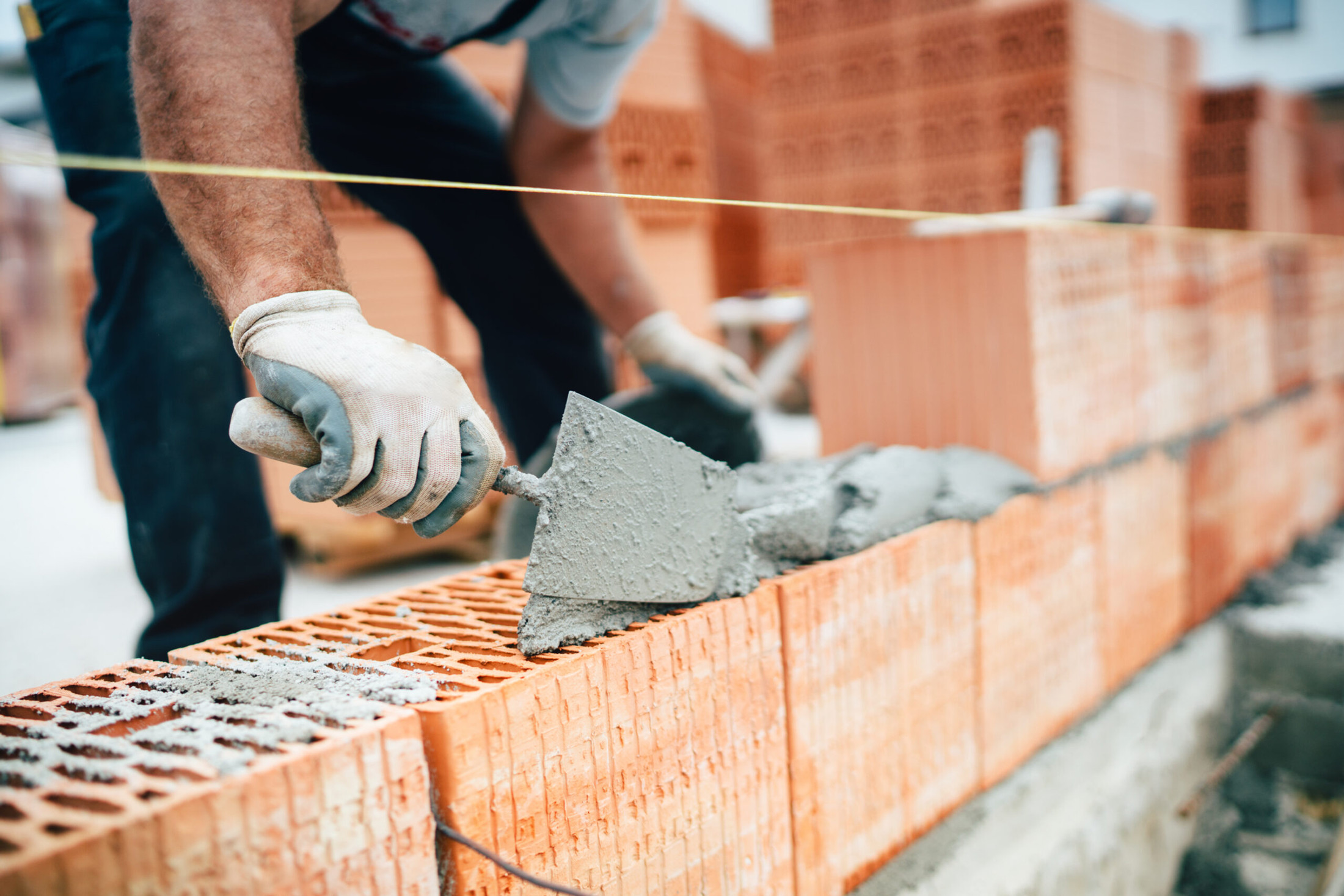
Bricklaying and repointing in Winterborne Stickland
Lime repointing, flint and brick repair, chimney stacks and roadside walls in Winterborne Stickland and the DT11 villages along the valley.
The site visit is free and so is the written itemised quote. Thomas Hannen prices every job himself.
Bricklaying and repointing
Weathered joints, loose flint and blown brick in Winterborne Stickland
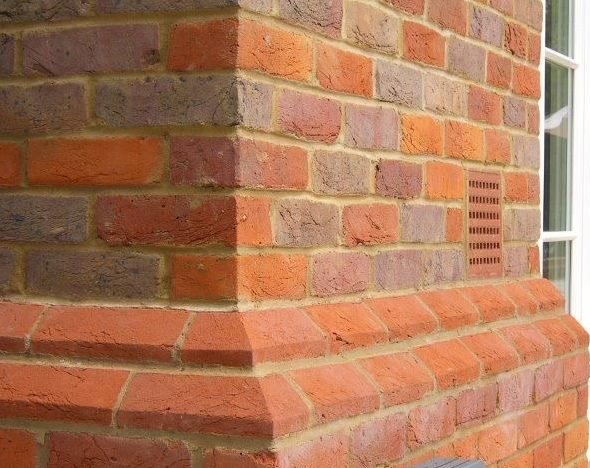
Stickland is a downland village of soft, old, mixed walling, and the two things that decide whether a repair lasts at Winterborne Stickland are the mortar mix and the time of year it goes in. Lime, not cement, on anything with age in it. Cut out by hand, never with a disc. And the exposed face done in the warm half of the year so it can cure before the first frost. Get those right and one elevation properly repointed will outlast the whole house done badly.
The calls from the village follow the weather. Joints on the south west face weathered back until you can get a finger in. Flints working loose out of a wall along the lane, usually starting under a coping that has lost its bedding. A brick plinth crumbling under a rendered wall. A stack that looks out of square from the road, or a roadside wall leaning a little further each winter.
We come out and look at the wall itself before anything is priced, because out here no two are built the same. What is in front of us decides the mix, the tools and the method, and it is worth an hour to get that settled. You get a straight answer on what needs doing this year and what will keep, then an itemised written quote for whichever of it you want. The site visit and the quote are both free.
The work
The brickwork jobs we do around Winterborne Stickland
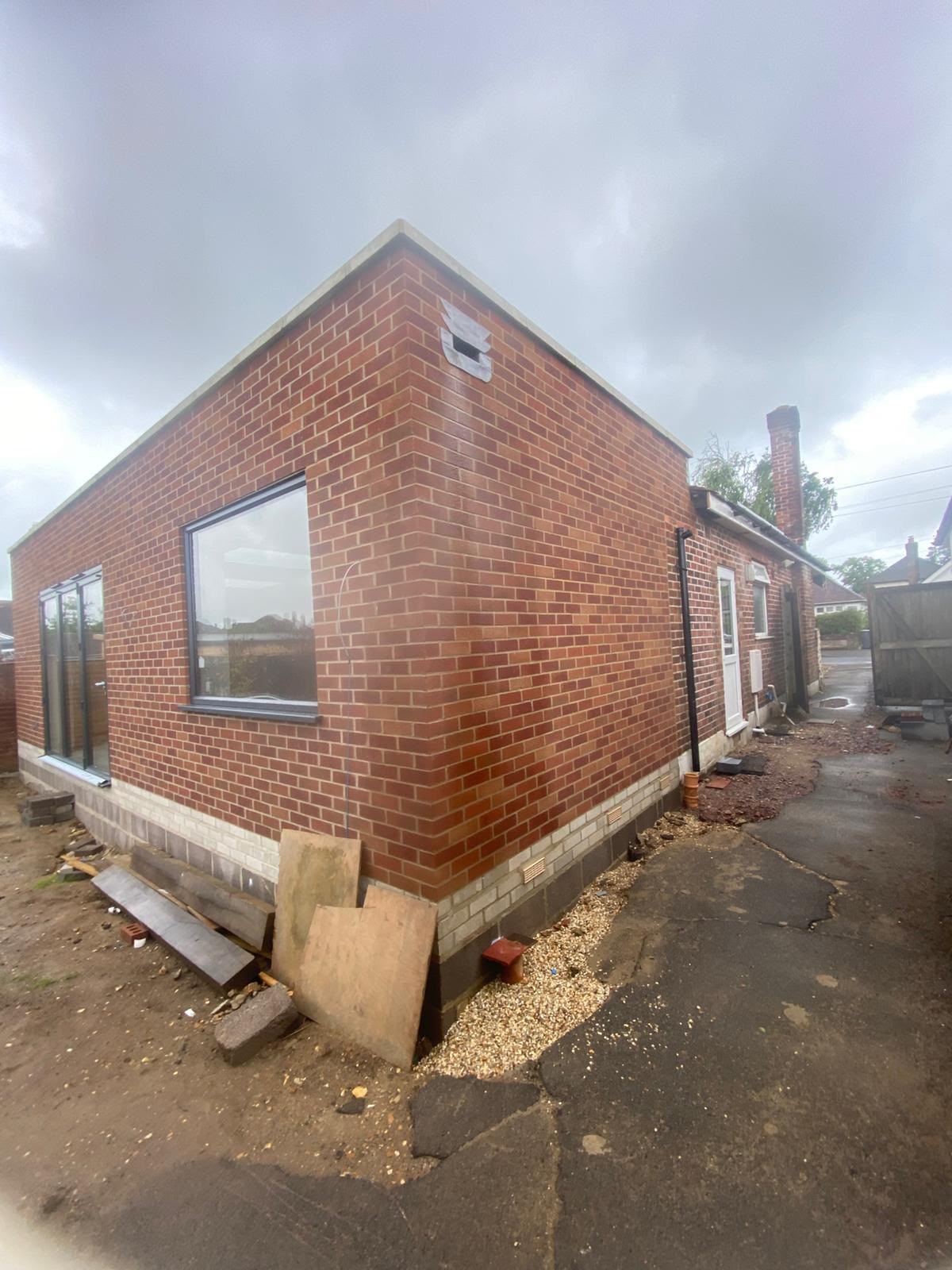
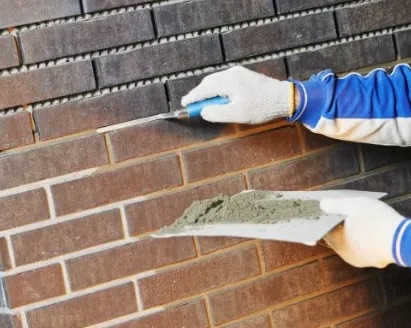
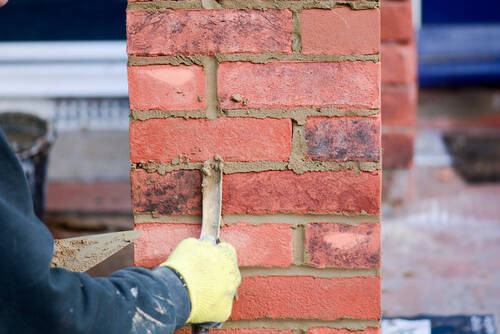
Lime repointing on soft old brick. The brickwork around the village is soft, handmade and solid wall, built so that water leaves through the joint rather than through the face. We rake out by hand to about twice the joint width, and a disc cutter never goes near it because the cut widens the joint for good and takes the arris off. Back in goes an NHL lime mix with the sand picked for colour and grain against what came out. The profile is matched to what the wall has: flush or slightly recessed on a sheltered face, weather struck on the south west elevation where the driven rain comes from. You approve a sample panel, cured rather than wet, before we start an elevation.
Flint walls, quoins and banding. A lot of the older walling here is flint with brick quoins, brick banding through it and a brick or stone coping on top. Flint has almost no bond to it, so the mortar is doing all the work, and once the top of the wall lets water in the flints start to loosen from the head down. We take the loose material out, rebed it in a fat lime mix, gallet the joints with small chips the way the wall was built, and rebuild the quoins and the coping so the head of the wall sheds water instead of holding it. Plenty of the old cottages sit on a brick or flint plinth with something softer above, and where that has been patched in cement water gets trapped and the brick behind goes to powder.
The village sits on a slope and a good many of its boundary walls are holding a bank back on footings that would not be allowed today. Once a coping goes the wall fills with water and bows, so we reset or replace copings, rebuild bowed lengths off a proper base, put weep holes into anything retaining ground and tie gate piers into the wall rather than leave them on the end. A stack out here stands in clear air and is usually the first thing on the building to go: cracked flaunching, pointing gone from the top courses, then a lean. Where the roof is thatched the access has to be designed around the reed rather than dropped onto it, and that scaffold is priced as its own line so you can see it. Barns, outbuildings and new work are the rest, with materials chosen so a new wall does not shout against an old one.
How it runs
From your call to a written price
Winterborne Stickland has its own conservation area and 25 listed entries for a village of its size, so the first question is what your building actually is. Like-for-like repointing and brick repair are maintenance, but on a listed building or a listed wall even plain repointing counts as alteration and needs listed building consent from Dorset Council. In the conservation area appearance is controlled, so changing a material, a colour or a joint profile rather than putting it back can need planning permission, and the Planning Portal sets out where that line falls. A rebuilt boundary wall has height limits under the guidance on walls, gates and fences, lower again in a conservation area. Structural work goes through building control, and on a shared wall the Party Wall etc. Act 1996 sets a notice period.
Cost
What decides the price of a brickwork job
No rate per square metre. Access first: a cottage gable that is also the lane boundary, a thatched roof where the scaffold has to stand clear of the reed and a farm wall you can park a van alongside are three different set ups. How long the platform stands matters as much as its size, and work at height rules are why it is a priced line. Hand raking, and matching a lime mix by panel, is where the hours go. Ask what the mix is and whether the scaffold is in.
If something has moved
Loose brickwork, or a wall that has shifted
Ring rather than use the form. Anything overhead or leaning jumps the queue, and the first visit is about making it safe. Around Stickland it is usually a roadside wall caught by something wide coming through the village, or a stack that has moved in a gale off the down. The phone is answered 24 hours for emergencies; scheduled work runs Monday to Friday, 8am to 6pm.
The one local thing
Exposure, frost, and the right time of year to point
The village lies in an open chalk valley and its most exposed elevations face south west, with very little between them and the weather. Driven rain does not wear a wall evenly. It works at the edges and the openings first: the reveals, the heads over windows, the verge, the coping, the top courses of a stack and the corner where two walls meet.
The middle of a panel is the last part to fail. So on most buildings here the sensible job is one face done thoroughly, with the joints raked back far enough and a profile that sheds rather than holds water, plus the details on the other faces that are actually letting water in.
The other thing exposure decides is when the work happens. Lime mortar cures slowly and it will not take a frost while it is still green, and up here frost arrives earlier in the autumn and hangs about later in the spring than it does down on the coast. That makes the window for lime pointing roughly spring to early autumn, and it is a real constraint rather than a tradesman's excuse. If someone offers to point your exposed gable in November, ask what happens to it in January.
Our advice for the village is to get the wall looked at and priced over the winter, book it for the warm months, and use the cold weeks for the work that is not weather dependent: cutting out and replacing brick, rebuilding a length of roadside wall, resetting coping. It costs nothing to plan it that way round and it is the difference between a repair that stays put and one you pay for twice.
Who you are dealing with
A local firm you can check
Stickland is a longer run for us at about eighteen miles, so we tend to plan work in the Winterborne valley rather than dash out to it, and we will tell you honestly when we can be there. We cover the DT11 villages, Winterborne Kingston, Winterborne Whitechurch, Turnworth, Stourpaine and Bryanston, along with Blandford and the rest of north Dorset.
Bournemouth Roofing & Building Ltd, registered in England and Wales, company number 15471719, which you can look up in a minute. Thomas Hannen's business, and he is the one who comes out to price the job, not a salesman. A verified customer's 10 out of 10 on Checkatrade. The visit and the written quote are both free.
Questions
Winterborne Stickland questions we get asked
How do I find out what protection our cottage has?
Two separate checks, and they are not the same thing. The National Heritage List tells you whether the building itself is listed, and Winterborne Stickland has 25 entries including Quarleston Farmhouse and the church of St Mary. Dorset Council mapping tells you whether you sit inside the Winterborne Stickland Conservation Area, which controls appearance whether or not a building is listed. Both get checked before I put a price on anything.
Which wall goes first if we do it in stages?
The south west facing one. Exposure sets the specification around Winterborne Stickland, and driven rain lands on corners and openings rather than on the flat of a wall, so the quoins, the verge and the heads of the windows on that face empty out first. A sheltered north east wall on the same house can be a long way behind it. Staging that way spends the money where the water is.
We want a new wall to the front. Will anyone object?
It gets looked at harder here than it would elsewhere. Winterborne Stickland sits within the Dorset national landscape, where anything visible from a public place draws design scrutiny, and inside the conservation area the material and the coping matter as much as the height. Built in a matching brick or stone with a traditional cap it rarely causes trouble. Built in modern block with a concrete cap, it does.
Is the ground here likely to be moving the wall?
Probably not the ground itself. Winterborne Stickland sits on freely draining soil, so the seasonal swelling and shrinking that opens joints on heavier land is less likely to be the cause. That pushes the diagnosis back onto the wall. A shallow footing, a corroded tie, a hard cement repair holding water in, or mortar simply at the end of its life. I would want to see the crack before choosing between them.
It is a long way out. Will you come for one repair?
Yes, though it gets planned rather than squeezed in. Winterborne Stickland is 17.6 miles from the yard, so a single repair is usually paired with another visit out that way or booked as a half day of its own. Thomas prices it himself either way, and neither the visit nor the written quote is charged for, whether the job is one pier or a whole elevation.
Nearby, and next door
Bricklaying and repointing near Winterborne Stickland
Bricklaying and repointing nearby
Our other trades in Winterborne Stickland
Everything we do in Blandford Forum Bricklaying and repointing, all areas Every area we cover
Free quote
Get a price for the brickwork in Winterborne Stickland
Tell us what the wall is doing and we will come and look at it. Free site visit, free itemised written quote, and a straight answer on what can wait.