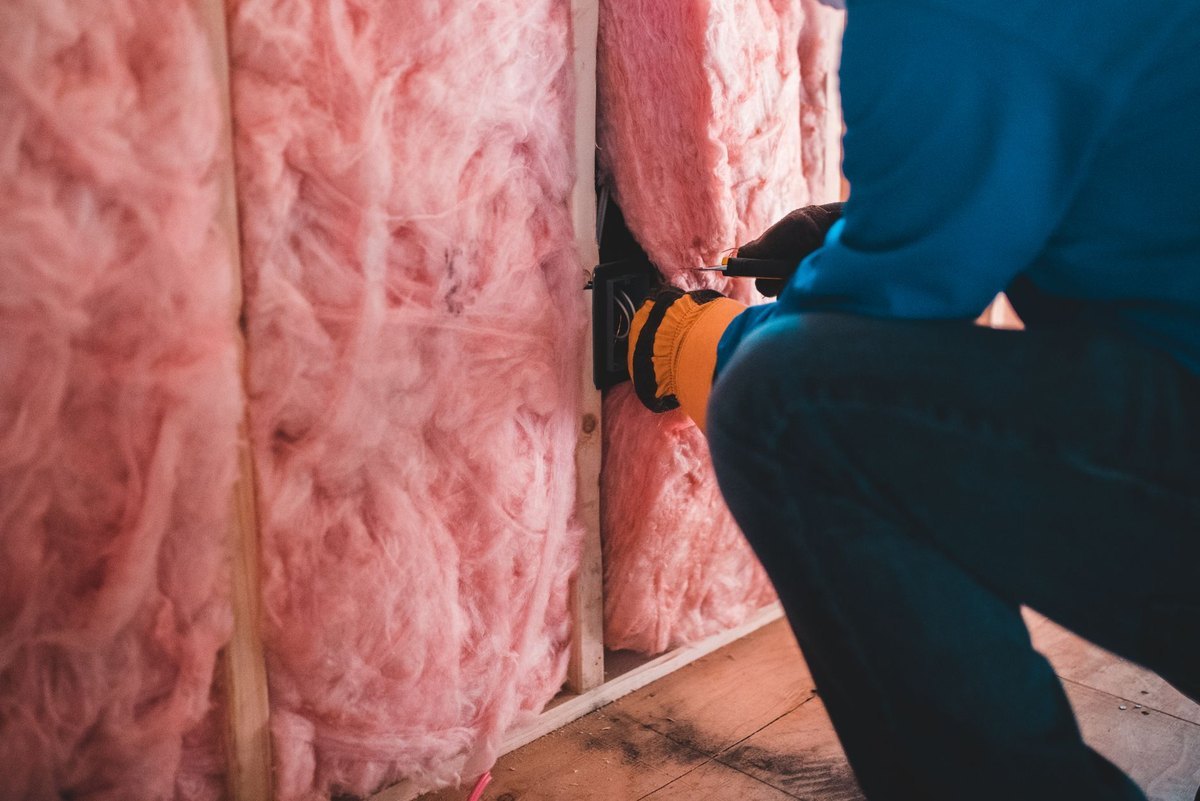
Wall insulation in Winterborne Stickland
A banded flint wall is thick, uneven and has nothing to fill, so a lining here is a battened job rather than a board on dabs.
The site visit is free and so is the written itemised quote. Thomas Hannen prices every job himself.
A lot of the older walls in the Winterborne valley are flint with brick bands and quoins, and a flint wall is not a flat one. The inside face wanders, the core is rubble and lime, and there is nothing to fill. That rules out dabbing insulated board straight onto it, and it means a lining here is a battened or studded job scribed to what is actually there.
The calls are a cold room on a thick old wall, mould where the plaster meets the floor, and people who have been told their wall has a cavity when it plainly has not.
We start by finding out what the wall is: thickness at a reveal, what shows where the plaster has come away, and a borescope only where there is genuinely a cavity to look into. The site visit is free and so is the written itemised quote.
The work
Lining a wall that is not flat
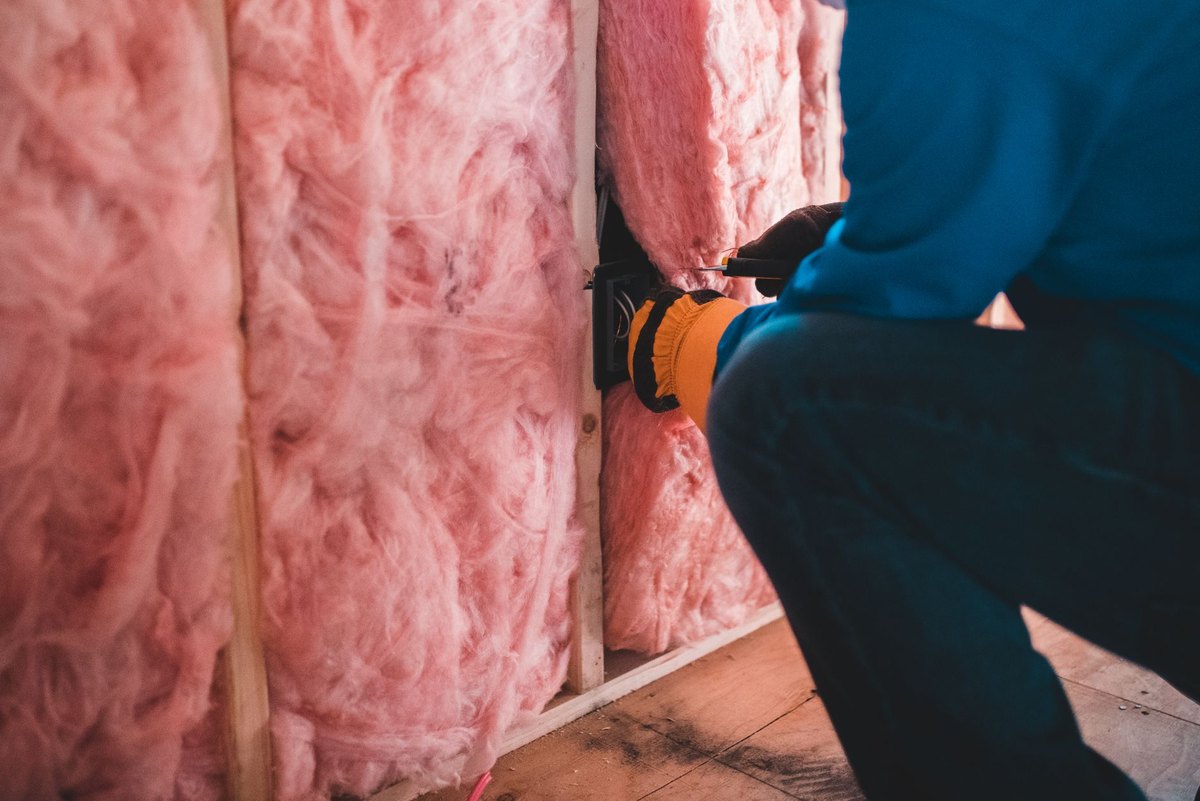
Flint, brick and rubble. A banded flint wall is two faces with a lime and rubble core between them. It is thick, it is irregular, and it has no cavity in any useful sense, so nothing can be injected into it. Where a modern house in the village has a proper brick and block cavity, one hole in a mortar joint and a borescope gives the width, whether it is clear and dry and whether a failed or slumped fill is in there.
Why dot and dab does not belong here. Insulated plasterboard bedded on dabs needs a reasonably true wall, and it leaves a void behind the board. On an irregular flint wall you get an uneven, badly bonded lining with air moving in the gap behind it, which carries warm moist room air onto a cold surface. That is how you get condensation inside a wall you have just insulated.
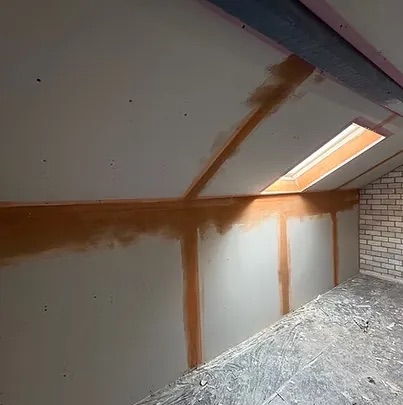
Battens and studs, scribed. The proper answer is timber battens packed and scribed to the wall, or an independent stud set off it, with PIR such as Celotex or Kingspan cut to a friction fit between them and a second layer over the timbers so they are not cold bridges themselves. Taped and skimmed to BS 8000-8. Slower than dabbing, and the only way to get a flat, warm wall out of an old one.
Breathable where the wall needs it. A lime and rubble wall works by taking water in and giving it back. On those, a vapour open build up in wood fibre and lime replaces the foil faced board, so the wall can still dry inwards. BS 5250 sets out how interstitial moisture is managed, and it is the reason the material choice follows the wall rather than the price list.
Cavity fill on the later houses. Where the cavity is sound and dry it takes bonded bead or blown mineral wool from outside, drilled in a pattern and made good in matched mortar. We do not offer a guarantee scheme of our own; a cavity fill is normally installed under an independent one, so ask whoever drills your wall which scheme covers it.
External wall insulation. Boards and a fresh render over a render carrier give the best U value on a solid wall, but rendering over banded flint hides the reason the building looks the way it does, and in the conservation area that is a planning matter before it is a thermal one.
Junctions and ventilation. Reveals take a thin board or aerogel, and on a thick wall the reveals are deep, so they matter more here than on a modern house. The threshold and the floor junction get returned, joist ends built into the wall keep air around them, and trickle vents, a working extract fan and clear air bricks go in with the work because Approved Document F still has to be satisfied in a tighter house.
How it runs
From your call to a written price
Same team from first visit to last, one person to ring, and no sub-contracting your work out to somebody you have never met. The quote is itemised, not a figure on the back of a card: the survey and any borescope check, the system and its thickness, making good around windows and doors, ventilation works, and disposal on separate lines, so you can compare it properly against anyone else's.
Nothing is left open or unusable overnight. The site is swept at the end of each day rather than the end of the job, and what comes out leaves with us. If something turns up once we start that nobody could have seen, you get a photograph and a price before we carry on.
Dorset Council is the planning authority and building control. Lining a wall inside is not development, which the guidance on insulation confirms, while cladding or rendering the outside falls under what the rules say about cladding a wall. The village has its own conservation area, so external wall insulation here is an application rather than an assumption, and Dorset Council keeps the listed entries for the twenty five or so listed entries in the parish, on which internal lining and even a change of plaster can need consent. regulation 23 brings a whole wall up to the Part L standard once more than half of it is renovated.
Cost
What decides the price of a wall insulation job
No rate per square metre, because the wall area is the easy part; what happens at every window, door and floor junction is not.
Getting to it. A flint and brick cottage on the street, a farmhouse with walls two feet thick and a post-war house on the edge of the village are three different jobs. Cavity fill is drilled from outside and a bungalow comes off a tower where a three storey gable wants a scaffold. Internal lining is worked room by room from inside, so it is your rooms rather than a platform that gets disrupted. The work at height rules still set the platform.
Which wall you actually have. A cavity that is clear and dry can be filled in a day. A solid wall cannot be filled at all, and has to be lined inside or insulated outside, which is a different job at a different price. A borescope through one drilled hole settles it, and no honest quote is written before that.
The junctions, not the field of the wall. Reveals at windows and doors, the floor junction, the eaves and any party wall are where heat escapes and where condensation shows up if the detailing is wrong. That work is slow, it is most of the labour, and it is the first thing a cheap quote leaves out.
Comparing quotes? Ask whether the wall has actually been checked with a borescope or just assumed, what system and what thickness is specified, how the reveals and floor junction are being detailed, whether ventilation is being addressed, and who makes good the plaster and decoration afterwards. Two quotes for the same job are usually two different jobs.
If damp has appeared
Damp or mould after a wall was insulated
Ring rather than use the form. Damp patches or black mould appearing on an outside wall after cavity fill or internal lining usually means water is tracking across the cavity, or warm air is reaching a cold surface at a junction. We look before we take anything out, because the fix depends on which of those it is. If plaster has started to come away from an old wall, leave it and ring, because what is behind it tells us more than a patched repair would. The phone is answered 24 hours for emergencies; scheduled work runs Monday to Friday, 8am to 6pm.
Worth knowing
Why an uneven wall changes the whole method
Flint is a facing material and it is laid in courses with brick to bring the wall back to level. What that leaves you with inside is a wall that is roughly plumb and nowhere near flat, often with a soft lime plaster over it that has moved with the building for a century. Any lining has to deal with that reality rather than assume a flat face.
Battens packed out and scribed take longer than dabs, and they are the difference between a lining that touches the wall properly and one sitting on five blobs with a moving air gap behind it. That gap is the problem: warm damp air from the room gets into it, meets cold masonry, and condenses where nobody can see it. The board looks perfect for two years.
It also changes what is realistic. On a wall two feet thick with deep reveals, the reveals are a genuine share of the surface, and the room loses less width proportionally than it would in a modern house. Thick old walls are slow to heat and slow to lose it, which is worth knowing before you decide how much of the house to do.
Who you are dealing with
A local firm you can check
We cover Winterborne Stickland, Winterborne Whitechurch, Turnworth and the lanes towards Blandford, broadly DT11, under Dorset Council. You are dealing with Bournemouth Roofing & Building, the trading name of Bournemouth Roofing & Building Ltd, registered in England and Wales, company number 15471719, which you can look up in a minute. Thomas Hannen's business, and he is the one who comes out to price the job, not a salesman. A verified customer's 10 out of 10 on Checkatrade. The visit and the written quote are both free.
Questions
Winterborne Stickland questions we get asked
Can a flint wall be insulated?
Yes, on the inside, with battens or a stud scribed to the wall rather than board on dabs. What it cannot take is anything injected, because there is no cavity to inject into.
Why is dot and dab a problem on an old wall?
It leaves a void behind the board that air can move through. On a cold, irregular wall that means warm room air reaching a cold surface out of sight, and condensation forming there.
Our walls are two feet thick. Do we still need insulation?
Thick walls are slow rather than warm. They hold heat well once they have it and take a long time to get it, so a lining on the rooms you use every day is usually still worth doing.
Will the plaster have to come off first?
Often yes, at least where it is loose or where battens need a solid fixing. We would rather take it back and see the wall than fix into something that is already parting from it.
Can we render over the flint to insulate outside?
Technically it is possible; in the conservation area it is an application, and covering banded flint is a hard case to argue. Inside is normally the realistic route here.
Nearby, and next door
Wall insulation near Winterborne Stickland
Wall insulation nearby
Our other trades in Winterborne Stickland
Everything we do in Blandford Forum Wall insulation, all areas Every area we cover
Free quote
Have an uneven old wall looked at properly
Thomas comes out, finds out what the wall is made of and prices a lining that fits it rather than fights it. The visit and the quote are free.