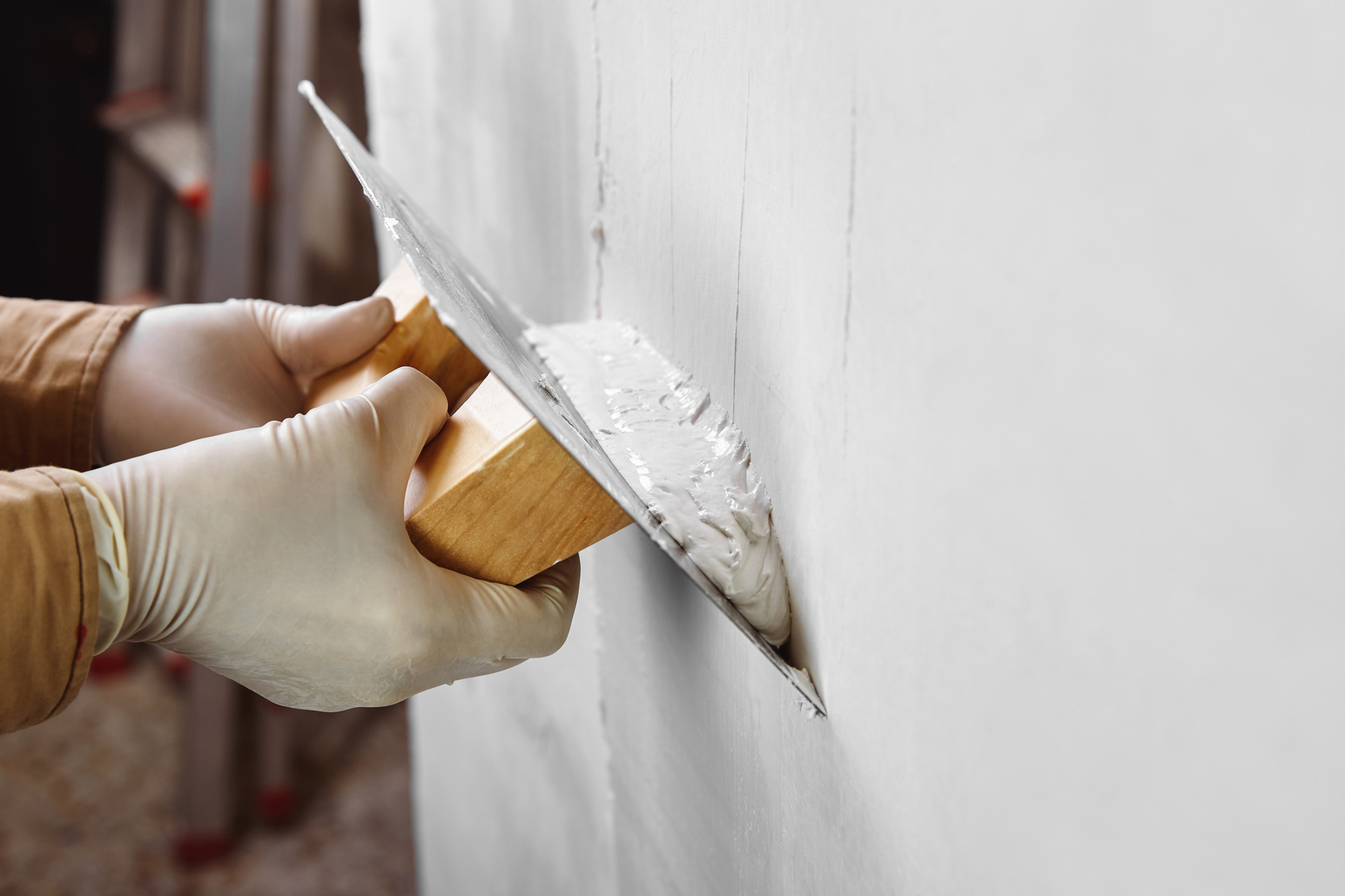
Plastering in Winterborne Stickland
Lath ceilings, lime work, skimming and external render across Winterborne Stickland and the DT11 villages. We sound the walls before we price them.
The site visit is free and so is the written itemised quote. Thomas Hannen prices every job himself.
If a ceiling in a Winterborne Stickland cottage has started to bow and shed dust, it is the lath fixings letting go rather than the plaster failing. Either it comes down and is boarded and skimmed in a day, or it is sound enough to fix from above and skim over. We will tell you which after ten minutes with a torch in the loft.
Most calls from this village are about something old rather than something new. A ceiling that has dropped a little between the joists and leaves grit on the furniture. Plaster that drums hollow along the bottom of a wall and has been patched twice already. Or a room that has just been bought and wants pulling back to something flat and clean without losing the shape of the house.
We come out, sound every wall and ceiling in the rooms concerned, get into the loft where we can, and tell you which of those you are dealing with. What is behind the surface in the old part of the village is flint and brick or cob rather than blockwork, and that decides the specification far more than the size of the room does.
The work
A dead straight wall in a crooked room looks wrong
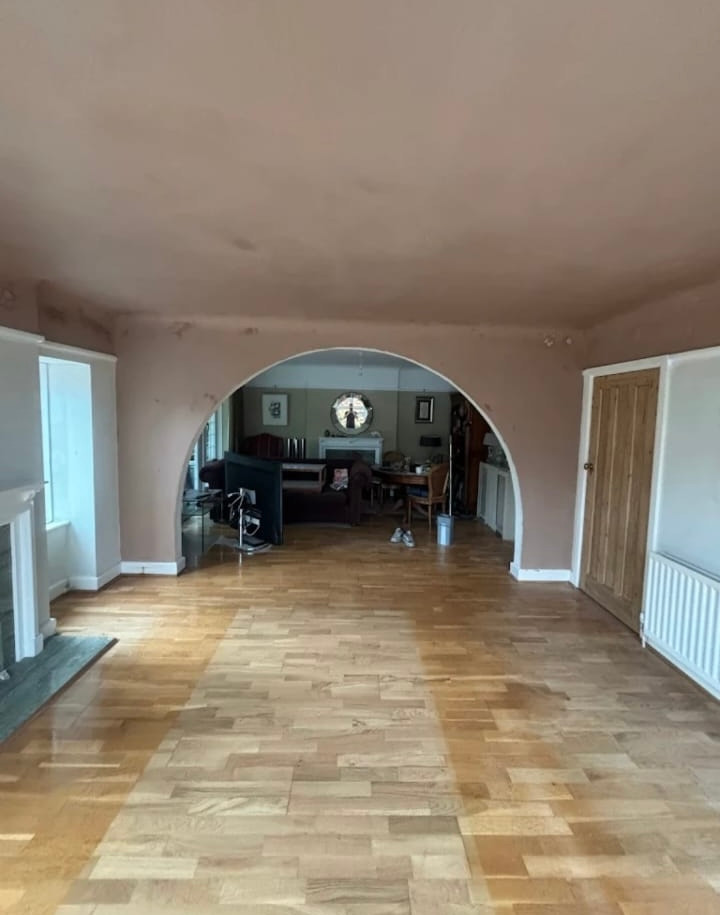
Lath and plaster ceilings. The commonest thing we are called to here. Thin riven laths nailed across the joists with haired plaster squeezed through the gaps to form a key on the back. The plaster itself usually outlives the nails, and once the key snaps off the ceiling hangs on nothing and bellies down. If more than about a third of the key has gone, it comes down, gets boarded and is skimmed, a day for a bedroom and two for a big room with beams to work round. If it is sound and only tired, it is cheaper to secure it from the loft side and skim over, and we would rather do that than sell you a ceiling you do not need.
Lime plaster on flint, brick and cob. The walls in the old part of the village are solid, with no cavity behind them and nothing under them to stop ground water rising. They dry through their own face. Put gypsum hardwall and a modern paint over that and you have closed the only route out, and the salts come back through in a white bloom within a couple of winters. We hack off what has blown, brush the background back, then work in a haired lime backing coat in more than one pass and finish it breathable.
Old cottages here have wide fireplace openings and window reveals two feet deep, and both are where a rushed job shows first. A breast that gets warm and carries old soot behind it will push gypsum straight back off, so that goes in lime too. Reveals get a stop bead run properly plumb and an external corner an angle bead, and we take the trouble to keep the soft edges and slight waves of an old wall rather than laser it flat, because a dead straight wall in a crooked room looks wrong and you cannot undo it.
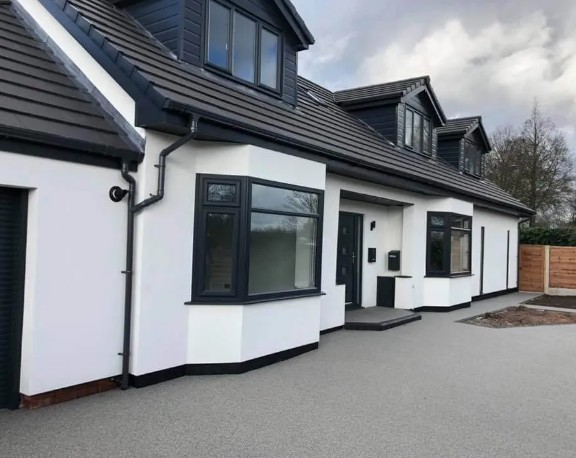
The bungalows and houses added along the village in the last sixty years are gypsum on brick or block and want a skim, not a strip: covers down, a clean, PVA where the background is dusty, two passes of finish coat, and a mist coat before you decorate. Where one has blown, the backing coat is floated to a rule, browning where the block pulls and bonding on a dense face. Artex ceilings from the seventies skim over well once stabilised, and we never sand or scrape one, because coatings of that age can contain asbestos. Extensions and outbuilding conversions go on dabs where the blockwork is flat and dry, stud where it is not. Outside, the sand and cement and the pebbledash on the newer houses craze and drum in the end, and we repair far more render than we replace, in lime on old fabric and in a silicone thin coat or monocouche on modern block.
How it runs
From your call to a written price
Permission, plainly. It starts with a free site visit and a survey of every wall and ceiling in the rooms concerned, not just the one you rang about, and the quote is itemised: protection, hacking off, boarding, the backing coat, beads, finish and disposal on separate lines. Plaster inside an ordinary house is your business and nobody else's, and patching render like for like is repair. This village is one of the places where that general rule does not go far enough: the old core is the Winterborne Stickland conservation area and there are twenty-five listed entries here, Quarleston Farmhouse and the Church of St Mary among them. Re-render most of an elevation rather than patch it and Approved Document L brings building control in.
Cost
What decides the price
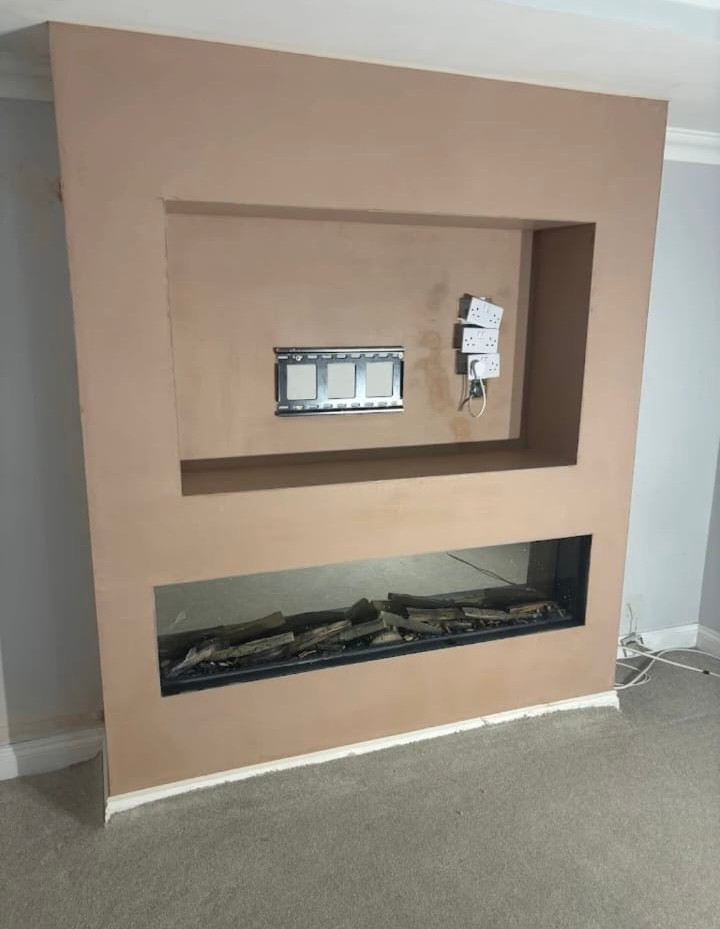
There is no useful rate per square metre: the square metres are the easiest thing to measure and the least useful thing to know. A flint and brick wall under its original lime, a chimney breast somebody skimmed in gypsum, and an eighties extension with sound plasterboard are three different prices under one roof. Access matters as much: a thatched cottage on the bend of the street with nowhere to leave a van, a farmhouse up a long track, and a modern house with the drive at the door. Ask any quote what backing coat is going on, and who takes the waste. Outside, a tower does for low work and a gable wants a scaffold.
If it has just gone
A ceiling on the floor, or plaster off after a leak
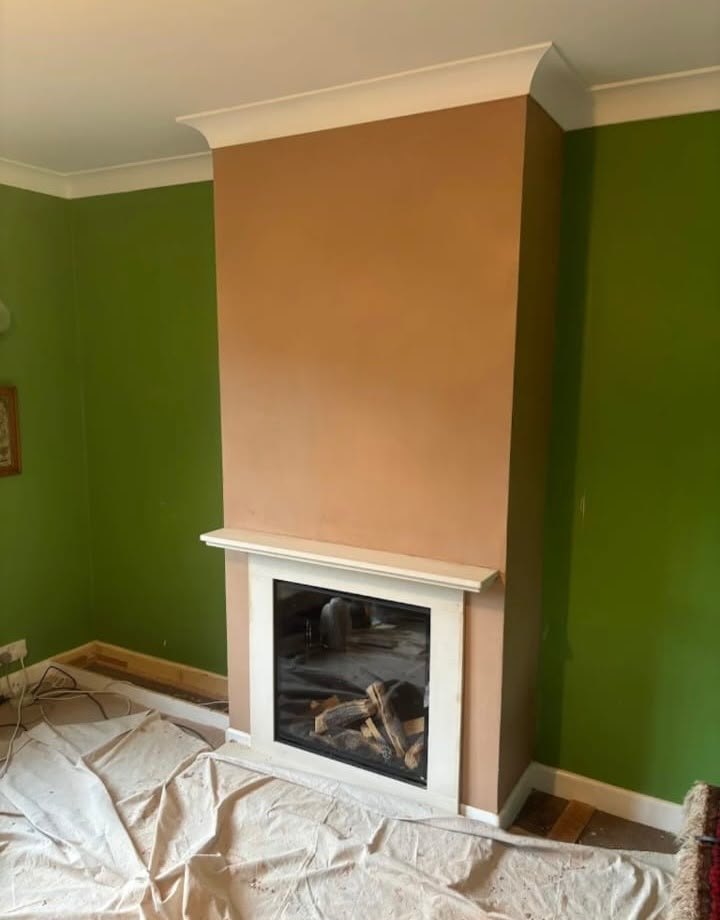
Ring rather than use the form. A ceiling that has cracked and dropped, plaster off a wall after a leak, or render that has come away from a gable goes to the front of the queue. We are about eighteen miles out by way of Blandford, so we will normally have someone with you inside a day, and the same day when it is unsafe.
Worth knowing
What listing and the conservation area actually stop you doing
There are about twenty five listed entries in and around this village, and a conservation area over the old core, and the two work differently in a way that changes your specification rather than just your paperwork. Listing covers the whole building, inside as well as out, so an original lath ceiling, a moulded cornice and even the lime plaster on a wall can be part of what is protected. Taking a lath ceiling down and boarding it is the job that catches people out, because it feels like maintenance and can need listed building consent.
Conservation area control works on appearance from the outside: adding render to a wall that is bare flint or brick, taking render off, or changing the finish and colour are all changes of appearance, while repairing what is already there is not. Being in the Dorset National Landscape matters too, because the permitted development right that lets people elsewhere render a house without asking does not apply on designated land.
What that means when you are choosing between quotes is worth saying plainly. Consent takes weeks, so a job that needs it needs a date in the diary rather than a start next Tuesday. Like for like repair almost never needs it.
And a lime specification costs more in labour than a gypsum one, but on a listed cottage it is the one that will be accepted anyway, so a cheaper quote that hacks the lot off and hardwalls it is not a saving. If your house is neither listed nor in the conservation area, none of this applies and we will say so at the visit.
Who you are dealing with
A local firm you can check
We cover Winterborne Stickland and the DT11 villages, Winterborne Houghton, Winterborne Whitechurch, Turnworth and Durweston, and down the valley into Blandford Forum. Bournemouth Roofing & Building Ltd, registered in England and Wales, company number 15471719, which you can look up in a minute. Thomas Hannen's business, and he is the one who comes out to price the job, not a salesman. A verified customer's 10 out of 10 on Checkatrade. The visit and the written quote are both free.
Questions
Winterborne Stickland questions we get asked
Quarleston Farmhouse is listed. How do we check ours?
Search the national list by address, or ask Dorset Council. There are 25 listed entries in this parish, Quarleston Farmhouse and the Church of St Mary among them, and most of the rest are houses rather than monuments. Listing runs to the interior, so plaster, cornices and lath ceilings inside are covered as well as the elevations. If yours is on the list, work needs consent before it starts and the specification is usually lime.
We want to render over the flint and brick. Allowed?
That would be a change of appearance, and Winterborne Stickland has its own conservation area, so it is not a decision to take standing on site. Covering exposed flint and brick alters how the building reads from the street, which is exactly what the designation controls, and Dorset Council would need an application. There is a fabric argument too: a solid flint wall dries through its face and a dense modern render traps that moisture inside.
Can a lath and plaster ceiling be saved rather than replaced?
Often it can. Where the plaster keys pushed through the lath are still holding, the ceiling can be secured from above and either overboarded or repaired in lime. Where the keys have sheared off, it comes down. In a listed Stickland cottage that decision is not ours alone, because removing an original ceiling needs consent first. We test by pressing from below and looking at the keys from the loft wherever there is access.
The house sits in the open. Does that show on the walls?
It shows on the south west face. The exposed elevation here looks south west, twenty four kilometres in from the coast, and it takes the driven rain while the sheltered sides stay dry enough to look fine for years. On a rendered or limewashed wall the breakdown starts at the openings and at the base, where water concentrates. In practice that is one elevation of work rather than a wrap around the whole house.
Who actually comes out to look at an old cottage?
Thomas Hannen, who owns the firm and prices the work himself. On a listed or conservation area building here that matters, because the decisions are about backing coats, lime mixes and what the conservation officer will accept, not about picking a package off a list. The visit and the written itemised quote are both free. The company is Bournemouth Roofing and Building Ltd, registered in England and Wales, company number 15471719.
Nearby, and next door
Plastering and rendering near Winterborne Stickland
Plastering and rendering nearby
Our other trades in Winterborne Stickland
Everything we do in Blandford Forum Plastering and rendering, all areas Every area we cover
Free quote
Get a price for plastering in Winterborne Stickland
Tell us the address and what you have noticed. We will come out, sound the walls and ceilings, and put an itemised price in writing. No charge, and no obligation.