
Driveways and patios in Winterborne Stickland
Drives, parking and patios in the village, priced from the dig upwards rather than from the square metre.
The site visit is free and so is the written itemised quote. Thomas Hannen prices every job himself.
A drive in Winterborne Stickland is decided by two things before any surface is chosen: which way the ground falls, and what the digger finds in the first spit. Settle those on the site visit and the rest of it is ordinary work.
The calls we get from the village tend to be one of three. Loose stone that has rutted into tracks and is creeping out onto the street every time it rains. Water running off the road or down a bank and standing at a doorway. Or a house with nowhere sensible to leave a car, where the front garden or a side space would take one if it were built to carry a vehicle rather than a wheelbarrow.
So the survey starts with a hole and a look at the fall of the land, not with a brochure. We dig down to see what is under the existing surface, follow where the water goes now and where it would go once the ground is hard, and work out how a machine and a lorry get in. The written quote comes back with the excavation, the muck away, the sub-base, the edgings, the surface and the drainage each on their own line.
The work
Sloping ground, chalk and flint, and what that does to a drive
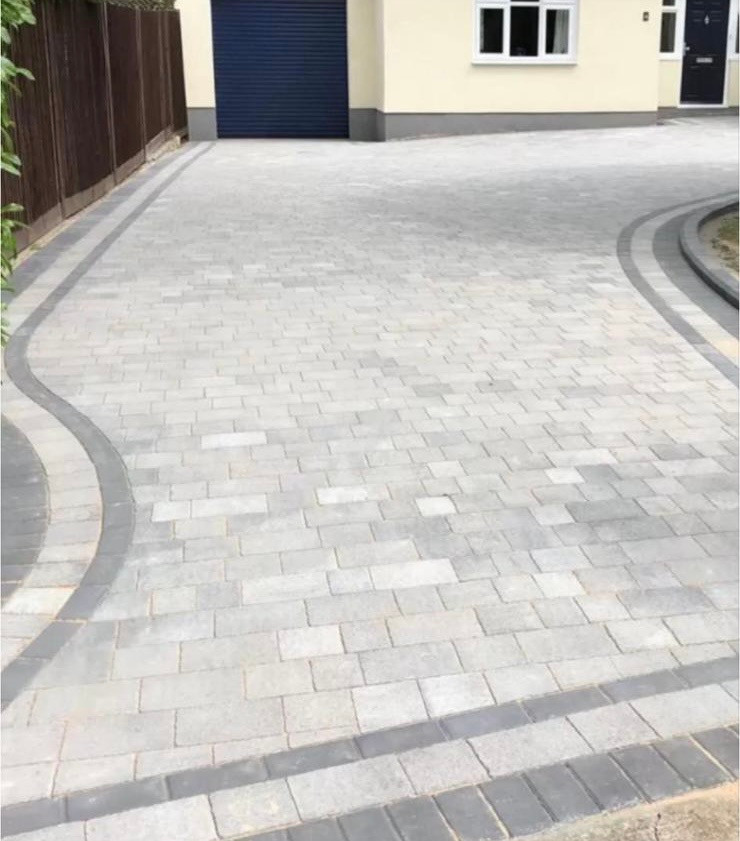
Drives that run downhill to the house. The village sits in a valley and a lot of the ground tips one way or the other, so a fair number of drives deliver water straight to a back door or a garage threshold. The fix is rarely a different surface. It is a channel drain across the head of the slope, a crossfall built into the formation so water leaves the running surface sideways, and an outfall with somewhere real to go. On anything steep we would talk you out of loose gravel and into resin bound, tarmac or block paving, because stone on a slope ends up at the bottom of it.
What comes out of the dig. Under the topsoil here you are usually into chalk and flint. Dry, that is a decent formation and it saves you money. Wet, chalk turns to slurry the moment a machine tracks over it, and the honest answer is to dig deeper, lay a geotextile membrane and bring the depth back up in clean stone rather than compact a soft base and hope. Flinty spoil is bulky and sharp, so disposal is priced as a grab lorry or a skip depending on where a vehicle can stand.
Gravel belongs in a village like this, but only contained: membrane, a compacted sub-base, an edge restraint against the borders and a bound apron for the first couple of metres at the entrance, with a cellular grid on a gradient. Flags go on a full mortar bed with the falls running away from the house and the finished level kept well below the damp proof course, and where a garden drops away a retaining edge and a step beat importing soil. On the older concrete and block paving, sinking is nearly always the base rather than the blocks, so we lift the affected area, correct the depth, re-compact and relay the same units, then re-sand with kiln dried sand. Where a bay is formed out of a front garden it needs a haunched edging, a build-up that will carry a car, and a way in and out that does not mean reversing blind. If a wall has to be opened, the new ends are rebuilt and capped, and Planning Portal guidance on fences, gates and garden walls covers where a boundary wall needs consent in its own right. A new crossing over the verge is a dropped kerb, and Planning Portal guidance on dropped kerbs explains how that is applied for.
How it runs
From your call to a written price
Dorset Council is the planning authority here, and the village has its own conservation area with 25 listed entries in and around it, the parish church among them. Where a house is listed, the council can want listed building consent for hard landscaping tight against the walls. Out at the front, hard surfacing past five square metres needs planning permission unless it is permeable or falls to a lawn, a border or a soakaway inside your own boundary, which is the test in Planning Portal guidance on paving your front garden. A patio at the back at ground level does not. The written quote itemises the dig, the disposal, the sub-base, the edgings, the surface and the drainage.
Cost
What decides the price of a driveway
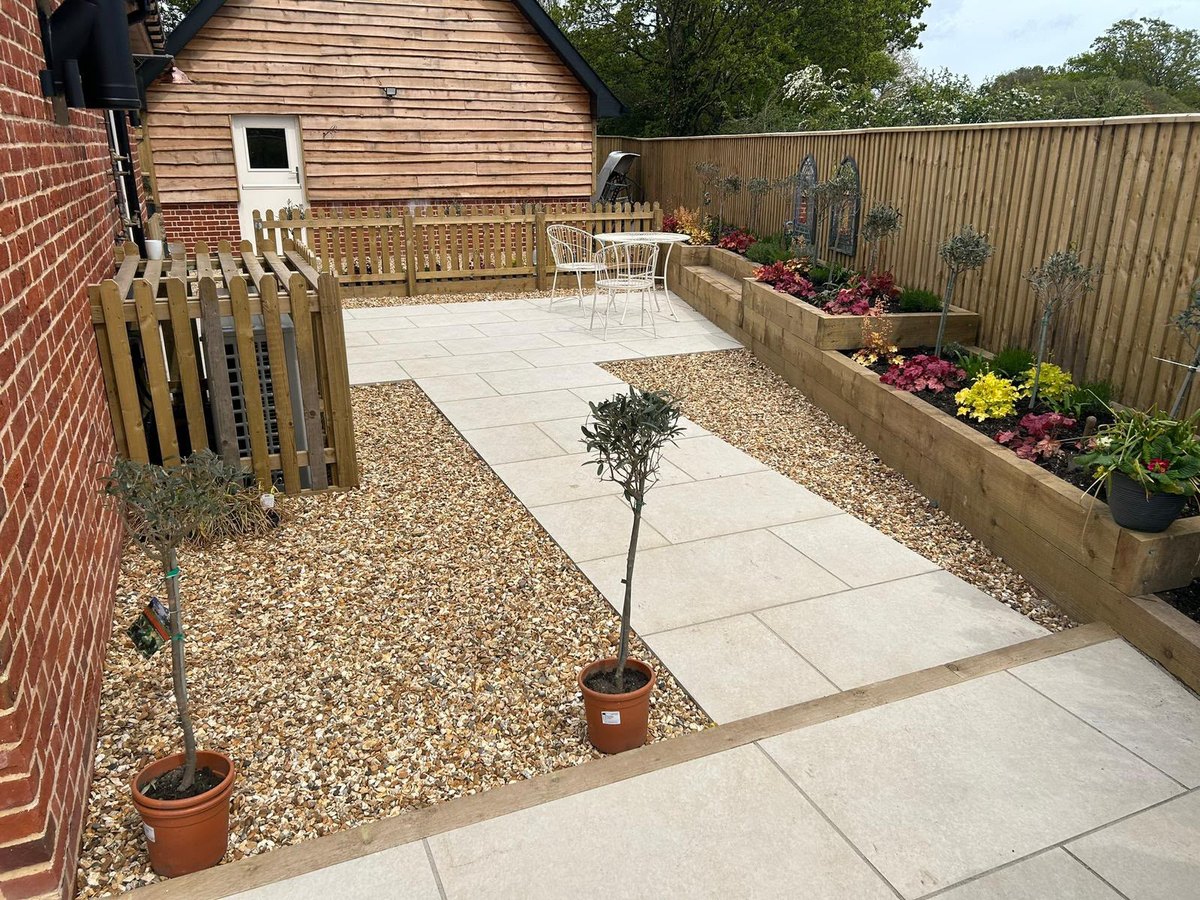
The valley does as much to a price here as the paving does. A cottage right on the street, a house up a bank behind a flint wall and a farmhouse at the end of a long track are three different jobs before a shovel goes in. Chalk that is dry is a decent formation and chalk that is wet is not, so what the trial hole shows changes the depth and the disposal. When you compare quotes, ask what the sub-base is and where the water is being taken.
If it is urgent
A trip hazard, or a drive that floods
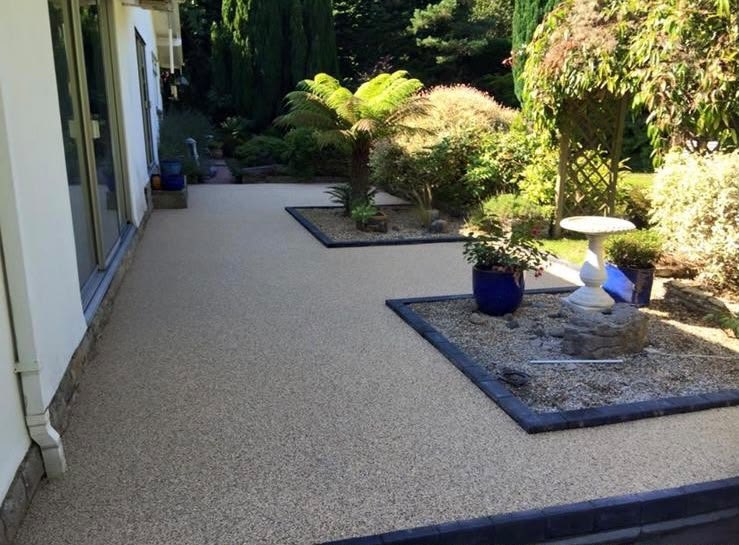
Ring for these rather than using the form. Water off the road standing at a doorway, or a slab that has dropped on a step somebody uses in the dark, are the two that will not keep. The first visit makes it safe and gets the water going somewhere; the permanent work is priced once the ground can be opened up.
Worth knowing
A conservation area village, and what it changes about the front of your house
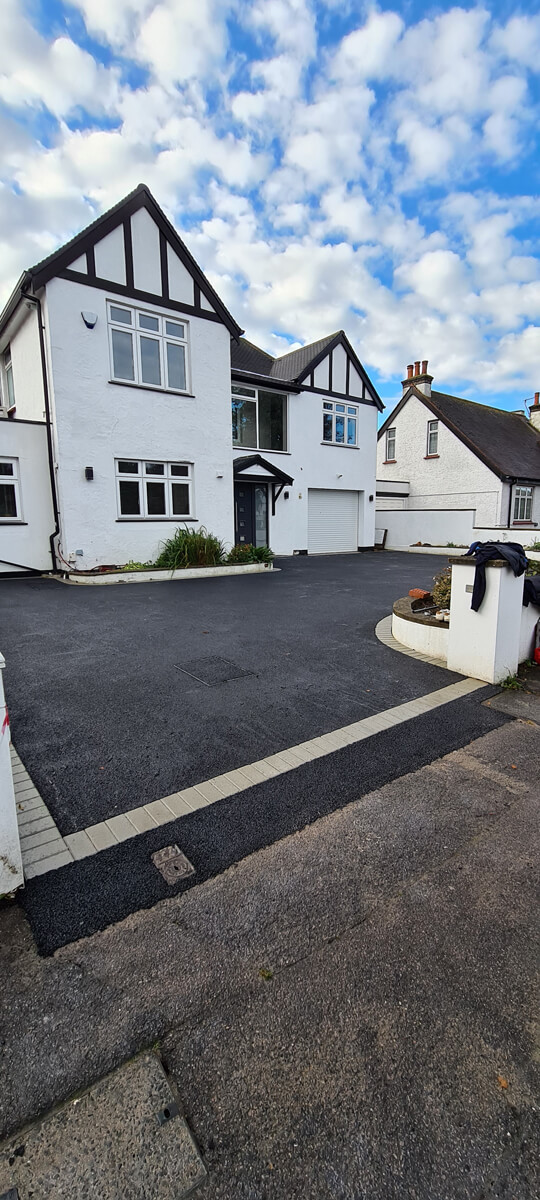
Winterborne Stickland has its own conservation area, and the part people get wrong is assuming it stops them paving anything. It does not. The permitted development test at the front is the same one that applies anywhere: keep the surface permeable, or drain it to a lawn, a border or a soakaway on your own land, and you are inside it. What the designation really controls is appearance, and that bites in two places most homeowners do not expect.
Trees are the first. Works to a tree in a conservation area need written notice to the council before anybody starts, which matters when a root plate is the reason your drive has lifted. Boundaries are the second. Taking down a front wall to make an opening is not automatically yours to do, and on a listed building it is a separate consent again.
The practical side is about materials. Flint, brick and hoggin are what the older boundaries and surfaces here are made of, so gravel, natural stone, clay pavers and a close-textured tarmac all sit comfortably against them. A large area of bright multi-coloured block paving does not, and if you ever do need permission it is the sort of thing that gets argued about.
Two things we would suggest either way. Keep the existing wall or bank if you possibly can and take the opening no wider than a car needs, because a wall you demolish is expensive to put back and never quite matches. And where a wall is opened, keep the flint and brick that comes out, because rebuilding the new ends in the same material is what stops the drive looking bolted on.
Who you are dealing with
A local firm you can check
We cover Winterborne Stickland, Winterborne Whitechurch, Turnworth, Stourpaine, Blandford Forum and the villages through the Winterborne valley, and DT11 generally. Bournemouth Roofing & Building Ltd, registered in England and Wales, company number 15471719, which you can look up in a minute. Thomas Hannen's business, and he is the one who comes out to price the job, not a salesman. A verified customer's 10 out of 10 on Checkatrade. The visit and the written quote are both free.
Questions
Winterborne Stickland questions we get asked
Will a new drive look wrong in this village?
It can, and stopping that is exactly what the Winterborne Stickland Conservation Area exists for. The council looks at the surface visible from the road, so like for like repair goes through while a change from gravel to strong coloured block does not. What tends to work here is self binding gravel or a reclaimed stone edge, with any block paving kept behind the house where it is out of public view.
Rain runs down to our back door. What fixes that?
A cut off above it, rather than a new surface. In Winterborne Stickland the water reaching a back door has usually come off the ground behind the house rather than off the paving, so relaying the terrace changes nothing at all. We put a linear channel or a shallow swale across the slope above the door, pipe it round to the low side, and only then reset the paving to fall away from the wall.
Can the existing blocks be lifted and reused?
Most of them. Clay pavers and decent concrete blocks come up clean where they were bedded on sand, and we allow roughly one in ten for breakage and for colour loss on cut edges. What does not get reused is the bedding sand and the old base, since that is normally why the drive failed. Reusing blocks keeps the appearance the conservation area expects and cuts the delivery back to stone only.
Our house is listed. Does a patio need consent?
It can, because listed status reaches the ground within the curtilage as well as the building itself. Winterborne Stickland has 25 listed entries, and raising a level against a wall, fixing a handrail into it, or lifting old stone paving are the things needing listed building consent from Dorset Council. A new surface set away from the house on ground already disturbed is normally straightforward. We read the entry first.
What weather stops you finishing a job?
Frost in the ground and standing water in the excavation. Stone base and blocks go down perfectly well in the cold, but concrete for edgings needs protecting below roughly three degrees and resin will not cure onto a damp surface. Winterborne Stickland is far enough inland to get proper frosts, so during a hard spell we bring the digging forward and hold the surfacing back rather than laying something that fails by spring.
Nearby, and next door
Driveways and patios near Winterborne Stickland
Driveways and patios nearby
Our other trades in Winterborne Stickland
Everything we do in Blandford Forum Driveways and patios, all areas Every area we cover
Free quote
Free quote for a drive or patio in Winterborne Stickland
Ring or send a photograph and we will come out and look properly. The visit and the written itemised quote are free.