
Driveways and patios in Stourpaine
Gravel drives that will not stay put, new openings onto the lane, yards that have rutted and patios levelled properly against an old wall, across Stourpaine and DT11.
The site visit is free and so is the written itemised quote. Thomas Hannen prices every job himself.
In a village like Stourpaine the surface is rarely the first decision. The lane is, and so is where the water goes. Getting materials in past a narrow frontage, keeping the finished level below the damp proof course of an old wall, and sending run off somewhere legal that is not the road are what shape the price and the programme here. Once those three are settled, gravel, block paving, resin, tarmac or stone are all straightforward.
People ring us here for three reasons. A gravel drive that has thinned to bare ground in the wheel tracks and spread itself across the lane. A patio at the back that has settled towards the cottage, so rain runs at the wall instead of away from it. And a frontage that has to take a car off the lane for the first time, which means an opening, a surface and a place for the water, all three of them tangled together.
None of that is complicated work. It is work that has to be planned around a narrow road and an old building, and that is the part a quote from somebody who has never seen the place will always get wrong. The site visit is free, the written itemised quote is free, and we will tell you on the visit if the honest answer is a repair rather than a rebuild.
The work
Drives, yards and patios in a village on a narrow lane
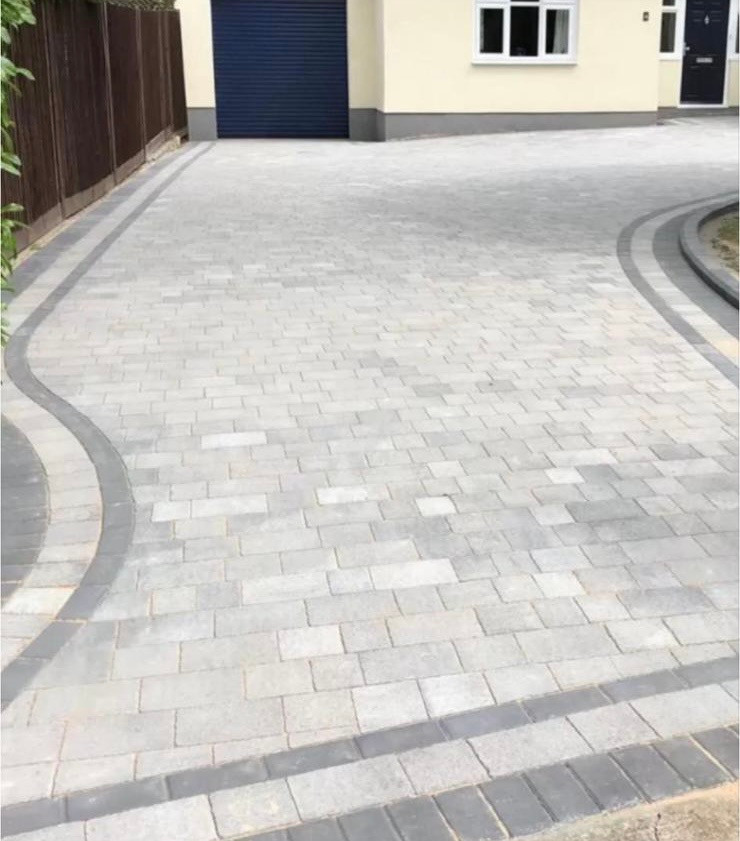
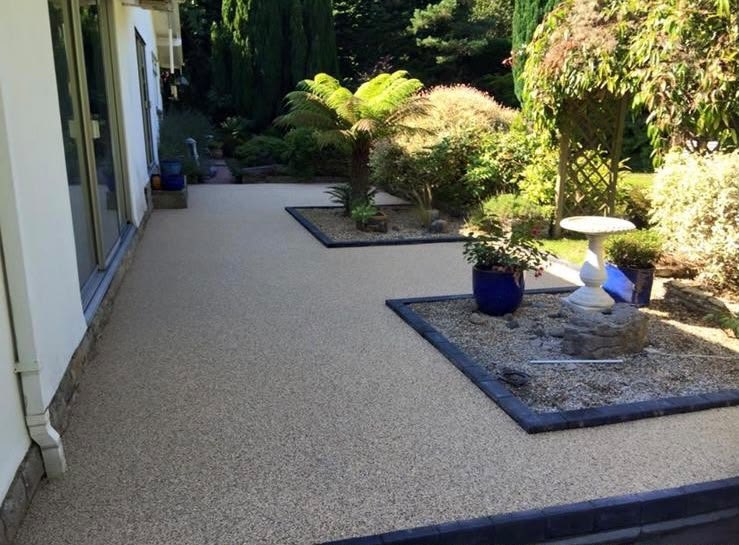
Gravel and bound gravel drives. The default surface in the village and the one we are asked to put right most. Loose stone migrates: it climbs out of the wheel tracks, finds the fall of the drive and ends up on the lane or in the gully at the bottom. What works is to scrape back to a firm formation, lay a geotextile membrane so the stone cannot press into soft ground, put in a compacted sub-base, then finish with an angular gravel that locks rather than rolls, or a grid or a resin bound layer where the drive slopes. Edge restraint is what actually keeps it in place, so a haunched kerb or a brick border at the boundary is part of the job and not an extra.
Openings, crossings and the verge. Where a frontage has never had a car on it the first job is the opening: taking down a short length of wall, rebuilding clean returns and a pier, forming a level standing behind it, and crossing the verge to the lane. That crossing is a dropped kerb, or vehicle crossing, application to Dorset Council as highway authority, and highways decide the construction, not us.
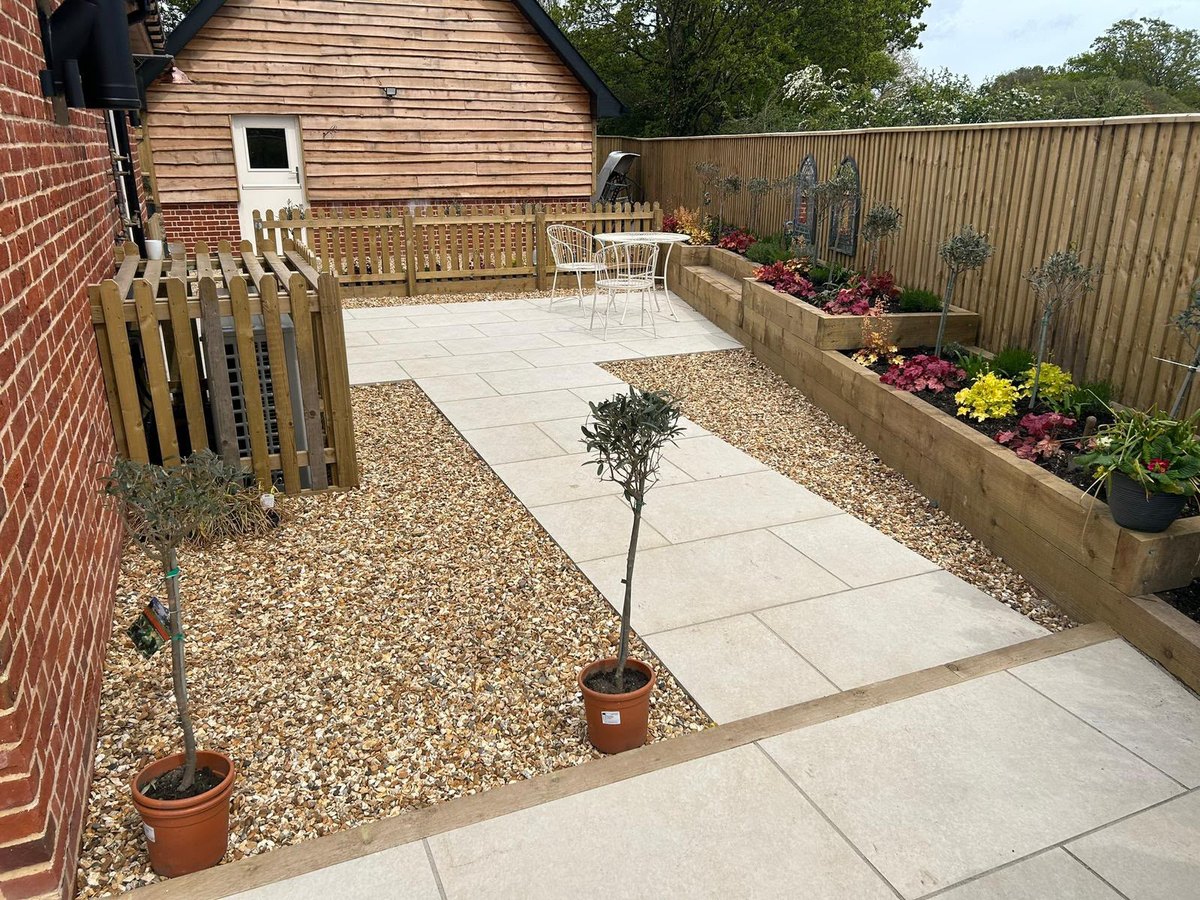
Patios and steps behind the cottages. Gardens here run away from the house or fall towards the water meadows, so a patio is a levelling job with steps in it rather than a flat rectangle, the flags bedded on a full mortar bed, and the jointing is a mortar joint rather than a kiln dried sand that washes down the fall, because an open joint ponds, holds weed and stains the flag. The rule we will not bend is the level at the house: paving finishes clear of the damp proof course with the fall running away from the wall, and where a threshold sits low we put in a channel drain and a step rather than raising the paving up the brickwork.
How it runs
From your call to a written price
One person to ring, and an itemised quote. Paving your own front garden is normally permitted development, and the test is water rather than size: any hard surface over five square metres has to be permeable or drain to a border, lawn or soakaway inside your boundary, which is what the front garden paving rules set out. Send it into the lane and it needs planning permission. The village is a conservation area, so appearance counts at the front, and new gates, walls and piers have their own limit, lower where they front a highway, so what you may build without permission is worth two minutes. Dorset Council covers all of it, including the vehicle crossing.
Cost
What decides the price of a driveway
No rate per square metre, because what is under it decides more than what goes on top. A drive a grab lorry can back onto is one job, a cottage frontage where the wagon tips at a passing place and everything comes down the lane by machine is another, and a walled yard with one gateway is a third. Ground conditions, the depth of the dig and how much muck goes away are the real variables. Surface water has to be dealt with on the property rather than run into the lane. Ask the depth of dig, the sub base, the drainage and who does the muck away, because the spoil and its disposal are a real part of a job on a lane like this.
If it is urgent
A trip hazard, or a drive that floods
Ring rather than use the form. A lifted slab, a sunken bay by a doorway or a gully that has stopped taking water will not wait, because somebody falls or water ends up against the house. We are eighteen miles up the valley, so mention it if the lane is running with water at your end. The phone is answered 24 hours for emergencies; scheduled work runs Monday to Friday, 8am to 6pm.
Worth knowing
The conservation area, and what it actually controls
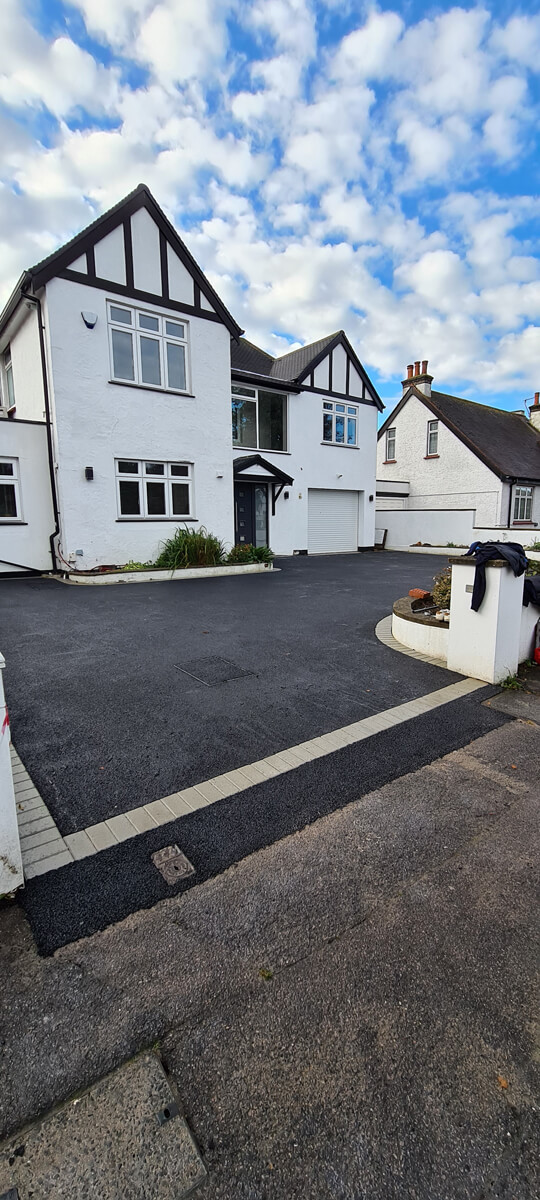
Stourpaine has its own conservation area, and it causes far less trouble than people expect once you know what it touches. It does not stop you paving your own frontage, and it does not dictate a material list. What it protects is the appearance of the place from the public road, so the things it genuinely bites on are the boundary rather than the surface: taking down a length of wall, putting up a new one, a pair of gates, a pier, or losing a hedge that has always framed the entrance.
Demolition of a wall in a conservation area can need consent in its own right, and that is a separate matter from whether the paving behind it is permitted development. The order to do it in is boundary first, surface second, because the opening is the part somebody else has a say in.
The practical version is simple. Keep the frontage looking like a frontage. Gravel, bound gravel and a stone or brick edge sit comfortably here and are permeable into the bargain, which solves the drainage question at the same time. If a wall has to be opened, keep the brick and flint that comes out and rebuild the returns and the pier with it, because matching it later costs more than storing it now.
And check what you have got before you start: there are 26 listed entries in the village, and walls, piers and outbuildings can be caught by a listing on the house they belong to, in which case listed building consent is needed and it is not a form you fill in afterwards. We raise all of this at the survey and put whatever applies in the quote in writing.
Who you are dealing with
A local firm you can check
We cover Stourpaine, Durweston, Blandford Forum, Bryanston and the DT11 villages along the Stour, with Dorset Council for planning and building control. Send the postcode if you want to be certain. Bournemouth Roofing & Building Ltd, registered in England and Wales, company number 15471719, which you can look up in a minute. Thomas Hannen's business, and he is the one who comes out to price the job, not a salesman. A verified customer's 10 out of 10 on Checkatrade. The visit and the written quote are both free.
Questions
Stourpaine questions we get asked
Does the conservation area rule out a hard surface at the front?
No. The Stourpaine Conservation Area governs what the front of a property looks like, not whether it is allowed to have one. Replacing an existing surface like for like counts as maintenance. Changing the material, particularly to something dark and continuous across a village frontage, is what officers take an interest in. Dorset will say whether they want an application, and gravel or hoggin edged in brick generally goes through without argument.
Our garden wall is listed but the house is not. Now what?
Then the wall is the constraint and the paving beside it is not. A listed boundary wall cannot be cut through for a new opening or crossing without consent, and with twenty six listed entries at Stourpaine that situation comes up more often than people expect. If the wall stays untouched we work off it: no plant leaning on it, no excavation near its footings, and hand dig for the last stretch alongside.
Why is the quote broken down instead of one figure?
Because on a job at Stourpaine the surface is rarely the biggest part of it. The dig depth, getting arisings out along a narrow lane, the edgings and any drainage all move independently of each other, and lumped into one figure you cannot tell what you are agreeing to. Thomas writes each as its own line after walking the plot, so a section can be dropped or added and the effect is visible.
Should the path against the house come first?
That is normally the order I would suggest. A path resurfaced two or three times over the years finishes higher than it started, and plenty of the older frontages at Stourpaine have crept up until the outside sits level with the inside. Taking that back down stops water tracking into the wall. The drive can follow whenever it suits you, because a rough drive does the building no harm at all.
How is material delivered when the lane will not take a lorry?
It gets dropped where a vehicle can stand safely and comes in from there by dumper. That is normal for Stourpaine and it goes on the quote as its own item rather than turning up later as an extra. We fix the drop point with you and, where it has to be on the lane, keep it to one delivery window instead of stone arriving all week. The road is brushed at the end of each day.
Nearby, and next door
Driveways and patios near Stourpaine
Driveways and patios nearby
Our other trades in Stourpaine
Everything we do in Blandford Forum Driveways and patios, all areas Every area we cover
Free quote
Get a written price for your Stourpaine drive or patio
Send the postcode and tell us what you are dealing with. We come out, look at the ground and the access, and put the price in writing with the days it will take.