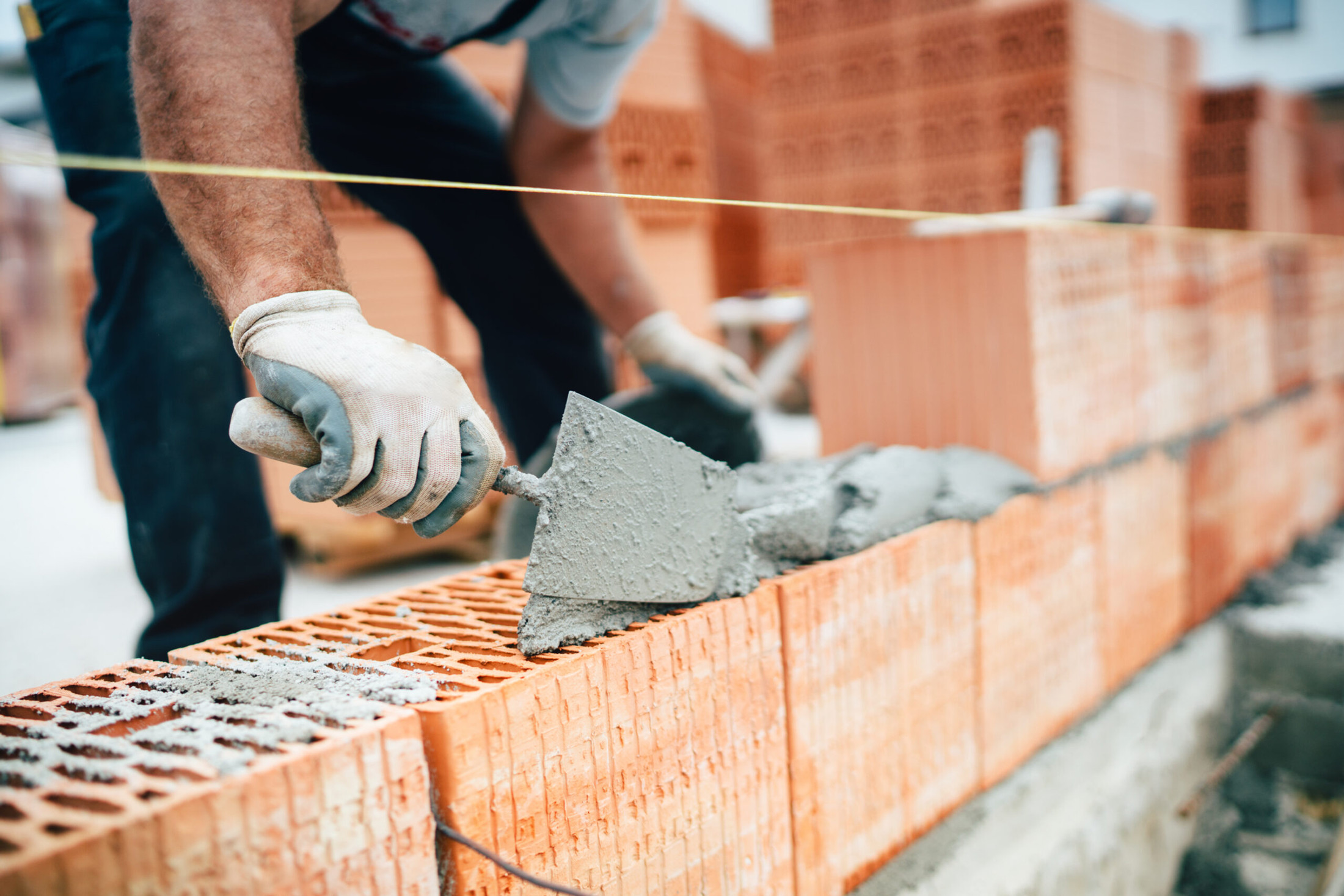
Stourpaine repointing, and what holds the flints in
Hand raking on flint and soft brick, a lime mix matched off your own wall, and the joint finished back at the face of the stone.
The site visit is free and so is the written itemised quote. Thomas Hannen prices every job himself.
Most of the walls we are asked to look at in Stourpaine are flint with brick banding and brick dressings, and on that fabric the mortar is not a filler between two solid things. It is the wall. Getting the mix and the finish right is the whole job, and getting them wrong loses flints.
Three kinds of call come from the village. Flints working loose, usually near the top of a run or where a coping has gone. Soft red brick around a window crumbling behind pointing that is still hard and grey. And a stack shedding mortar and cracked flaunching down the roof slope.
We look at the wall in daylight and go over it with a chisel, because a face that sounds hollow and a face that is only dirty want different work. Every elevation is photographed and the joints scraped in two or three places, so we know how far back the decay runs. You get a written itemised quote, elevation by elevation, saying what needs doing this year and what will keep. The site visit and the quote are free.
The work
Flint, soft red brick and the joints between them
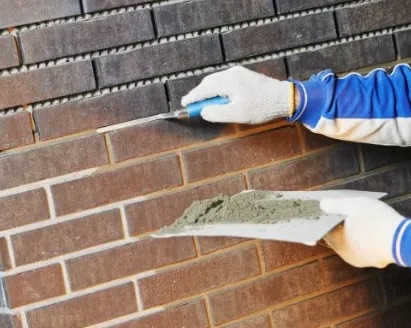
Pointing to the flint, not over it. A flint takes in no water at all, so everything the weather does to a flint wall happens in the mortar. The commonest fault we undo here is a wall pointed with the mortar run flat over the faces of the stones, which looks solid for a decade and then sheets away, taking flints with it. Done properly the mortar sits back at the face of the flint so each stone reads as a stone.
Raking a joint that has no straight lines in it. Flint joints are deep, irregular and full of galleting, so there is nothing flat to work off and no depth gauge worth having. It is chisel work by hand, back to sound material and no further, in short lengths so the wall is never opened more than it can safely give. An angle grinder is useless here and worse on the brick beside it, where a disc cutter takes the arris off a soft handmade face for good.
The mix, and how much of it goes in. A flint wall swallows far more mortar than a brick one, and it wants a natural hydraulic lime with a sharp, well graded sand: strong enough to hold the stones, open enough to let the wall keep drying through the joint. We take a sample of sound original from a sheltered spot, match the sand for colour and grain, and dry a trial panel on your own wall first, because wet mortar reads darker than it finishes. The work goes in lifts, damped down and brushed back once the mix has taken up.
The brick banding and dressings. The quoins, lacing courses and window surrounds are soft brick laid in lime, and hard cement there holds water inside the brick until a frost takes the face off. Where the cement has cracked away and is trapping water, it comes out and goes back breathable. Where it is sound and the brick behind it whole, we say leave it, because taking it out costs brick.
Spalled faces and stacks. A blown brick face will not recover, so the brick is cut out whole and a reclaimed match bedded in. A stack has no shelter and nothing warming it from within, so its joints go friable and the flaunching cracks long before anything at ground level. That is work at height, and the platform is its own line on the quote.
How it runs
From your call to a written price
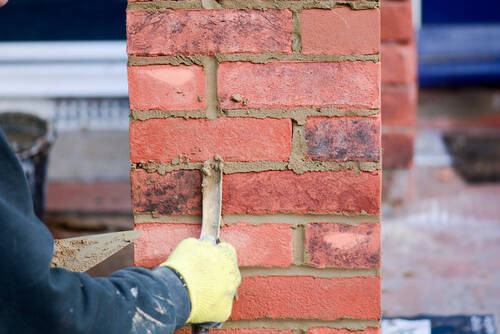
Same team from first visit to last, one person to ring, and no sub-contracting. The quote breaks out access, raking out, the mortar mix, the area of each elevation, brick replacement and disposal on separate lines, so you can compare it against anyone else's.
Nothing is left open overnight, the site is swept daily, and what comes out leaves with us. If something turns up that nobody could have seen, you get a photograph and a price first.
Repointing like for like is repair rather than development, so it needs no planning application and nothing from building control. The village sits inside the Stourpaine Conservation Area, which controls how the place looks rather than whether you can repair it, and inside the Dorset National Landscape. Twenty six entries in the parish are listed, and on one of those the mortar is listed fabric, so repointing needs listed building consent from Dorset Council first. A scaffold standing on the lane needs a licence in writing, and we sort that.
Cost
What decides the price of a repointing job
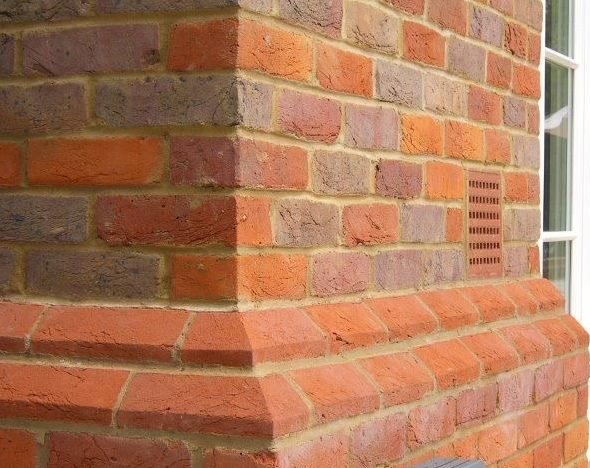
No rate per square metre: the area tells you almost nothing until somebody has looked at what the joints are like.
Getting to it. A cottage with the footway under its wall, a house with its own drive and room for a tower, and a long flint wall on a bank are three different set ups before anybody starts. The work at height rules are why the scaffold is a priced line, not something absorbed into a rate.
The joints decide it, not the wall. How deep the joints have to come back, and whether the faces have already spalled, sets the hours far more than the area does.
Matching is the part that shows. Too strong a mix is the classic mistake, and one hard frost takes the face off soft brick. Lime is right on most pre-1919 walls here.
Comparing quotes? Ask how deep the joints are raked and by hand or by disc, what the mix is and whether it has been matched, and whether the scaffold is in the price. Two quotes for the same job are usually two different jobs.
If water is getting in
Open joints, and water coming through the wall
Ring rather than use the form. Joints washed out let driven rain straight through to the inside face, and on a chimney it finds the flashings too. We come and look, sheet or point the worst of it, and price the elevation once it has dried enough to see what is sound. In the village that is most often a stack above an older roof, or a flint wall shedding stones out of an open joint near the top. The phone is answered 24 hours for emergencies; scheduled work runs Monday to Friday, 8am to 6pm.
Worth knowing
On a flint wall the mortar is doing two jobs at once
On a brick wall the mortar keeps water out and the bricks hold each other up. On a flint wall the mortar does both, because a rounded flint has almost no bearing surface and nothing to bond to. So the mix here sits in a narrower window than anywhere else. Too weak and the joint will not hold the stones. Too strong and the wall cannot dry through the mortar, so moisture works out through the brick banding and the soft dressings lose their faces. Lime, well graded sand and a gauge chosen for that wall satisfies both.
The second decision is the finish, and it separates a quote worth taking from one that is not. The instinct on a wall shedding flints is to smear mortar across the faces of the stones to make it feel solid again. It does, for about ten years, and then the whole skin lets go in sheets and the flints come with it. The joint has to come back flush with the widest part of each stone and no further, so every flint keeps its own shadow and water finds its way off the wall rather than into it.
So when you compare prices, ask where the mortar will finish against the face of the flints. Anyone who has pointed flint in this valley will have an answer ready. We put it in the quote and show it on the trial panel.
Who you are dealing with
A local firm you can check
We cover Stourpaine, Durweston, Bryanston, Blandford Forum and the DT11 villages either side of the Stour, with Dorset Council as the planning authority. You are dealing with Bournemouth Roofing & Building, the trading name of Bournemouth Roofing & Building Ltd, registered in England and Wales, company number 15471719, which you can look up in a minute. Thomas Hannen's business, and he is the one who comes out to price the job, not a salesman. A verified customer's 10 out of 10 on Checkatrade. The visit and the written quote are both free.
Questions
Stourpaine questions we get asked
Why does a flint wall use so much more mortar than a brick one?
Because there is no regular bed. Flints are irregular lumps with rounded faces, so the space between them is far larger and less even than a ten millimetre bed joint in brickwork. More material goes in, it takes longer to place, and it is worked in short lifts so nothing slumps before it has taken up.
What are the little stones pushed into the joints for?
That is galleting, and it is not decoration. Small flint chips set into the fresh mortar reduce the open joint the weather can get at and help the mix hold its shape while it sets. Where a wall here was built with it, we put it back.
Some of our pointing is fine and some has gone. Do you do the lot?
No, and we would rather not. Sound mortar is worth keeping, because taking it out risks the stones and the brick around it for no gain. We rake out what has failed, leave what is holding, and match the new work to the old so the elevation reads as one wall. The quote says which areas we open and which we leave.
Does the Stourpaine Conservation Area mean we have to ask before repointing?
Not for a repair in the same materials, which is maintenance whatever the designation. What it reaches is a change of appearance, and mortar colour and joint finish both count. Being inside the conservation area is not the same as being listed, so check your own address with Dorset Council rather than assuming.
Is a lime mortar strong enough to hold flints in place?
Yes, and it is what these walls were built with. A natural hydraulic lime sets hard enough to grip a rounded stone while still letting the wall dry through the joint, which is the balance a flint wall needs. What loses flints is an open joint left for years, or a hard skin of cement over the faces that lets go in sheets.
Nearby, and next door
Repointing near Stourpaine
Repointing nearby
Our other trades in Stourpaine
Everything we do in Blandford Forum Repointing, all areas Every area we cover
Free quote
See the mortar on your own wall first
Thomas comes out, looks over every elevation and prices it itemised, and a trial panel goes up on your wall to dry before an elevation is started. Free.