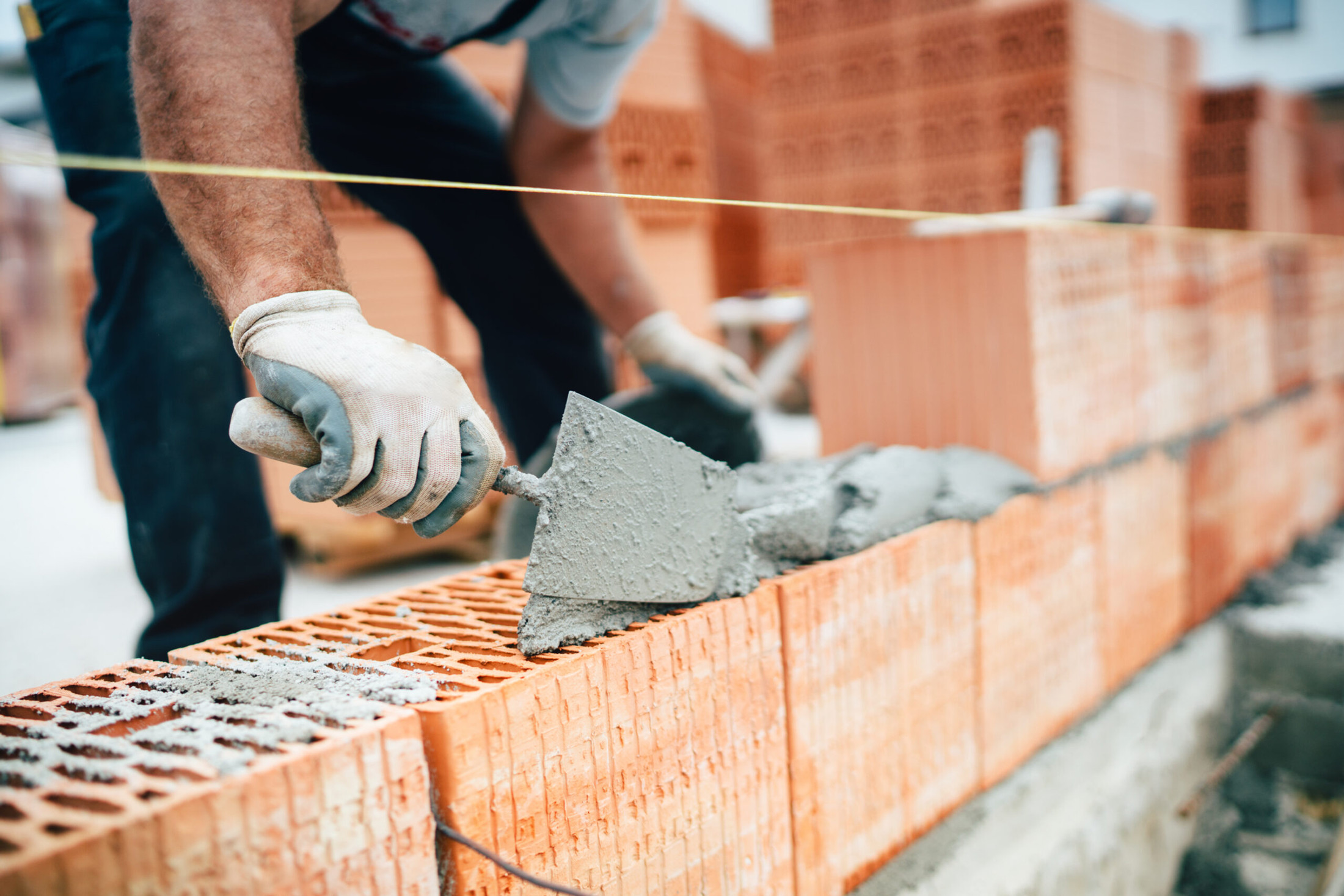
Repointing flint and brick walls in Iwerne Minster
Lime pointing on flint panels and brick dressings, judged stone by stone rather than raked to a number, across the village and the valley around it.
The site visit is free and so is the written itemised quote. Thomas Hannen prices every job himself.
Pointing flint is not pointing brick, and on most older walls in Iwerne Minster you are doing both in the same elevation. Flint is bedded rather than coursed, so it cannot be raked to a set depth, and the mortar that suits it is coarser than the one that suits the brick dressings around it.
Nearly four in ten homes in this parish predate 1919, and a great deal of what we are asked to look at is flint and greensand rubble with brick quoins at the corners, brick reveals round the openings and banded brick lacing courses running through the panels.
Three things bring people to the phone. A wall pointed in hard cement at some point in the last fifty years that is now shedding brick faces and whole flints after every cold snap. Joints on the weather side gone friable enough to take a key past the knuckle. Or a stack that has gone soft at the top and is washing mortar down into the gutter. All three are repairs rather than rebuilds if they are caught before the wall itself starts to move. We come out for a free site visit, look at the whole elevation rather than the patch you have noticed, photograph what we find and put the mix and the method in writing so you know what you are buying.
The work
Flint, brick and the mortar between them
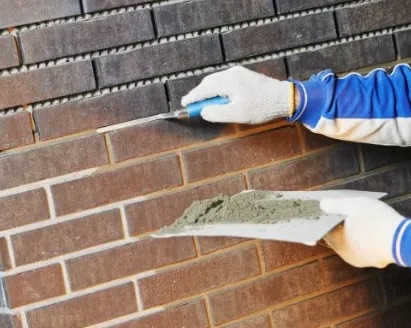
Pointing a flint panel. Tap a suspect panel first: a hollow note, or mortar crumbling out between your fingers, means the bedding has gone and is usually where penetrating damp starts. A flint wall is not laid to a course. The stones are bedded into a thick mortar and it is the mortar that holds the wall together, so the joints are irregular in both width and depth and the material between the flints is doing structural work rather than filling a gap. That changes the method completely, and it rules out a disc cutter or angle grinder: a straight kerf through work that was never straight loosens a stone before it cleans a joint. You cannot rake to twice the joint width, because on flint that measure means nothing and the depth you would reach takes the bedding out from under the stones and loosens more than it fixes. We judge the depth stone by stone, take out only what is genuinely perished, and leave anything sound alone. Loose flints come out and go back properly bedded, and the galleting, the small chips pressed into the joint, goes back where the original had it, because it is not decoration: it stops a wide joint slumping while it cures.
The mix for flint, and why it is coarser. Joints between flints run wide and irregular where a brick bed joint runs at a consistent ten millimetres. A fine mortar filling a wide joint shrinks as it dries and cracks away from the stone either side, which is the commonest fault we see on flintwork that has been pointed by somebody used to brick. So the mix for a flint panel carries a coarser, well graded sharp sand, sometimes with a little chalk or brick dust to match the original, and it goes in in more than one pass rather than being buttered on in a single thickness. The finish sits back slightly from the face of the stones rather than being smeared flush across them, which is what makes a flint wall read as flint from the lane instead of looking rendered.
Brick dressings, quoins and lacing courses. The brickwork framing the flint is ordinary coursed work and it rakes and points normally, but it wants a different mix from the panel beside it, matched to the brick rather than to the stone. On banded flint and brick the two run through the same elevation in alternating bands, so both mortars are on the wall at once and the joint where they meet has to be handled cleanly. It is slower than pointing a plain brick wall and it is the part that shows from the road.
Undoing a cement repoint. This is the most common job in the village. A solid wall is breathable by design, and hard cement stops water leaving through the joint, so it leaves through the flint or the brick face instead and the first hard frost takes the face off. Flint fails worse than brick does when this happens, because a flint has nothing to lose off its surface: instead of spalling a face, it lets go of the wall entirely. Taking cement out of a flint joint without disturbing the stones is careful, slow work, and it is the reason a proper price for it looks nothing like a price for brick pointing.
Stacks, copings and gate piers. Stacks up here are exposed on every side and normally fail first, wanting repointing above the flashing, perished brick cut out and the flaunching renewed around the pots. The flint and brick walls along the lanes and driveways fail from the top down: once the coping lets water into the core the joints in the panel below go, and then the wall bows. Getting a coping rebedded and the top courses pointed is the cheap end of that story.
How it runs
From your call to a written price
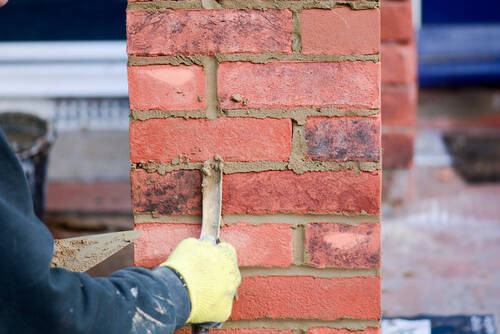
Same team from first visit to last, one person to ring, and no sub-contracting. The quote breaks out access, raking out, the mortar mix, the area of each elevation, brick replacement and disposal on separate lines, so you can compare it against anyone else's.
Nothing is left open overnight, the site is swept daily, and what comes out leaves with us. If something turns up that nobody could have seen, you get a photograph and a price first.
Repointing like for like is repair, so there is no planning application and nothing for building control to sign off. Appearance is another matter here. Iwerne Minster has its own conservation area and forty listed entries in the parish, so we check which side of that line your address falls on before we price anything. Inside the conservation area, putting the same mortar back in the same profile is maintenance, while a different colour or a different finish on an elevation you can see from a lane is a change of appearance. On a listed building listed building consent is needed from Dorset Council even for repointing, because the mortar is part of the protected fabric. Where it is neither, Planning Portal guidance on external walls sets out the general position.
Cost
What decides the price of a repointing job
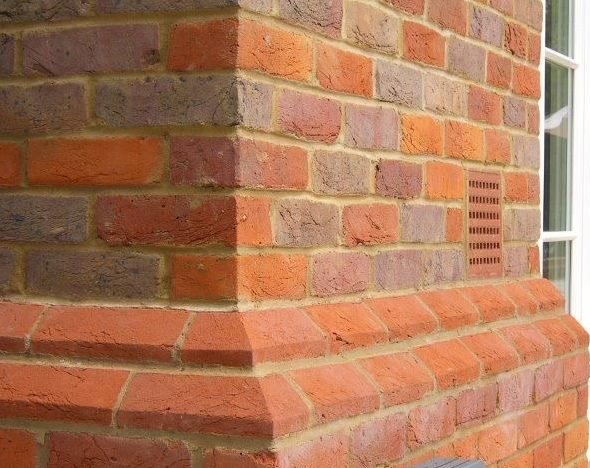
No rate per square metre: the area tells you almost nothing until somebody has looked at what the joints are like. A trial panel settles colour and weathering first, because a Victorian flint wall and its later brick repairs rarely take the same mix.
Getting to it. A flint boundary wall you can work off the ground, a village semi with a brick gable and a detached house with a stack on the ridge are three different set ups before a joint is opened. The work at height rules are why the scaffold is a priced line rather than something absorbed into a rate.
The joints decide it, not the wall. How deep the joints have to come back, and whether the faces have already spalled, sets the hours far more than the area does.
Matching is the part that shows. Too strong a mix is the classic mistake, and one hard frost takes the face off soft brick. Lime is right on most pre-1919 walls here.
Comparing quotes? Ask how deep the joints are raked and by hand or by disc, what the mix is and whether it has been matched, and whether the scaffold is in the price. Two quotes for the same job are usually two different jobs.
If water is getting in
Open joints, and water coming through the wall
Ring rather than use the form. Joints washed out let driven rain straight through to the inside face, and on a chimney it finds the flashings too. We come and look, sheet or temporarily point the worst of it, and price the full elevation once it has dried enough to see what is sound. Round here it is usually a flint panel that has started dropping stones, and if that is what you have, keep people away from the foot of the wall until we have looked. The phone is answered 24 hours for emergencies; scheduled work runs Monday to Friday, 8am to 6pm.
Worth knowing
Flint and brick are two jobs in one elevation
Most quotes for repointing in this village are written as though the wall were brick, and that is the single most useful thing to watch for. Flint and brick sit in the same elevation on a great many buildings around the Iwerne valley, and they are two different jobs measured in the same square metre. Brick pointing is fast and predictable: consistent joints, a known depth, one mix. Flint pointing is slow, the depth has to be judged stone by stone, the mix is coarser and goes in in more than one pass, and there is nothing to stop a careless rake from loosening a face of stones that then has to be rebedded before anything can be pointed at all.
So if you are comparing prices, ask each one to split the flint from the brick and give the mix for each separately. A quote that shows one rate across the whole elevation is either going to be repriced once the work starts or is going to treat your flintwork the way it treats brickwork, and the second is worse than the first. It is also worth asking what happens to loose stones, because rebedding is part of the job on flint and not a variation. We separate the two on every quote here, and we make up sample panels on both, left a few days before you judge them, because lime lightens a great deal as it dries.
Who you are dealing with
A local firm you can check
We cover Iwerne Minster, Iwerne Courtney, Fontmell Magna and the DT11 villages along the valley towards Blandford Forum, under Dorset Council. You are dealing with Bournemouth Roofing & Building, the trading name of Bournemouth Roofing & Building Ltd, registered in England and Wales, company number 15471719, which you can look up in a minute. Thomas Hannen's business, and he is the one who comes out to price the job, not a salesman. A verified customer's 10 out of 10 on Checkatrade. The visit and the written quote are both free.
Questions
Iwerne Minster questions we get asked
Someone quoted us a rake depth for our flint wall. Is that right?
Only as deep as the perished mortar goes, and that is judged stone by stone rather than measured. A flint is held by the mortar around it rather than by bearing on the stone below, so raking to a set depth pulls the bedding out and loosens stones that were perfectly secure. If somebody quotes you a rake depth for flintwork, ask how they arrived at it.
Our wall is dropping whole flints, not just mortar. Is it too far gone?
Usually not. Losing stones normally means the wall was pointed in something too hard and the mortar has parted from the flint behind the face. The stones come out, the joint is cleaned back to sound material, and they are rebedded and pointed in a lime mix that will hold them. It is slower than pointing, but it is a repair rather than a rebuild.
What is the galleting for on these walls?
The small chips and flakes pressed into the mortar between the flints. They fill out a wide joint so it does not slump while it cures, they reduce the amount of mortar showing on the face, and on many walls around here they are part of how the wall has always looked. We put them back where the original had them and leave them out where it did not.
Can the flint and the brick be pointed in the same mortar?
They can be, and they usually should not be. A mix fine enough to fill a brick bed joint shrinks and cracks in the wide irregular joints between flints, and a mix coarse enough for flint will not go into a ten millimetre brick joint neatly. We make up both and use each where it belongs.
How long does flint pointing take compared with brick?
Considerably longer for the same area of wall, which is the main reason two quotes for the same elevation can be so far apart. The depth has to be judged as you go, the mix goes in in more than one pass, and any loose stones have to be rebedded first. The quote gives you working days and says what would push it, which is usually the weather.
Nearby, and next door
Repointing near Iwerne Minster
Repointing nearby
Our other trades in Iwerne Minster
Everything we do in Blandford Forum Repointing, all areas Every area we cover
Free quote
Get the flint and the brick priced separately
Thomas comes out, samples the original mortar, photographs each elevation and writes the mix for each material down. Free.