
Driveways and patios in Iwerne Minster
Block paving, gravel, resin, tarmac and stone patios across Iwerne Minster and DT11. We dig a trial hole, take the levels, and put the price in writing.
The site visit is free and so is the written itemised quote. Thomas Hannen prices every job himself.
Nobody can tell you what an Iwerne Minster drive needs until somebody digs a hole in it and looks. A drive that has sunk, started rutting or holds water after rain has almost never failed at the surface. It has failed in the sub-base under it.
People ring us in Iwerne Minster for three reasons. There is nowhere to put a car and the front garden is the only place one could go. The gravel has crept out into the verge and the wheel tracks have worn into hollows. Or the patio behind the cottage has gone uneven and green, and the back door now steps down into a puddle.
All three are ground work rather than surfacing work, which is why we come and look before saying anything about price. We take levels off the threshold and off the road, dig a trial hole where the car will actually stand, and tell you what is under there. Then it goes in writing, itemised, so the part you can see and the part you never will are priced apart.
The work
Drives, gravel and cottage patios around the village
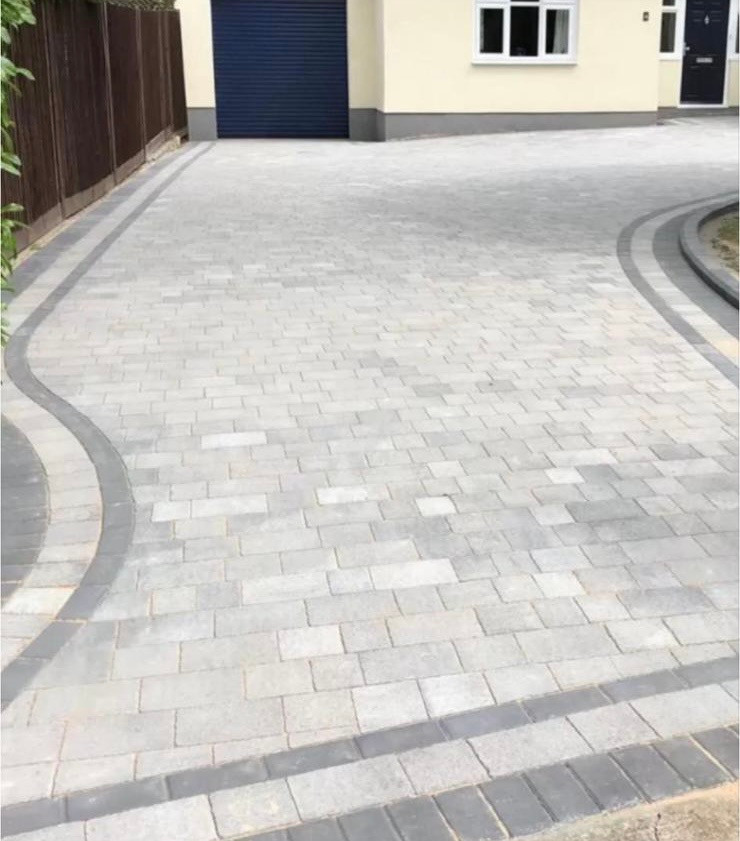
Making a parking space where there never was one. Four in ten houses in the village predate 1919 and sit close to the street with a path, a wall and no drive, because nothing needed one when they were built. That job is as much about the opening as the paving: where a car can turn in and come out forwards, what the boundary wall is doing structurally, and whether the verge in front of it is yours. The dropped kerb is its own application to Dorset Council wearing its highway authority hat, and it takes longer to come through than the drive takes to build. The village has its own conservation area, so what a frontage looks like from the street is part of the decision.
Loose stone is the traditional surface around here and it works until the edges go. Then it migrates onto the lane, thins where you turn and starts rutting in the wheel tracks. Doing it once means excavating to a formation that will carry a car, a geotextile membrane, a compacted sub-base at a depth judged in the hole rather than off a price list, and an edge restraint haunched in concrete instead of pushed into soil. A bound margin at the entrance keeps the stone off the highway.
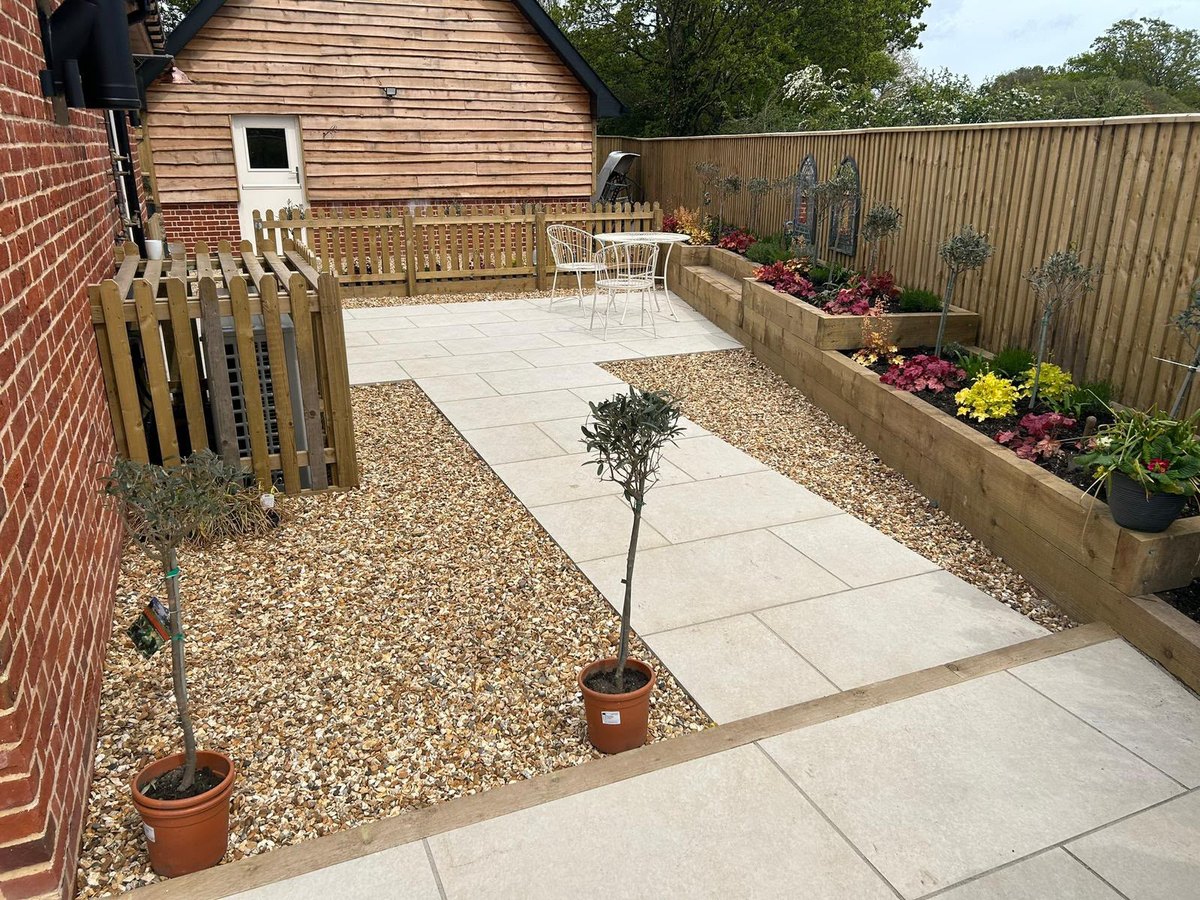
Patios against old walls. Behind these cottages the inside floor is often barely above the garden, and on pre-1900 walls the damp proof course is low or not there at all. So the finished level is the first decision and the slab is the last one. Natural stone goes on a full mortar bed rather than five dabs of muck, porcelain goes on a primed bed or it lifts, and irregular flags want pointing rather than brush jointing. The paving stops short of the wall with a gravel margin or a channel drain, so nothing bridges up to the threshold.
On the newer closes it is sunken bays, kiln dried sand washed out of the joints and weed coming through what is left. Where the base under it is sound, that is a lift, a re-lay to proper falls and a re-sand. Where the blocks have dropped in one line under a single wheel, the sub-base never had the depth. Cracked concrete aprons and porous tarmac can sometimes be overlaid and often cannot, and we will tell you which once the edges are visible.
How it runs
From your call to a written price
One person to ring, and an itemised quote: excavation, muck away, sub base, edgings, the surface and the drainage on separate lines. Relaying a drive or a patio where one already is counts as maintenance and needs nothing. It changes when new hard surfacing at the front runs to more than five square metres and sheds onto the road, which needs planning permission, and the Planning Portal sets out where the line falls. Keep the water on your own land, or use a permeable surface, and it stays permitted development. With forty listed entries in the village and a conservation area over it, anything that alters a boundary wall or a gate pier is worth a call to Dorset Council first.
Cost
What decides the price of a driveway
No rate per square metre. What is under it decides more of the cost than what goes on top. A cottage on the street with a gateway a car only just fits through, a bungalow with an open frontage, and a house at the end of a shared gravel lane are three different jobs. Access decides whether a machine does the digging or a barrow does, and that is the biggest single swing. Ask any quote how deep the dig is, what sub base goes in, where the water goes, and who takes the spoil.
If it is urgent
A trip hazard, or a drive that floods
Ring rather than use the form. The ones that will not wait are a lifted slab, a hollow by a door, and a gully that has stopped taking water. The first visit is about making it safe and getting the water going somewhere. Around here that is usually a bay by a back door that has dropped away from the step. The phone is answered 24 hours for emergencies; scheduled work runs Monday to Friday, 8am to 6pm.
Worth knowing
The conservation area, and why it lands on the wall not the paving
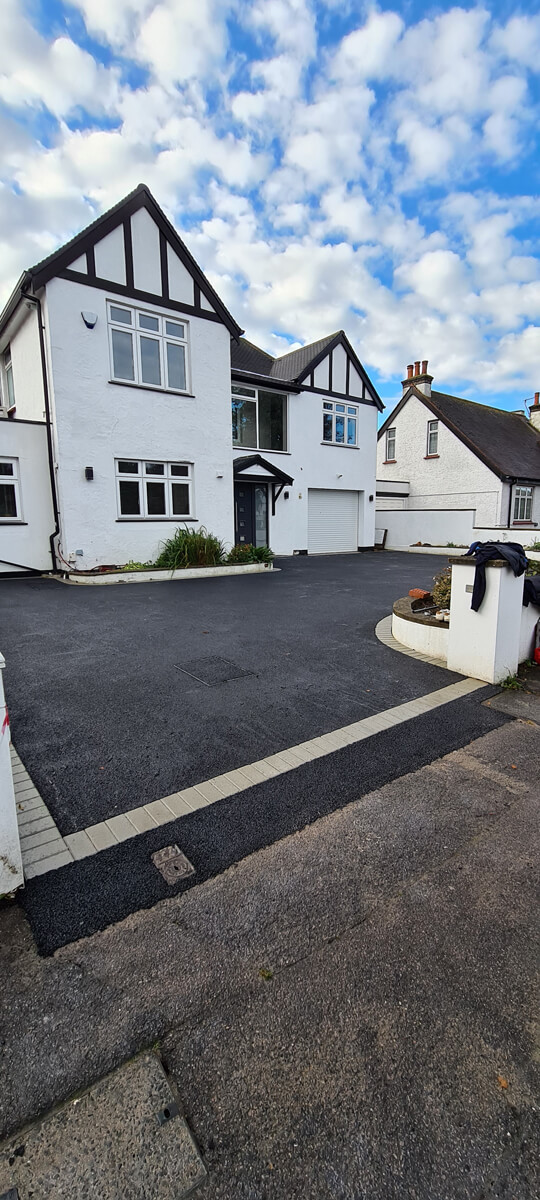
Iwerne Minster has its own conservation area, and on driveway jobs it catches people out in a way nobody expects. What the surface is made of is rarely the issue. What the designation protects is the look of the street, and on a frontage here that means the wall, the gate piers and the hedge. Taking a metre out of an old boundary wall to get a car in is the part to ask about, not what you lay behind it.
Demolition on a frontage in a conservation area is not automatically permitted development, and if the house or the wall in front of it is on the list, then listed building consent is a separate consent again on top of anything else.
So make one call to Dorset Council before anybody prices an opening, because the answer changes the design rather than just the paperwork. Where the wall has to stay, the drive gets planned around the gateway you already have, which usually means a narrow entrance and a turning area behind it.
Where a section can come out, the old brick and stone is worth setting aside and re-using on the returns, because matching a wall like that out of a builders merchant rarely ends well. Either way we price the wall work on its own line, so you can see what the opening itself is costing you.
Who you are dealing with
A local firm you can check
Iwerne Minster sits on our run up the A350, and we cover the DT11 villages either side of it between Blandford Forum and Shaftesbury. Bournemouth Roofing & Building Ltd, registered in England and Wales, company number 15471719, which you can look up in a minute. Thomas Hannen's business, and he is the one who comes out to price the job, not a salesman. A verified customer's 10 out of 10 on Checkatrade. The visit and the written quote are both free.
Questions
Iwerne Minster questions we get asked
Does being in the conservation area limit the paving we choose?
It limits what looks right rather than banning paving outright. The Iwerne Minster conservation area is about what the street reads like, so a gravel or natural stone front sits correctly and a broad sweep of bright concrete block does not. Permitted development still applies, which means a permeable surface, or one draining to a border, generally goes ahead without an application. Dorset will confirm that in writing if you want it.
Can you match the stone in the old garden walls?
Within reason, yes. 39.6% of the housing here predates 1919, so the walls and thresholds are mostly local stone laid in lime, and a modern sawn slab set against that looks new for a long time. We source riven stone rather than sawn where it meets old work, bed it on a lime based mortar so it stays flexible, and keep the joints generous. Material salvaged on site is the best match there is.
Does the ground here drain well enough for a soakaway?
It usually does. The ground around Iwerne Minster is free draining, which is why so many of the old yards were gravel over rammed stone and never needed a gully at all. We still dig a test pit and time it, because a pocket of made ground or an old farm yard base behaves nothing like the field beside it. Where it drains, a soakaway under the parking area is the simplest thing to maintain.
Is the landscape designation something we have to think about?
For a drive, rarely. The Cranborne Chase and West Wiltshire Downs designation puts scrutiny on things that change the view, so it matters for a new outbuilding or a run of tall fencing and not for the surface you park on. Where it does come up is lighting and gate posts at the entrance, which read from a long way off across open ground. Dorset will say if that needs an application.
How much of the old yard surface can stay?
More than you would expect on an old property. Rammed stone yards that have been down for a century are often better compacted than anything we could build, so where the level suits we clean off, regulate with a binding layer and lay onto it. What has to come out is anything soft, anything with roots through it, and the topsoil washed over the edges. That gets decided on the visit, with a spade.
Nearby, and next door
Driveways and patios near Iwerne Minster
Driveways and patios nearby
Our other trades in Iwerne Minster
Everything we do in Blandford Forum Driveways and patios, all areas Every area we cover
Free quote
Get a price for a drive or patio in Iwerne Minster
Tell us the address and what you have noticed. We will come out, look at the ground, and put an itemised price in writing. Both are free.